
TL;DR:
- Proper facility painting safety involves verifying ventilation, selecting appropriate PPE, and conducting thorough pre-work walk-throughs. Implementing administrative controls such as activity hazard analysis, site permits, and fire prevention measures is essential to prevent incidents. Most accidents are avoidable through diligent preparation, hazard verification, and strict adherence to safety protocols.
Facility painting safety tips are the set of hazard controls, compliance checks, and protective measures that prevent chemical exposure, falls, and fire during commercial and institutional painting projects. The industry term for this practice is occupational painting hazard management, and it covers everything from Safety Data Sheets (SDS) and personal protective equipment (PPE) to ventilation standards and Activity Hazard Analysis (AHA). Facility managers and property owners who skip these steps face regulatory penalties, worker injuries, and project delays. The good news is that a structured approach to workplace painting precautions removes most of that risk before a single brush touches a wall.
1. What are the top fall prevention precautions for facility painting?
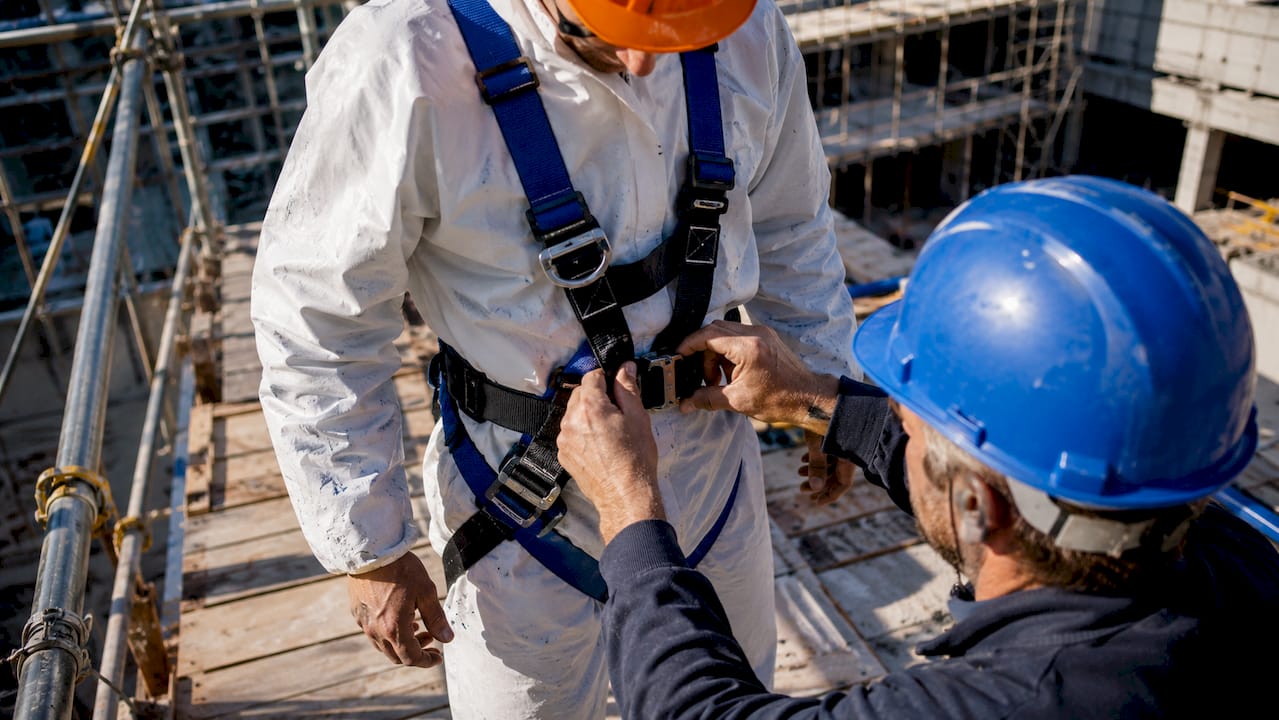
Fall protection is the first control to verify on any facility painting project. Fall protection is mandatory at or above 1.8 metres in construction painting work under 2026 standards. That threshold means any elevated painting task, including work on ladders, scaffolds, or elevated work platforms, requires a formal control in place before work begins.
The three primary fall protection methods for painting operations are:
- Guardrails: Fixed barriers installed at the perimeter of elevated platforms. These are the preferred option because they require no action from the worker once installed.
- Scaffolding: Provides a stable, wide working surface for painters covering large façades or multi-storey properties. Scaffolding must be erected and inspected by a competent person before use.
- Safety harnesses: Used where guardrails or scaffolding are not practicable. Harnesses must be connected to an anchor point rated for the load, and workers must be trained in their correct use.
A pre-project walk-through is the most reliable way to verify these controls are in place. A thorough pre-work walkthrough verifying ventilation, SDS presence, and fall protection at heights can catch 80% of potential safety failures before work starts. That figure reflects how many incidents trace back to preparation gaps rather than on-the-job errors.
Pro Tip: Apply fall protection at every height where a fall could cause injury, not just at the 1.8-metre regulatory threshold. A fall from a standard stepladder can cause serious harm.
2. How to manage ventilation for chemical safety during painting
Ventilation is the single most misunderstood control in facility painting safety. Opening a door or window does not constitute adequate ventilation. Adequate ventilation means measurable airflow that maintains exposures below occupational limits, not simply opening a door.
For enclosed or confined spaces, mechanical ventilation must meet specific thresholds:
- Oxygen levels must remain above 20.9% at all times during painting operations.
- Solvent vapour concentrations must stay below 10% of the Occupational Exposure Limit (OEL) or 25% of the Lower Explosive Limit (LEL). These confined space ventilation standards reflect the April 2026 update to construction safety guidelines.
- Spray booths require a minimum face velocity of 100 linear feet per minute (fpm) to safely exhaust coating particles and vapour. This figure comes from OSHA 1910.107 and remains the benchmark for spray application environments.
- Continuous air monitoring is required throughout the task, not just at the start. Vapour concentrations can rise as coatings are applied and solvents evaporate.
The practical implication for facility managers is clear. You need calibrated gas detection equipment on site, and the readings must be documented. Relying on a painter’s judgement about whether the air “smells okay” is not a compliant approach and exposes you to liability.
Pro Tip: Always measure airflow and vapour levels with calibrated instruments before and during painting. Never assume ventilation is adequate based on visual inspection alone.
3. Which PPE is critical for safe facility painting?
Protective gear for painting is not a single product. It is a matched set of equipment selected based on the specific coatings, solvents, and application methods in use. The SDS for each product specifies the minimum PPE required, and that document must be on site and accessible to all workers before work begins.
The core PPE categories for facility painting are:
- Respirators: Half-face or full-face respirators with the correct cartridge for the chemical in use. Organic vapour cartridges suit most solvent-based paints. Combination cartridges with P100 particulate filters are required for spray applications.
- Eye protection: Chemical splash goggles for brush and roller work. Full-face shields are required during spray painting to protect against mist and overspray.
- Gloves: Nitrile gloves provide adequate protection against most water-based and solvent-based paints. Thicker chemical-resistant gloves are required for epoxy and polyurethane coatings.
- Protective clothing: Disposable coveralls or dedicated work clothing prevent skin contact with coatings and solvents. Contaminated clothing must not be taken home.
Isocyanate-based coatings, which are common in industrial and commercial facilities, require a higher level of protection. Isocyanate coatings require supplied-air respirators, and health surveillance including spirometry is mandatory before work begins. Standard cartridge respirators do not provide adequate protection against isocyanates. This is a non-negotiable requirement, not a precaution to weigh up against convenience.
Store PPE in a clean, dry location away from direct sunlight and chemical contamination. Inspect each item before use and replace any component showing signs of wear, damage, or saturation.
4. What administrative controls strengthen painting safety compliance?
Administrative controls are the planning and procedural measures that sit above PPE in the hierarchy of controls. The hierarchy of controls prioritises hazard elimination and engineering controls before PPE. Many facilities rely too heavily on PPE without first verifying that ventilation is adequate or that a less hazardous product could be substituted.
Key administrative controls for facility painting projects include:
- Activity Hazard Analysis (AHA): An AHA must specify products by name, reference the SDS for each, and document respiratory and ventilation requirements. Facility owners carry oversight responsibility for this document.
- Confined space permits: Any painting in a confined space, such as a tank, pit, or enclosed plant room, requires a confined space entry permit. This triggers additional atmospheric testing, rescue planning, and attendant requirements.
- Site isolation and signage: Painting areas must be physically separated from occupied zones using barriers and warning signs. Signage must identify the hazard, the restricted zone, and the required PPE for entry.
- Training: All painters and supervisors must be trained on the specific hazards of the products in use, the correct application of PPE, and the emergency response procedures for the site.
- SDS availability: Safety Data Sheets for every product on site must be accessible to workers at all times, not filed in an office or stored digitally without on-site access.
“Facility managers often overlook the value of a comprehensive Activity Hazard Analysis tailored specifically for painting projects. A well-prepared AHA improves both compliance and worker safety from the first day on site.”
The pre-project walk-through is where administrative controls are verified in practice. Walk the site with the lead painter before work starts, confirm that SDS documents are present, check that ventilation equipment is operational, and confirm that fall protection is installed at every elevated work point.
5. How to manage fire and explosion risks during facility painting
Fire and explosion are the most severe hazards in spray painting operations. Solvent-based coatings produce flammable vapours that ignite readily from sparks, open flames, or hot surfaces.
The core fire prevention controls for facility painting are:
- Ignition source exclusion: Ignition sources must be removed within 20 feet of spray painting operations. This includes electrical switches, power tools, mobile phones, and any open flame.
- Grounding and bonding: All spray equipment, containers, and transfer lines must be grounded and bonded to prevent static discharge. Grounding and bonding of spray equipment is routinely overlooked in facility settings and is a leading cause of ignition incidents.
- Flammable storage: Solvent-based coatings and thinners must be stored in fire-rated cabinets designed for flammable liquids. Only the quantity needed for the day’s work should be brought into the painting area.
- Rag disposal: Solvent-soaked rags must be stored in self-closing metal waste containers to prevent spontaneous combustion. This is one of the most common fire causes in painting operations and one of the easiest to prevent.
- Spray booth fire suppression: Spray booths must have fire suppression systems and fire extinguishers rated for the coating type in use. Ventilation filters must be maintained and replaced on schedule.
| Fire hazard | Control measure | Standard |
|---|---|---|
| Flammable vapour ignition | 20-foot ignition exclusion zone | OSHA 1910.107 |
| Static discharge | Grounding and bonding of all equipment | OSHA 1910.107 |
| Spontaneous combustion | Self-closing metal rag disposal containers | 2026 safety guidance |
| Spray booth fire | Fire suppression system and rated extinguishers | 2026 compliance requirement |
Key takeaways
Safe facility painting requires verified ventilation, matched PPE, a completed AHA, and active fire controls before any coating work begins.
| Point | Details |
|---|---|
| Fall protection starts at 1.8m | Install guardrails, scaffolding, or harnesses at every elevated work point before painting begins. |
| Ventilation must be measured | Use calibrated instruments to confirm oxygen and vapour levels meet the required thresholds throughout the task. |
| PPE must match the product | Select respirators, gloves, and eye protection based on the SDS for each specific coating in use. |
| AHA is a compliance requirement | Document every product by name, reference the SDS, and assign oversight responsibility before work starts. |
| Fire controls are non-negotiable | Remove ignition sources within 6 metres of spray operations and store solvent rags in self-closing metal containers. |
Why I think most facility painting incidents are preventable
From my experience working across Melbourne’s inner east and bayside properties, the pattern in painting incidents is almost always the same. The hazard was known. The control was available. Nobody verified it was actually in place on the day.
The pre-project walk-through is the most underused tool in facility painting safety. Spending 20 minutes with your lead painter before work starts, checking that the SDS documents are physically on site, confirming the ventilation equipment is running, and walking every elevated work point, removes the majority of risk before a single drop of paint is mixed. That walkthrough can catch 80% of potential safety failures. That is not a small number.
The other pattern I see consistently is over-reliance on PPE. Handing a painter a respirator and calling it done is not a safety programme. PPE is the last line of defence, not the first. If the ventilation is inadequate, the respirator is carrying a load it was not designed to carry alone. Get the engineering controls right first, then confirm the PPE matches the product. The SDS tells you exactly what is needed. Read it before the job starts, not after something goes wrong.
Facility managers who treat the AHA as a paperwork exercise rather than a genuine planning tool are the ones who end up with incidents. Name every product. Reference every SDS. Assign someone to verify every control on the day. That is the difference between a compliant project and a preventable injury.
— Jarrad
How Sol Shine handles safety on every painting project

Sol Shine approaches every facility and residential painting project with the same structured safety framework described in this guide. From the initial site assessment through to final coat, Sol Shine’s team verifies ventilation, confirms PPE requirements against product SDS documents, and conducts a pre-work walk-through on every job. For facility managers and property owners in Melbourne’s inner east and bayside suburbs, that means you are not managing compliance on your own. Explore Sol Shine’s interior painting projects to see how this approach translates into quality, compliant results across a range of commercial and residential settings. Get in touch to discuss your next painting project.
FAQ
What height requires fall protection during facility painting?
Fall protection is mandatory at or above 1.8 metres under 2026 construction painting standards. Industry experts recommend applying controls at any height where a fall could cause injury, regardless of the regulatory threshold.
What ventilation is required for painting in enclosed spaces?
Mechanical ventilation must maintain oxygen above 20.9% and keep solvent vapour below 10% of the OEL. Opening a door or window does not meet this standard. Calibrated air monitoring is required throughout the task.
Do I need a supplied-air respirator for all painting work?
Standard cartridge respirators suit most solvent-based and water-based coatings. Isocyanate-based coatings require supplied-air respirators and pre-work health surveillance. Always check the SDS for the specific product in use.
What is an Activity Hazard Analysis and is it required?
An Activity Hazard Analysis (AHA) is a written document that identifies the hazards of each painting task and specifies the controls, PPE, and ventilation requirements for each product by name. It is a compliance requirement for construction painting projects and a best practice for all facility painting work.
How should solvent-soaked rags be disposed of on site?
Solvent-soaked rags must be placed in self-closing metal waste containers immediately after use. Leaving them in open bins or piled on the floor creates a spontaneous combustion risk that has caused numerous facility fires.


