
Many homeowners mistakenly assume any premium paint will protect their Victorian or Edwardian home. This false confidence leads to trapped moisture, peeling surfaces, and costly restoration failures within years. Heritage houses demand breathable, conservation-grade paints matched to authentic period colours and applied with meticulous preparation. This guide reveals how to select specialist paints, navigate Melbourne council approvals, and execute compliant restoration that preserves architectural integrity while delivering lasting protection.
Table of Contents
- Understanding Heritage House Paint And Its Importance
- Selecting Authentic Heritage Colours For Victorian & Edwardian Homes
- Heritage Painting Process And Preparation
- Council Compliance And Approvals For Heritage Painting In Melbourne
- Trust Sol Shine For Your Heritage Painting Restoration In Melbourne
Key takeaways
| Point | Details |
|---|---|
| Heritage paints breathe | Conservation-grade paints allow moisture escape, preventing timber rot and masonry damage unlike modern acrylics. |
| Authentic colours matter | Victorian and Edwardian homes require historically accurate palettes that satisfy heritage council standards. |
| Council approval mandatory | Melbourne councils demand paint samples, repair evidence, and heritage colour documentation before starting work. |
| Preparation prevents failure | Comprehensive surface assessment uncovers hidden defects like rising damp that cause premature paint breakdown. |
| Wrong paint costs dearly | Using impermeable paints or skipping approvals triggers fines, mandated repaints, and permanent heritage fabric damage. |
Understanding heritage house paint and its importance
Heritage paints differ fundamentally from standard modern coatings in their chemical composition and performance characteristics. These specialised formulations allow water vapour to pass through the paint film, enabling moisture trapped in timber and masonry to escape naturally. Incorrect use of modern paints can trap moisture, leading to structural damage like cracking and timber rot.
Standard acrylic and synthetic paints create an impermeable barrier. While this works brilliantly on modern homes with damp-proof courses and vapour barriers, it spells disaster for heritage buildings. Original Victorian and Edwardian construction relied on breathable lime mortars and solid timber that need to release moisture absorbed during Melbourne’s wet months. Seal that moisture in, and you accelerate decay from the inside out.
Conservation-grade heritage paints solve this problem through carefully balanced formulations. Key characteristics include:
- Microporous structure allowing vapour transmission whilst blocking liquid water
- Flexible film formation that moves with timber expansion and contraction
- Compatibility with lime-based substrates and original putty glazing
- UV-stable pigments matching historic colour ranges
- Alkali-resistant binders that bond to heritage render systems
Pro Tip: Test heritage paint compatibility by applying a small patch on an inconspicuous area. Wait 48 hours and check for bubbling or peeling, which indicates substrate moisture issues requiring resolution before full painting.
Choosing conservation-grade coatings protects your investment in heritage painting projects by ensuring durability. These specialised paints cost more upfront but deliver decades of protection when applied correctly. Standard paints might save money initially but typically fail within three to five years on heritage substrates, forcing expensive remediation. Understanding paint composition empowers you to make informed decisions that preserve architectural fabric whilst avoiding costly mistakes.
Selecting authentic heritage colours for Victorian & Edwardian homes
Period-appropriate colour selection goes beyond personal preference. It honours architectural intent, satisfies heritage overlay requirements, and enhances your home’s kerb appeal through authentic presentation. Victorian heritage colour palettes commonly feature deep burgundy paired with stone neutrals, creams, and ochres, reflecting natural pigments available during the era.
Victorian homes (1837-1901) embraced rich, earthy tones derived from mineral pigments. Typical exterior schemes included:
- Deep burgundy or terracotta for feature walls and bay windows
- Stone grey or warm cream for main weatherboards
- Olive green or Prussian blue for decorative trim and brackets
- Ochre yellows for highlighting architectural details
- Chocolate brown for window frames and doors
Edwardian homes (1901-1910) shifted towards lighter, more refined palettes influenced by Flemish and Italian Renaissance design. Common colours included:
- Soft creams and buttermilk whites for main surfaces
- Sage green and duck egg blue for decorative elements
- Warm terracotta and burnt sienna for feature accents
- Pearl grey for window sashes and architectural joinery
| Era | Primary colours | Accent colours | Trim colours |
|---|---|---|---|
| Victorian | Deep burgundy, stone grey, warm cream | Olive green, Prussian blue, ochre | Chocolate brown, black |
| Edwardian | Soft cream, buttermilk white | Sage green, duck egg blue, terracotta | Pearl grey, white |
Modern heritage paint manufacturers replicate these historic pigments using durable, breathable formulations. They match the visual appearance of original colours whilst providing superior weather resistance and fade protection. This allows you to achieve authentic period presentation without sacrificing longevity.
Proper colour choice enhances architectural details rather than obscuring them. Use darker tones to recede plain surfaces and lighter shades to highlight decorative elements like brackets, friezes, and turned timber posts. This approach guides the eye and celebrates the craftsmanship embedded in your home’s design. Heritage council approval becomes straightforward when your colour scheme demonstrates understanding of period conventions and respects neighbourhood character.
Heritage painting process and preparation
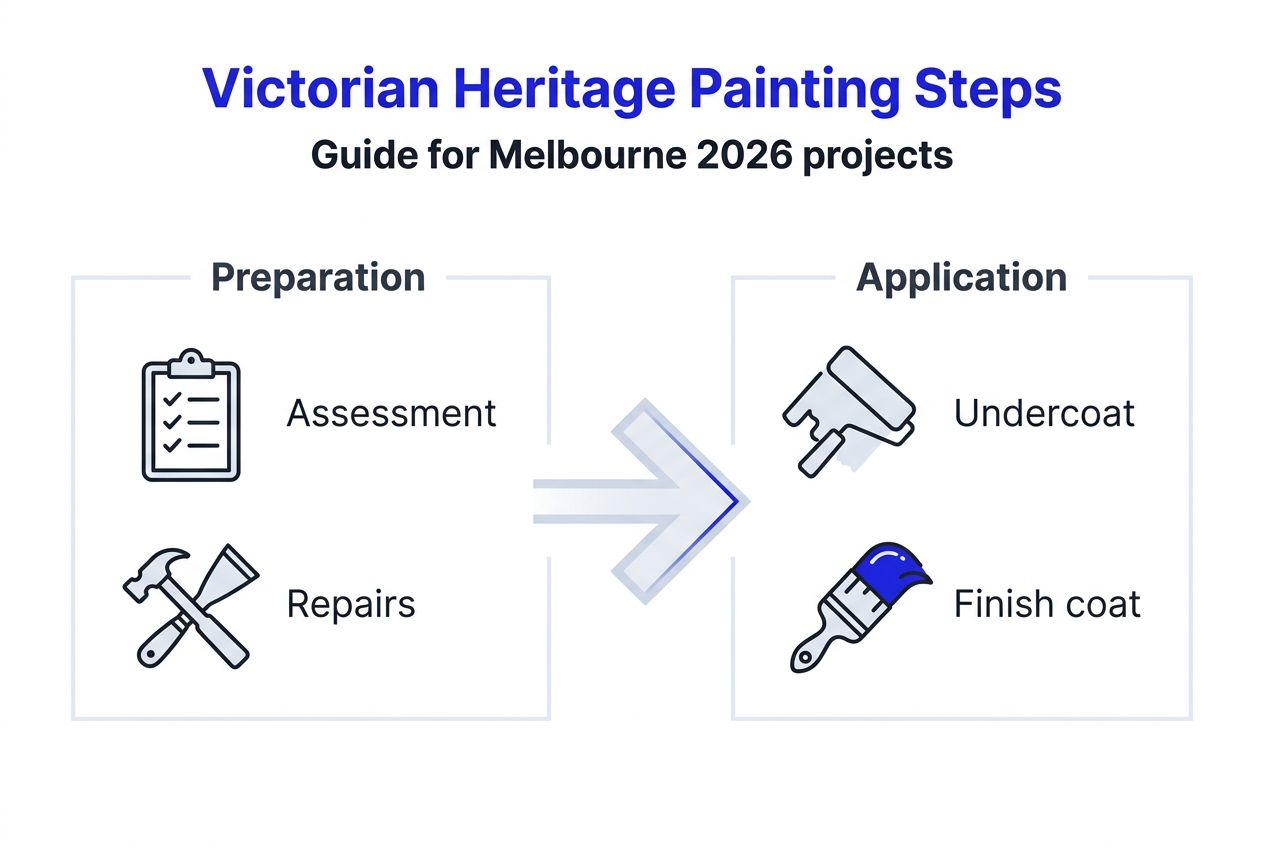
Successful heritage painting relies on methodical preparation that addresses underlying defects before applying a single coat. Rushing this phase guarantees premature failure regardless of paint quality. A detailed survey before painting detects hidden issues like rising damp, plaster hollowness, and multiple paint layers, preventing costly post-paint failures.
Phase 1: Initial assessment and documentation
Begin with comprehensive property inspection covering all exterior surfaces. This survey identifies moisture ingress points, timber decay, render delamination, and previous paint system failures. Document findings with photographs and written notes that inform your council application and guide restoration priorities.
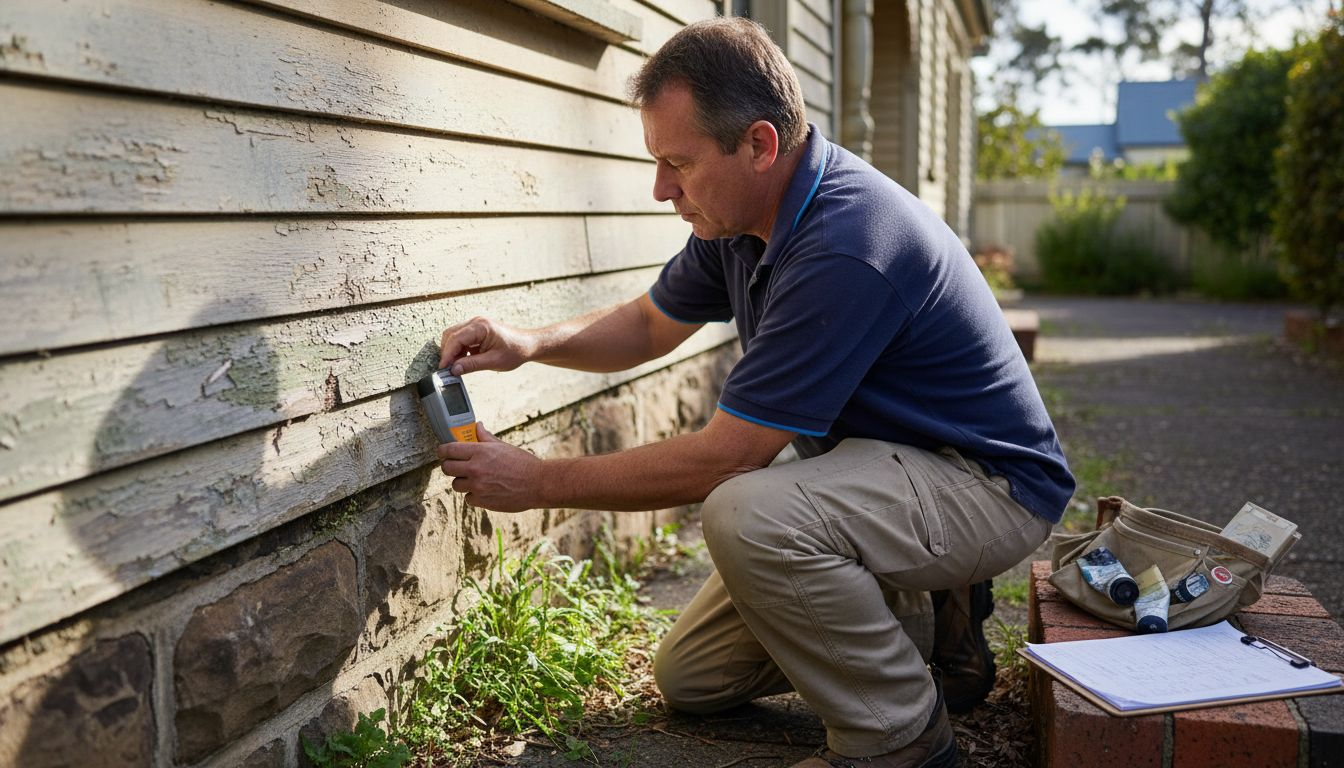
Check for rising damp using a moisture metre, particularly around ground-level weatherboards and brick plinths. Test render adhesion by tapping with knuckles, listening for hollow sounds indicating separation from substrate. Probe timber with a bradawl to locate soft spots revealing rot. This detective work prevents applying expensive paint over failing substrates.
Phase 2: Surface preparation and repair
Proper preparation consumes 60 to 70 percent of project time but determines longevity. Essential steps include:
- Lead-safe removal of failing paint layers using approved chemical strippers or heat methods
- Replacement of rotten timber sections with new hardwood matching original profiles
- Repair of render cracks and delamination using compatible lime-based mortars
- Filling of nail holes and joints with flexible exterior-grade fillers
- Thorough washing and degreasing of all surfaces to ensure paint adhesion
- Spot priming of bare timber and masonry with appropriate sealers
Never skip lead testing on homes built before 1970. Melbourne regulations require licensed contractors for lead paint removal exceeding certain thresholds. DIY removal risks serious health hazards and council fines. Professional lead-safe removal protects your family whilst ensuring compliance.
Pro Tip: Apply mesh tape over render cracks before filling to prevent future crack telegraphing through new paint. This simple step dramatically improves finish durability.
Phase 3: Paint application
Apply heritage-approved breathable paints following manufacturer specifications. Typically this involves an undercoat plus two finishing coats, with adequate drying time between applications. Use quality brushes for detailed trim work and rollers for flat surfaces, maintaining wet edges to avoid lap marks.
Work in manageable sections, completing entire walls or elevations before stopping. This prevents visible join lines in the finished surface. Avoid painting in direct sunlight or when rain threatens within 24 hours. Temperature and humidity significantly impact paint cure rates and final appearance.
Phase 4: Final inspection and protection
Conduct thorough inspection checking for missed spots, runs, and inadequate coverage. Touch up defects immediately whilst paint remains workable. Consider applying additional protective coatings to high-wear areas like window sills and door thresholds.
Document completed work with photographs for your records and council sign-off. This evidence proves compliance and provides baseline for future maintenance planning. Properly executed heritage painting should last 10 to 15 years with minimal maintenance.
Council compliance and approvals for heritage painting in Melbourne
Navigating Melbourne’s heritage overlay system prevents costly mistakes and legal complications. Councils require detailed documentation including paint samples, substrate repairs, heritage colour evidence, and use of conservation-grade paint for approval of heritage painting projects. Understanding these requirements before starting work saves time and money whilst protecting heritage values.
Melbourne councils classify properties within heritage overlays as either significant, contributory, or non-contributory. Significant and contributory homes require planning permits for external painting involving colour changes. Non-contributory properties face fewer restrictions but still need compliance with neighbourhood character guidelines.
Essential documentation for council applications includes:
- Paint colour samples showing proposed scheme for all surfaces
- Historic colour analysis proving period-appropriate selections
- Manufacturer specifications confirming breathable paint properties
- Photographs documenting existing condition and proposed changes
- Written justification explaining colour choices and restoration approach
- Evidence of substrate repairs and preparation methods
Council planners assess applications against heritage policies prioritising conservation of original fabric and maintenance of architectural character. They favour schemes demonstrating historical research and understanding of period conventions. Generic modern colours typically face rejection or requests for revision.
Skipping council approval or using incorrect paint systems can result in costly repaints, fines, and damage to heritage value. Enforcement officers conduct regular inspections and respond to neighbour complaints. Penalties include stop-work orders, mandatory restoration to original condition, and fines exceeding $10,000 for serious breaches.
Pro Tip: Schedule a pre-application meeting with your council’s heritage adviser before lodging formal documentation. This informal consultation clarifies requirements and identifies potential issues early, streamlining the approval process.
Processing times vary from four to eight weeks depending on application complexity and council workload. Factor this timeline into project planning, particularly if scheduling contractors or coordinating with other restoration works. Commencing work before receiving approval voids permits and triggers enforcement action.
For projects exceeding $20,000, engage heritage consultants or experienced painters familiar with council processes. Their expertise navigates technical requirements and presents applications in formats planners expect. This professional approach expedites approvals and demonstrates commitment to proper restoration.
Understanding heritage overlay maps and specific property classifications is mandatory before planning any external changes. Access these documents through your local council website or planning department. Properties listed on the Victorian Heritage Register face additional requirements overseen by Heritage Victoria, requiring separate approval processes beyond council permits.
Once approved, maintain documentation proving compliance throughout the project. Councils may conduct site inspections to verify work matches approved specifications. Deviations require amended applications before proceeding. This diligence protects your investment and preserves heritage integrity for future generations whilst ensuring your heritage paint durability guide recommendations remain valid.
Trust Sol Shine for your heritage painting restoration in Melbourne
Restoring your Victorian or Edwardian home demands specialised expertise that combines historical knowledge with practical craftsmanship. Sol Shine delivers comprehensive premium heritage painting services tailored to Melbourne’s most cherished period properties across Kew, Brighton, Malvern, and surrounding heritage suburbs.
Our integrated approach addresses every restoration challenge under one roof. We manage council approvals, source conservation-grade breathable paints, execute meticulous surface preparation, and coordinate essential timber and masonry repairs. This seamless process eliminates coordination headaches whilst ensuring every element meets heritage standards. Hiring specialist heritage painters who understand period construction techniques and regulatory requirements protects your investment and delivers results that honour architectural integrity.
For projects exceeding $20,000, our experienced team brings proven expertise in managing complex restorations requiring multi-trade coordination. We handle everything from weatherboard replacement and render repair to custom joinery and architectural woodwork, delivering turnkey solutions backed by skilled craftsmanship. Trust Sol Shine to transform your heritage home with authentic colours, durable protection, and complete compliance, ensuring your exterior painting services preserve Melbourne’s architectural legacy for decades to come.
Frequently asked questions
What types of paints are best for heritage homes?
Breathable, conservation-grade paints with microporous structures allow moisture to escape whilst blocking liquid water ingress. They preserve timber and masonry by preventing trapped moisture damage. These specialised formulations differ from modern acrylics which create impermeable barriers that trap moisture, causing rot and paint failure on heritage substrates.
How do I get council approval for a heritage painting project in Melbourne?
Submit detailed applications including paint colour samples, substrate repair evidence, and heritage colour justification to your local council before commencing work. Consult heritage overlay maps to determine your property classification and required documentation. Schedule pre-application meetings with heritage advisers to clarify requirements and streamline the approval process, typically taking four to eight weeks.
Can I do heritage painting restoration myself to save costs?
DIY heritage painting risks improper surface preparation, incorrect paint selection, and lack of council compliance, often resulting in premature failure and enforcement penalties. Professional painters possess expertise in lead-safe removal, breathable paint systems, and heritage approval processes. For projects exceeding $20,000, specialist contractors deliver compliant, long-lasting results that protect your investment and avoid costly mistakes.
What are the risks of using modern paints on heritage homes?
Modern impermeable paints trap moisture in original timber and masonry, accelerating timber rot, render delamination, and structural decay from within. They void council approvals and cause premature paint failure requiring expensive remediation within three to five years. Using incorrect paint systems damages heritage fabric permanently whilst triggering enforcement action including fines and mandated restoration to original condition.


