
TL;DR:
- Roof restoration is a detailed, multi-step process that enhances both structural integrity and aesthetics.
- Proper restoration significantly boosts property value, heritage preservation, and weatherproofing for period homes.
- Engaging experienced specialists ensures effective repairs, maintains heritage features, and avoids costly mistakes.
Many homeowners with Victorian or Edwardian properties assume their roof just needs a quick patch here and there. The reality is quite different. Proper roof restoration is a structured, multi-stage process that addresses structural integrity, weatherproofing, and heritage aesthetics in one coordinated programme. For period homes across Melbourne’s inner east, bayside, and inner north, the roof is far more than a functional covering. It is a defining feature of the home’s character, and treating it as such can make a significant difference to your property’s long-term value and condition.
Table of Contents
- Understanding roof restoration: More than just repairs
- Key benefits of roof restoration for Melbourne period homes
- How the roof restoration process works
- Common mistakes with period home roofs and how to avoid them
- Our take: Why roof restoration makes the biggest impact for period homes
- Preserve your home’s legacy with expert roof and heritage restoration
- Frequently asked questions
Key Takeaways
| Point | Details |
|---|---|
| Roof restoration defined | A comprehensive process that revives, repairs and protects old roofs far beyond basic patchwork. |
| Boosts property value | Done right, restoration substantially lifts period home value and appeal in Melbourne’s key suburbs. |
| Preserves heritage features | Professional restoration safeguards architectural details and the original character unique to heritage homes. |
| Avoids costly mistakes | Expert help prevents common pitfalls and ensures lasting results, saving money over time. |
| Step-by-step clarity | Understanding each stage helps you plan, budget and choose the right professionals for your roof work. |
Understanding roof restoration: More than just repairs
Roof restoration and roof repairs are often confused, but they are fundamentally different in scope. A repair addresses a specific problem, such as replacing a cracked tile or resealing a flashing. Restoration, by contrast, is a comprehensive process that renews the entire roof surface, addressing both structural and cosmetic issues at once. As outlined in the roof restoration workflow, roof restoration involves comprehensive cleaning, repair, and updating to address both structural and aesthetic issues.
Full replacement sits at the other end of the scale. It means removing all existing roofing material and installing new product from scratch. This is rarely necessary when restoration is carried out at the right time, and it is significantly more expensive.
Restoration vs. repairs vs. replacement: A quick comparison
| Factor | Patch repairs | Restoration | Full replacement |
|---|---|---|---|
| Scope | Single issue | Whole roof | Complete removal |
| Cost | Lowest | Moderate | Highest |
| Lifespan added | 1 to 3 years | 10 to 15 years | 20 to 30 years |
| Heritage suitability | Limited | High | Variable |
| Disruption | Minimal | Moderate | Significant |
A full restoration typically follows these stages:
- Detailed inspection of tiles, ridge capping, gutters, and flashings
- High-pressure cleaning to remove moss, lichen, and debris
- Crack and chip repair on individual tiles or slate
- Re-bedding and re-pointing of ridge and hip capping
- Application of primer suited to the roof material
- Final sealing or paint coating in a heritage-appropriate finish
Pro Tip: For heritage roofs, the inspection and preparation stages are just as important as the final coating. Skipping thorough prep on a terracotta or slate roof risks trapping moisture beneath the finish, which accelerates deterioration rather than preventing it.
Now that you know roof restoration is not just a patch-up job, let’s look at what it delivers for your property over the long term.
Key benefits of roof restoration for Melbourne period homes
Once you understand what restoration covers, the next question is what it actually delivers. For period homes in suburbs like Kew, Hawthorn, Brighton, and Malvern, the advantages extend well beyond a fresh coat of paint.
- Weather protection: A restored roof provides a sealed, continuous barrier against Melbourne’s variable climate, including heavy rain, UV exposure, and strong winds.
- Improved insulation: Sealing and re-coating reduces heat transfer, which can lower energy costs during both summer and winter.
- Enhanced street appeal: A clean, well-finished roof lifts the entire facade, which matters enormously for period homes where first impressions carry real weight.
- Increased property value: A professionally restored roof can significantly boost property value and enhance street appeal, particularly in Melbourne’s heritage-rich suburbs.
- Extended roof lifespan: Restoration adds years to the life of existing tiles or slate, avoiding premature replacement.
- Heritage preservation: Restoration respects and maintains the original materials and aesthetic, which is essential for homes with significant architectural character.
A well-executed roof restoration on a period home in Melbourne’s inner suburbs can meaningfully lift value of restored roofs, particularly where heritage features are intact and well-maintained.
The exterior cleaning benefits for period homes are closely linked to restoration outcomes. Moss and lichen accumulation, if left untreated, can cause tile degradation and timber fascia damage that compounds quickly. Consistent heritage exterior cleaning combined with timely restoration is one of the most effective ways to protect your property.
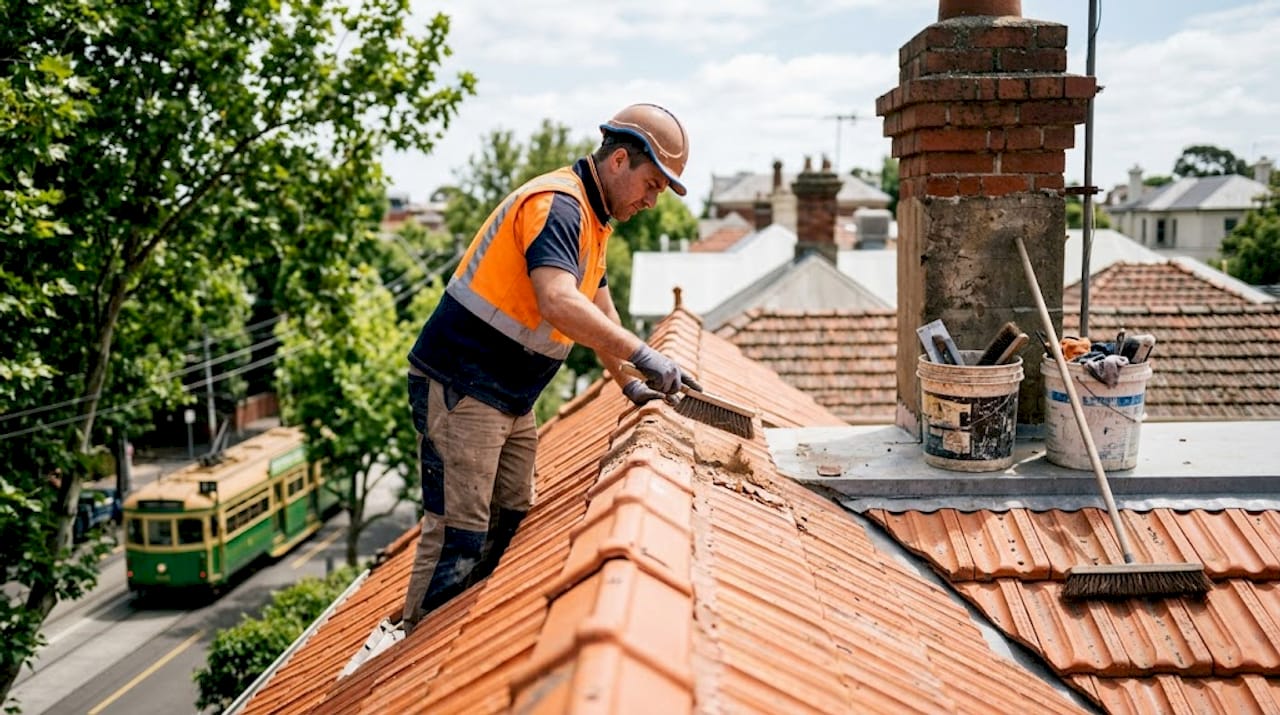
Consider a period home in inner Camberwell where the terracotta roof had not been touched in over fifteen years. After a full restoration programme including re-pointing, sealing, and a heritage-matched coating, the property presented noticeably better to the market and the owners reported a strong sale result above initial expectations.
How the roof restoration process works
Having seen the benefits, it is worth understanding what actually happens during a restoration so you know what to expect.
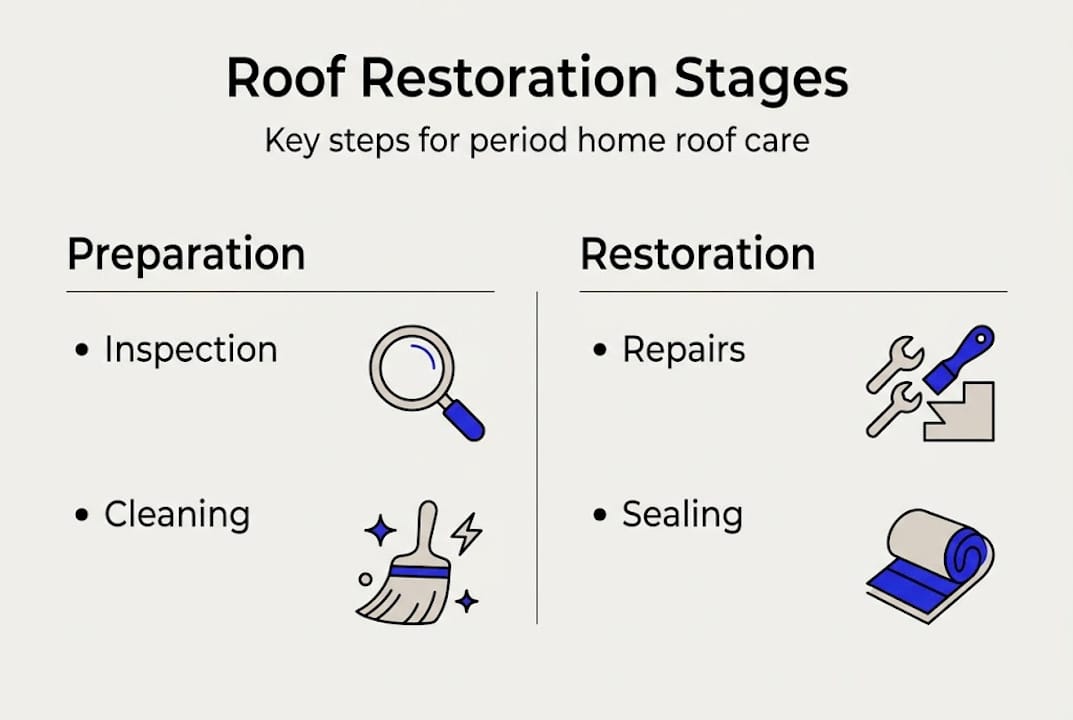
A thorough heritage roof cleaning tips resource confirms that roof restoration typically involves inspection, cleaning, repairing, re-bedding, re-pointing, and sealing as the core stages.
The main stages of roof restoration:
- Initial inspection — Assessment of tiles, ridge capping, gutters, valleys, and flashings to identify all issues before any work begins.
- High-pressure cleaning — Removal of biological growth, dirt, and loose material to prepare the surface properly.
- Tile and pointing repairs — Individual cracked or broken tiles are replaced. Ridge capping is re-bedded and re-pointed where needed.
- Priming — A suitable primer is applied to ensure the sealer or coating bonds correctly.
- Sealing and coating — The final coat is applied in a colour and finish appropriate to the home’s heritage profile.
- Final inspection and clean-up — The completed roof is reviewed and the site is left clean and tidy.
What to expect at each stage:
| Stage | Typical duration | What happens |
|---|---|---|
| Inspection | Half a day | Detailed assessment and written report |
| Cleaning | 1 to 2 days | High-pressure wash and surface prep |
| Repairs | 1 to 2 days | Tile, capping, and pointing work |
| Priming and coating | 1 to 2 days | Application of primer and final sealer |
| Final inspection | Half a day | Quality check and site clean |
Projects in Camberwell and Malvern East demonstrate how this structured approach delivers consistent, high-quality results on period properties with complex roof profiles.
Pro Tip: Ask your contractor for a written schedule before work begins. Transparent, step-by-step communication is a reliable indicator of a professional operation. If a contractor cannot clearly explain what they will do and when, that warrants caution.
Common mistakes with period home roofs and how to avoid them
Knowing the process is valuable. Knowing what can go wrong is equally important.
Period roofs have specific vulnerabilities that standard approaches can overlook. Terracotta tiles, slate, and original timber fascias all require careful handling and product selection. DIY work or improper materials can damage heritage features and reduce long-term value, which makes specialist knowledge non-negotiable.
Common mistakes to avoid:
- Using harsh chemical cleaners that strip protective coatings from aged terracotta or slate tiles
- Skipping the re-pointing stage and painting over cracked mortar, which allows water ingress to continue beneath a fresh surface
- Selecting the wrong colour or finish that clashes with the home’s original palette and can affect heritage overlay compliance
- Ignoring structural issues such as sagging gutters or failing flashings before applying a new coating
- Treating restoration as a cosmetic exercise rather than a structural programme, which leads to surface-level results that deteriorate quickly
Period homes in suburbs like Fitzroy, Northcote, and Thornbury often sit within heritage overlays, which means material and colour choices must meet local council guidelines. An experienced specialist will navigate these requirements as a matter of course.
Reviewing the roof repainting signs for your home will help you determine whether you are dealing with a cosmetic issue or something that requires full restoration. Widespread staining, crumbling mortar, and tile degradation across large sections of the roof are clear indicators that a simple repaint will not be sufficient.
Pro Tip: Always engage a specialist with demonstrated experience on heritage and period properties. Ask to see examples of completed work on similar homes and request a detailed written scope before any work starts.
Our take: Why roof restoration makes the biggest impact for period homes
Most homeowners approaching a period property renovation focus first on kitchens, bathrooms, or interior painting. These improvements are visible and gratifying. But in our experience working across Melbourne’s inner east and bayside suburbs, the roof is the element that quietly determines everything else.
A neglected roof does not just risk leaks. It can compromise eligibility for heritage grants, reduce resale appeal, and signal to buyers that the home has not been properly maintained. The restored homes value impact is most pronounced when the roof reflects the care given to the rest of the property.
Heritage homes carry irreplaceable architectural character. Restoration honours that character rather than erasing it. We consistently recommend that clients prioritise roof restoration before tackling interior overhauls. A sound, well-finished roof sets the foundation for durable results throughout the property, and it protects every improvement made beneath it. Interior work completed under a failing roof is simply money at risk.
Preserve your home’s legacy with expert roof and heritage restoration
If you are considering a restoration project on your Melbourne period home, working with specialists who understand heritage requirements from the outset will save you time, money, and frustration.

Sol Shine’s exterior painting experts bring refined craftsmanship and deep knowledge of period properties across Melbourne’s inner east, bayside, and inner north. Whether your project calls for a full roof restoration or a broader programme of heritage painting solutions, our team provides clear guidance, transparent scheduling, and quality outcomes. For restoration value insights tailored to your property and suburb, get in touch with Sol Shine to arrange a consultation.
Frequently asked questions
How long does roof restoration take for a Melbourne period home?
Most roof restorations take between three and seven days, though the restoration timeline varies with property size, existing condition, and weather during the programme.
Does roof restoration increase home value?
Yes. A restored roof markedly increases house value, particularly for heritage homes in high-demand Melbourne suburbs where presentation and condition carry significant weight.
Is roof restoration suitable for all roof types?
Restoration works well for terracotta, slate, and Colorbond roofs, but specialist expertise is required when working with heritage and period materials to avoid damage.
What signs indicate my roof needs restoration instead of simple repairs?
Widespread leaks, crumbling mortar, sagging sections, or large-scale tile deterioration all suggest restoration is needed. A thorough assessment of signs your home needs repainting can help clarify whether patch repairs are sufficient.
Can I stay in my home during roof restoration?
In most cases yes, though you should expect some noise and restricted access to certain areas of the property during the work.
Recommended
- Roof painting workflow for Melbourne heritage homes 2026
- Top roof cleaning tips for Melbourne heritage homes
- How restoration boosts value of historical homes over $2m
- Maximise your home’s value: top benefits of exterior cleaning
- Roof Maintenance Workflow to Prevent Storm Damage
- Why Regular Roof Maintenance Protects Your Texas Home


