
TL;DR:
- Exterior cleaning enhances curb appeal and preserves the original materials of Melbourne’s heritage homes.
- Soft washing is preferred over pressure washing to prevent damage to delicate Victorian and Edwardian surfaces.
- Regular maintenance can significantly reduce long-term repair costs and support property value.
Melbourne’s Victorian and Edwardian homes carry a character that newer builds simply cannot replicate. Ornate fretwork, weatherboard façades, rendered masonry, and heritage timber trim all contribute to that timeless appeal. But Melbourne’s climate, with its damp winters, humid summers, and persistent greenery, works against these surfaces every single day. Mould, algae, grime, and biological growth quietly accumulate, dulling the very features that make period homes so desirable. For homeowners in suburbs like Kew, Hawthorn, Brighton, and Camberwell, exterior cleaning is one of the most underused yet powerful tools for protecting property value and preserving authentic character.
Table of Contents
- Key benefits of exterior cleaning for period homes
- Surface-by-surface: What to clean in a Victorian or Edwardian home
- Soft washing vs pressure washing: What’s best for your heritage home?
- The long-term financial case: Value, preservation, and prevention
- The overlooked secret: Heritage value is built in the small details
- Protect and beautify your period home with expert help
- Frequently asked questions
Key Takeaways
| Point | Details |
|---|---|
| Boosts property value | A clean exterior creates an inviting first impression and can justify higher sale prices for Melbourne homes. |
| Protects delicate heritage features | Gentle, appropriate cleaning methods shield weatherboards, render, and period details from costly damage. |
| Prevents expensive repairs | Early, regular cleaning catches mould and damage before they escalate, saving thousands in restoration. |
| Improves family health | Thoroughly removing mould, dust, and airborne allergens keeps your home’s air fresher and healthier. |
| Requires tailored approaches | Not all surfaces suit high-pressure cleaning—soft washing is vital for timber, paint, and intricate trims. |
Key benefits of exterior cleaning for period homes
Exterior cleaning delivers results that go well beyond surface appearances. For period homes in Melbourne, where the materials are often original and irreplaceable, those results carry even greater weight.
Curb appeal is the immediate visual impression your home makes from the street. It shapes how buyers, visitors, and neighbours perceive your property before they step inside. Exterior cleaning enhances curb appeal and can increase perceived property value by creating strong first impressions and signalling consistent maintenance. In a competitive market like Melbourne’s inner east and bayside, that perception translates directly into buyer interest and sale price.
Beyond aesthetics, regular cleaning prevents serious structural damage. Mould, algae, and grime are not just unsightly. They actively break down paint films, cause timber to retain moisture, and accelerate the deterioration of render and masonry. Preventing surface damage from mould, algae, and grime in Melbourne’s climate prolongs exterior surface lifespan and avoids costly repairs. For a period home with original weatherboards or decorative render, that protection is invaluable.
There are also health considerations. Mould spores and allergens that accumulate on exterior surfaces can affect indoor air quality, particularly around windows, eaves, and vents. Removing these biological growths creates a healthier environment for your household.
Here is a summary of the core benefits that regular exterior cleaning delivers for period homes:
- Improved curb appeal: A clean façade immediately lifts the visual presence of your home and signals quality upkeep
- Extended surface longevity: Removing biological growth protects paint, timber, render, and masonry from premature deterioration
- Better air quality: Eliminating mould and allergens from exterior surfaces reduces health risks for occupants
- Reduced maintenance costs: Early intervention through cleaning prevents the need for expensive repairs or full restorations
- Stronger buyer interest: A well-maintained exterior attracts more prospective buyers and supports a higher asking price
These benefits are amplified in period homes because the original materials, old-growth timber, lime-based render, and heritage brickwork, are far more sensitive to neglect than modern equivalents. Learning how to boost value with exterior cleaning is one of the smartest investments a period homeowner can make, alongside understanding the importance of safeguarding heritage homes through consistent surface care.
Surface-by-surface: What to clean in a Victorian or Edwardian home
With those benefits in mind, let’s look at exactly what parts of a period home need special cleaning attention.
Not every surface on a Victorian or Edwardian home responds well to the same treatment. Each element has its own vulnerabilities, and understanding them helps you avoid causing damage in the process of trying to clean.
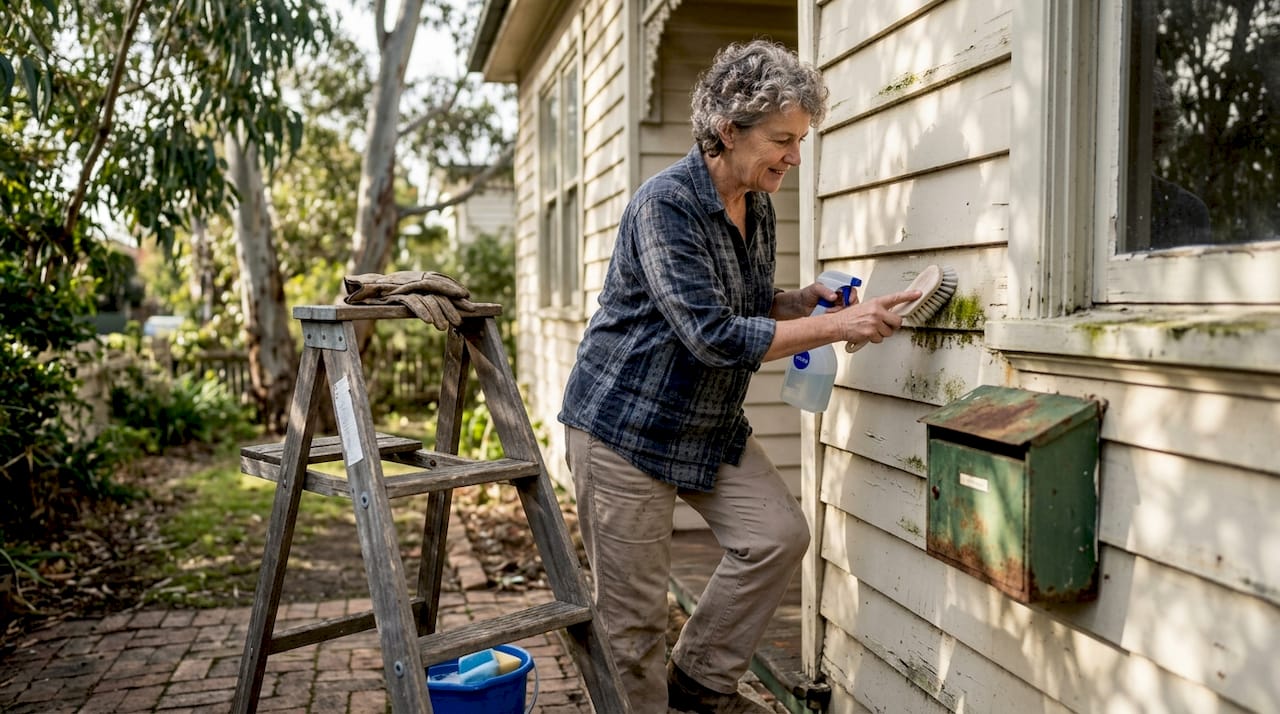
Weatherboards are among the most common cladding types on Melbourne period homes. They accumulate grime, mould, and algae in the gaps between boards, and old paint layers can be fragile. Harsh cleaning methods can lift paint or force water behind the boards, causing swelling and rot.
Brick and render require careful attention. Mortar joints on older brickwork can be soft and porous, making them susceptible to erosion under high pressure. Render, particularly lime-based render common in Edwardian homes, can crack or delaminate if treated aggressively.
Decorative timber trim, including fretwork, fascias, bargeboards, and verandah posts, is often the most visually distinctive feature of a period home. These elements are also the most vulnerable to moisture retention and biological growth.
Roof tiles and gutters collect moss, lichen, and leaf matter that can block drainage and cause water ingress. Terracotta tiles, common on Victorian and Edwardian roofs, are brittle and can crack under foot traffic or high-pressure washing.
Windows and frames accumulate grime around seals and sills. Timber-framed windows are particularly sensitive to moisture and need gentle cleaning to avoid swelling or paint damage.
The key methodology for period homes involves assessing surfaces first, then using soft washing to kill mould at the root for longer-lasting results without damaging fragile materials like weatherboards or terracotta tiles. Reviewing paint maintenance essentials before any cleaning programme begins is also strongly advised.
Pro Tip: Always test your chosen cleaning method in an inconspicuous spot first. A small patch behind a downpipe or under an eave will reveal how the surface responds before you commit to treating the full façade. This simple step can save you from costly mistakes on irreplaceable heritage materials. Understanding how protecting heritage surfaces works in practice will guide better decisions across every element of your home.
Soft washing vs pressure washing: What’s best for your heritage home?
Knowing what to clean, it’s crucial to choose the right method to protect heritage and avoid costly mistakes.
The two primary exterior cleaning methods are soft washing and pressure washing. They differ significantly in how they work and which surfaces they suit.
Soft washing uses low water pressure, typically below 500 to 1000 PSI, combined with eco-friendly cleaning solutions. The solutions do the heavy lifting, breaking down mould, algae, and grime at the root rather than blasting them away mechanically. This approach is far gentler on delicate surfaces and produces longer-lasting results because it kills biological growth rather than simply displacing it.
Pressure washing operates at 1500 to 4000 PSI and relies on the force of water to remove surface contaminants. It is highly effective on hard, durable surfaces but poses real risks to heritage materials. Soft washing is preferred for delicate period home surfaces like paint, render, timber, and roofs to avoid damage, while pressure washing suits hard surfaces like driveways and brick paths.
Here is a comparison to guide your decisions:
| Surface | Preferred method | Risk with pressure washing |
|---|---|---|
| Weatherboards | Soft wash | Paint stripping, water ingress |
| Render and masonry | Soft wash | Mortar erosion, cracking |
| Decorative timber trim | Soft wash | Splintering, paint lift |
| Terracotta roof tiles | Soft wash | Cracking, tile displacement |
| Brick pathways | Pressure wash | Low risk on hard surfaces |
| Driveways and concrete | Pressure wash | Minimal risk |
Choosing the wrong cleaning method on a heritage home can cause damage that costs far more to repair than the original cleaning job. For Victorian and Edwardian properties, professional assessment before any cleaning work begins is not optional—it is essential. Always seek professional advice when you are unsure which method suits a particular surface.
For homeowners managing painting maintenance tips alongside cleaning, understanding these distinctions ensures that freshly painted surfaces are not compromised by an inappropriate cleaning approach.
The long-term financial case: Value, preservation, and prevention
Making the best cleaning choices starts to make sense when you consider their impact on value over time.
Regular exterior cleaning is not simply a cosmetic exercise. It is a financial strategy. For period homes in Melbourne, where restoration costs can run into tens of thousands of dollars, early intervention through cleaning is one of the most cost-effective forms of property maintenance available.
The numbers make a compelling case. Heritage preservation cleaning with monitoring caught issues early, saving $19,000 versus a $1,200 repair in one documented case. That is the difference between a manageable maintenance cost and a significant, disruptive restoration project.
Here is a simplified view of costs avoided through proactive cleaning:
| Problem caught early | Cleaning or minor repair cost | Cost if left untreated |
|---|---|---|
| Mould on weatherboards | $300 to $600 | $4,000 to $12,000 (timber replacement) |
| Blocked gutters and moss | $200 to $400 | $2,000 to $8,000 (water damage repair) |
| Render surface staining | $400 to $800 | $5,000 to $15,000 (full render replacement) |
| Algae on roof tiles | $500 to $900 | $3,000 to $10,000 (tile replacement) |
Beyond avoiding repair bills, a clean and well-maintained exterior also supports a stronger sale outcome. Real estate agents and property experts consistently note that presentation drives buyer competition, and a clean façade signals that the home has been cared for throughout. The impact on property value is well recognised across the industry.
To maximise long-term savings and preservation outcomes, follow these steps:
- Schedule an annual exterior clean across all surfaces, with spot-cleaning after wet seasons
- Monitor high-risk areas such as shaded eaves, south-facing walls, and areas near established trees
- Book a professional inspection every two years to assess paint condition, render integrity, and timber health
- Act on minor issues immediately rather than waiting for visible deterioration to worsen
- Document your maintenance history as it adds credibility and value when selling
Understanding the value of preventative maintenance is what separates homeowners who manage costs well from those who face sudden, expensive restoration bills.
The overlooked secret: Heritage value is built in the small details
Many period homeowners pour significant investment into kitchen renovations or bathroom upgrades, and those projects absolutely have their place. But in our experience working on Victorian and Edwardian homes across Melbourne’s inner suburbs, it is the cumulative small neglects that quietly erode a property’s value and structural integrity.
Mould quietly growing under eaves. Dirt packed into decorative fretwork. Algae creeping across a rendered façade. None of these feel urgent in isolation. Together, they accelerate material breakdown and diminish the very character that makes a period home worth restoring in the first place.
The homeowners who preserve their properties most effectively treat exterior cleaning the way they treat repainting: as a planned, scheduled activity rather than a reactive response to visible damage. They understand that paint’s role in protecting Victorian homes is inseparable from the condition of the surfaces beneath it.
A gentle clean every twelve months, combined with a professional eye for early warning signs, is far more valuable than a major restoration every decade. The detail is where heritage value lives, and consistent care is what keeps it intact.
Protect and beautify your period home with expert help
If you’re ready to protect and reveal your home’s authentic charm, here’s how to start.
At Sol Shine, we understand that Melbourne’s heritage homes deserve a careful, considered approach. Our team brings specialist knowledge to every project, from gentle exterior cleaning assessments through to full exterior painting expertise and heritage painting services tailored to Victorian and Edwardian properties.

We work with homeowners across Kew, Hawthorn, Camberwell, Brighton, Malvern, and surrounding suburbs on projects where quality and heritage integrity matter. Whether your home needs a thorough exterior clean followed by a full repaint, or a broader heritage restoration that addresses render, timber, and architectural detail, we handle it all under one roof. Contact Sol Shine today to discuss your property and request a tailored quote.
Frequently asked questions
How often should I clean the exterior of my period home in Melbourne?
Aim for at least an annual exterior clean, with more frequent gentle spot-cleaning in damp or high-greenery areas. Regular cleaning prevents mould, algae, and grime from taking hold and causing costly surface damage over time.
Does exterior cleaning really impact property value when selling?
Yes, a clean exterior significantly improves first impressions and can justify a higher asking price or a faster sale. Exterior cleaning signals maintenance and creates the kind of curb appeal that attracts serious buyers in Melbourne’s competitive market.
Is pressure washing safe for all heritage home surfaces?
No, pressure washing can damage old mortar, fragile paint layers, and heritage timber. Soft washing is safer for delicate areas like weatherboards, render, and terracotta roof tiles commonly found on Victorian and Edwardian homes.
Can exterior cleaning help prevent long-term problems?
Yes, regular cleaning catches issues early and protects historic detail from irreversible deterioration. Early intervention has been shown to save homeowners tens of thousands of dollars compared to the cost of leaving problems unaddressed.


