
Most homeowners believe paint is simply decorative, yet choosing the wrong type can accelerate decay in Victorian and Edwardian properties by trapping moisture and causing rot. Paint serves as your heritage home’s primary defence against Melbourne’s weather extremes, protecting irreplaceable timber and masonry from moisture ingress and UV deterioration. This guide reveals how proper paint selection, meticulous surface preparation, and strategic maintenance schedules preserve your property’s structural integrity and value for decades to come.
Table of Contents
- Why Paint Is Essential For Maintaining Victorian And Edwardian Homes
- How Surface Preparation Affects Paint Durability And Prevents Failures
- Choosing The Right Paint Type: Breathable Vs Modern Coatings For Heritage Properties
- When And How To Schedule Repainting For Melbourne Heritage Homes
- Protect Your Heritage Home’s Value With Expert Painting Services
- Frequently Asked Questions
Key takeaways
| Point | Details |
|---|---|
| Paint as protection | Quality paint extends substrate life by 3 to 5 years when properly applied to heritage materials |
| Surface preparation | Poor preparation causes 70 to 80% of paint failures including peeling and blistering |
| Breathable coatings | Heritage-appropriate paints allow vapour transfer preventing moisture damage to masonry and timber |
| Strategic repainting | Targeted maintenance of south and west walls every 4 to 6 years reduces costs by 35 to 50% |
Why paint is essential for maintaining Victorian and Edwardian homes
Paint functions as far more than aesthetic enhancement for your heritage property. It creates a critical barrier protecting vulnerable building materials from Melbourne’s variable climate, where intense UV radiation alternates with heavy rainfall throughout the year. Without this protective layer, timber window frames, ornate mouldings, and decorative brickwork deteriorate rapidly through moisture penetration and solar damage.
Proper paint application extends substrate life by 3 to 5 years compared to untreated surfaces. This protective function becomes especially vital for Victorian and Edwardian homes built with materials never designed to withstand direct weather exposure indefinitely. Original builders relied on regular paint maintenance to preserve structural integrity, a practice many modern homeowners underestimate.
Consider these protective benefits paint delivers to heritage properties:
- Prevents moisture ingress that causes timber rot and masonry spalling
- Blocks UV radiation that degrades lignin in timber and fades decorative elements
- Seals micro-cracks before they expand into structural problems
- Creates a sacrificial layer that weathers instead of the substrate beneath
- Maintains thermal performance by protecting insulation and air barriers
Melbourne’s climate presents unique challenges for heritage homes. Western and southern elevations endure harsh afternoon sun combined with driving rain from cold fronts. Northern walls face prolonged UV exposure throughout summer months. Each orientation demands specific attention to paint maintenance essentials suited to its exposure patterns.
Neglecting paint maintenance accelerates deterioration exponentially rather than linearly. Once moisture penetrates timber or masonry, decay spreads internally where visual inspection cannot detect it. What begins as minor paint failure quickly escalates to costly structural repairs requiring replacement of irreplaceable heritage materials.
Professional heritage painters understand that paint protects the building fabric first and enhances appearance second. This fundamental principle guides every decision from surface preparation through final coating application.
The economic argument for regular paint maintenance proves compelling. Preventative repainting costs a fraction of structural repairs necessitated by paint failure. Victorian homes with consistent paint maintenance retain significantly higher market values and attract buyers seeking well-preserved heritage properties.
How surface preparation affects paint durability and prevents failures
Surface preparation determines paint longevity more than any other factor. Research confirms inadequate preparation causes 70 to 80% of failures including peeling, blistering, and premature breakdown. Yet many painting contractors rush this critical phase, prioritising speed over thoroughness and leaving homeowners with expensive remedial work within months.
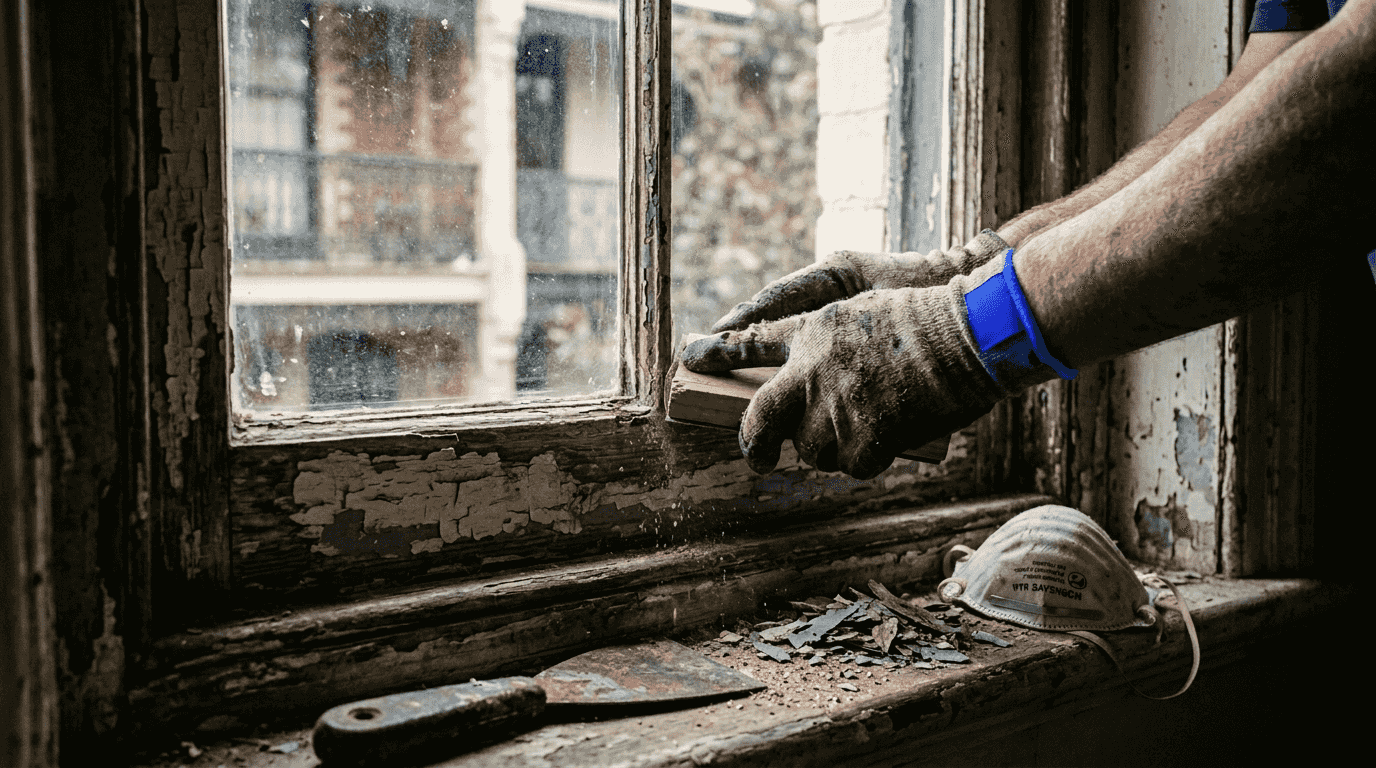
Heritage timber and masonry demand meticulous preparation protocols that modern substrates can tolerate skipping. Victorian-era materials respond differently to moisture, temperature fluctuations, and coating chemistry than contemporary building products. Shortcuts that might succeed on new construction guarantee failure on heritage properties.
Follow these essential preparation steps for lasting paint performance:
- Thoroughly scrape all loose, flaking, and deteriorated paint back to sound substrate
- Clean surfaces to remove dirt, mould, efflorescence, and chalky residues
- Test moisture content in timber and masonry before any primer application
- Repair damaged substrates including rotten timber sections and cracked render
- Apply appropriate primers matched to substrate type and existing paint system
- Allow adequate drying time between preparation stages and coating application
- Protect prepared surfaces from weather exposure until painting completes
Moisture management separates successful heritage painting from guaranteed failures. Painting over damp substrates traps moisture beneath impermeable coatings, creating ideal conditions for rot, mould, and paint delamination. Professional painters use moisture metres to verify timber contains less than 15% moisture content before proceeding.
Common exterior painting mistakes include inadequate scraping that leaves unstable paint layers, insufficient cleaning that prevents adhesion, and rushed timelines that compress drying periods. Each compromise undermines the entire paint system regardless of coating quality.
Pro tip: Schedule preparation work during Melbourne’s drier months from November through March. Stable weather conditions allow proper drying between stages and reduce moisture-related complications that plague winter painting projects.
Primer selection requires matching chemistry to both substrate and topcoat. Oil-based primers excel on bare timber and over old oil paints, while specialised masonry primers address alkalinity in lime render and brickwork. Using incorrect primers creates weak interfaces where paint systems fail prematurely.
The preparation investment pays dividends through extended paint life. Properly prepared surfaces support coating systems lasting 10 to 15 years on protected elevations. Rushed preparation often results in failure within 2 to 3 years, requiring complete removal and reapplication at far greater total cost.
Understanding the interior painting workflow reinforces how systematic preparation applies equally to internal heritage surfaces. The same principles of thorough cleaning, moisture control, and appropriate priming ensure internal paint systems perform reliably for years.
Choosing the right paint type: breathable vs modern coatings for heritage properties
Paint chemistry profoundly affects heritage building health. Modern non-breathable paints trap moisture inside walls causing rot and decay, while traditional breathable coatings allow vapour permeability protecting masonry and timber. This distinction becomes critical for Victorian and Edwardian homes built with lime mortar and solid masonry construction designed to breathe.
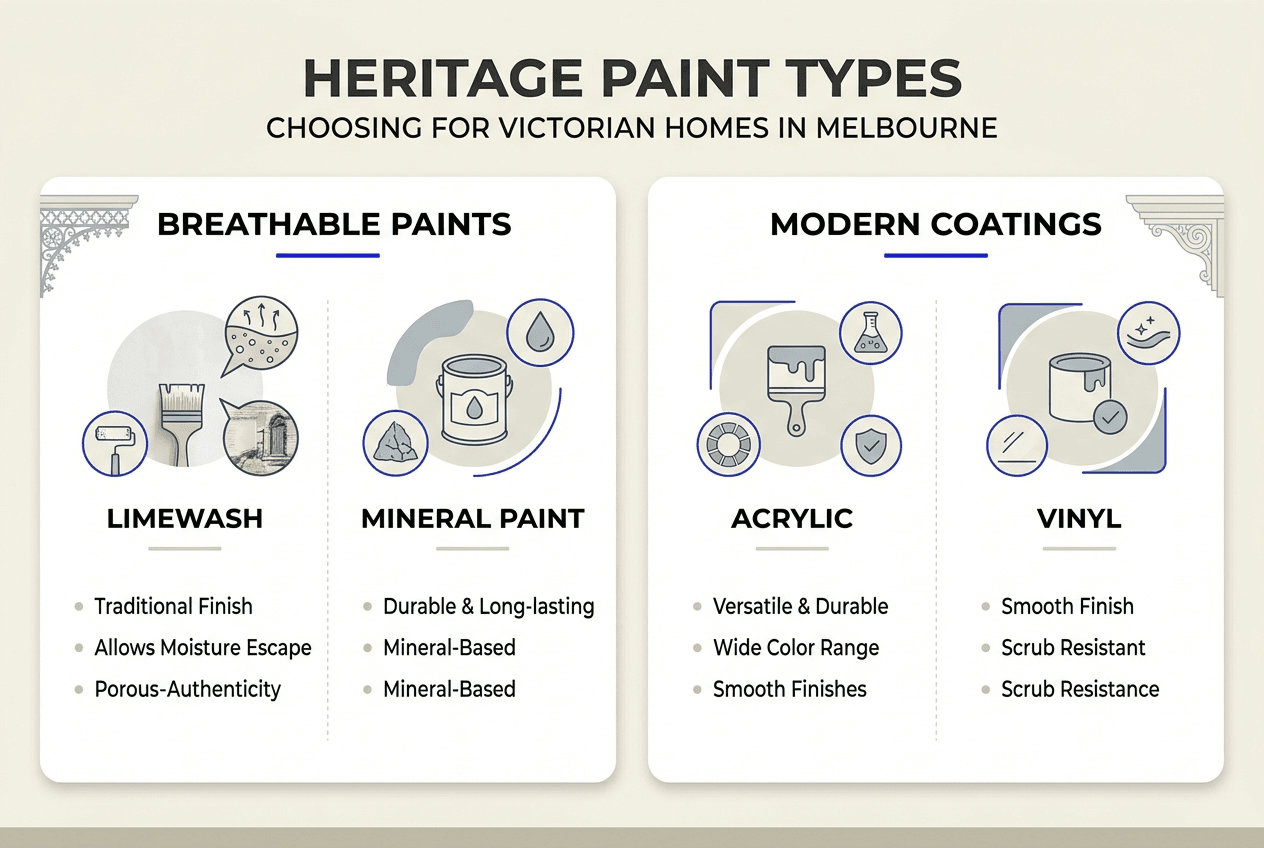
Contemporary acrylic and vinyl paints create impermeable barriers preventing moisture vapour from escaping building fabric. When applied to heritage materials, these coatings trap condensation and rising damp inside walls. Trapped moisture accelerates timber decay, causes render to spall, and creates conditions for dry rot establishment. The damage often remains hidden until structural failure occurs.
Breathable paint systems allow water vapour to pass through while still protecting against liquid water penetration. Mineral paints, traditional limewash, and quality linseed oil formulations achieve vapour permeability ratings below 0.05 metres, the threshold considered breathable for heritage applications. These coatings work with building physics rather than against them.
| Paint type | Vapour permeability | Heritage suitability | Typical lifespan |
|---|---|---|---|
| Modern acrylic gloss | Very low (non-breathable) | Poor for masonry/timber | 3 to 5 years |
| Mineral paint | High (SD <0.05m) | Excellent for all heritage | 10 to 15 years |
| Traditional limewash | Very high | Ideal for lime render/brick | 5 to 7 years |
| Linseed oil paint | Moderate to high | Excellent for timber | 8 to 12 years |
Historical evidence supports breathable coating superiority. Opaque linseed oil paints maintained properly lasted up to 100 years on heritage buildings across Europe. These traditional formulations flex with timber movement, resist UV degradation, and allow substrates to dry naturally after rain events.
Selecting premium paint versus standard products matters enormously for heritage homes. Budget acrylic paints optimised for modern substrates lack the flexibility, breathability, and durability heritage materials demand. Investing in appropriate coatings prevents the catastrophic damage cheap alternatives inflict.
Consider these factors when specifying paint for heritage properties:
- Substrate material (lime render, brick, timber species)
- Existing paint system chemistry and condition
- Exposure severity and orientation
- Decorative finish requirements and historical accuracy
- Maintenance capacity and repainting intervals
Modern technology offers heritage-appropriate options beyond traditional materials. Contemporary mineral paints combine breathability with enhanced durability and colour stability. These formulations suit homeowners seeking low-maintenance solutions without compromising building health.
The wrong paint choice creates cascading problems requiring expensive remediation. Removing failed non-breathable systems from heritage masonry demands specialist skills and equipment. Preventative painting using appropriate materials avoids these complications entirely.
Expert guidance helps navigate complex coating decisions. Resources like 7 tips for shutters on heritage homes demonstrate how traditional building elements require specialised approaches that modern construction practices often overlook.
When and how to schedule repainting for Melbourne heritage homes
Strategic maintenance scheduling maximises protection while minimising costs. Assessment-based methodology recommends repainting south and west elevations every 4 to 6 years while north-facing walls last 10 to 15 years, reducing total costs by 35 to 50% compared to whole-house repainting cycles. This targeted approach acknowledges that different elevations weather at dramatically different rates.
Melbourne’s climate creates distinct deterioration patterns across building orientations. Western walls endure intense afternoon sun combined with driving rain from weather systems moving across Port Phillip Bay. Southern elevations receive minimal direct sunlight but face persistent moisture from southerly weather patterns. Northern walls enjoy benign conditions with good solar drying and limited rain exposure.
| Orientation | Weather exposure | Repainting interval | Priority level |
|---|---|---|---|
| West | Severe (sun + rain) | 4 to 6 years | Highest |
| South | Moderate (moisture) | 6 to 8 years | High |
| East | Moderate (morning sun) | 8 to 10 years | Medium |
| North | Mild (good drying) | 10 to 15 years | Lower |
Implementing orientation-specific maintenance delivers substantial savings. Rather than repainting entire properties every 7 to 10 years, targeted intervention maintains protection where needed most. This approach requires systematic assessment but rewards homeowners with superior protection at reduced total expenditure.
Develop a practical maintenance schedule following these steps:
- Conduct annual visual inspections of all elevations noting paint condition
- Photograph problem areas to track deterioration progression over time
- Prioritise repainting based on exposure severity and observed condition
- Schedule work during optimal weather windows for proper application
- Maintain detailed records of painting dates, products used, and costs
- Adjust intervals based on actual performance rather than arbitrary timelines
Pro tip: Create a simple maintenance log recording inspection dates, observations, and completed work. This documentation helps identify patterns, justify maintenance expenditure, and provides valuable information for future owners.
Recognising key signs your home needs repainting prevents minor issues escalating into major problems. Chalking, fading, and minor cracking signal approaching maintenance needs. Peeling, blistering, and bare substrate exposure demand immediate attention before moisture damage occurs.
Timing interventions appropriately extends coating life significantly. Repainting at the first signs of breakdown, before substrate exposure occurs, allows simpler preparation and better adhesion. Delaying until extensive failure develops necessitates complete removal and intensive substrate repair.
Melbourne’s seasonal patterns influence optimal painting schedules. Summer and autumn provide stable conditions with lower humidity and reliable drying. Winter painting risks moisture complications and extended drying times. Spring weather variability creates unpredictable conditions that can compromise application quality.
Long-term planning enables budget allocation and contractor scheduling. Knowing western walls require attention every 4 to 6 years allows financial preparation and avoids emergency reactive maintenance. This proactive approach characterises successful heritage paint lasting 10 years or more through systematic care.
Assessment-based maintenance transforms painting from an unpredictable expense into manageable planned investment. Homeowners gain control over timing and costs while ensuring their heritage property receives optimal protection throughout its lifecycle.
Protect your heritage home’s value with expert painting services
Your Victorian or Edwardian home deserves specialist care that honours its heritage while providing modern protection standards. Sol Shine delivers premium heritage painting services throughout Melbourne’s inner east, bayside, and surrounding suburbs, combining traditional craftsmanship with contemporary durability.
Our heritage restoration specialists understand breathable coating systems, period-appropriate colour schemes, and the meticulous preparation heritage materials demand. We work exclusively on substantial projects where quality and longevity matter more than speed. Explore our completed exterior painting projects and interior painting portfolio to see the difference specialist expertise delivers. Contact us for a personalised assessment and maintenance plan tailored to your property’s unique needs.
Frequently asked questions
What paint types are best for heritage homes?
Breathable paints like limewash, mineral formulations, or traditional linseed oil-based coatings work best for heritage properties. These allow vapour transfer preventing moisture trapping that causes rot and decay. Modern acrylic gloss may suit metalwork but damages timber and masonry when breathability is compromised.
How often should I repaint different walls?
South and west-facing walls typically require repainting every 4 to 6 years due to harsh weather exposure. North-facing walls enjoy benign conditions allowing 10 to 15-year intervals between repainting. East-facing elevations fall between these extremes at 8 to 10 years depending on paint quality and local microclimate.
What causes most paint failures on heritage homes?
Poor surface preparation including inadequate scraping, insufficient priming, and painting over damp substrates causes 70 to 80% of failures like peeling and blistering. Addressing moisture content, removing unstable paint layers, and applying appropriate primers before coating prevents most problems. Rushed preparation guarantees premature failure regardless of paint quality.
Can I use modern paints on Victorian homes?
Modern non-breathable paints trap moisture inside heritage masonry and timber causing serious structural damage over time. While contemporary mineral paints designed for heritage applications work well, standard acrylic and vinyl formulations create impermeable barriers incompatible with traditional building materials. Always verify vapour permeability ratings before selecting products for heritage properties.


