
TL;DR:
- Victorian and Edwardian heritage buildings require careful exterior maintenance due to legal and structural responsibilities.
- Regular repainting every 7 to 10 years protects against weather damage and preserves historic character.
- Proper preparation and heritage-compliant materials are essential for durable, long-lasting exterior restorations.
Repainting the exterior of a body corporate building might seem like a straightforward maintenance task, but for owners of Victorian and Edwardian heritage properties in Melbourne, it carries real legal weight and financial consequence. Under Victorian law, an owners corporation is legally obligated to maintain and repair common property, including exterior walls and façades. Neglecting this responsibility doesn’t just result in peeling paint. It opens the door to structural deterioration, council compliance issues, and significant repair bills. This guide covers exactly what Melbourne body corporates need to know, with particular focus on the unique demands of heritage-listed properties.
Table of Contents
- Understanding body corporate responsibilities for exteriors
- Protection against weather: Why repainting is Melbourne’s best insurance
- Unique considerations for Victorian and Edwardian heritage properties
- How proper preparation and modern vs heritage paints impact outcomes
- Our take: What most Melbourne body corporates get wrong with heritage repaints
- Preserve your building with trusted heritage repaint experts
- Frequently asked questions
Key Takeaways
| Point | Details |
|---|---|
| Legal duty | Body corporates must maintain and repaint common exteriors to stay compliant in Victoria. |
| Weather protection | Timely repainting prevents costly rot, leaks, and façade deterioration in Melbourne’s climate. |
| Heritage essentials | Heritage homes need specific paints, permits, and care to preserve authenticity and value. |
| Importance of preparation | Expert preparation and correct paint choices are key to long-lasting, stunning results. |
Understanding body corporate responsibilities for exteriors
In Victoria, the term ‘body corporate’ is formally known as an owners corporation. If you own a lot within a subdivision, such as a unit in a heritage terrace or an apartment in a converted Edwardian building, you are automatically a member of the owners corporation. That membership comes with shared obligations, and exterior maintenance sits squarely among them.
The owners corporation is responsible for the repair and upkeep of all common property. In practice, this typically includes:
- Exterior walls, render, and masonry
- Shared rooflines, gutters, and downpipes
- Fences, gates, and shared pathways
- Windows and doors that form part of the external envelope
- Heritage timber trim and verandah elements shared between lots
This isn’t just a courtesy arrangement. Failure to maintain common property can result in orders from the Victorian Civil and Administrative Tribunal (VCAT) and expose lot owners to liability if deterioration causes damage. Understanding when repainting becomes urgent is part of responsible ownership.
For heritage properties specifically, the stakes are higher. A Victorian terrace in Fitzroy or a converted Edwardian block in Hawthorn isn’t just real estate. It’s a building with planning overlays, design guidelines, and, in many cases, obligations set by local council heritage schedules. Maintenance must be carried out in ways that respect the character and fabric of the building.
“An owners corporation that defers exterior maintenance risks not just aesthetic decline, but genuine legal exposure and rising repair costs that compound over time.”
Pro Tip: Review your owners corporation’s maintenance plan annually. If exterior repainting hasn’t been scheduled within the last seven years, it’s worth flagging at the next AGM. You’ll find useful context in body corporate maintenance guides to help structure that conversation.
Protection against weather: Why repainting is Melbourne’s best insurance
Melbourne’s climate is famously unpredictable. Four seasons in one day isn’t just a saying; it reflects the genuine stress that UV radiation, heavy rainfall, frost, and humidity place on exterior surfaces year-round. For heritage buildings with original render, exposed timber, and decorative brickwork, that stress accumulates rapidly when protective coatings are left to deteriorate.
Repainting exteriors protects against UV damage, moisture ingress, rot, and the kind of structural deterioration that turns a modest maintenance cost into an expensive remediation project. Paint acts as the primary barrier between your building’s substrate and everything Melbourne’s weather throws at it.
Here’s how common threats affect different heritage exterior materials:
| Surface type | Primary weather risk | Consequence of neglect |
|---|---|---|
| Timber weatherboards | Moisture and UV exposure | Cracking, rot, structural failure |
| Lime render | Water ingress and frost | Spalling, delamination, internal leaks |
| Face brick | Efflorescence and damp | Salt damage, mortar erosion |
| Decorative timber trim | UV and rain cycling | Warping, splitting, loss of detail |
Once paint begins to fail, water finds a way in. For heritage timber, that means rot sets in quickly. For render façades, peeling paint and cracking allows moisture to bypass the wall’s weather barrier entirely, leading to internal dampness, staining, and ultimately structural compromise.
Repainting on a 7 to 10 year cycle is widely regarded as the practical standard for Melbourne conditions, though factors like aspect (north-facing facades receive more UV), tree coverage, and coating quality all influence the actual interval. Heritage properties with breathable lime render may need closer attention than modern painted surfaces.
Pro Tip: Don’t wait for paint to peel before acting. Checking for chalking (a chalky residue left on your hand when you wipe the surface) is an early indicator that the coating has reached the end of its protective life. Reviewing paint protection insights can help you plan before problems escalate.
Unique considerations for Victorian and Edwardian heritage properties
Modern apartment blocks and historical terraces aren’t the same, especially when heritage rules come into play. If your building sits within a Heritage Overlay (HO) under the relevant planning scheme, repainting is not simply a matter of choosing a colour and calling a painter.
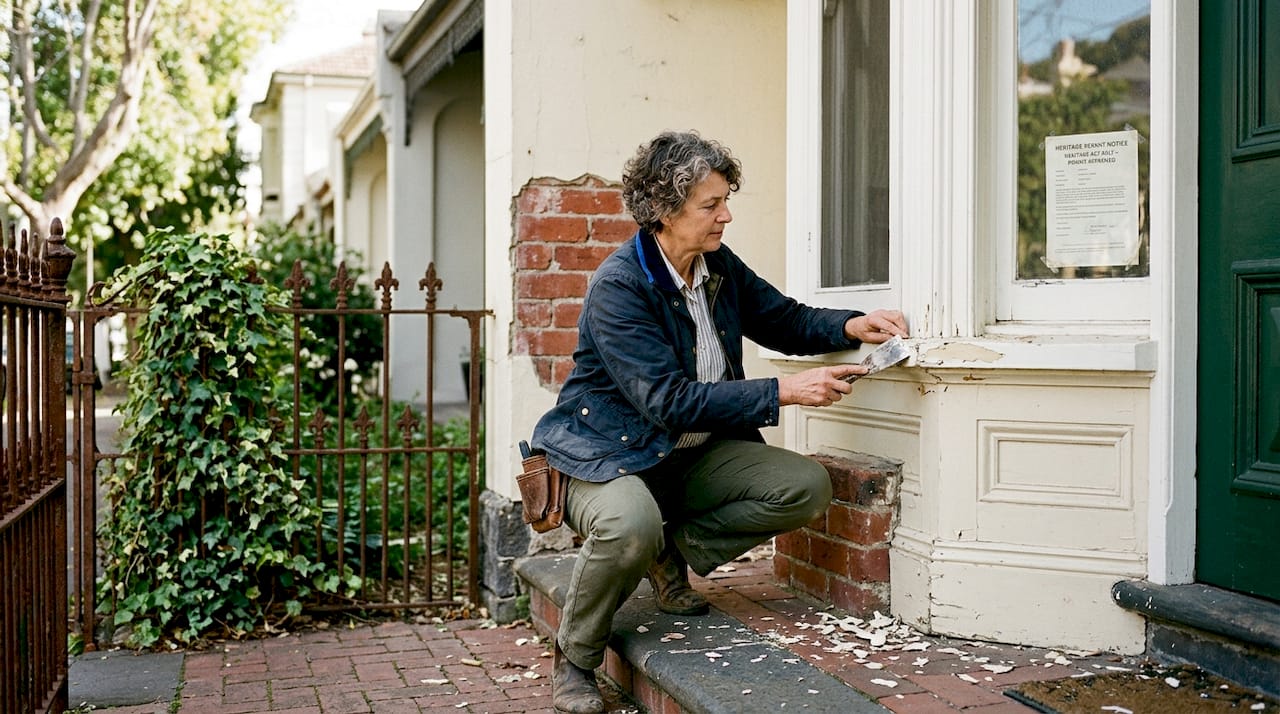
Planning permits are often required for colour changes or for painting surfaces that have not previously been painted, such as exposed brick or unpainted render. This applies even when the building isn’t individually listed, provided it sits within a heritage precinct.
Here’s a comparison of typical requirements for heritage versus non-heritage exteriors:
| Consideration | Non-heritage building | Heritage-listed building |
|---|---|---|
| Colour change | Owner’s discretion | May require permit |
| Painting bare brick | Generally permitted | Likely requires permit |
| Paint type | Broad flexibility | Breathable, heritage palette preferred |
| Surface preparation | Standard methods | No sandblasting; gentle methods only |
| Council involvement | Rare | Common for significant changes |
Heritage guidelines specify that external paint controls apply in some HO schedules. Breathable paints and heritage palettes are required, and practices such as sandblasting are specifically discouraged because they damage the original fabric of the building.
Common mistakes that body corporates and owners make include:
- Assuming any paint will do because it looks good at the hardware store
- Skipping the permit check because the previous coat was the same colour
- Using acrylic sealant-type coatings over breathable lime render, trapping moisture
- Engaging painters without heritage experience who default to modern prep methods
- Neglecting to document paint colours for future reference and council compliance
For a detailed walkthrough of appropriate products and methods, the heritage paint guide offers practical guidance tailored to Melbourne’s Victorian and Edwardian building stock. Those planning a full programme of works will also benefit from reviewing heritage painting steps and heritage coatings tips before engaging a contractor.
How proper preparation and modern vs heritage paints impact outcomes
Rules around heritage and painting are one thing, but what separates an enduring paint job from a quick patch? The answer, consistently, is preparation. Skilled painters often say that preparation is 80% of the job, and for heritage exteriors, that figure is arguably conservative.
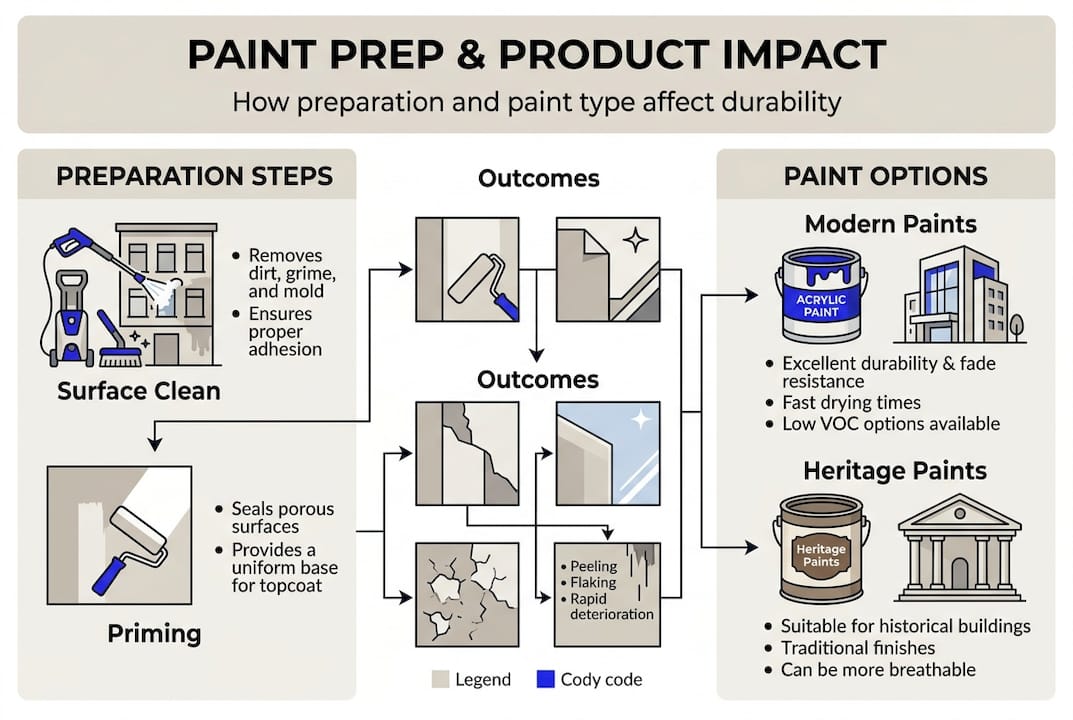
Proper preparation involves scraping and sanding old paint, repairing rot and cracks, using breathable coatings for heritage timber and render, and selecting low-VOC, UV-resistant products from trusted brands like Dulux or Haymes. Skipping any of these steps shortens the life of the coating significantly.
A practical preparation checklist for heritage exteriors includes:
- Inspect all surfaces for rot, cracks, and loose render before any paint is applied
- Repair structural defects fully before priming, not after
- Use flexible fillers compatible with the original substrate
- Apply a suitable primer that bonds to the existing surface and supports the topcoat
- Choose breathable topcoats for lime render and heritage timber to prevent moisture entrapment
- Allow adequate drying time between coats, particularly in cooler Melbourne conditions
“A paint job applied over a compromised substrate will fail within two or three seasons, regardless of how premium the product is. The substrate must be healthy before any coating goes on.”
When it comes to paint selection, the contrast between modern and heritage priorities is notable. Modern coatings such as water-repellent membrane products last longer and offer self-cleaning properties, which appeals to body corporates focused on reduced maintenance intervals. However, heritage properties prioritise breathable, authentic materials over high-performance modern coatings, because sealing a heritage substrate incorrectly causes more damage than the paint prevents.
Body corporates managing heritage properties should establish a formal inspection schedule, typically every two years, to assess coating condition, check for early signs of cracking or moisture, and plan proactively. Resources on ongoing painting maintenance and long-lasting paint choices provide practical frameworks for building this into your maintenance programme.
Our take: What most Melbourne body corporates get wrong with heritage repaints
Having worked across Kew, Hawthorn, Fitzroy, and Brighton on significant heritage repaints, we’ve observed a consistent pattern. The projects that deliver results lasting a decade or more share one thing in common: the owners prioritised substrate health, not just surface appearance.
The most common mistake is treating a heritage repaint as an opportunity to refresh aesthetics while cutting corners on preparation and compliance. Cheap quotes often reflect shortcuts, whether that’s inadequate prep, non-compliant paint selection, or failure to check Heritage Overlay requirements before brushing a single stroke. These decisions don’t look problematic on day one. They look expensive by year three.
Body corporates that invest in proper heritage repaints, informed by local planning knowledge and authentic material choices, consistently see better long-term outcomes. The exterior painting approach that protects a building over ten years is never about finding the fastest way to apply paint. It’s about understanding what the building needs and executing that with care.
Preserve your building with trusted heritage repaint experts
If you want a repaint that genuinely protects and uplifts your property’s value, expert help pays off. Sol Shine works directly with body corporates and homeowners managing Victorian and Edwardian properties across Melbourne’s inner east, bayside, and surrounding suburbs.
Our team brings together painting expertise and heritage restoration knowledge under one roof, covering everything from render repair and timber restoration to full exterior repaints. Browse our exterior painting portfolio to see real heritage results, or learn more about what our Melbourne heritage painting specialists deliver on projects of this scale. When you’re ready to discuss your building’s specific needs, speak to our team for a straightforward, knowledgeable conversation.
Frequently asked questions
How often should body corporate exteriors be repainted?
Every 7 to 10 years is the typical cycle for Melbourne conditions, though annual inspections help catch early deterioration between full repaints.
Can we change the paint colour on a heritage property?
Planning permits are often required for colour changes or for painting previously unpainted surfaces such as brick or render on heritage-listed buildings.
What happens if painting is neglected?
Ignoring repainting allows water, UV, and pests to degrade timber and render, and prevents costly structural deterioration from being caught early, turning manageable maintenance into expensive remediation.
Is scaffolding necessary for all repainting projects?
Multi-storey and high-rise heritage buildings generally require scaffolding or elevated work platforms; scaffolding and EWP are standard for safe, high-quality results on these properties.


