
Most heritage homeowners underestimate how Melbourne’s harsh UV exposure and humidity rapidly degrade standard paints on Victorian and Edwardian timber, leading to expensive repaints every 5 years. Premium paints engineered for heritage substrates extend this cycle to 15-20 years while preserving authentic period colours and textures. The right paint choice protects your architectural investment and reduces lifetime maintenance costs dramatically.
Table of Contents
- Introduction: The Unique Challenges Of Painting Heritage Homes
- Understanding Premium Paints: Composition And Advantages
- Durability And Protection Benefits Specific To Melbourne Heritage Homes
- Aesthetic And Historical Accuracy: Preserving Heritage Authenticity
- Cost-Benefit Analysis: Long-Term Value Of Investing In Premium Paints
- Common Misconceptions About Premium Paints In Heritage Restorations
- Practical Guidance: Selecting And Applying Premium Paints For Your Heritage Home
- Summary And Next Steps: Maximising Your Heritage Renovation Investment
- Discover Premium Heritage Painting Solutions From Sol Shine
- Frequently Asked Questions
Key takeaways
| Point | Details |
|---|---|
| Durability advantage | Premium paints reduce degradation by 40% on heritage timber compared to standard options |
| Extended repaint cycles | Quality materials stretch maintenance intervals from 5-7 years to 15-20 years |
| Heritage authenticity | Historically accurate pigments preserve Victorian and Edwardian colour fidelity |
| Climate protection | Formulations resist Melbourne’s UV intensity, humidity, and temperature fluctuations |
| Long-term value | Higher upfront costs deliver net savings through reduced maintenance frequency |
Introduction: the unique challenges of painting heritage homes
Victorian and Edwardian homes in Melbourne showcase intricate architectural details like ornate fretwork, timber weatherboards, decorative cornices, and original sash windows. These features demand careful material selection. Melbourne’s climate adds another layer of complexity. Intense UV radiation, seasonal humidity swings, and temperature extremes stress paint systems relentlessly. Standard paints fail quickly under these conditions.
Choosing inappropriate materials leads to visible damage within months. Peeling, blistering, and colour fade compromise both protection and aesthetics. Your heritage home loses its character while repair costs mount. Premium paints formulated for heritage substrates address these challenges directly.
Key climate and architectural factors include:
- High UV exposure accelerating pigment breakdown and surface chalking
- Humidity fluctuations causing moisture penetration in timber and render
- Temperature cycles expanding and contracting substrates, stressing paint films
- Heritage materials like aged timber requiring breathable, flexible coatings
- Original architectural details needing careful preparation and compatible products
These stressors make paint selection critical. The wrong choice damages irreplaceable heritage fabric. Protective coatings must work with your home’s original materials, not against them. Projects in areas like Camberwell heritage properties demonstrate how proper material selection preserves architectural integrity. Understanding benefits of repainting interiors helps homeowners appreciate the full scope of paint’s protective role.
Understanding premium paints: composition and advantages
Premium heritage paints differ fundamentally from standard products through superior formulation. Premium heritage paints use higher-quality binders, pigments, and advanced additives offering superior protection and moisture management. These technical specifications translate directly into performance.
Binders form the paint film’s structural backbone. Premium products use 100% acrylic or modified oil-based binders that remain flexible across temperature ranges. This flexibility accommodates substrate movement without cracking. Pigments in premium paints resist UV degradation far longer than standard alternatives. Titanium dioxide and iron oxide formulations maintain colour intensity for decades.
Additive packages enhance protection:
- UV absorbers and stabilisers prevent photodegradation of both pigment and binder
- Biocides inhibit mould and mildew growth in humid conditions
- Water-repellent additives shed moisture while allowing vapour transmission
- Adhesion promoters bond securely to aged timber and masonry surfaces
- Flexibility enhancers maintain film integrity during substrate movement
Moisture vapour permeability matters enormously for heritage substrates. Old timber and lime-based renders need to breathe. Trapped moisture causes rot, spalling, and structural damage. Premium paints balance weather protection with breathability. This protects your home’s fabric while preventing paint failure from moisture pressure.
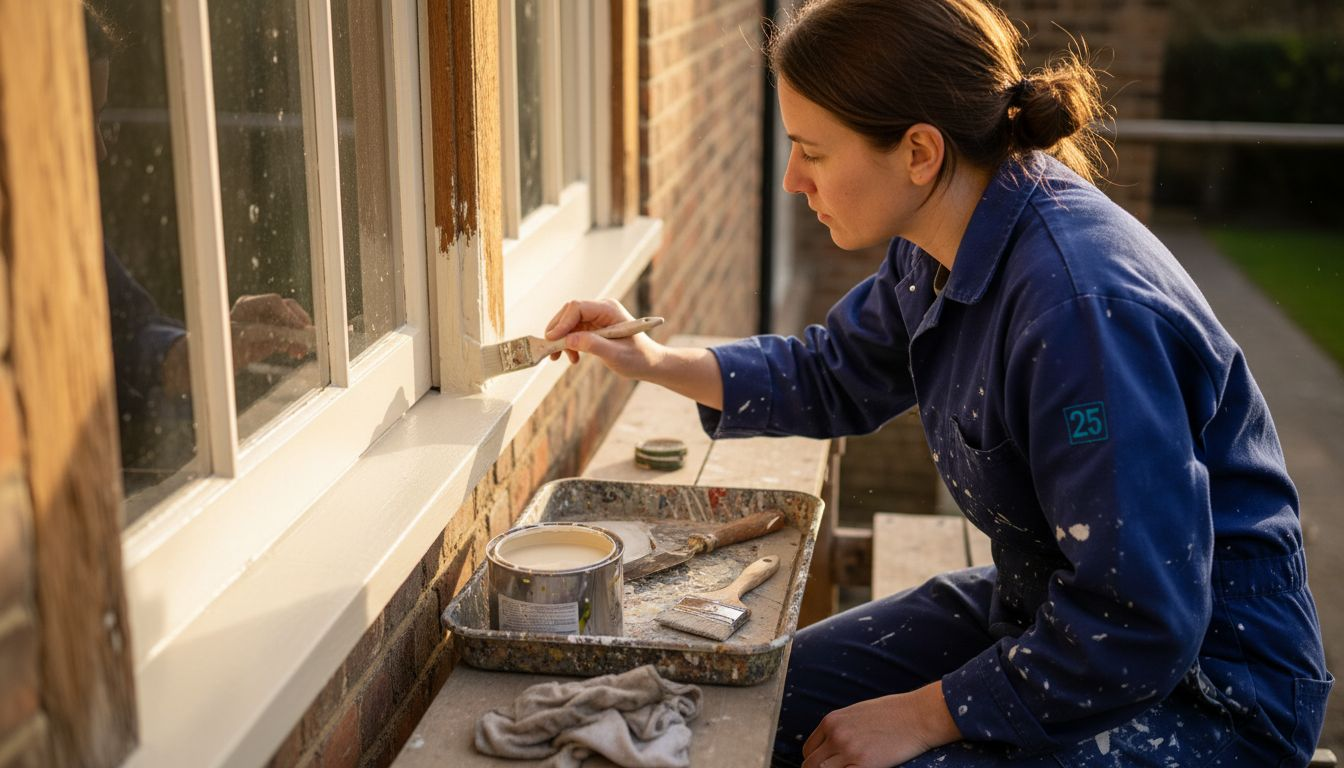
These formulation advantages explain why experienced restorers specify premium materials. The technical gap between standard and premium products is substantial. Investing in quality paint means investing in proper heritage protection. Resources like this heritage paint longevity guide detail specific product characteristics worth seeking.
Durability and protection benefits specific to Melbourne heritage homes
Melbourne’s intense sunlight tests paint durability constantly. Premium paints extend repaint intervals to 15-20 years and reduce degradation rates by 40% compared to standard paints on heritage timber. This performance difference stems from engineered UV resistance and moisture management.
UV protection prevents the chalking and fade that plague standard paints within 3 years. Premium formulations maintain gloss retention above 80% after 10 years exposure. Standard products drop below 50% within 5 years. Colour stability remains equally impressive, with minimal perceptible fade over a decade.
| Protection Aspect | Standard Paint | Premium Paint |
|---|---|---|
| Repaint cycle | 5-7 years | 15-20 years |
| UV degradation rate | 100% baseline | 40% of baseline |
| Gloss retention (10 years) | Under 50% | Above 80% |
| Moisture resistance | Moderate | Excellent |
| Substrate compatibility | Limited | Engineered for heritage |
Water resistance protects timber weatherboards and window frames from Melbourne’s humidity. Premium paints shed rain effectively while allowing internal moisture to escape. This prevents the trapped moisture that causes timber rot and paint blistering. Biocide packages inhibit mould growth in shaded areas where moisture lingers.
Extended longevity delivers tangible benefits:
- Reduced scaffolding and access costs over your ownership period
- Minimal disruption from frequent repainting projects
- Preserved heritage fabric through fewer preparation cycles
- Lower lifetime material and labour expenditure
- Maintained property value through consistent appearance
Pro Tip: Match your paint system’s permeability rating to your substrate type. Timber weatherboards need highly breathable coatings, while masonry can tolerate less permeable formulations. Your painter should measure moisture content before coating application.
Proper surface preparation remains essential even with premium materials. Quality paint cannot compensate for poor preparation. Following paint maintenance essentials between repaints maximises your investment. Clean surfaces annually and address minor damage promptly to extend coating life further.
Aesthetic and historical accuracy: preserving heritage authenticity
Heritage value depends heavily on visual authenticity. Premium heritage paints contain historically accurate pigments essential for faithful colour retention and texture preservation. Period-appropriate colours distinguish Victorian and Edwardian homes from generic renovations. Premium products deliver this authenticity.
Victorian colour palettes featured deep, rich tones achieved with natural earth pigments. Edwardian schemes introduced lighter, more varied hues. Premium paint manufacturers research historical formulations to recreate authentic colours. Iron oxides, chromium compounds, and carbon blacks provide genuine period tones impossible to match with modern synthetic pigments alone.
Colour retention over 15-20 years preserves your home’s character without frequent touch-ups. Standard paints fade noticeably within 5 years, forcing early repaints or accepting a weathered appearance. Premium formulations maintain colour intensity through superior UV-stable pigments. Your heritage palette looks fresh decades longer.
Finish durability matters equally:
- Traditional low-sheen finishes resist dirt accumulation while maintaining subtle lustre
- Matte formulations recreate historical lime wash appearances without chalking
- Eggshell sheens provide easy cleaning while respecting period aesthetics
- Premium products maintain consistent sheen levels as they age
Texture preservation protects architectural details. Quality paints flow into ornate mouldings and fretwork without obscuring detail. They build gradually in thin coats rather than filling delicate profiles. This maintains the crisp definition that characterises well-maintained heritage homes.
Authentic aesthetics directly impact property value. Buyers recognise and pay premiums for faithfully restored heritage homes. Poor paint choices signal neglect or inexperience. Premium materials demonstrate proper stewardship of architectural heritage. Engaging heritage painting services ensures colour and finish selections align with your home’s period and architectural style.
Cost-benefit analysis: long-term value of investing in premium paints
Premium paints cost 40-60% more upfront than standard products. This price difference disappears when viewed across ownership timeframes. Extended repaint intervals and superior protection deliver substantial net savings. Understanding the full financial picture helps justify premium material selection.
Repaint cycle comparison reveals the value proposition clearly:
| Factor | Standard Paint | Premium Paint |
|---|---|---|
| Initial cost per square metre | $15-20 | $25-32 |
| Expected lifespan | 5-7 years | 15-20 years |
| Repaints over 20 years | 3 cycles | 1 cycle |
| Total material cost (20 years) | $45-60/m² | $25-32/m² |
| Labour cost multiplier | 3x | 1x |
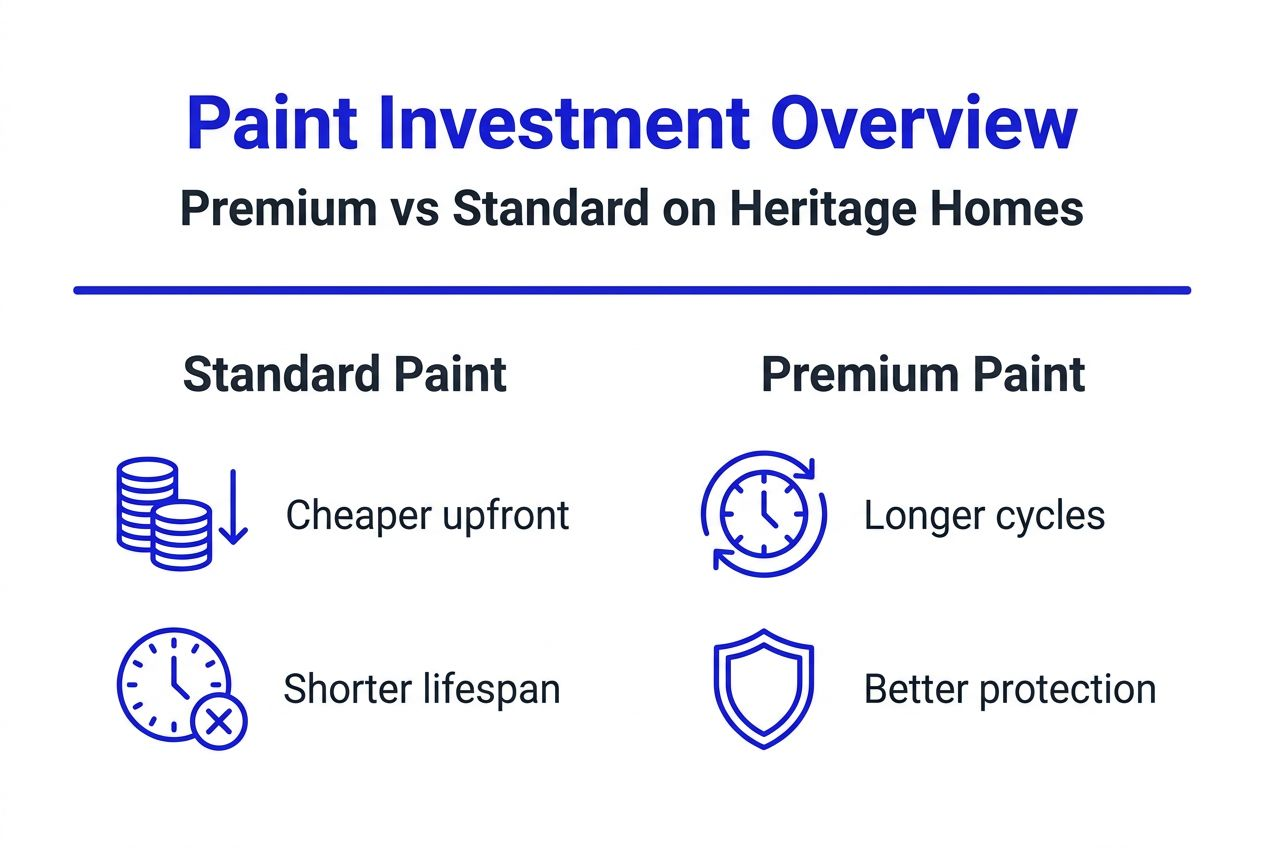
Labour represents 60-70% of total painting costs. Reducing repaint frequency from 3 cycles to 1 over 20 years saves thousands on scaffolding, preparation, and application labour. A typical Victorian home exterior costing $35,000 with premium paint would cost $85,000-100,000 for three standard paint cycles over the same period.
Additional financial benefits include:
- Reduced interim maintenance and touch-up costs
- Avoided damage repair from premature paint failure
- Lower disruption costs to household activities
- Maintained property marketability through consistent appearance
- Reduced environmental impact from fewer painting cycles
Coverage efficiency matters too. Premium paints often achieve specified film thickness in fewer coats. Better hiding power and solids content mean less material waste. While cost per litre appears higher, cost per square metre of finished surface often equals or beats standard products.
Pro Tip: Calculate lifetime paint investment by multiplying initial cost by expected repaint cycles over 30 years. Include scaffolding, preparation labour, and disposal costs in your comparison. Premium materials typically cost 40-50% less over three decades.
Property value impact extends beyond cost savings. Well-maintained heritage homes command significant premiums in Melbourne’s inner suburbs. Authentic restoration signals quality throughout the property. Consulting heritage painting services about premium material selection positions your home advantageously for future sale or refinancing.
Common misconceptions about premium paints in heritage restorations
Several myths discourage homeowners from selecting appropriate premium materials. Correcting these misconceptions helps you make informed decisions about heritage paint specification.
-
Myth: All paints provide similar protection levels. Reality: Degradation rates differ dramatically. Standard paints on heritage timber degrade at baseline rates while premium formulations reduce degradation by 40%. This translates to visible difference in appearance and substrate protection within 3-5 years.
-
Myth: Premium paints just cost more without tangible benefits. Reality: Extended repaint intervals from 5-7 years to 15-20 years deliver substantial lifetime savings. Initial cost premiums of 40-60% disappear when labour and disruption costs are included. Total ownership costs favour premium materials decisively.
-
Myth: Aesthetic results do not differ materially between products. Reality: Premium pigments and binders maintain colour intensity and finish quality far longer. Standard paints fade noticeably within 5 years while premium formulations retain 80%+ of original appearance after 10 years. Heritage authenticity depends on this durability.
-
Myth: Any experienced painter can achieve equivalent results with standard materials. Reality: Premium paints require proper application technique but offer superior performance regardless of skill level. However, heritage projects demand painters familiar with period-appropriate preparation and coating systems. Product quality and application expertise both matter.
-
Myth: Modern paint technology makes all products essentially equivalent. Reality: Formulation quality varies enormously across price points. Premium products invest in research, testing, and superior raw materials. Standard paints meet minimum performance standards but cannot match premium durability or heritage suitability.
Choosing specialist heritage painters familiar with premium product application ensures you receive full performance benefits. Proper surface preparation, moisture testing, and application timing matter as much as material selection. Experience with heritage substrates and coating systems separates specialists from general painters.
Practical guidance: selecting and applying premium paints for your heritage home
Selecting appropriate premium paints requires evaluating several substrate and environmental factors. Heritage homes present unique challenges that generic paint specifications cannot address adequately.
Selection criteria for premium heritage paints:
- Breathability ratings appropriate for your substrate type (timber, masonry, render)
- UV resistance formulated for Melbourne’s solar intensity levels
- Flexibility to accommodate substrate movement without cracking
- Biocide packages for mould resistance in shaded or humid areas
- Historically accurate colour ranges matching Victorian or Edwardian palettes
- Manufacturer documentation of heritage project testing and performance
Substrate matching ensures paint compatibility. Timber weatherboards need highly flexible, breathable coatings with excellent adhesion to aged wood. Rendered surfaces require alkali-resistant primers and permeable topcoats. Original brickwork benefits from mineral-based paints that allow moisture vapour transmission. Mismatched systems fail prematurely regardless of individual product quality.
Application timing significantly impacts performance. Melbourne’s climate offers optimal painting windows in autumn and spring when temperatures remain moderate and humidity stays manageable. Avoid painting during summer heat or winter dampness. Surface temperatures between 10-30°C and relative humidity below 85% deliver best results.
Pro Tip: Schedule heritage painting during stable weather periods with 48-72 hours of dry conditions forecast. Surface moisture content should read below 15% for timber and below 6% for masonry before coating application. Professional moisture meters provide accurate readings.
Surface preparation determines long-term success:
- Remove all loose or failing paint through careful scraping and sanding
- Repair damaged timber, render, or masonry before coating
- Clean surfaces thoroughly to remove dirt, mould, and chalked paint residue
- Prime bare substrates with appropriate heritage-compatible primers
- Allow adequate drying time between preparation and coating stages
Engaging experienced heritage painting services ensures proper material selection and application technique. Specialists understand substrate assessment, moisture management, and period-appropriate finish systems. They specify products proven on heritage projects rather than relying on general-purpose materials.
Consulting specialist heritage painters early in renovation planning helps establish realistic budgets and timelines. Their experience with premium products and heritage substrates prevents costly mistakes. They can recommend specific product lines with documented heritage performance.
Summary and next steps: maximising your heritage renovation investment
Premium paint materials deliver measurable advantages for Melbourne heritage home restorations. Superior durability extends repaint intervals to 15-20 years while reducing degradation rates by 40%. This protects irreplaceable architectural fabric and delivers lifetime cost savings despite higher upfront investment.
Historically accurate pigments preserve Victorian and Edwardian authenticity. Colour retention and finish durability maintain your home’s character for decades. Climate-specific formulations resist Melbourne’s UV intensity, humidity, and temperature extremes better than standard alternatives. These technical advantages translate directly into better heritage preservation.
Key benefits of premium paint investment:
- Extended protection reducing maintenance frequency and lifetime costs
- Preserved heritage authenticity through accurate colours and finishes
- Superior climate resistance protecting substrate integrity
- Enhanced property value through professional restoration quality
- Reduced environmental impact from fewer repaint cycles
Professional assessment ensures appropriate material selection for your specific heritage home. Substrate condition, architectural period, and environmental exposure all influence optimal paint system specification. Experienced heritage painting services provide this expertise, protecting your investment through informed material choices and proper application technique.
Discover premium heritage painting solutions from Sol Shine
Your Victorian or Edwardian home deserves materials and expertise that honour its architectural heritage. Sol Shine specialises in premium heritage painting services tailored to Melbourne’s inner east and bayside suburbs. We understand the unique demands of period properties and specify premium materials proven on heritage restorations.
Our complete restoration approach extends beyond painting to include render repair, timber restoration, and architectural woodwork. This integrated service ensures every element of your heritage project receives appropriate attention and materials. We work exclusively on substantial renovation projects where quality and authenticity matter most.
Whether you need premium interior painting services or comprehensive exterior restoration, our team brings specialised knowledge to every project. Engaging specialist heritage painters who understand premium materials and period-appropriate techniques maximises your renovation investment. Contact Sol Shine to discuss how premium paint materials can protect and enhance your Melbourne heritage home.
Frequently asked questions
What paints are best for restoring heritage homes in Melbourne?
Premium heritage paints formulated specifically for durability, pigment fidelity, and moisture management suit Melbourne’s heritage homes best. These products use superior binders, UV-stable pigments, and breathable formulations that protect timber and masonry substrates. Consulting specialist heritage painters ensures precise product selection matching your home’s specific needs and architectural period.
How often should heritage homes be repainted with premium paints?
Premium paints extend repainting intervals to 15-20 years, significantly longer than the 5-7 year cycles typical with standard products. Actual longevity depends on surface preparation quality, application technique, and environmental exposure. Proper maintenance between repaints, including annual cleaning and prompt damage repair, can extend coating life even further. Professional application following manufacturer specifications ensures you achieve these extended intervals.
Are premium paints really worth the extra cost for heritage renovations?
Premium paints deliver substantial net savings despite 40-60% higher upfront costs. Extended repaint intervals reduce lifetime material and labour expenses by 40-50% over 30 years. They also preserve heritage authenticity through accurate colours and superior durability, directly supporting property value. The combination of lower maintenance frequency, better substrate protection, and maintained aesthetics makes premium materials the economically sound choice for serious heritage restorations.
How do I choose the right painter for my heritage home?
Look for painters specialised in heritage restorations with documented experience using premium products on period properties. Review portfolios showing Victorian and Edwardian projects similar to yours. Check client references specifically about heritage work quality and attention to architectural detail. Specialists understand period-appropriate preparation techniques, substrate assessment, and proper application of premium coating systems that general painters may not encounter regularly.


