
TL;DR:
- Thermal reflective paint reduces heat transfer by reflecting sunlight and emitting absorbed heat, lowering indoor temperatures and energy bills. Heritage-appropriate cool coloured coatings can provide these benefits without compromising traditional aesthetics, especially when professionally applied and correctly matched to the roof type. In Melbourne’s climate, strategic use of reflective coatings enhances summer comfort and prolongs roof lifespan, making them a valuable investment in sustainable building performance.
If you’ve been looking into ways to keep your home cooler without a full renovation, thermal reflective paint has probably come up. Also known as cool roof coatings or heat reflective coatings in industry practice, these products promise meaningful temperature reductions and lower energy bills. But the marketing can be misleading, and many homeowners aren’t sure what’s actually happening on a technical level, whether the benefits are real, or how the right choice applies to a heritage property where aesthetics matter as much as performance. This guide covers all of it, clearly.
Key takeaways
| Point | Details |
|---|---|
| Reflectance and emittance both matter | A coating must score well on both metrics to deliver genuine heat reduction benefits. |
| Colour affects performance significantly | White coatings reflect most, but cool coloured pigment technology makes darker tones viable for heritage homes. |
| Climate context is non-negotiable | Reflective coatings suit hot Australian climates well but can increase heating costs in cooler regions if misapplied. |
| Product data must be verified | Always request Solar Reflectance Index (SRI) ratings measured after weathering, not just fresh application figures. |
| Professional application protects investment | Correct surface preparation and application method directly determines long-term coating performance and durability. |
How thermal reflective paint works
The physics are straightforward once you understand what sunlight actually contains. Visible light is only part of what hits your roof on a summer day. Around 53% of solar energy arrives as infrared radiation, which is invisible but responsible for most of the heat buildup in your home. Standard exterior paints absorb much of this infrared energy and conduct it straight into your building structure.
Thermal reflective coatings work through three mechanisms:
- Solar reflectance: The coating bounces back visible sunlight before it can be absorbed by the substrate. Higher reflectance means less energy entering the building envelope.
- Infrared reflection: Advanced pigments and additives target the near-infrared portion of the solar spectrum specifically, blocking heat penetration even in darker coloured products.
- Thermal emittance: Any heat that is absorbed gets radiated back outward rather than conducted inward. A high emittance coating releases stored heat efficiently, which prevents overnight heat retention.
The US Department of Energy confirms that both reflectance and emittance must score well for a coating to perform effectively. A product with high reflectance but low emittance will still trap absorbed heat inside your roof structure.
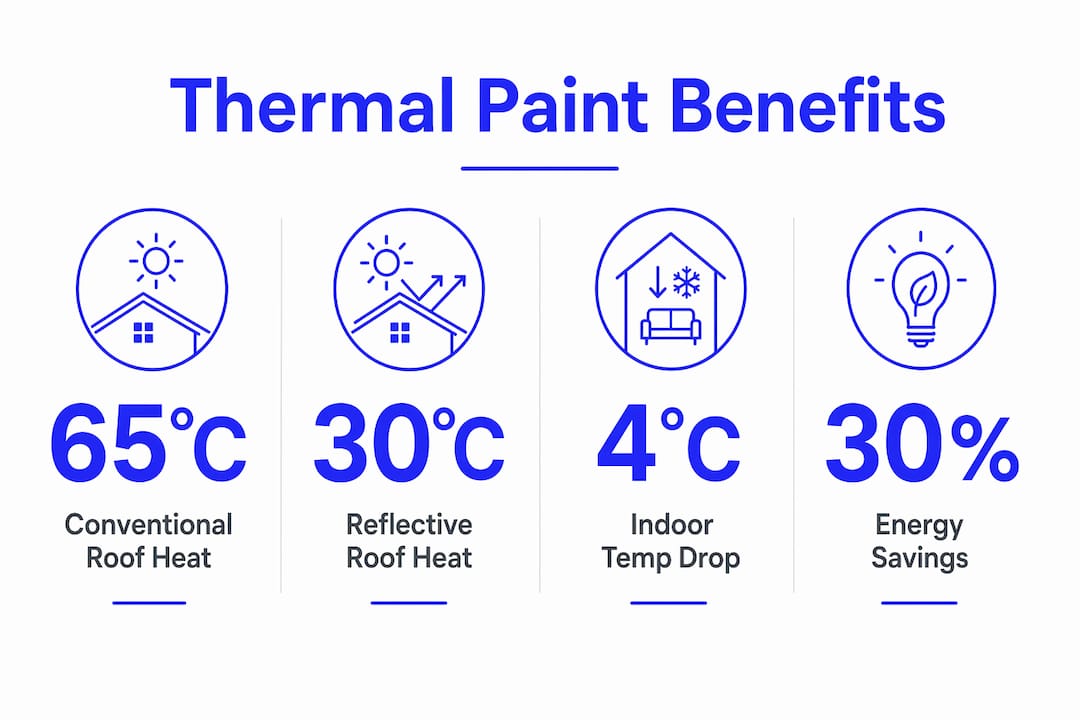
The result is measurable. Conventional roofs reach around 65.5°C under summer sun, while reflective surfaces stay near 37°C. That’s a difference of over 28°C, and it directly affects your indoor comfort and air conditioning load.
Pro Tip: When reviewing product specifications, look for the Solar Reflectance Index (SRI) rather than just the reflectance percentage. SRI combines both reflectance and emittance into a single number, giving you a true measure of thermal performance.
Colour, finish, and heritage suitability
One of the most persistent myths about reflective coatings is that you must choose white or pale colours to get any real benefit. That was largely true with older paint technology, but the gap has narrowed considerably.
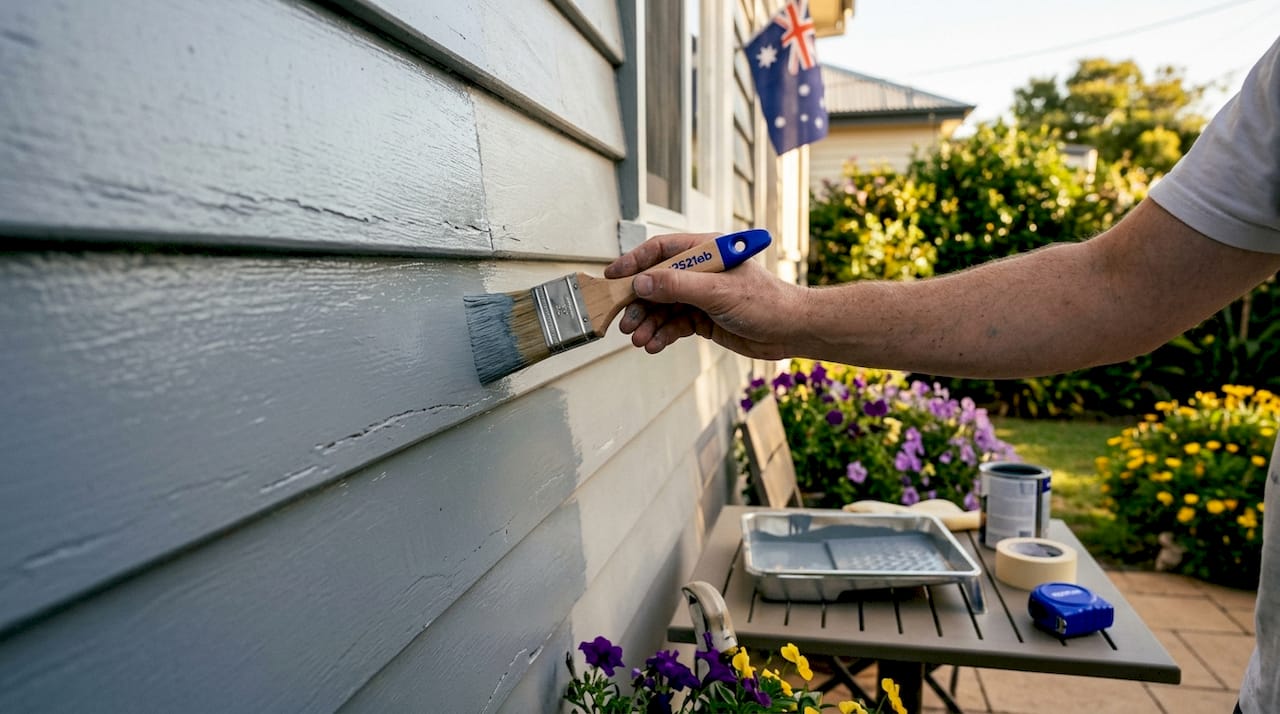
Here’s how the main options compare:
| Paint type | Solar reflectance | Best suited to | Heritage suitability |
|---|---|---|---|
| White/off-white high-reflectance | 60–90% | Modern roofs, metal sheeting, flat surfaces | Limited. Can alter character of period homes. |
| Cool coloured (pigment technology) | 30–60% | Tiles, heritage facades, coloured exteriors | Good. Available in period-appropriate tones. |
| Standard exterior paint | 5–25% | General use | High, but no meaningful thermal benefit. |
| Elastomeric roof coating | 70–85% | Low-slope and flat roofs | Moderate. Works well on rendered surfaces. |
White roofing products reflect 60 to 90% of sunlight, while cool coloured products use specialised pigments to reflect near-infrared radiation and typically achieve 30 to 60% reflectance. For a Victorian terrace in Hawthorn or a Federation bungalow in Camberwell, cool coloured coatings are often the more appropriate choice. They deliver a genuine thermal improvement without the stark brightness that would compromise the property’s period character.
Heritage properties particularly benefit from cool coloured options that balance improved reflectivity without compromising traditional aesthetics. This is worth taking seriously. Local councils in Melbourne’s inner east and bayside areas often have guidelines about exterior colour changes, especially for properties with heritage overlays.
When selecting a finish, matte surfaces generally reflect less than satin or low-sheen finishes on vertical walls. On roofs, a smooth elastomeric or membrane-grade coating tends to retain its reflective performance better over time than heavily textured surfaces that trap dirt.
Pro Tip: For heritage properties, explore paint options suited for heritage homes that include manufacturer SRI data. Matching period colours while gaining thermal performance is achievable with the right product specification.
Practical use in Australian climates
Australia’s climate range is wider than most homeowners appreciate. The thermal benefits of reflective coatings are strong in Melbourne’s hot summer months but deserve careful consideration across the full seasonal picture.
Reflective roof coatings can reduce indoor temperatures by 1 to 4°C and nearby outdoor temperatures by up to 2°C. Over summer, that reduction is significant, cutting the time your air conditioning runs and lowering peak electricity demand. Modelling from the US Department of Energy suggests reflective coatings typically reduce cooling needs by 10 to 30%, not an instant fix but a meaningful ongoing saving.
The trade-off is winter. In Melbourne, which sits in a temperate climate zone with cold winters, a highly reflective roof will also reflect winter sun that would otherwise contribute passive solar warmth. The US DOE cautions that cooling savings are highest in hot climates but can increase heating energy costs in colder climates. For Melbourne homes, the net benefit is generally positive when accounting for the longer, hotter summer period, but this should be quantified for each property rather than assumed.
| Climate zone | Expected cooling benefit | Heating penalty risk | Recommended approach |
|---|---|---|---|
| Hot/arid (north Qld, NT) | High. Significant bill reduction. | Very low | White or high-SRI coatings recommended |
| Warm temperate (Melbourne, coastal) | Moderate to high | Moderate | Cool coloured coatings with careful product selection |
| Cool/highland areas | Low to moderate | Higher risk | Assess net benefit carefully before proceeding |
Beyond temperature, there are substrate and moisture considerations that matter considerably on Victorian and Edwardian properties. Applying coatings on tiled or steep roofs requires care because paint can affect moisture movement and durability. On older terracotta tiles, sealing the surface incorrectly traps moisture beneath the coating, leading to premature failure and potentially damaging the tiles themselves.
Combining reflective coatings with shading devices and keeping windows closed during the hottest hours markedly improves cooling outcomes. Reflective paint performs best as part of a considered passive design strategy, not as a standalone solution.
Cost, durability, and long-term value
Understanding the investment value of reflective coatings requires looking beyond the upfront cost.
Premium thermal reflective coatings typically cost 20 to 40% more per litre than standard exterior paints. On a full roof repaint for a two-storey Melbourne home, that cost difference might be $800 to $1,500 more in product costs. Over a 10 to 15 year product lifespan, the energy savings alone often recover that premium, and frequently more.
The durability benefits compound the financial case. Reflective coatings protect surfaces from UV radiation, thermal expansion, cracking, and peeling, extending material lifespan in ways that standard paints cannot. Roofing materials that routinely cycle through extreme temperature swings degrade faster. A reflective coating that keeps surface temperatures 28°C lower directly reduces that thermal stress, which matters especially for heritage properties where replacing original terracotta tiles or timber fascias is expensive.
Key long-term benefits to weigh include:
- Reduced air conditioning costs through summer, typically 10 to 30% cooling load reduction
- Extended roof and cladding lifespan due to lower thermal cycling stress
- Improved indoor comfort during heatwaves, relevant for uninsulated or poorly insulated Victorian homes
- Potential uplift in property appeal as energy efficiency becomes an increasingly prominent factor in Melbourne’s property market
Pro Tip: Ask your painting contractor to show you how paint protects heritage homes over the long term. For heritage properties specifically, the structural protection argument often outweighs the energy savings argument as the primary driver of value.
Selecting and applying thermal reflective coatings
Getting the product choice and application right determines whether you see the promised benefits or pay a premium for little return.
-
Request verified SRI data. Specifiers should request SRI and CRRC data reflecting performance after weathering, not just fresh application figures. A product may show excellent performance when new but degrade significantly after one or two summers of UV exposure and dirt accumulation. Ask manufacturers for aged performance data.
-
Match the product to your roof type. Elastomeric coatings suit flat and low-slope roofs. For pitched tile roofs, penetrating sealers with reflective pigments are often more appropriate than film-forming coatings. Colorbond metal roofs have their own range of compatible products. Your heritage paint selection should factor in substrate type before anything else.
-
Prepare the surface thoroughly. This is where most DIY applications fail. Thermal reflective coatings applied over contaminated, chalky, or poorly adhered existing paint will peel prematurely regardless of their quality. Professional preparation includes washing, priming where needed, and addressing any substrate defects before coating.
-
Apply in the correct conditions. Most reflective coatings require application within specific temperature and humidity ranges. Application in direct summer sun on a hot roof surface can affect film formation and adhesion. Professional contractors understand these constraints and schedule accordingly.
-
Plan for maintenance. A reflective coating’s performance depends partly on keeping the surface clean. Dirt accumulation on a roof can reduce reflectance noticeably over a season. Budget for periodic washing as part of your maintenance programme.
Pro Tip: For heritage exteriors, always consult a specialist before selecting a product. Reflective pigment technology has advanced considerably, and a specialist can identify coatings that satisfy both the thermal performance brief and any council heritage overlay requirements.
My perspective on reflective coatings and heritage homes
I’ve worked on enough heritage properties across Melbourne’s inner east and bayside to have a clear view on this: the gap between what the marketing promises and what the product actually delivers has shrunk considerably over the past decade, but it hasn’t disappeared.
What I’ve found is that homeowners who get the most from reflective coatings are those who treat them as one layer of a considered building performance strategy, not the whole solution. A heritage terrace in Richmond with single-pane windows, no ceiling insulation, and a newly painted reflective roof will feel better in summer. Genuinely better. But nowhere near as cool as the same house would with the reflective coating plus ceiling insulation and external shading on the north-facing windows.
The heritage aesthetics question is real, and I take it seriously. A cool coloured product in a period-appropriate tone on an Edwardian façade in Kew or a Federation home in Malvern can be specified to look entirely authentic while delivering meaningful thermal performance. The trick is in knowing which products have the right colour options, the right SRI rating, and the appropriate substrate compatibility for older painted surfaces, many of which have layers of lead-based paint beneath that require careful management.
My honest advice: don’t buy the idea that any single product will solve your home’s thermal comfort challenges. Do buy the idea that a well-specified reflective coating, professionally applied, is a sound long-term investment in both comfort and material protection. Get the data, get a specialist’s eye on your property, and make the decision from there.
— Jarrad
How Sol Shine can help with your coating project
Sol Shine brings specialist expertise to thermal reflective coating projects across Melbourne’s inner east and bayside suburbs, including Kew, Hawthorn, Camberwell, Brighton, and Malvern. Whether you’re planning a full exterior repaint on a Federation home or a large-scale heritage painting project involving render repair, timber restoration, and colour specification, the team understands how to balance energy performance with period authenticity.

Sol Shine works directly with homeowners and developers on projects typically $20,000 and above, handling everything under one roof. Product specification, surface preparation, application, and quality assurance are all managed in-house. If you’re weighing your options on a reflective coating for a residential or heritage property, get in touch with the Sol Shine team for a detailed, tailored assessment.
FAQ
What is thermal reflective paint and how does it work?
Thermal reflective paint, also called a cool roof coating, uses specialised pigments to reflect solar radiation and release absorbed heat outward rather than conducting it into the building. The key performance metrics are solar reflectance and thermal emittance, both combined in the Solar Reflectance Index (SRI).
Can reflective paint be used on heritage homes without changing their appearance?
Yes. Cool coloured paint technology uses infrared-reflective pigments that allow darker, period-appropriate tones to achieve meaningful thermal performance. Heritage properties can gain genuine reflectance benefits without the stark white appearance associated with older reflective products.
How much can thermal reflective paint reduce indoor temperatures?
Reflective coatings can reduce indoor temperatures by 1 to 4°C and cut cooling energy needs by 10 to 30%, depending on climate, building type, and how the coating is combined with other passive design measures.
Is reflective paint suitable for all Australian climates?
Not equally. Cooling savings are highest in hot climates, while cooler regions may see a net heating penalty in winter. Melbourne homeowners generally benefit from the net seasonal result, but product selection should account for the full climate profile of the property’s location.
Does reflective coating extend the life of my roof?
Yes. By keeping surface temperatures significantly lower, reflective coatings reduce thermal cycling stress on roofing materials, which slows UV degradation, cracking, and peeling. This is particularly valuable for heritage properties where original roofing materials are costly or difficult to replace.


