
TL;DR:
- UV-resistant paint protects heritage homes from fading, cracking, and chalking caused by Australian UV exposure.
- The effectiveness depends on proper surface preparation, correct product choice, and regular maintenance.
- Choosing the right type, color, and application method ensures long-lasting protection for Victorian and Edwardian exteriors.
Melbourne’s Victorian and Edwardian homes are architectural treasures, but standard exterior paint is no match for Australian UV conditions. The sun here is intense, and surfaces exposed to it without proper protection will fade, chalk, and crack far sooner than most homeowners expect. UV-resistant paint is a weather-resistant coating formulated to withstand ultraviolet radiation from sunlight, preventing exactly this kind of degradation. This article explains what UV-resistant paint is, how it works, which types suit heritage surfaces best, and how to select the right product for your period property in Melbourne.
Table of Contents
- What is UV-resistant paint and how does it work?
- Types of UV-resistant paint: What matters for period homes
- Selecting UV-resistant paint for heritage restoration in Melbourne
- Common mistakes and how to get the most from UV-resistant paint
- A Melbourne heritage painter’s perspective: What really counts for UV protection
- Get expert help choosing UV-resistant paint for your heritage home
- Frequently asked questions
Key Takeaways
| Point | Details |
|---|---|
| Scientific UV protection | UV-resistant paints use advanced stabilisers and pigments to shield heritage surfaces from fading and cracking under Melbourne sun. |
| Choose right paint type | Acrylics, polyurethanes, and powder coatings each offer unique benefits for different heritage details—select for surface and durability. |
| Pick proven products | Select Australian-tested brands like Dulux Weathershield or Wattyl Solagard and ensure council-compliant coatings for restoration. |
| Maximise paint life | Proper preparation, application technique, and ongoing care are essential for getting the full value from UV-resistant paint. |
What is UV-resistant paint and how does it work?
Standard exterior paint was never designed to cope with the extremes of Australian sunlight. On a north-facing façade in Kew or Brighton, surfaces can reach temperatures well above 60°C on a summer afternoon. That heat, combined with UV radiation in the 290 to 400 nanometre range, breaks down the molecular structure of ordinary paint films. The result is fading, chalking, cracking, and a loss of gloss that strips the character from your heritage home’s exterior.
UV-resistant paint addresses this through a carefully engineered combination of ingredients. The formulation includes UV absorbers, which compete with the paint’s chromophores to absorb incoming UV energy and release it safely as heat rather than allowing it to destroy the coating. Alongside these, HALS stabilisers (hindered amine light stabilisers) capture the free radicals generated during UV exposure, halting the chain reactions that cause a paint film to degrade from the inside out. This two-pronged approach is what separates a genuinely protective coating from a standard exterior product.
Understanding the paint durability factors specific to Melbourne heritage homes helps explain why this matters so much for period properties. Intricate timber trims, ornate lacework, rendered façades, and weatherboards all present different surfaces with different vulnerabilities. When UV damage takes hold, it rarely stops at the surface. Moisture enters through cracks, timber swells and splits, render detaches, and ironwork corrodes beneath failing paint.
Common signs of UV damage on heritage buildings include:
- Chalking or powdery residue on rendered walls and weatherboards
- Colour fading, particularly on north and west-facing elevations
- Cracking or flaking of paint film, especially on timber trims
- Loss of gloss on decorative ironwork and verandah details
- Brittleness in older oil-based coatings exposed to prolonged sun
“UV-resistant paint is a weather-resistant coating formulated to withstand ultraviolet (UV) radiation from sunlight, preventing degradation such as fading, chalking, cracking, and loss of gloss.” — SpecialChem Coatings Guide
It is also worth noting that UV protection for windows on period homes works in a complementary way to exterior coatings, reducing the overall UV load on interior timbers and furnishings. Protecting the whole building envelope, not just the paintwork, is the most effective approach.
| Damage type | Cause | Surface most affected |
|---|---|---|
| Chalking | UV breaks down binder | Render, weatherboards |
| Fading | Pigment degradation | All exterior surfaces |
| Cracking | Thermal expansion and UV | Timber trims, fascias |
| Corrosion | UV and moisture ingress | Cast iron lacework |
| Gloss loss | Surface oxidation | Ironwork, doors |
Types of UV-resistant paint: What matters for period homes
Now that you know how UV-resistant paint works, let’s compare the types and when to use each for heritage surfaces. Not all UV-resistant paints are equal, and choosing the wrong type for a specific substrate can be just as damaging as using no UV protection at all.
Pigments like titanium dioxide scatter UV radiation through their high refractive index, while the binder system determines the coating’s long-term performance. Acrylics, polyurethanes, and fluoropolymers each offer different levels of inherent stability, and the right choice depends on your heritage surface and budget.
- Acrylic (water-based): The most widely used option for heritage exteriors. Acrylics are flexible, breathable, and available in a wide range of heritage-approved colours. They are affordable and easy to apply, making them the default choice for timber weatherboards, rendered walls, and fascias. Their main limitation is lower chemical resistance compared to premium alternatives.
- Polyurethane: Offers significantly better durability and gloss retention than standard acrylics. Polyurethane coatings are well suited to high-wear surfaces and areas with intense sun exposure. They cost more and require careful application, but the extended service life justifies the investment on prominent heritage details.
- Fluoropolymer: The premium tier. Fluoropolymers provide inherent stability that far exceeds acrylics and polyurethanes, with outstanding resistance to UV, moisture, and chemical attack. They are typically reserved for large-scale or high-value restoration projects where maximum longevity is the priority.
- Oil-based: Historically common on heritage homes but now generally avoided for exterior use. Oil-based paints become brittle under prolonged sun exposure, leading to cracking and flaking. They are not recommended as a primary UV-protective coating on period properties.
- Powder coatings: Not a paint in the traditional sense, but an essential option for cast iron lacework, verandah posts, and decorative metalwork. Powder coatings offer exceptional UV resistance and durability without the VOC concerns of liquid paints.
Pro Tip: For heritage timber trims and weatherboards, a premium water-based acrylic with HALS stabilisers delivers the best balance of breathability, UV protection, and compatibility with council-approved colour palettes. Avoid oil-based products on any surface that receives direct afternoon sun.
When selecting between these options, the substrate matters as much as the product. Timber requires a flexible, breathable coating that moves with the material through seasonal changes. Cast iron lacework needs a coating that bonds to metal and resists the corrosive effects of moisture and UV together. Rendered surfaces benefit from a microporous coating that allows moisture vapour to escape while blocking liquid water and UV radiation.
Comparing premium paint vs standard products on heritage homes consistently shows that the upfront cost difference is recovered many times over in reduced maintenance and repainting cycles. The choice of premium paint materials is particularly significant on period properties where intricate details are difficult and expensive to prepare and repaint.
Selecting UV-resistant paint for heritage restoration in Melbourne
Once you know your options, finding the right UV-resistant paint for each heritage detail is crucial. Melbourne’s climate, council heritage overlays, and the specific surfaces found on Victorian and Edwardian homes all influence which products perform best in practice.
For Australian conditions, several brands have established strong track records. Dulux Weathershield offers enhanced UV protection with a 25-year warranty against peeling and flaking, and it has been tested extensively in Australian and New Zealand conditions. Taubmans Endure and Wattyl Solagard both provide UV blockout technology with heat-reflective pigments and 25-year warranties, making them reliable choices for high-exposure façades. Regent Ultra is noted for gloss retention that lasts approximately 25% longer than standard exterior products, which is particularly valuable on decorative trims and doors.
Key considerations when selecting UV-resistant paint for a Melbourne heritage home:
- Check the warranty period and what it specifically covers (peeling, fading, chalking)
- Confirm the product is breathable and suitable for the substrate (timber, render, masonry)
- Verify that the colour is within council-approved heritage palettes for your area
- For metalwork, specify powder coatings rather than liquid paints wherever possible
- Ask for the product’s Light Reflectance Value (LRV) to understand its heat and UV performance
Statistic: Powder coatings for heritage ironwork offer a service life of 15 to 20 years, produce zero VOC emissions, and comply with the Burra Charter requirements for reversible and non-destructive heritage treatments.
Council requirements add another layer of complexity. Most Melbourne heritage overlays require coatings that are breathable, reversible, and specified within approved colour ranges. This rules out many industrial coatings and reinforces the case for premium water-based acrylics and powder coatings. Before committing to any product, it is worth confirming compliance with your local heritage adviser or a specialist restoration painter.
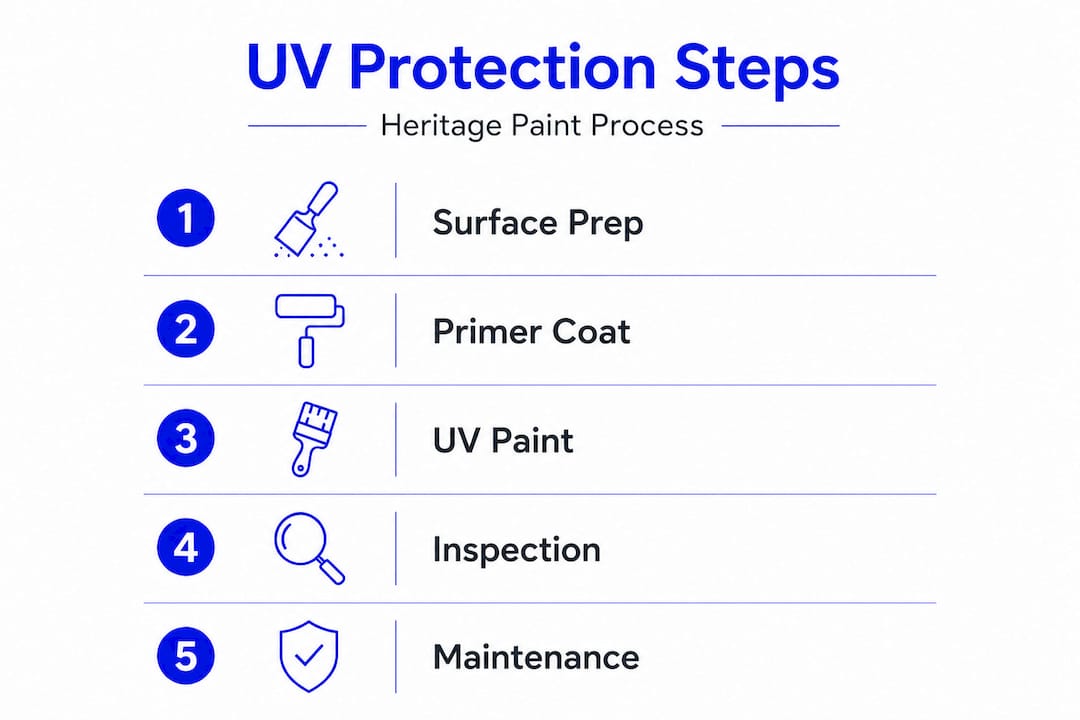
Proper surface preparation is as important as product selection. No UV-resistant coating will perform to its rated lifespan on a surface that has not been correctly cleaned, stripped of failing paint, and primed. The heritage paint durability that homeowners expect from premium products is only achievable when the substrate is sound and correctly prepared before application. Colour selection also plays a role. Lighter colours with higher LRV reflect more UV and heat, reducing the thermal load on the paint film and the substrate beneath it.
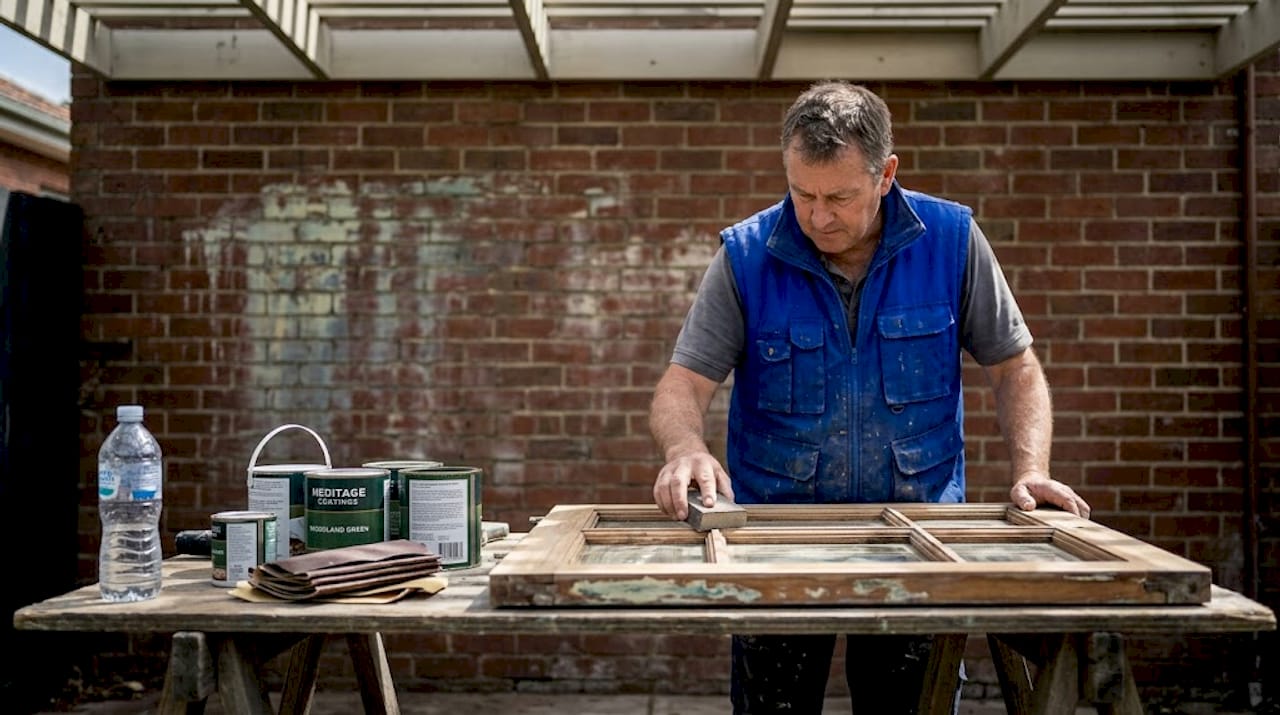
For paint selection on heritage homes, the interaction between colour, substrate, and coating type is something experienced heritage painters understand from years of working on period properties across Melbourne’s inner east and bayside suburbs. Getting this combination right from the start avoids costly remediation later. Additional protection through UV window treatments can further reduce the overall UV exposure on sensitive heritage materials.
Common mistakes and how to get the most from UV-resistant paint
With the right paint in hand, here’s how to avoid costly mistakes and ensure maximum UV protection for your heritage home.
The most common mistakes Sol Shine sees on period properties include:
- Using the wrong product for the substrate, such as applying a masonry coating to timber
- Skipping or rushing surface preparation, which causes premature adhesion failure
- Selecting dark colours on north and west-facing elevations without understanding the UV implications
- Painting in hot conditions above 32°C, which causes poor adhesion and surface blistering
- Applying a single coat and expecting full UV protection from a product rated for two coats
Dark colours fade and chalk faster due to higher heat absorption, and in coastal suburbs like Brighton and Bayside, salt-laden air accelerates corrosion beneath failing paint films. In these conditions, silicone-modified acrylics offer better resistance to moisture and salt than standard formulations. Heritage properties also require coatings that are breathable and reversible, which eliminates many otherwise high-performing industrial products.
“Film thickness is critical for UV performance; apply 2 coats; maintenance washing extends life; avoid epoxies direct on exterior, pair with a polyurethane topcoat.” — SpecialChem Coatings Guide
Film thickness is one of the most overlooked factors in UV protection. A single thin coat of even the best UV-resistant paint will not deliver the protection the product is rated for. Two full coats, applied at the correct spread rate, are the minimum for reliable performance on heritage exteriors. Regular maintenance washing, at least once a year, removes salt, pollution, and biological growth that accelerate surface degradation. Early touch-ups on areas showing wear maintain the film thickness and prevent moisture ingress before it becomes a structural problem.
Painting maintenance advice for period properties consistently points to washing and inspection as the most cost-effective ways to extend coating life. The principle of preventative painting is well established among heritage specialists: addressing minor deterioration before it escalates protects both the coating and the heritage fabric beneath it.
Pro Tip: Shade from mature trees or external awnings can meaningfully extend the life of UV-resistant coatings on south-facing and sheltered elevations. For north-facing façades with no shade, prioritise the highest-rated UV-resistant product available and plan for a maintenance inspection every three to four years. Explore external shade options as a complementary strategy for reducing UV load on exposed elevations.
A Melbourne heritage painter’s perspective: What really counts for UV protection
There is a persistent belief among homeowners that buying the most expensive paint on the shelf guarantees the best outcome. In practice, Sol Shine’s experience across hundreds of heritage projects in Kew, Hawthorn, Camberwell, and Brighton tells a different story.
The product matters, but it is only one part of the equation. A premium fluoropolymer coating applied over a poorly prepared surface will fail just as quickly as a budget product. The fundamentals of surface preparation for heritage repainting are not glamorous, but they are what separates a coating that lasts 20 years from one that starts peeling within five.
What experienced Melbourne heritage painters know is that UV protection is a system, not a single product. It starts with understanding the substrate, whether it is 100-year-old Baltic pine weatherboards, original render, or cast iron lacework. Each requires a different preparation approach, a different primer, and a different topcoat. Applying a one-size-fits-all approach to a Victorian terrace in Fitzroy or an Edwardian bungalow in Malvern is a shortcut that always shows up eventually.
Colour choice is another area where homeowners often underestimate the UV implications. A deep heritage green or charcoal on a north-facing elevation looks striking, but it absorbs significantly more heat and UV than a lighter cream or off-white. This does not mean dark colours should be avoided entirely. It means the product specification needs to account for the higher UV load, and the maintenance cycle needs to be adjusted accordingly.
The honest advice Sol Shine gives to every client is this: invest in thorough preparation, specify the right product for each surface, apply two full coats, and commit to a simple annual maintenance routine. That combination will outperform any single premium product applied without care, every time.
Get expert help choosing UV-resistant paint for your heritage home
Choosing the right UV-resistant coating for a period property is not a decision to make based on a tin label alone. The interaction between substrate, preparation, product, colour, and application method determines whether your heritage home looks refined and protected for decades or requires costly remediation within a few years.
Sol Shine specialises in exactly this kind of considered, expert approach. Our team works across Melbourne’s inner east and bayside suburbs on heritage painting projects that demand precision, care, and a genuine understanding of period properties. From specifying the right UV-resistant system for your weatherboards and lacework to managing council compliance and colour selection, our heritage painting services cover every detail under one roof. For homeowners who want to understand more about what makes coatings last, our paint durability insights provide practical guidance specific to Melbourne conditions. Get in touch with Sol Shine to discuss your heritage restoration project.
Frequently asked questions
How long does UV-resistant paint last on heritage homes?
UV-resistant paints in Australia can last 10 to 25 years on period properties when applied correctly, with Dulux Weathershield carrying a 25-year non-residential warranty after decades of testing in Australian and New Zealand conditions. Longevity depends heavily on preparation quality, film thickness, and regular maintenance.
Can UV-resistant paint be used on both timber and ironwork?
Yes, but the product type should match the substrate. For heritage metalwork such as cast iron lacework, powder coatings offer superior UV protection and a 15 to 20-year service life compared to liquid paints, while also meeting Burra Charter compliance requirements.
What’s the best colour for UV resistance on a Melbourne period home?
Lighter colours with a high Light Reflectance Value reflect more UV and heat, maintaining vibrancy and reducing thermal stress on the paint film. Lighter shades are particularly recommended for north and west-facing elevations where UV exposure is greatest.
Is UV-resistant paint environmentally friendly for heritage projects?
Premium water-based acrylics and powder coatings are both low-VOC options approved for heritage use in Melbourne, meeting council requirements for breathable and reversible coatings. Powder coatings produce zero VOC emissions during application.
What maintenance extends the life of UV-resistant paint?
Annual washing to remove salt, pollution, and biological growth is the single most effective maintenance step, combined with early touch-ups to maintain film thickness and prevent moisture ingress on heritage surfaces.


