
Many homeowners assume a fresh coat of paint is enough for their Victorian or Edwardian home. However, specialised exterior coatings protect heritage fabric far beyond aesthetics. The right coatings safeguard original materials, comply with council requirements, and tackle Melbourne’s demanding climate. This guide reveals how to select and apply coatings that preserve your home’s character while ensuring lasting durability.
Table of Contents
- Understanding The Importance Of Specialised Exterior Coatings In Heritage Restoration
- How Melbourne’s Climate Influences Exterior Coating Choices For Heritage Homes
- Breathability And Moisture Management: Why It Matters For Heritage Properties
- Authenticity And Colour Accuracy In Heritage Exterior Coatings
- Common Misconceptions About Heritage Exterior Coatings
- Step-By-Step Heritage Coating Application Process
- Regulatory Compliance And Long-Term Maintenance Strategies In Melbourne
- Explore Expert Heritage Painting Services From Solshine
- Frequently Asked Questions
Key takeaways
| Point | Details |
|---|---|
| Specialised coatings essential | Heritage-grade products protect period materials and meet local heritage standards for compliance. |
| Climate-driven selection | Melbourne’s variable weather demands flexible, breathable coatings to prevent moisture damage. |
| Authentic colours matter | Historically accurate palettes preserve architectural integrity and simplify council approval. |
| Common myths mislead | Misconceptions about colours and materials can derail restoration projects. |
| Proper application extends lifespan | Expert techniques and regular maintenance safeguard your investment for 10 to 15 years. |
Understanding the importance of specialised exterior coatings in heritage restoration
Heritage coatings do far more than refresh appearances. They preserve the original architectural features and structural integrity that define Victorian and Edwardian homes. Melbourne’s climate swings between intense UV exposure, heavy rainfall, and temperature extremes that stress heritage substrates like lime render, timber, and masonry.
Standard modern paints frequently fail on period homes because they trap moisture or crack under substrate movement. Premium paint materials for heritage homes are formulated specifically for breathability and flexibility. These specialised products allow vapour to escape while blocking water ingress, preventing the rot and decay that destroy irreplaceable historic fabric.
Proper coatings protect your investment over decades rather than years. They maintain the heritage value that attracted you to the property initially. Using the wrong products leads to costly failures, frequent repainting cycles, and potential damage to original materials that cannot be replaced.
Key benefits of heritage-grade coatings include:
- Prevention of moisture entrapment that causes timber rot and render decay
- Flexibility to accommodate substrate movement without cracking or peeling
- Compatibility with lime-based renders and period joinery common in Victorian homes
- Enhanced durability against Melbourne’s UV radiation and weather extremes
- Preservation of architectural details through appropriate surface preparation and application
Pro tip: Always request product data sheets showing vapour permeability ratings. Heritage coatings should allow moisture transmission while resisting liquid water penetration.
How Melbourne’s climate influences exterior coating choices for heritage homes
Melbourne’s notoriously unpredictable weather creates unique challenges for heritage exterior coatings. The city experiences four seasons in a day, with rapid temperature swings causing substrates to expand and contract repeatedly. This movement stresses rigid coatings, leading to cracks that allow water ingress.
Variable rainfall patterns mean periods of intense moisture followed by dry spells. Heritage materials like lime render and timber naturally absorb and release moisture in response to humidity changes. Hiring specialist painters ensures coatings accommodate this movement without failing.
Coatings must be flexible enough to follow substrate movement throughout seasonal cycles. Rigid modern paints crack under stress, creating pathways for water to penetrate behind the coating system. Once moisture enters, it becomes trapped, accelerating decay of the underlying substrate.
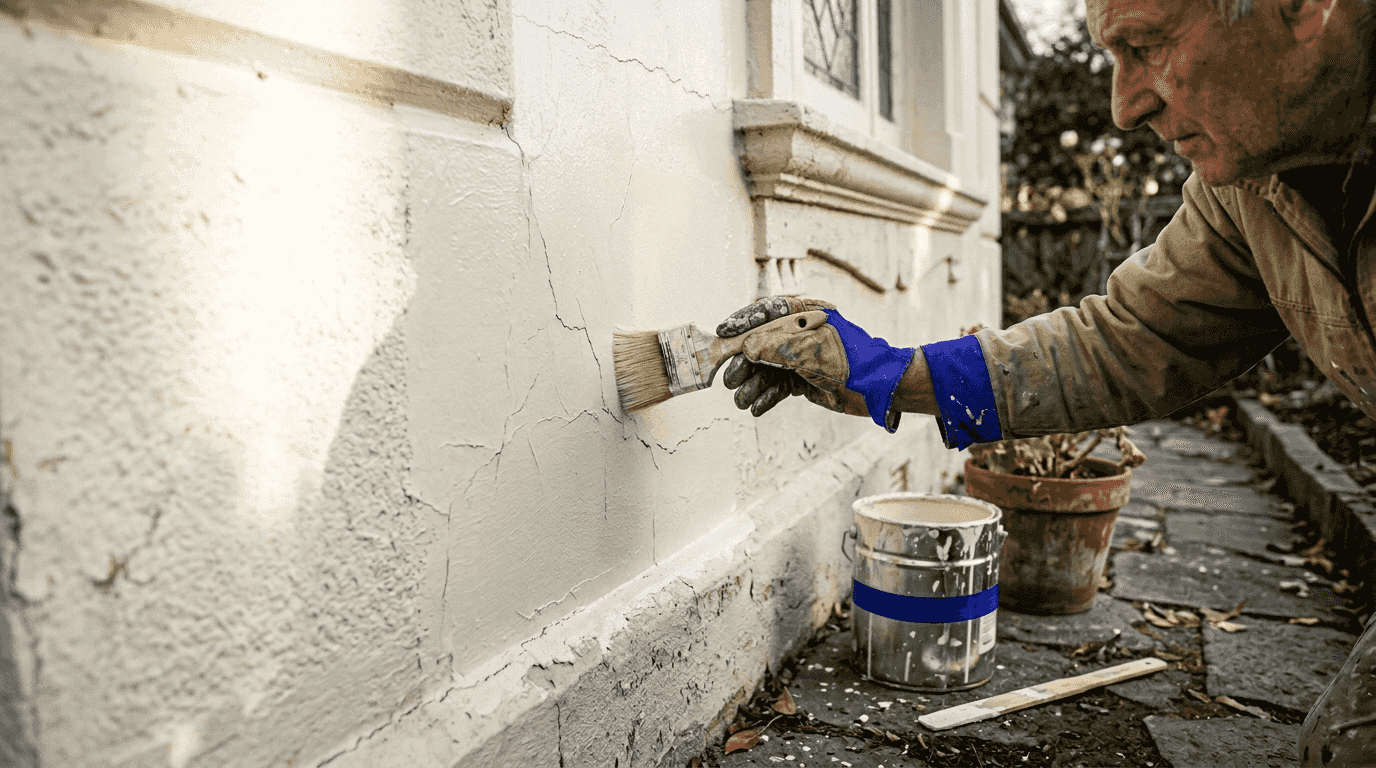
Breathe-ability becomes critical in Melbourne’s humid conditions. Coatings that block vapour transmission trap condensation inside walls, leading to structural damage invisible from the exterior. By the time problems become apparent, significant deterioration has already occurred.
Essential coating properties for Melbourne’s climate:
- Flexibility to accommodate thermal expansion and contraction cycles
- High vapour permeability allowing moisture to escape outward
- Water resistance preventing liquid ingress during heavy rainfall
- UV stability to withstand intense summer sun without fading or chalking
- Adhesion to damp substrates for application during Melbourne’s variable conditions
Pro tip: Schedule exterior coating work during stable weather periods in autumn or spring. Avoid summer extremes and winter dampness for optimal curing and performance.
Breathability and moisture management: why it matters for heritage properties
Moisture management separates successful heritage restoration from projects that fail within years. Non-breathable modern paints seal surfaces completely, trapping water vapour inside walls. This trapped moisture accelerates timber rot, causes render to spall, and creates conditions for mould growth.
Lime-based breathable coatings function differently from modern acrylics. They allow water vapour to pass through while still blocking liquid water from penetrating inward. This one-way moisture movement lets heritage substrates dry naturally, preventing the accumulation that leads to decay.
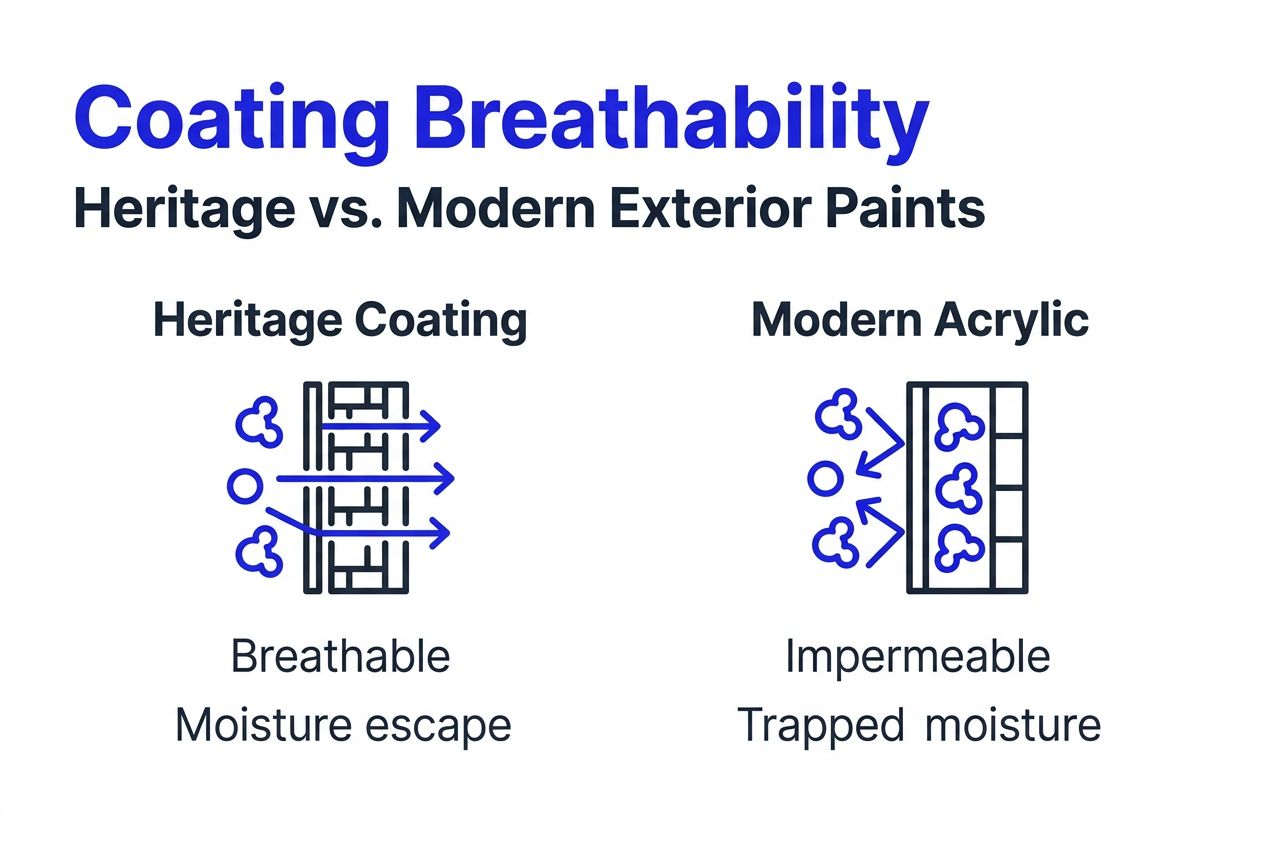
Breathe-ability prevents the blistering and peeling common when moisture tries to escape through impermeable coatings. It also stops substrate decay by eliminating the damp conditions fungi and bacteria require to break down organic materials. Without proper vapour permeability, even the most careful restoration work eventually fails.
Incorrect coatings undermine every other aspect of heritage preservation. You might repair damaged render, replace rotten timber, and restore decorative features perfectly. However, sealing everything with modern acrylic paints traps moisture and starts the decay cycle again.
| Property | Lime-based breathable coatings | Modern acrylic paints |
|---|---|---|
| Vapour permeability | High (allows moisture escape) | Low (traps moisture inside) |
| Substrate compatibility | Excellent with lime render and timber | Poor adhesion on heritage materials |
| Flexibility | Accommodates substrate movement | Rigid and prone to cracking |
| Durability on heritage homes | 10-15 years with maintenance | 5-7 years before failure |
| Heritage compliance | Approved for listed properties | Often prohibited by councils |
Key indicators your coating system is breathable:
- No blistering or bubbling during humid weather
- Walls feel dry to touch even after rain
- Interior surfaces show no condensation or dampness
- Original render and timber remain stable without decay
Authenticity and colour accuracy in heritage exterior coatings
Historical research reveals Victorian and Edwardian homes used specific colour palettes that modern homeowners often misunderstand. Bright white is not authentic for heritage facades. Before World War II, pure white pigments were unavailable or prohibitively expensive. Period homes featured muted tones instead.
Authentic exterior colours include soft creams, warm ochres, sage greens, dusty blues, and terracotta reds. These hues were derived from natural earth pigments and complemented the architectural details craftsmen carefully incorporated into designs. The colours enhanced rather than overwhelmed decorative elements like corbels, brackets, and fretwork.
Colour choice affects more than aesthetics. Using historically accurate palettes smooths council approval processes for heritage-listed properties. Many local councils maintain approved colour schedules that property owners must follow. Selecting inappropriate modern colours can result in enforcement notices requiring expensive repainting.
Accurate colours also enhance architectural features by creating visual depth and interest. Victorian builders used multiple tones to highlight different elements, a practice called “polychromatic decoration.” Main walls might be cream, with trim in deeper ochre and decorative details picked out in contrasting green or burgundy.
Historically appropriate heritage colour categories:
- Stone and render: off-whites, pale creams, warm buffs, soft greys
- Timber trim and joinery: ochres, deep creams, sage greens, terracotta
- Decorative features: burgundy, deep green, dusty blue, chocolate brown
- Ironwork: dark green, burgundy, brown, deep blue (not black)
Understanding period colour use helps you make informed choices that satisfy both heritage requirements and personal preferences. Consult heritage house paint guides for detailed information on authentic palettes for your specific property style.
Common misconceptions about heritage exterior coatings
Several persistent myths mislead homeowners during heritage restoration projects. Understanding the facts prevents costly mistakes and ensures compliance with heritage standards.
Victorian ironwork was painted various colours, not exclusively black. Period railings, gates, and balustrades appeared in dark greens, burgundies, deep blues, and chocolate browns. The modern convention of painting all ironwork black emerged much later and lacks historical accuracy.
Lead-based paint is hazardous only when disturbed through sanding or scraping. Intact lead paint poses minimal risk and can remain in place if in good condition. Licensed professionals should handle any removal work using proper containment and disposal methods to protect occupants and the environment.
Brilliant white paint is a modern invention unavailable during the Victorian era. Using stark white on heritage facades creates an inauthentic appearance and may violate heritage overlay controls. Period homes relied on off-whites and creams derived from natural pigments.
These misconceptions stem from modern preferences rather than historical practice. They persist because many people assume current trends reflect past traditions.
“The best way to treat a heritage building is first to understand what it is, how it was made and what materials were used originally. Only then can you make decisions that protect its integrity.” — Heritage conservation principle
Common myths debunked:
- Myth: All heritage ironwork should be black → Fact: Period colours included greens, reds, browns, and blues
- Myth: Lead paint must always be removed → Fact: Intact lead paint is safe; only disturbed paint poses risks
- Myth: White was the standard Victorian exterior colour → Fact: Creams, ochres, and earth tones were authentic
- Myth: Modern paints work fine on old homes → Fact: Heritage substrates require specialised breathable formulations
Expert handling ensures both safety and authenticity. Professional heritage painters understand these nuances and apply appropriate treatments that maintain your home’s character while protecting occupants.
Step-by-step heritage coating application process
Successful heritage coating projects follow a methodical approach that addresses substrate condition before any paint touches surfaces. Rushing preparation compromises results regardless of coating quality.
Begin with thorough surface assessment identifying damaged timber, cracked render, and failing previous coatings. All defects require repair before new coatings can be applied. This might involve replacing rotten weatherboards, patching render, or stabilising loose joinery.
Next, remove failing paint using appropriate methods for heritage substrates. Avoid aggressive techniques that damage underlying materials. Hand scraping and gentle chemical strippers work better than power sanders that gouge soft timber or friable render.
Prime all bare surfaces with heritage-compatible products that enhance adhesion and seal porous substrates. Primers create a stable base for finish coats while preventing uneven absorption that causes patchy appearance.
Apply breathable heritage coatings in thin, even layers following manufacturer specifications for coverage and recoat times. Multiple thin coats outperform single thick applications, providing better protection and more uniform finish. See examples from our Camberwell and Malvern East projects.
Complete the process with final inspection confirming quality and coverage. Review results with the homeowner, addressing any concerns before project completion.
Application steps in order:
- Inspect and document existing condition with photographs
- Repair damaged substrates: timber, render, masonry, and joinery
- Remove failing coatings using heritage-appropriate methods
- Clean surfaces thoroughly removing all dust, debris, and contaminants
- Prime bare substrates with compatible heritage products
- Apply first coat of breathable heritage finish in favourable weather
- Allow proper curing time between coats as specified by manufacturer
- Apply subsequent coats to achieve specified coverage and protection
- Inspect completed work confirming uniform coverage and finish quality
- Document work and provide maintenance guidance to homeowner
Pro tip: Never apply coatings in direct sunlight, extreme temperatures, or high humidity. Morning application in mild conditions allows proper drying throughout the day.
Regulatory compliance and long-term maintenance strategies in Melbourne
Heritage council approvals are mandatory for coating colours and materials on listed properties. These requirements protect Melbourne’s architectural heritage by ensuring restorations maintain historical accuracy. Failing to obtain proper approvals can result in enforcement actions requiring expensive corrective work.
Using approved heritage paints significantly extends coating lifespan. Standard modern paints last 5 to 7 years on heritage homes before failure. Properly applied heritage coatings last 10 to 15 years under Melbourne conditions, making them more cost-effective despite higher initial investment.
Regular inspection and maintenance prevent minor issues from becoming major problems. Schedule professional assessments every 3 to 5 years to identify areas requiring attention. Prompt touch-ups protect underlying substrates and extend the overall system lifespan.
Maintenance strategies that maximise coating performance:
- Clean surfaces annually removing dirt, mould, and organic growth
- Address small defects immediately before water ingress causes substrate damage
- Avoid pressure washing which drives water into substrates and damages coatings
- Use only compatible products for touch-ups and repairs
- Keep vegetation trimmed away from painted surfaces to improve air circulation
Following official heritage guidelines ensures your restoration meets preservation standards. These resources provide colour schedules, material specifications, and application requirements specific to different property types and heritage overlays.
Documentation helps future maintenance by recording products used, application dates, and any repairs completed. This information guides subsequent work and helps new owners understand the property’s coating history. Review completed projects like East Melbourne to see comprehensive heritage restoration approaches.
Proper planning and regular maintenance protect your investment while preserving Melbourne’s architectural heritage for future generations. Heritage properties represent irreplaceable cultural assets deserving thoughtful stewardship.
Explore expert heritage painting services from Solshine
Preserving your Victorian or Edwardian home requires specialised knowledge and proven craftsmanship. Solshine delivers premium heritage painting services tailored specifically to Melbourne’s period properties. Our specialists ensure coatings comply with heritage guidelines while withstanding local climate challenges.
We understand the unique requirements of lime renders, original timber joinery, and decorative architectural features. Our experienced team protects your investment through meticulous surface preparation, authentic colour selection, and expert application of breathable heritage coatings. Browse our exterior painting portfolio to see completed restorations across Melbourne’s heritage suburbs. Partner with heritage painting specialists who combine traditional techniques with modern quality standards for lasting, authentic results.
Frequently asked questions
What types of exterior coatings are best for Victorian and Edwardian homes in Melbourne?
Breathe-able lime-based and specialist heritage formulations designed for timber, masonry, and render work best. These coatings allow moisture to escape while blocking water ingress, preventing the substrate damage common with modern acrylics. They accommodate the natural movement of period materials and withstand Melbourne’s variable climate effectively.
Are there restrictions on paint colours for heritage properties in Melbourne?
Yes, local councils mandate historically accurate colours like muted creams, ochres, soft greens, and dusty blues for heritage-listed properties. Bright white and non-period colours are generally prohibited to preserve architectural authenticity. Council approval is required before repainting heritage facades, so consult heritage overlay guidelines early in your planning.
How often should heritage exterior coatings be reapplied or maintained?
Properly applied heritage coatings last 10 to 15 years with appropriate maintenance in Melbourne conditions. Schedule professional inspections every 3 to 5 years to identify areas needing attention. Timely touch-ups and cleaning prevent minor issues from escalating into costly substrate damage requiring extensive repairs.
Is lead paint removal necessary for Victorian homes during restoration?
Lead paint poses hazards only when disturbed through sanding or scraping, not when intact. Safe removal requires licensed professionals using proper containment and disposal methods. If existing lead paint is in good condition, it can remain in place with new coatings applied over it following appropriate preparation protocols.


