
TL;DR:
- Regular exterior cleaning protects heritage materials from moisture damage and costly repairs.
- Melbourne’s climate accelerates biological growth, requiring cleaning every 1 to 2 years.
- Soft washing at low pressure is the safest method for heritage brick and render surfaces.
Melbourne’s Victorian and Edwardian homes carry a quiet authority. The ornate timber fretwork, the face brick façades, the rendered parapets — they look like they were built to outlast everything. And in many ways, they were. But that sense of solidity can be misleading. Beneath a layer of grime, algae, and weathered paint, these heritage exteriors are quietly deteriorating. Regular exterior cleaning is not a cosmetic luxury. It is one of the most effective ways to protect the structural integrity, street appeal, and long-term value of your home. This guide explains the real risks of neglect, how Melbourne’s climate accelerates damage, and which cleaning methods are safe for heritage surfaces.
Table of Contents
- The real risks of neglecting exterior cleaning
- Melbourne’s climate: Why local homes need regular cleaning
- Choosing the right cleaning method for heritage exteriors
- Exceptions, regulations, and costly mistakes to avoid
- What most guides miss about maintaining Melbourne’s heritage exteriors
- Preserve your heritage home’s beauty with expert help
- Frequently asked questions
Key Takeaways
| Point | Details |
|---|---|
| Regular cleaning saves money | Cleaning every 1-2 years prevents costly repairs to heritage homes. |
| Choose safe cleaning methods | Soft washing protects original bricks and render without damage. |
| Follow heritage regulations | Always check council rules and use approved products for listed properties. |
| Melbourne homes need extra care | Local climate and pollution mean heritage exteriors need more frequent attention. |
The real risks of neglecting exterior cleaning
It is easy to assume that a little dirt on the façade is purely a visual issue. In reality, surface grime on heritage homes is rarely just surface-deep. Mould, algae, and biological growth trap moisture against brickwork, render, and timber. Over time, that persistent moisture works its way into the substrate, accelerating paint failure, timber rot, and mortar deterioration.
For Victorian and Edwardian homes, this is particularly costly. The original materials — soft face brick, lime-based render, and old-growth timber — are more porous than modern equivalents. They absorb moisture readily and release it slowly. When biological growth is left unchecked, these materials degrade faster than most homeowners realise.
Here is what neglect typically leads to on heritage exteriors:
- Mould and algae retain moisture and accelerate paint delamination
- Grime build-up conceals cracked mortar, spalling render, and early rot
- Moisture intrusion into brickwork causes efflorescence and structural weakening
- Staining from pollution and organic matter becomes harder to remove the longer it sits
- Timber decay in window frames, fascias, and verandah posts accelerates under damp conditions
The financial consequences are significant. Neglect can lead to $5,000 to $15,000 in repointing costs alone, and early detection through routine cleaning can save up to $19,000 in repairs. That is a compelling case for something as straightforward as a scheduled wash.
“The most expensive repairs we see are almost always the result of problems that were hidden under years of grime. A clean façade is not vanity — it is visibility.”
Beyond the structural argument, curb appeal in Melbourne is directly tied to property value. A well-maintained heritage exterior signals care and quality to buyers, neighbours, and council assessors alike. The good news is that exterior cleaning safeguards against the most common and costly forms of deterioration, provided it is done correctly and consistently.
Melbourne’s climate: Why local homes need regular cleaning
Melbourne’s weather is famously unpredictable, but its effects on heritage exteriors are entirely predictable. The combination of high humidity, seasonal pollen, coastal salt air in bayside suburbs, and urban pollution creates ideal conditions for biological growth on exterior surfaces. Algae and lichen establish themselves quickly on porous materials, and once rooted, they are difficult to remove without the right technique.
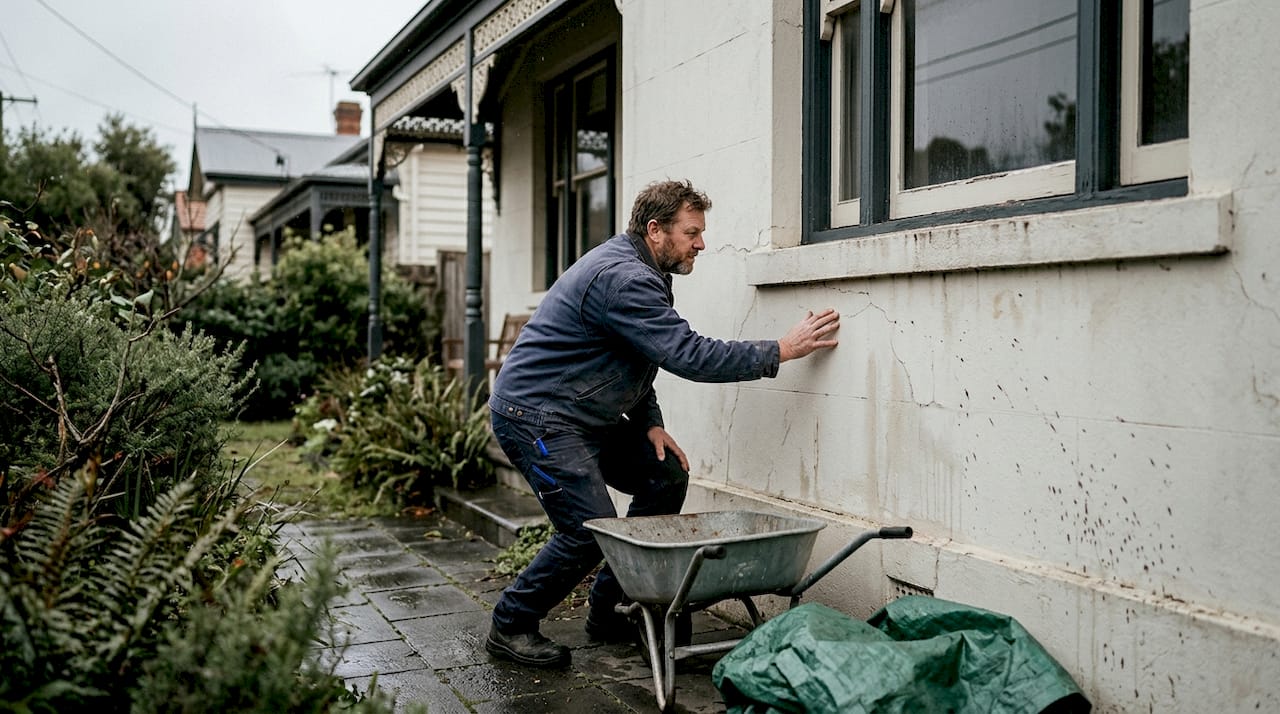
The city’s pattern of hot dry summers followed by wet winters means heritage surfaces go through repeated cycles of expansion and contraction. This stresses mortar joints and render coatings. When biological growth is already present, these stress cycles cause damage to accelerate. The result is that a home that looked fine in autumn can show significant deterioration by the following spring.
Regular cleaning every 1 to 2 years prevents rapid regrowth and preserves heritage features by interrupting the biological cycle before it takes hold. This frequency suits Melbourne’s climate well and keeps maintenance manageable.
Cleaning frequency guide for Melbourne heritage homes:
| Surface type | Recommended frequency | Key risk if delayed |
|---|---|---|
| Face brick | Every 1 to 2 years | Algae staining, mortar erosion |
| Lime render | Every 1 to 2 years | Moisture retention, cracking |
| Painted timber | Annually | Paint failure, rot |
| Roof tiles | Every 2 to 3 years | Lichen, water pooling |
| Verandah ironwork | Annually | Surface rust, paint lift |
Pro Tip: Soft washing with a biocide solution lasts up to four times longer than basic pressure washing because it kills the biological growth at the root rather than simply blasting it off the surface. This means fewer cleaning cycles and better protection between visits. Pairing a cleaning schedule with preventative painting strategies extends the life of your exterior coatings significantly.
For render surfaces specifically, the guide to render cleaning highlights how critical it is to match the cleaning method to the render type. Cement render, lime render, and acrylic render each respond differently to cleaning solutions and pressure levels. Choosing the wrong approach can cause more damage than the grime itself. Selecting heritage restoration coatings after a proper clean also ensures the surface is ready to accept new paint without adhesion issues. Routine paint maintenance tips can help you stay ahead of these issues between major works.
Choosing the right cleaning method for heritage exteriors
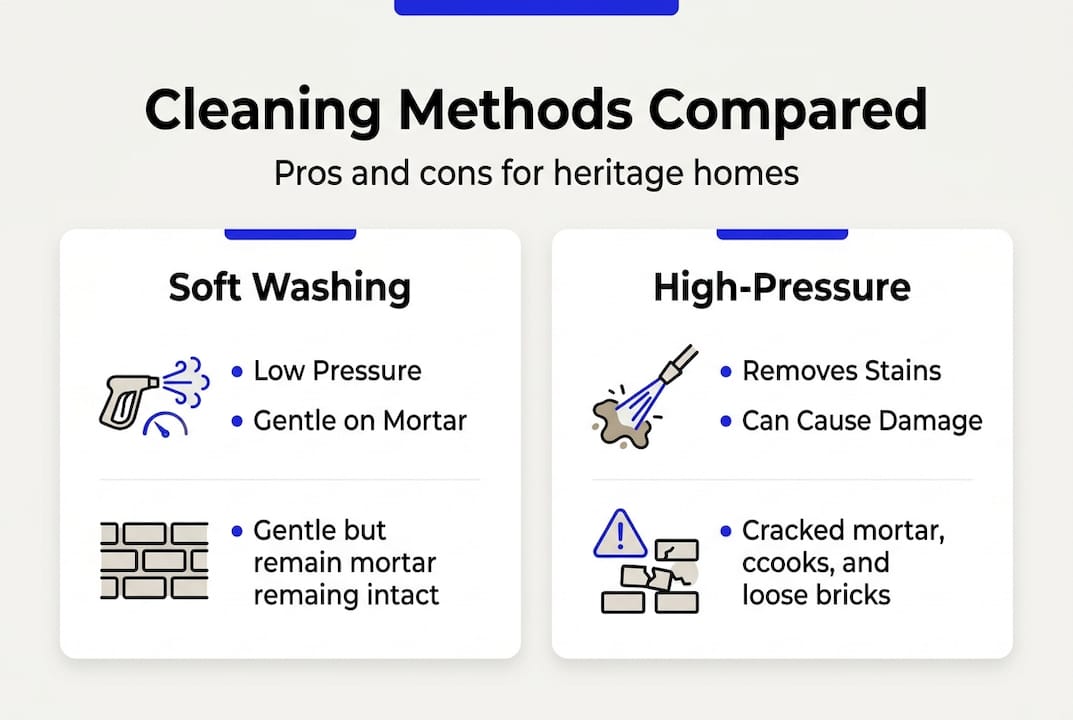
Not all cleaning methods are equal, and for heritage homes, the wrong choice can cause irreversible damage. The two most common approaches are soft washing and high-pressure cleaning, and they are not interchangeable.
High-pressure cleaning uses water at high velocity to blast contaminants from a surface. It is effective on modern hard surfaces like concrete driveways, but it is inappropriate for most heritage materials. The force can erode soft mortar joints, pit face brick, strip lime render, and drive moisture deep into already porous substrates. On painted timber, it lifts paint and forces water behind weatherboards, setting up conditions for rot.
Soft washing, by contrast, uses low pressure combined with biodegradable cleaning solutions and biocides to break down and kill biological growth. Soft washing is preferred over high-pressure for heritage brick and render, operating at 500 to 1200 PSI maximum, with biocides that kill roots without eroding mortar or delicate surfaces. The results last longer and the risk of damage is dramatically lower.
Here is a step-by-step overview of how a professional soft wash is typically carried out on a heritage exterior:
- Inspect the surface for existing cracks, loose render, and damaged mortar before applying any water or solution
- Apply a pre-treatment biocide to neutralise biological growth and loosen organic matter
- Allow dwell time so the solution penetrates and kills growth at the root
- Rinse at low pressure to remove the solution and loosened contaminants without abrading the surface
- Apply a post-treatment to slow future biological regrowth and extend the clean
Soft washing vs high-pressure cleaning for heritage surfaces:
| Factor | Soft washing | High-pressure cleaning |
|---|---|---|
| Pressure range | 500 to 1200 PSI | 2000 to 4000+ PSI |
| Heritage suitability | High | Low |
| Mortar risk | Minimal | Significant |
| Longevity of result | Up to 4 years | 6 to 12 months |
| Typical cost | Moderate | Lower upfront |
Pro Tip: Always ask your contractor to inspect mortar joints and render before cleaning begins. Any existing damage should be repaired first — cleaning a compromised surface can worsen cracks and allow water ingress. For detailed guidance on cleaning heritage exteriors, it pays to work with specialists who understand the specific vulnerabilities of Victorian and Edwardian materials. Further reading on soft wash brick cleaning and pressure vs soft washing can help you ask the right questions before work begins.
Exceptions, regulations, and costly mistakes to avoid
For homeowners with heritage-listed properties, exterior cleaning carries an additional layer of responsibility. Melbourne has a significant number of properties on the Victorian Heritage Register and local council heritage overlays. These listings exist to protect the character and fabric of historically significant buildings, and they come with real obligations.
Using the wrong cleaning product or method on a heritage-listed property is not just a technical mistake. It can result in fines, enforcement orders, and the requirement to remediate damage at your own cost. In some cases, it can delay future renovation approvals.
Heritage-listed properties require council permits, pH-neutral products, and non-abrasive methods to avoid fines and irreversible damage. This applies to cleaning as much as it does to painting or structural works.
Common mistakes to avoid on heritage exteriors:
- Using acid-based cleaners on brick or render, which can dissolve lime mortar and cause permanent staining
- Applying high-pressure water to ornate render details, which can chip or erode irreplaceable mouldings
- Skipping council approval before cleaning a heritage-listed façade, even for routine maintenance
- Using bleach-based products without checking compatibility with the specific render or brick type
- Cleaning in direct sun or high heat, which causes cleaning solutions to evaporate too quickly and leaves residue
“We have seen homeowners spend more fixing damage caused by the wrong cleaning method than they would have spent on a full professional restoration. The savings from cutting corners are almost always illusory.”
If your property sits within a heritage overlay, consult your local council before scheduling any exterior cleaning work. Some councils provide approved contractor lists or specific method guidelines. Pairing your cleaning programme with informed roof cleaning advice ensures every surface on your home is treated appropriately. The heritage building cleaning rules are worth reviewing in full before you engage any contractor.
What most guides miss about maintaining Melbourne’s heritage exteriors
Most advice on heritage home maintenance focuses on what to do and when to do it. That is useful, but it misses the more important point. The homeowners who get the best long-term outcomes are not simply those who follow a cleaning schedule. They are the ones who treat cleaning as an intelligence-gathering exercise.
Every time a professional cleans a heritage façade, they have an opportunity to identify what is changing. Where is new cracking appearing? Which areas are retaining moisture? Is the paint system starting to fail in specific spots? Case studies show early cleaning saves $10,000 or more in repairs compared to neglect, precisely because problems are caught before they compound.
The other thing most guides understate is the regulatory risk. Homeowners who skip permits or use unapproved methods on heritage-listed properties do not just risk fines. They risk delays on future works, complications with insurance claims, and in some cases, forced remediation that costs far more than the original cleaning would have. Working with experienced professionals who understand both the technical and regulatory landscape is not a luxury for large projects. It is the baseline for responsible heritage stewardship. Explore the step-by-step exterior painting process to understand how cleaning fits into a broader preservation plan.
Preserve your heritage home’s beauty with expert help
Protecting a Victorian or Edwardian home requires more than good intentions. It requires the right methods, the right products, and a clear understanding of what your property’s heritage status demands. Sol Shine works with Melbourne homeowners across Kew, Hawthorn, Camberwell, Brighton, Malvern, and surrounding suburbs to deliver exterior cleaning and restoration that is both technically sound and fully compliant.

Our team handles permit requirements, surface assessments, and the full scope of cleaning and restoration work under one roof. Whether you are preparing for a repaint or simply maintaining your façade between major works, we bring the same level of care to every project. Explore our exterior painting specialists or learn more about our dedicated Heritage painting services to take the next step in preserving your home’s character and value.
Frequently asked questions
How often should I clean the exterior of my Victorian or Edwardian home?
Every 1 to 2 years is ideal for Melbourne homes, given the city’s humidity, pollen load, and seasonal weather cycles that accelerate biological growth on heritage surfaces.
Can high-pressure cleaning damage old bricks and render?
Yes. High-pressure cleaning erodes mortar and can damage delicate render finishes on heritage homes — soft washing at 500 to 1200 PSI with biocides is the appropriate method for Victorian and Edwardian exteriors.
Do I need council approval to clean a heritage-listed property in Melbourne?
Yes. Heritage-listed properties require council permits and approved cleaning methods to avoid fines and protect original fabric — always check with your local council before scheduling any exterior cleaning work.
What’s the cost if I neglect exterior cleaning long-term?
Neglect can result in $5,000 to $15,000 in repointing and repair costs, whereas routine cleaning and early detection can save up to $19,000 by catching deterioration before it becomes structural.


