
Painting a heritage home in Melbourne comes with hidden dangers that many homeowners don’t anticipate. Between lead paint exposure in Victorian era properties and serious fall risks during multi-storey work, ignoring safety standards can result in devastating health consequences, legal penalties, and project delays. This guide walks you through the essential safety protocols required for heritage painting projects in 2026, ensuring your renovation protects both your family and the tradies working on your property.
Table of Contents
- Understanding Safety Regulations For Heritage Home Painting In Melbourne
- Lead Paint Hazards And Safe Removal Practices In Victorian Heritage Properties
- Preventing Falls And Managing Scaffolding Safety During Painting
- Practical Safety Tips For Homeowners Renovating Heritage Properties
- Discover Expert Heritage Painting Services In Melbourne
Key takeaways
| Point | Details |
|---|---|
| Legal compliance | Lead paint removal regulations mandate permits and control plans in Victoria for pre-1970s homes. |
| Fall prevention | Working at heights regulations require scaffolding and safety equipment to avoid fines and injuries. |
| Lead paint risk | Homes built before 1970 almost certainly contain lead paint requiring professional testing and certified removal. |
| Risk assessments | Site-specific control plans and ongoing monitoring are mandatory for safe heritage painting work. |
| Active enforcement | WorkSafe Victoria conducts regular inspections and issues improvement notices for safety breaches on painting sites. |
Understanding safety regulations for heritage home painting in Melbourne
When you’re renovating a Victorian or Edwardian property in Melbourne, you’re working within a strict regulatory framework designed to protect everyone involved. WorkSafe Victoria and the EPA enforce comprehensive safety standards that go far beyond basic precautions. These aren’t suggestions, they’re legal obligations that carry serious penalties if ignored.
The Occupational Health and Safety Act 2004 places clear duties on both employers and contractors. If you’re hiring painters for your heritage home, they must use appropriate height safety equipment, maintain scaffolding to code, and implement fall prevention measures. Ladders alone rarely meet the standard for exterior work on two-storey properties. Proper scaffolding with guardrails, toe boards, and stable platforms becomes mandatory.
Falls from heights remain a leading cause of traumatic fatalities in construction work. The most common scenarios involve unstable ladders, incomplete scaffolding, workers stepping through fragile roof sheeting, and attempting to reach beyond safe working positions. Every year, WorkSafe inspectors issue improvement notices and prohibition orders on painting sites where basic height safety protocols aren’t followed.
For heritage properties specifically, the risks multiply. You’re often dealing with steep roof pitches, narrow working spaces, deteriorating timber that won’t support weight safely, and multi-storey elevations that require extensive scaffolding. The regulatory framework accounts for these complexities by requiring detailed risk assessments before work begins.
Key regulatory requirements for heritage painting projects:
- Risk assessments identifying fall hazards, lead paint presence, and other site-specific dangers
- Control plans documenting how identified risks will be managed throughout the project
- Appropriate scaffolding designed and erected by licensed scaffolders for work above two metres
- Fall arrest systems and edge protection where scaffolding isn’t practical
- Regular equipment inspections documented in writing
- Worker training records demonstrating competency in height safety and hazardous material handling
When hiring specialist painters for heritage homes, verify they understand and comply with these Victorian requirements. Ask to see their risk assessments and safety management plans before work starts. A professional heritage painting contractor will have these documents ready and will welcome your questions about safety protocols.
Lead paint hazards and safe removal practices in Victorian heritage properties
If your Melbourne home was built before 1970, you should assume lead paint is present until testing proves otherwise. Lead was a standard ingredient in household paints throughout the Victorian and Edwardian eras, prized for its durability and colour retention. Today, we understand the severe health risks it poses, particularly during renovation work that disturbs painted surfaces.
Lead exposure affects multiple body systems. It damages the nervous system, impairs kidney function, disrupts blood cell production, and accumulates in bones where it can be released back into the bloodstream years later. Children and pregnant women face heightened risks, but anyone exposed to lead dust during painting work can experience serious health consequences.
Victoria’s regulatory framework for lead paint removal is comprehensive and strictly enforced. Before disturbing any painted surface in a pre-1970s home, you need professional lead paint testing. If lead is confirmed, the removal process requires permits, detailed risk assessments, and control plans that specify exactly how the work will be conducted safely.
Safe lead paint removal methodology:
- Professional testing using XRF analysers or laboratory analysis of paint chip samples
- Obtaining necessary permits and approvals from EPA Victoria
- Developing a lead control plan documenting removal methods and waste disposal procedures
- Establishing containment zones with plastic sheeting and negative air pressure where appropriate
- Using wet methods or chemical stripping rather than dry sanding to minimise airborne dust
- Employing HEPA-filtered vacuum equipment for cleanup, never standard vacuums or brooms
- Proper disposal of all lead-contaminated waste through licensed facilities
- Post-removal testing to verify lead dust levels meet safe thresholds
Chemical stripping remains one of the safest methods for removing lead paint from heritage timber and plaster. The chemicals break down the paint film without creating airborne dust. When sanding is necessary, HEPA-filtered sanders with dust extraction must be used, and workers need full respiratory protection rated for lead particulates.
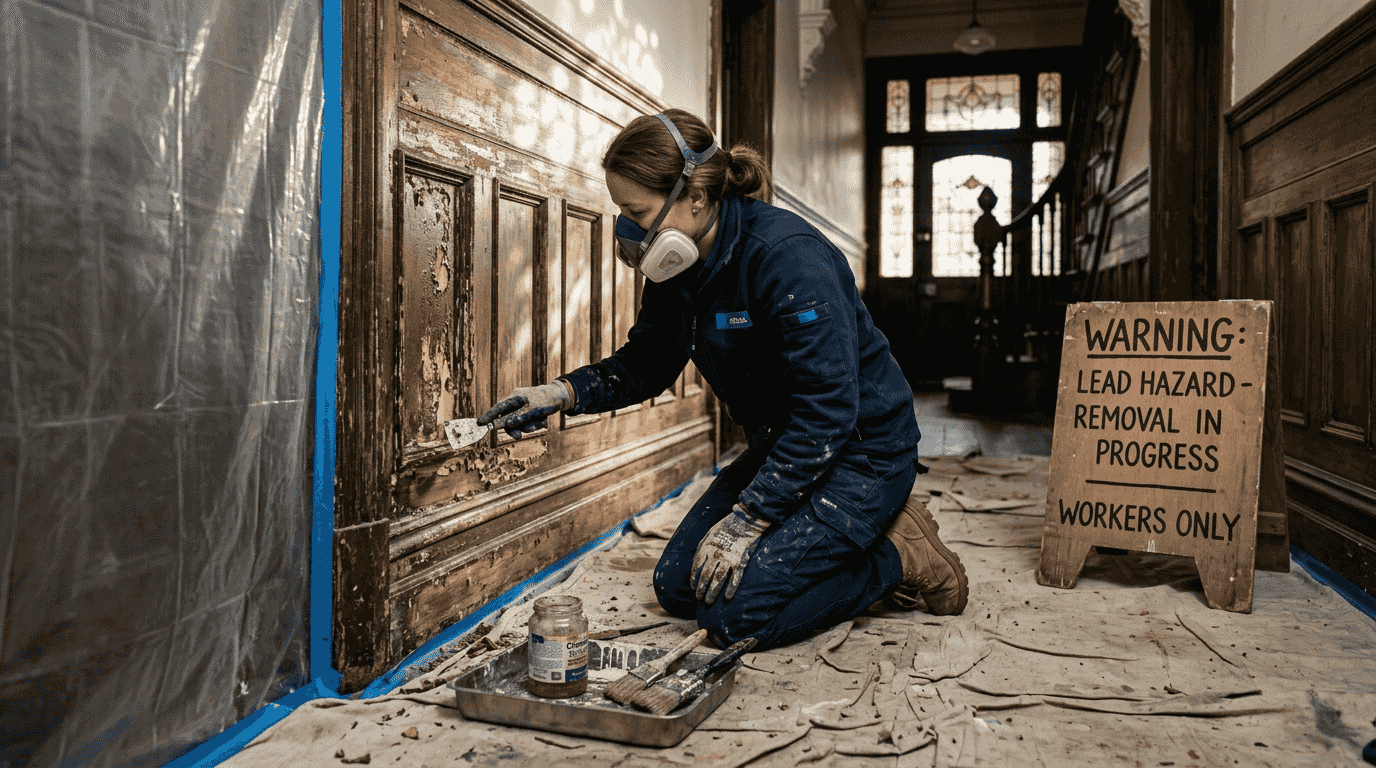
Pro Tip: Never attempt DIY sanding or heat gun removal of paint on heritage homes without professional testing first. Both methods release massive amounts of lead dust that will contaminate your entire property and put your family at risk for years.
Workers handling lead paint removal need specific training and often require biological monitoring through blood lead level testing. The health effects of lead exposure are cumulative and irreversible, making prevention the only acceptable approach. When you’re selecting paint colours and materials for your heritage house paint guide, working with professionals who understand these removal protocols protects everyone involved.
Modern premium paint materials designed for heritage homes contain no lead and provide superior protection without the health risks. The investment in proper lead paint removal creates a permanently safer environment for your family.
Preventing falls and managing scaffolding safety during painting
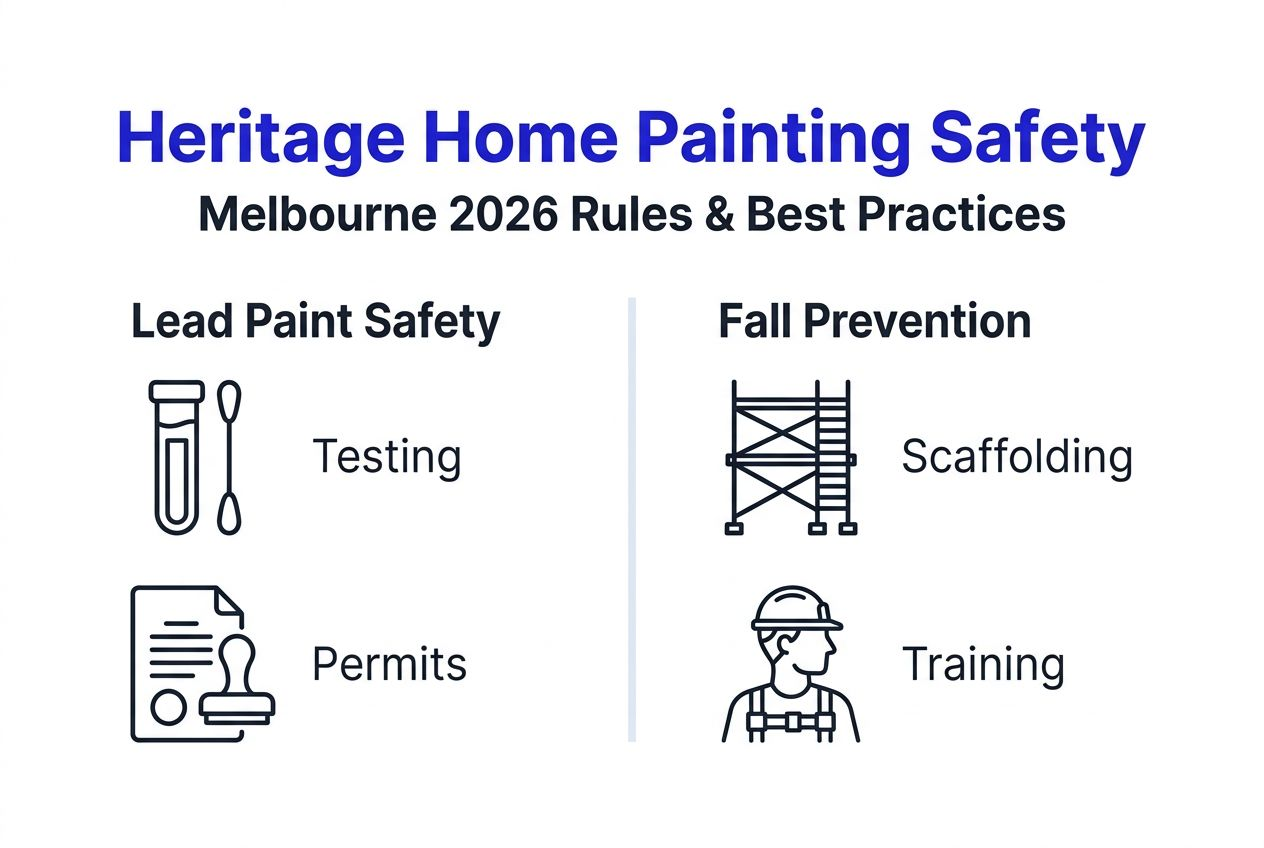
Fall prevention represents the single most critical safety concern during heritage home painting. The statistics are sobering. In 2024, falls from height caused 24 worker deaths, accounting for 13% of all workplace fatalities. These aren’t just numbers, they’re families devastated by preventable accidents.
Melbourne’s Victorian and Edwardian homes present unique fall risks. You’re working with two and three-storey structures, steep roof pitches that can’t be safely accessed with ladders alone, and ornate architectural details that require close-up work at dangerous heights. Standard residential painting equipment simply doesn’t cut it for these properties.
Worksafe Victoria has intensified its focus on scaffold safety with targeted inspection campaigns across the state. Inspectors are specifically looking for inadequate scaffolding, improper ladder use, and work at heights without appropriate fall protection. The improvement notices and prohibition orders issued aren’t just paperwork, they shut down non-compliant sites immediately.
Scaffolding safety comparison:
| Safety Control | Protection Provided | Risk If Ignored |
|---|---|---|
| Licensed scaffolder installation | Structurally sound platform meeting load requirements | Collapse causing falls, crushing injuries, or death |
| Guardrails and toe boards | Prevention of falls over edges and dropped tools | Workers falling from platforms, tools striking people below |
| Stable base and ground plates | Even weight distribution preventing tipping | Scaffold collapse on unstable or sloping ground |
| Regular inspections | Early detection of damage or deterioration | Undetected failures causing catastrophic accidents |
| Access ladders properly secured | Safe climbing to work platforms | Falls during access, ladder slipping |
Steps for safe work at heights during heritage painting:
- Conduct thorough site assessment identifying all elevated work areas and access requirements
- Engage licensed scaffolders to design and erect scaffolding appropriate for your specific building
- Ensure scaffolding includes full guardrails, mid-rails, and toe boards on all open sides
- Verify scaffolding inspection and tagging is current before allowing any workers to access platforms
- Provide workers with appropriate personal fall arrest equipment for areas where scaffolding isn’t practical
- Establish exclusion zones below work areas to protect people from falling objects
- Conduct toolbox talks at the start of each day reviewing fall hazards and safe work procedures
- Monitor weather conditions and cease work at heights during high winds or wet conditions
Pro Tip: The ‘it’s only a quick job’ mindset causes more fall injuries than any other factor. Every time someone climbs a ladder or accesses an elevated surface, proper protocols must be followed regardless of how brief the task seems.
For roof painting workflow on heritage properties, the safety requirements become even more stringent. Roof spaces on Victorian homes often contain fragile tiles, deteriorating timber, and steep pitches that become lethally slippery when wet. Professional contractors use purpose-built roof ladders with ridge hooks, safety harnesses anchored to approved points, and staging planks that distribute weight safely.
Practical safety tips for homeowners renovating heritage properties
As the homeowner, you have both legal and ethical responsibilities for safety during your renovation. Even if you’ve hired contractors, WorkSafe can hold you accountable as the person controlling the workplace. More importantly, you want everyone working on your heritage home to go home safely to their families each night.
Selecting the right painting contractor makes all the difference. Look for businesses with demonstrated experience in heritage properties who can provide evidence of their safety management systems. Ask about their WorkCover insurance, their approach to lead paint management, and their scaffolding protocols. A professional heritage painting specialist will welcome these questions and provide detailed answers.
Risk assessments need to be updated throughout the project, not just completed once at the start. As work progresses and different areas of your home are painted, new hazards may emerge. Your contractor should conduct regular safety audits and adjust their control measures accordingly. This isn’t bureaucratic box-ticking, it’s the systematic identification and management of real dangers.
Essential PPE checklist for heritage painting work:
- P2 or P3 respirators rated for lead dust and paint fumes, properly fitted and maintained
- Disposable coveralls preventing lead dust contamination of street clothes
- Chemical-resistant gloves appropriate for solvents and paint strippers being used
- Safety glasses or goggles protecting eyes from splashes and dust
- Non-slip footwear with ankle support for work on scaffolding and ladders
- Hard hats in areas where overhead work creates falling object risks
- High-visibility clothing ensuring workers are seen by others on multi-trade sites
Communication across your renovation site prevents accidents. If you have multiple trades working simultaneously, everyone needs to understand the painting work schedule, access requirements, and safety zones. Daily toolbox meetings keep safety front of mind and allow workers to raise concerns before incidents occur.
Pro Tip: Never overlook ventilation when working with paint strippers, sealers, and oil-based paints in heritage homes. These properties often have limited natural ventilation, and chemical fumes can reach dangerous concentrations quickly. Industrial ventilation fans and respiratory protection aren’t optional.
Worksafe Victoria issued multiple improvement notices for unsafe lead practices and inadequate worker training on heritage renovation sites. The consequences extend beyond fines. If someone is injured due to safety failures, you could face criminal charges. More significantly, you’ll carry the knowledge that someone was hurt on your property due to preventable failures.
When reviewing quotes for your heritage painting project, the cheapest option rarely delivers the best value. Contractors who cut corners on safety also cut corners on surface preparation, materials quality, and workmanship. For premium interior painting and exterior painting services, invest in professionals who demonstrate their commitment to safety through their systems, equipment, and worker training.
Discover expert heritage painting services in Melbourne
Protecting your heritage home during painting requires specialist knowledge that goes well beyond general painting skills. Sol Shine brings decades of experience working with Melbourne’s Victorian and Edwardian properties, combining traditional craftsmanship with rigorous 2026 safety standards. Our team understands the unique challenges these homes present, from lead paint management to safe access on complex roof structures.

We handle every aspect of heritage painting projects under one roof, eliminating the coordination headaches of managing multiple contractors. Our comprehensive approach covers interior painting that respects period details while meeting modern safety requirements, and exterior painting that protects your home’s architectural integrity for decades to come. Contact Sol Shine for a detailed consultation where we’ll assess your specific property, explain our safety protocols, and provide transparent pricing for your heritage painting project.
FAQ
What safety standards must I follow when painting a Melbourne heritage home?
You must comply with WorkSafe Victoria regulations for working at heights and EPA Victoria requirements for lead paint management in pre-1970s properties. Licensed contractors should provide risk assessments and control plans documenting how they’ll manage identified hazards throughout your project.
How can I tell if my home has lead paint and what should I do?
Homes built before 1970 almost certainly contain lead paint, particularly on exterior weatherboards, window frames, and interior trim. Professional testing using XRF analysers provides immediate results. If lead is confirmed, only use certified contractors with proper containment and removal procedures.
What precautions prevent falls during painting work on large Victorian homes?
Properly installed scaffolding with guardrails, licensed scaffolders, regular equipment inspections, and worker training in height safety are essential. Personal fall arrest equipment should be used in areas where scaffolding isn’t practical, with anchor points verified by structural engineers.
Is it safe to do some painting tasks myself during renovation?
Minor interior painting in rooms without lead paint and at ground level can be DIY projects if you follow basic safety precautions. Never attempt lead paint removal, exterior work above ground floor level, or any work requiring specialised equipment without proper training and safety systems.
How much does professional lead paint removal cost for heritage homes?
Costs vary significantly based on the extent of lead paint, removal methods required, and property size, typically ranging from $5,000 to $20,000 for comprehensive treatment. Professional removal costs less than dealing with lead contamination throughout your home or health consequences from DIY attempts.
What insurance should painting contractors have for heritage properties?
Contractors must carry current WorkCover insurance covering all workers, public liability insurance of at least $10 million, and professional indemnity insurance for heritage restoration work. Request certificates of currency and verify they’re current before work begins.


