
Many Melbourne homeowners assume choosing paint for their Victorian or Edwardian property is primarily about colour and finish. This misconception leads to costly structural damage when moisture trapping standard paints are applied to heritage masonry. The right premium paint protects your property’s original fabric, prevents plaster blowouts, and maintains authentic character while standard options accelerate decay in solid walls and lime renders common throughout inner Melbourne suburbs.
Table of Contents
- Why Breathable Paints Matter For Melbourne Heritage Homes
- Comparing Premium Paints With Standard Options: Features And Risks
- Traditional Techniques And Paint Choices In Authentic Heritage Restoration
- Choosing The Right Premium Paint For Your Melbourne Heritage Property
- Explore Solshine’s Premium Heritage Painting Services
Key takeaways
| Point | Details |
|---|---|
| Breathability protects heritage fabric | Premium paints allow moisture vapour to escape, preventing trapped water damage in solid walls and lime renders typical of Victorian and Edwardian homes. |
| Standard paints cause structural damage | Non-breathable acrylic and plastic-based paints trap moisture, leading to spalling, efflorescence, and expensive masonry repairs. |
| Premium paints offer superior longevity | Silicate and lime-based paints chemically bond to substrates, lasting 10+ years compared to standard paints requiring frequent repainting. |
| Traditional materials preserve authenticity | Lime renders and breathable coatings maintain original construction methods, protecting property value and heritage character. |
| Professional guidance ensures proper selection | Matching paint type to specific heritage materials prevents costly mistakes and ensures long-term protection. |
Why breathable paints matter for Melbourne heritage homes
Victorian and Edwardian properties throughout Kew, Brighton, and Malvern were built using solid brick walls, lime renders, and porous stone that naturally manage moisture through vapour transmission. Breathable exterior paints prevent moisture buildup by allowing water vapour to escape rather than becoming trapped within wall cavities. When moisture cannot escape, it accumulates behind paint films causing plaster blowouts, render failure, and brick spalling that compromises structural integrity.
Standard modern paints contain plastic binders and acrylic resins that create impermeable barriers. These coatings block the natural breathing process essential for heritage building materials. Water enters walls through capillary action, rain penetration, or condensation, but cannot evaporate outward when sealed by non-breathable paint films.
The damage progression follows a predictable pattern. Trapped moisture creates pressure behind paint layers, causing blistering and peeling. Salts within masonry dissolve and migrate to surfaces, forming white efflorescence deposits. Freeze-thaw cycles in Melbourne’s winter months expand trapped water, causing stone and brick faces to crack and detach.
Breathability is measured using Sd values, representing vapour diffusion resistance. Heritage walls require coatings with Sd values under 0.5 metres to maintain adequate moisture transmission. Standard acrylic paints typically exceed 2.0 metres, effectively waterproofing surfaces that must remain permeable.
Pro Tip: Before selecting any paint, have a heritage building specialist assess your walls’ moisture levels and identify existing materials. Original lime renders require different treatments than later cement patches, and mixing incompatible systems accelerates deterioration.
Choosing premium paint materials for heritage homes means understanding how your property’s original construction methods depend on breathability for long-term survival.
Comparing premium paints with standard options: features and risks
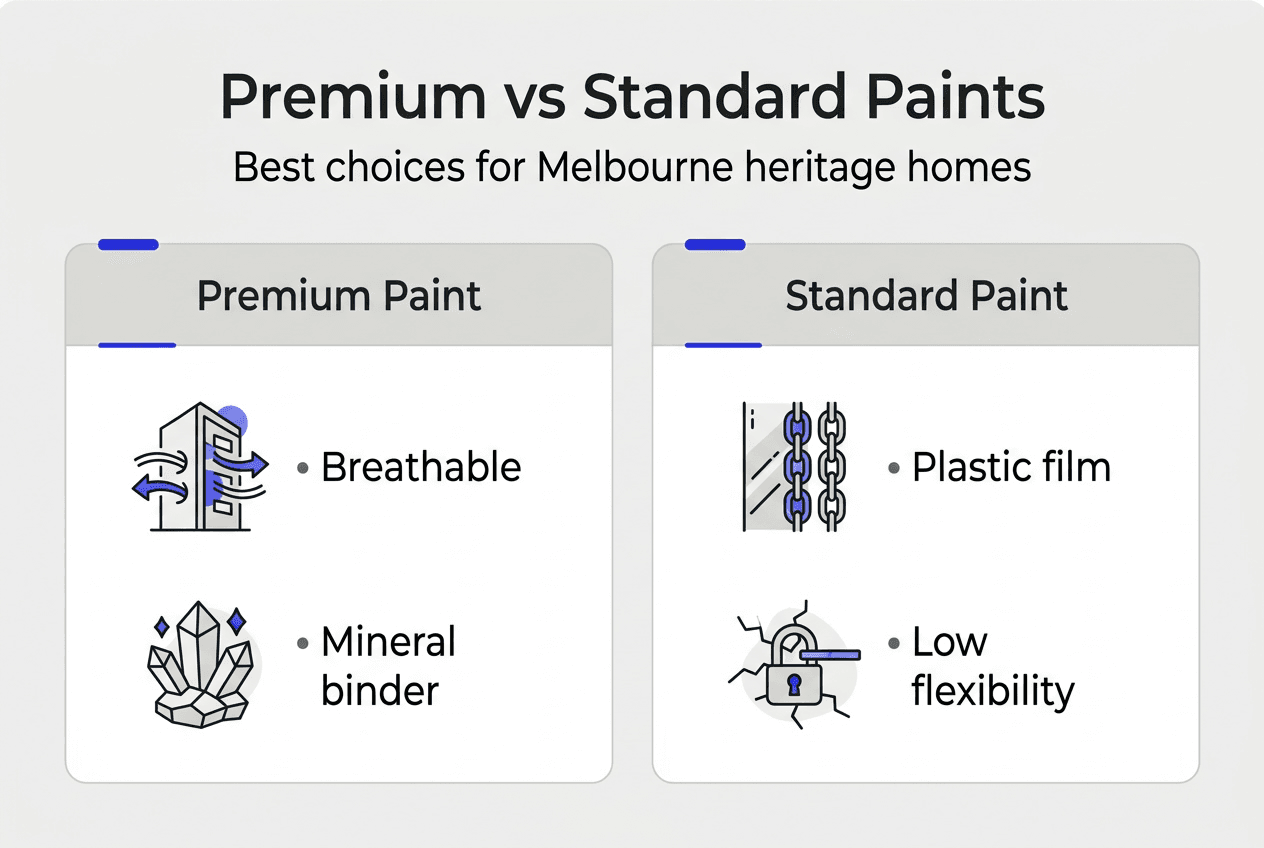
Premium heritage paints differ fundamentally in composition and performance from standard options available at hardware stores. Silicate paints chemically bond with substrates through a process called silicification, creating a mineral coating that becomes part of the wall surface rather than sitting on top. This molecular integration provides exceptional durability and weather resistance without blocking vapour transmission.
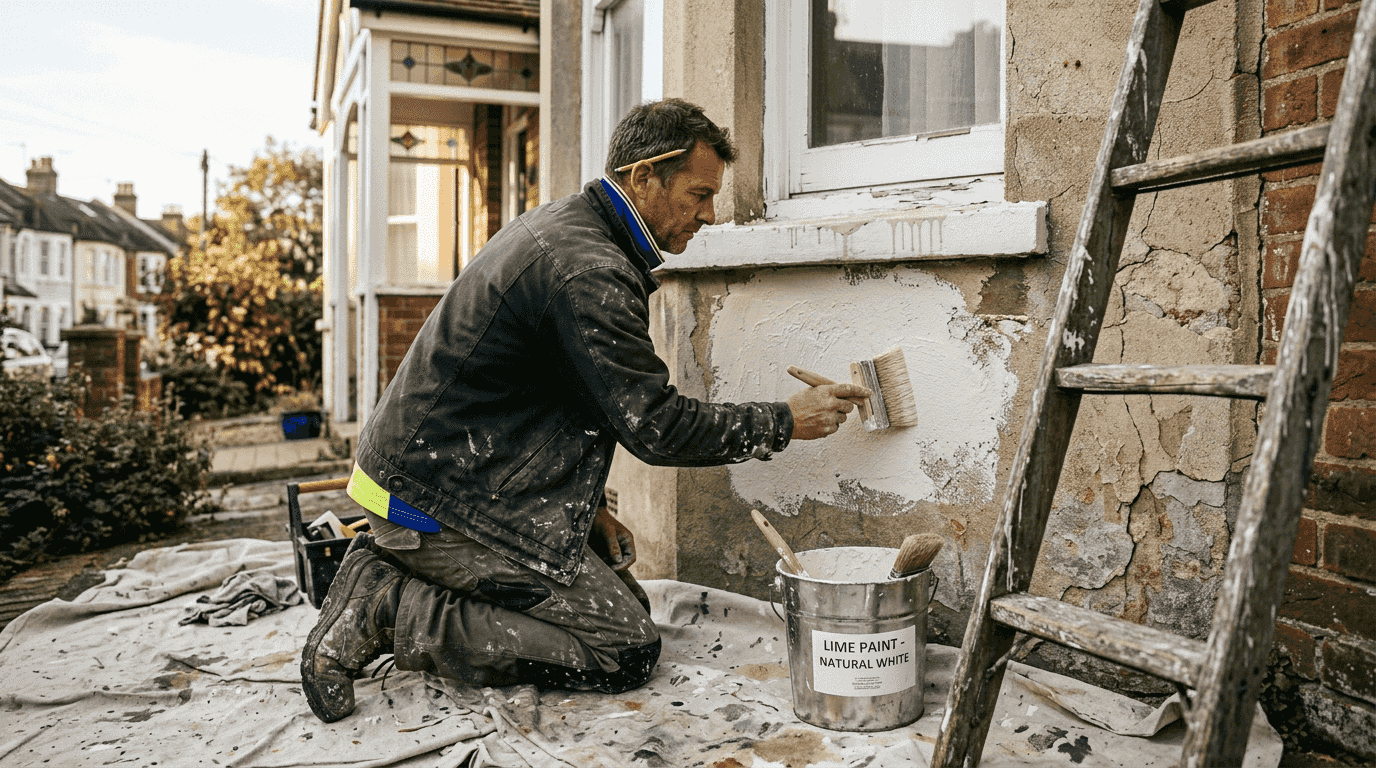
Lime-based paints use slaked lime as the primary binder, matching the composition of original renders on Victorian and Edwardian properties. These traditional formulations remain flexible, accommodating the slight movements common in older buildings without cracking. They also possess natural antimicrobial properties that inhibit mould growth in damp conditions.
Standard acrylic and vinyl paints create plastic films that flex minimally and crack under movement. Their impermeability means moisture trapping causes efflorescence and decay in heritage masonry. While initially cheaper, frequent repainting and underlying damage repairs make them costlier over property ownership.
| Feature | Premium Heritage Paint | Standard Acrylic Paint |
|---|---|---|
| Base composition | Mineral silicate or lime | Plastic acrylic resin |
| Breathability (Sd value) | 0.02 to 0.30 metres | 1.5 to 3.0 metres |
| Bonding method | Chemical integration | Mechanical adhesion |
| Typical lifespan | 10 to 15+ years | 3 to 6 years |
| Heritage compatibility | Excellent | Poor to moderate |
| Cost per litre | $45 to $85 | $25 to $40 |
Assessing whether premium paint suits your heritage surfaces requires systematic evaluation:
- Identify existing wall materials by removing small paint samples to reveal underlying substrates.
- Test moisture levels using a moisture meter at multiple wall locations, particularly near ground level and under eaves.
- Examine current paint condition for blistering, peeling, or efflorescence indicating trapped moisture.
- Determine if walls are solid masonry or cavity construction, as only solid walls require highly breathable coatings.
- Consult heritage paint specifications for your specific building materials and exposure conditions.
Pro Tip: Never apply premium mineral paints over existing acrylic or plastic-based coatings. Complete removal of incompatible layers is essential for proper adhesion and performance, though this preparation represents worthwhile investment for long-term protection.
Explore comprehensive guidance on exterior painting approaches that protect heritage character while addressing modern performance requirements.
Traditional techniques and paint choices in authentic heritage restoration
Lime renders and lime-based paints dominated construction throughout the Victorian and Edwardian eras because they accommodate building movement and moisture dynamics. These traditional materials remain the gold standard for authentic restoration because they allow wall breathability whilst providing weather protection. Modern cement renders and non-breathable coatings fundamentally conflict with heritage construction principles.
German Smear mortar application offers an alternative to paint that maintains superior breathability. This technique involves applying lime-based mortar in thin, irregular layers over brickwork, creating a textured whitewashed appearance whilst preserving vapour permeability. The method protects masonry without sealing surfaces, proving particularly effective for properties with moisture challenges.
The incorrect use of cement renders represents a critical error in Melbourne heritage restoration. Cement’s hardness and impermeability trap moisture whilst creating differential movement stresses that crack softer original brickwork. Removing failed cement and replacing it with appropriate lime-based systems forms a substantial component of proper heritage restoration.
Traditional breathable materials deliver multiple benefits:
- Natural antimicrobial properties reduce mould growth in damp conditions common to Melbourne’s bayside suburbs.
- Flexibility accommodates building movement without cracking or delamination.
- Self-healing characteristics allow minor cracks to seal through carbonation processes.
- Authentic appearance maintains heritage character essential for period property values.
- Long-term durability reduces maintenance cycles and associated costs.
Melbourne’s heritage property market increasingly rewards authentic restoration approaches. Properties restored using appropriate traditional materials command premiums over those with inappropriate modern interventions requiring costly rectification. Buyers recognise that proper heritage restoration protects their investment whilst preserving architectural significance.
Understanding heritage house paint selection requires appreciation of how traditional building methods and materials work together as integrated systems, not isolated components.
Choosing the right premium paint for your Melbourne heritage property
Several premium heritage paint brands serve Melbourne’s Victorian and Edwardian restoration market, each offering specific advantages for different applications and substrates. Selecting appropriate products requires matching paint characteristics to your property’s materials, exposure conditions, and aesthetic requirements.
Graphenstone GCS Exterior offers excellent coverage with a smooth matt finish across approximately 65 colour options, making it suitable for rendered facades requiring clean, uniform appearance. Its silicate-based formulation provides outstanding weather resistance for exposed elevations facing Melbourne’s westerly weather patterns.
Auro 344 Lime Paint represents a traditional mineral paint suited for both interiors and exteriors, particularly where authentic lime finishes are desired. This plastic-free formulation excels on lime renders and original plasterwork throughout properties in Richmond, Fitzroy, and surrounding heritage precincts.
Keim mineral paints deliver exceptional durability through potassium silicate chemistry, bonding molecularly with mineral substrates. These German-engineered systems prove ideal for exposed brickwork and stone surfaces requiring maximum longevity with minimal maintenance.
| Paint Product | Coverage (m²/L) | Sd Value | Colour Range | Finish | Best Application |
|---|---|---|---|---|---|
| Graphenstone GCS | 6 to 8 | 0.02 | 65+ | Smooth matt | Rendered facades |
| Auro 344 Lime | 4 to 6 | 0.05 | 20+ | Traditional matt | Lime renders, plaster |
| Keim Soldalit | 5 to 7 | 0.03 | 200+ | Matt to satin | Exposed masonry |
| Earthborn Silicate | 8 to 10 | 0.04 | 72 | Soft matt | Interior walls |
Matching paint to building materials prevents compatibility issues:
- Stone and solid brick accept silicate paints that chemically bond with mineral surfaces.
- Lime renders and original plaster require lime-based paints maintaining system compatibility.
- Timber elements need flexible breathable systems accommodating wood movement.
- Previously painted surfaces must be assessed for existing coating types before selection.
Premium heritage paints reduce long-term costs despite higher initial investment. Lasting 10+ years with proper application means fewer repainting cycles, less scaffolding hire, and reduced disruption to your property throughout ownership. The longevity advantage becomes particularly valuable for multi-storey properties where access costs represent substantial portions of painting budgets.
Pro Tip: Order sample pots and test colours on inconspicuous wall sections before committing to full quantities. Heritage paint colours often appear different on aged masonry compared to modern colour cards, and testing prevents expensive mistakes.
Explore Solshine’s premium heritage painting services
Restoring Melbourne’s Victorian and Edwardian homes requires specialised knowledge of traditional materials and proper application techniques. After understanding premium paint benefits, many homeowners seek professional expertise to ensure correct product selection and lasting results. Solshine combines premium breathable paints with skilled heritage craftsmanship, protecting your property’s original fabric whilst delivering authentic finishes.
Our premium heritage painting services address the complete restoration process from substrate preparation through final coating application. We work with silicate, lime, and mineral-based paint systems suited to Melbourne’s heritage building stock throughout Kew, Hawthorn, Camberwell, Brighton, and surrounding suburbs. Every project receives individual assessment to match materials with your property’s specific requirements.
Learn how proper paint selection contributes to heritage paint lasting 10 years through our detailed approach. Explore our exterior painting portfolio showcasing completed heritage restorations across Melbourne’s inner east and bayside areas.
FAQ
What is the difference between breathable and non-breathable paints?
Breathable paints allow water vapour to pass through the coating, letting moisture escape from solid walls and lime renders without becoming trapped. Non-breathable paints create impermeable barriers that seal moisture inside walls, causing plaster blowouts, efflorescence, and masonry decay. This breathability difference is critical for protecting heritage building materials that depend on vapour transmission for moisture management.
Can I use standard acrylic paint on a Victorian terrace in Melbourne?
Standard acrylic paints trap moisture within solid brick walls and lime renders, leading to progressive structural damage including spalling, render failure, and plaster deterioration. These modern coatings conflict with original construction methods that require breathability. Premium breathable paints specifically formulated for heritage buildings provide necessary protection whilst preserving your property’s structural integrity.
How long does premium heritage paint last compared to standard paint?
Premium heritage paints last 10+ years when properly applied and maintained, with some mineral-based systems exceeding 15 years on protected elevations. Standard acrylic paints typically require repainting every 3 to 6 years, particularly on heritage properties where trapped moisture accelerates coating breakdown. The extended lifespan of premium options reduces long-term costs despite higher initial investment.
What maintenance do premium paints require for heritage properties?
Regular inspection for damage, cracks, or moisture penetration helps identify issues before they escalate into costly repairs. Paint maintenance essentials include gentle cleaning with soft brushes and water, avoiding high-pressure washing that damages breathable coatings. Professional touch-ups of damaged areas maintain continuous protection, whilst annual assessments ensure breathability and weather resistance remain effective throughout the paint’s lifespan.


