
TL;DR:
- Conservation painting stabilizes and preserves original painted surfaces using scientifically assessed, reversible treatments. It prioritizes protecting cultural and historical value over cosmetic enhancement, ensuring the longevity of heritage interiors and exteriors. Proper assessment and maintenance help prevent irreversible damage and retain the authentic character of historic properties.
Conservation painting is the specialised process of stabilising and preserving original painted surfaces to maintain their structural and visual integrity over time. For homeowners of Victorian and Edwardian properties, and for art enthusiasts who care about cultural history, understanding the role of conservation painting means recognising that it goes far beyond touching up flaking paint. It is a scientifically informed discipline that combines chemistry, imaging technology, and ethical decision-making to protect what cannot be replaced. From Maltese chapel frescoes to the painted timber trims of Melbourne’s heritage homes, the importance of art conservation reaches into every corner of our built and cultural world.
What is the role of conservation painting in preserving painted surfaces?
Conservation painting is defined by its primary goal: to stabilise original materials and prevent further deterioration, rather than to simply improve appearance. Treatments include cleaning discoloured varnish, reattaching flaking paint layers, and reinforcing unstable supports to achieve long-term stability. This distinction matters enormously. A conservator is not repainting a surface. They are preserving what already exists, layer by layer, with as little intervention as possible.
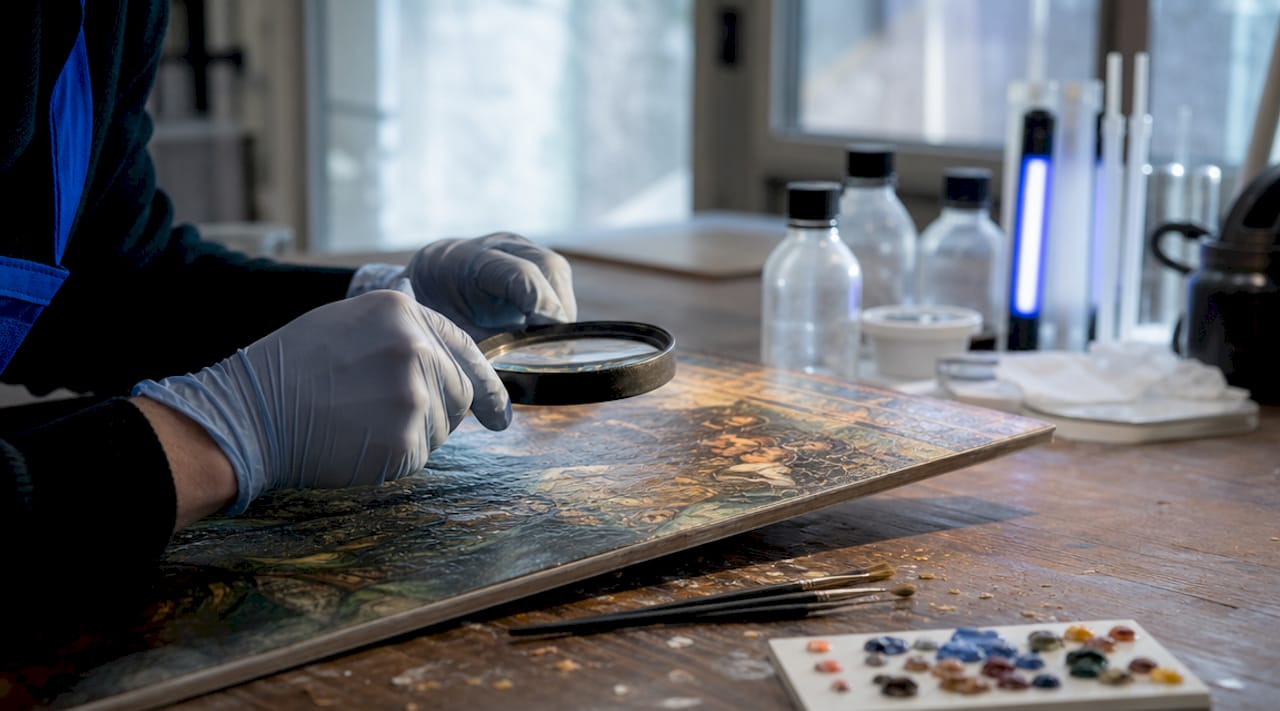
The process begins with a thorough assessment of the painting’s structure and chemistry. Conservators examine how different layers, including ground, paint, and varnish, interact and degrade over time. This scientific foundation determines which treatments are appropriate and which would cause harm. Without this step, even well-intentioned repairs can accelerate damage rather than arrest it.
Advanced imaging plays a central role in this investigative phase. UV and IR imaging can reveal underdrawings, previous restorations, and areas of instability invisible to the naked eye. A two-year Smithsonian project used exactly these techniques to stabilise and restore a 15th-century altarpiece by Giovanni Bellini, with the entire process visible to museum visitors. That level of transparency reflects how seriously the field takes public education alongside material care.
Reversibility is another defining principle. Every material introduced during treatment, whether a consolidant, a cleaning agent, or an inpainting medium, must be removable by future conservators without damaging the original. Selective cleaning uses polymers and spectroscopy to remove contaminants while preserving both aesthetic and structural integrity, evaluated with quantitative methods. This rigorous approach separates conservation painting from standard decorative repainting.
Pro Tip: If you own a heritage home with original painted surfaces, request a condition report from a qualified conservator before any painting work begins. A written assessment protects you from irreversible decisions made without proper investigation.
Why is conservation painting important for cultural and architectural heritage?
The importance of art conservation becomes clearest when you consider what is at stake. Painted surfaces are not merely decorative. They carry historical meaning, document artistic intent, and record the cultural values of the people who created them. When those surfaces are lost or altered without care, the information they hold disappears permanently.
Consider the range of painted heritage that conservation painting protects:
- Frescoes and murals in historic chapels, civic buildings, and private residences, including Valletta chapel frescoes and 16th-century Maltese panel paintings that document religious and social history
- Architectural painted elements such as decorative cornices, timber joinery, and façade details on Victorian and Edwardian homes across Melbourne suburbs like Kew, Hawthorn, and Camberwell
- Altarpieces and devotional works that serve both spiritual and historical functions within living communities
- UNESCO heritage site painted surfaces, including the Lahore Fort Picture Wall, where conservation decisions affect national identity and international cultural standing
Each of these categories presents different challenges, but the underlying principle is consistent. Conservation painting preserves visual legibility, meaning the ability of a viewer to read and understand the original work as its maker intended.
“Conservation is not about making things look new. It is about keeping them honest.” This principle, widely held across the profession, captures why ethical restraint matters as much as technical skill.
Restoration work using X-ray imaging can reveal original layers beneath later alterations, sometimes uncovering an artist’s true intent after centuries of well-meaning but misguided overpainting. One documented case involved a 420-hour restoration that revealed an entirely different composition beneath the altered surface. That kind of discovery is only possible when conservators approach painted surfaces with patience and scientific rigour rather than speed and aesthetic preference.
For homeowners, the parallel is direct. The original painted finishes on a heritage home, whether a leadlight-framed entry or a decoratively painted verandah ceiling, carry the same kind of historical value. Stripping or overpainting them without proper assessment removes evidence of the home’s original character that cannot be recovered.
What preventive conservation techniques support long-term painted surface care?
Preventive conservation is proactive maintenance that creates stable conditions rather than treating damage after it occurs. The Art Institute of Chicago defines this approach as monitoring and controlling temperature, humidity, light levels, and pollutants to avoid deterioration before it begins. This is the most cost-effective form of conservation available, because it reduces the frequency and severity of active treatments needed over time.
The environmental science behind this is specific. Museum climate regimes of RH 40 to 60%, with a maximum fluctuation of 10% per 24-hour period, are linked directly to the conservation performance of wax-resin lining layers used in painting treatments. Critically, effectiveness depends not just on average conditions but on how frequently fluctuations occur. A room that swings between 45% and 55% relative humidity twice daily causes more cumulative damage than one that holds steadily at 50%.
| Preventive measure | Why it matters for painted surfaces |
|---|---|
| Stable relative humidity (40–60%) | Prevents paint layer expansion and contraction that causes cracking and flaking |
| Controlled light exposure | Reduces fading and photochemical degradation of pigments and binding media |
| Pest inspections | Identifies insect or rodent activity that can physically damage painted supports |
| Routine condition monitoring | Catches early signs of deterioration before they require costly active treatment |
| Screening display and storage materials | Avoids off-gassing from acidic materials that accelerate paint and varnish breakdown |
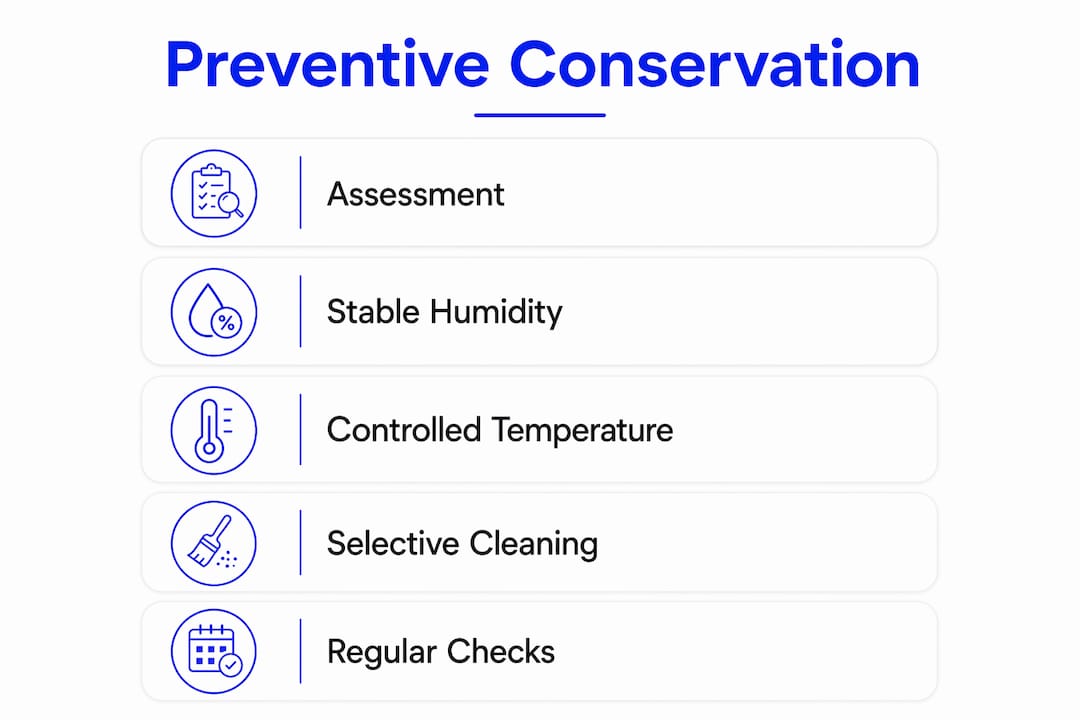
For homeowners, these principles translate into practical decisions. Keeping heritage rooms at consistent temperatures, avoiding high-humidity environments near original painted joinery, and scheduling annual condition checks with a qualified painter or conservator all reduce the risk of serious deterioration. The factors affecting paint lifespan in Melbourne’s climate, including humidity variation and UV exposure, are directly relevant to how long original painted surfaces survive without intervention.
Pro Tip: In Melbourne’s inner east and bayside suburbs, summer humidity spikes can stress original painted timber surfaces significantly. Installing a dehumidifier in enclosed verandahs or period-style sunrooms is a low-cost preventive measure that extends the life of original finishes.
How do ethical principles influence conservation painting practices?
Ethics in conservation painting are not abstract. They are the practical rules that prevent well-intentioned work from causing irreversible harm. The core ethical commitments of the profession include:
- Minimising intervention: Only treat what requires treatment. Every additional action carries risk to original material.
- Using reversible materials: All inpainting, consolidants, and varnishes must be removable by future conservators using standard methods.
- Avoiding visual deception: Reintegration of losses should not attempt to recreate original paint so convincingly that viewers cannot distinguish old from new under close examination.
- Thorough documentation: Every treatment decision must be recorded, including what was done, what materials were used, and what condition the work was in before treatment began.
- Preserving future options: No treatment should foreclose the possibility of a different approach being taken by conservators working with better technology or knowledge in the future.
Conservation of a painting at Serlachius museum illustrates these principles in practice. The treatment of a Gerbrandt van den Eeckhout work involved layer-by-layer decisions treating varnish, paint, and underlayers differently, with each intervention using removable modern materials. Reintegration was controlled so that losses were masked without permanently recreating original paint, preserving the option for future treatment. This approach reflects the profession’s commitment to authenticity over appearance.
For heritage homeowners, the ethical parallel is choosing heritage painting techniques that respect original materials rather than covering them with modern products incompatible with period construction. Using the wrong primer on original lime render, for example, can trap moisture and cause far more damage than the surface problem it was meant to fix.
Key takeaways
Conservation painting preserves original painted surfaces through scientifically informed, reversible treatments that prioritise material stability and authenticity over cosmetic improvement.
| Point | Details |
|---|---|
| Conservation vs. repainting | Conservation painting stabilises original materials; it does not replace or cover them with new paint. |
| Scientific investigation first | UV imaging, X-ray analysis, and chemistry assessment precede any physical treatment to avoid irreversible decisions. |
| Preventive care is most effective | Controlling humidity, light, and temperature reduces deterioration before active treatment becomes necessary. |
| Ethics guide every decision | Reversibility, minimal intervention, and thorough documentation protect original material and future treatment options. |
| Heritage homes need the same care | The painted surfaces of Victorian and Edwardian homes carry historical value that requires conservation-informed approaches, not standard repaints. |
Why the science behind conservation painting changed how I think about heritage homes
I have spent years working on Victorian and Edwardian homes across Melbourne’s inner east and bayside suburbs, and the single biggest shift in my thinking came from understanding what conservation painting actually is. Most people, including many in the trades, treat heritage painting as a cosmetic exercise. Strip the old paint, apply a fresh coat, and the job is done. That approach destroys irreplaceable material every time.
What the science makes clear is that original painted surfaces are documents. The lead-based paints on a Kew Italianate façade, the distemper on a Hawthorn hallway ceiling, the original enamel on a Camberwell verandah balustrade: these are not just old finishes waiting to be updated. They are physical records of how the home was built, what materials were available, and how the original owners understood quality. Once you sand them off, that record is gone.
The ethical framework of conservation painting, particularly the commitment to reversibility and minimal intervention, is something every heritage homeowner deserves to understand before they commission any painting work. It changes the questions you ask. Instead of “what colour should I repaint this?”, you start asking “what is actually here, and what does it need to remain stable?” Those are better questions, and they lead to better outcomes for the home and for the history it holds.
The growing integration of scientific tools into conservation practice, from spectroscopy to digital condition mapping, means that the gap between museum-grade conservation and skilled heritage painting is narrowing. That is genuinely good news for homeowners who want to protect what they have rather than simply refresh how it looks.
— Jarrad
Protect your heritage home with expert conservation painting

Heritage homes in Melbourne’s inner east and bayside suburbs represent some of the finest Victorian and Edwardian architecture in Australia, and their original painted surfaces deserve the same care given to museum collections. Com specialises in heritage painting and restoration for properties across Kew, Hawthorn, Camberwell, Brighton, Malvern, and surrounding suburbs, bringing conservation-informed methods to every project. From condition assessments and paint preservation to full façade restoration and architectural woodwork, Com handles large-scale heritage projects under one roof. If you are planning a restoration project and want to understand paint preservation before committing to a scope of work, get in touch for a consultation.
FAQ
What is conservation painting and how does it differ from repainting?
Conservation painting stabilises and preserves original painted materials using reversible, scientifically assessed treatments. Standard repainting applies new paint over existing surfaces without investigating or protecting the original layers beneath.
How does painting conservation work on heritage homes?
Conservators assess the structure and chemistry of existing paint layers before any treatment begins, using imaging tools like UV and X-ray to identify instability. Treatments then target specific problems, such as flaking, varnish discolouration, or support deterioration, with minimal intervention to the surrounding original material.
Why conserve paintings and original painted surfaces rather than replace them?
Original painted surfaces carry historical and material information that cannot be recreated once lost. Conservation preserves that record while maintaining the visual and structural integrity of the work for future generations.
What conservation techniques for artworks apply to architectural painted elements?
Techniques including selective cleaning, consolidation of flaking layers, controlled humidity environments, and reversible inpainting all apply directly to architectural painted surfaces such as decorative cornices, timber joinery, and heritage façades.
How often should heritage homeowners schedule condition checks on painted surfaces?
Annual condition monitoring is the standard recommended by preventive conservation practice, allowing early identification of deterioration before it requires costly active treatment.


