
TL;DR:
- Proper maintenance involves gentle cleaning suited to each paint finish and controlling humidity to extend surface life. Regular dusting, cautious cleaning, and correct paint storage prevent premature deterioration and ensure long-lasting painted surfaces. Patience with full curing time and consistent upkeep habits can significantly prolong the appearance and durability of interior and exterior paint.
Maintaining painted surfaces is the practice of using regular cleaning, moisture control, and timely touch-ups to preserve paint appearance and extend its serviceable life. How to maintain painted surfaces properly depends on three variables: paint finish, surface location, and exposure to moisture or abrasion. Get these right and interior paint lasts 7–10 years, while exterior paint holds for 5–7 years with consistent upkeep. Neglect them and you will be repainting far sooner than necessary. This guide covers the right cleaning solutions, safe techniques for each finish type, maintenance schedules, and paint storage practices that keep your home looking its best.
What cleaning solutions work best for painted surfaces?
The correct cleaning solution for painted surfaces is a mild liquid dish soap diluted at 5–10 drops per gallon of warm water. That ratio is gentle enough to lift everyday grime without stripping sheen or softening the paint film. For grease stains, a baking soda paste applied directly to the mark and left for 10 minutes breaks down the residue without abrasive scrubbing.
Avoid any cleaner labelled as a degreaser, bleach-based spray, or abrasive powder on painted walls or furniture. These products strip the topcoat and dull the finish permanently. The same applies to rough scrubbing pads or steel wool, which leave micro-scratches that catch light and show up clearly on gloss and semi-gloss finishes.
The right tool matters as much as the solution. Use a soft, non-shedding microfibre cloth or a clean cellulose sponge. Both lift dirt without grinding it into the paint surface. Wring the cloth thoroughly before use. A cloth that drips water onto the wall is already too wet.
Test your cleaning solution on a hidden area first, such as behind a door or inside a wardrobe. Wait a few minutes and check for any colour lift, dulling, or surface change. This single step saves you from accidental damage across an entire wall.
Pro Tip: For protecting painted furniture in high-traffic areas, add a thin coat of furniture wax over a fully cured painted surface. It adds a sacrificial layer that takes the daily wear instead of the paint itself.
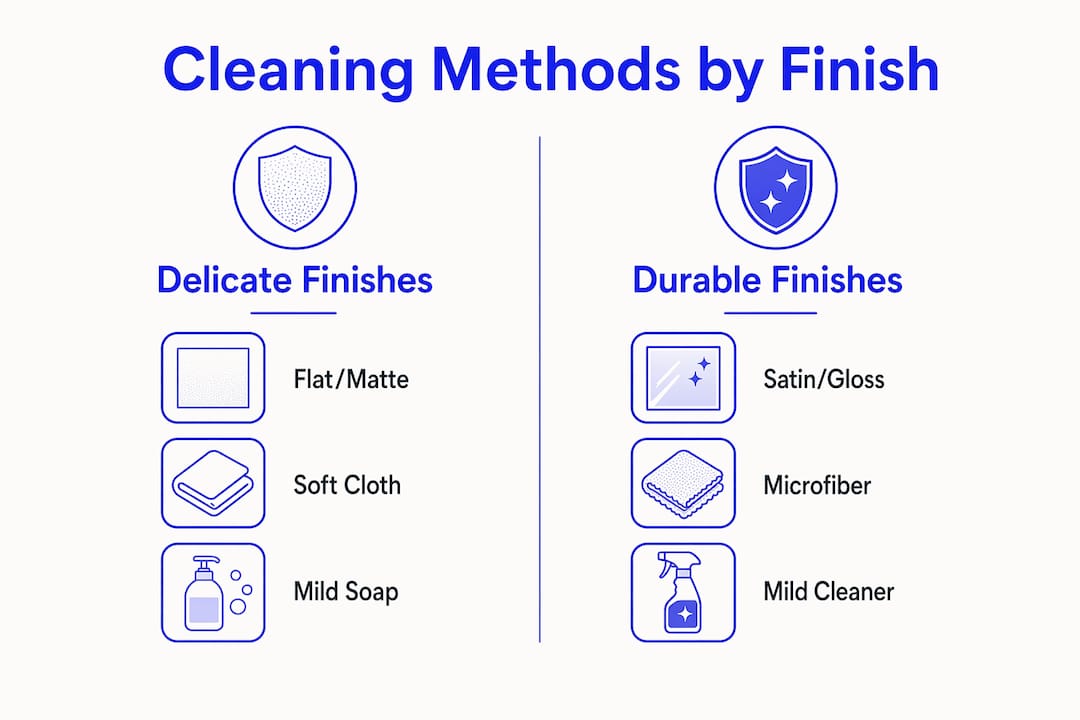
Cleaning methods by paint finish
| Paint Finish | Recommended Cleaner | Tool | Notes |
|---|---|---|---|
| Flat / Matte | Mild soap solution | Microfibre cloth | Blot and lift only; never wipe |
| Eggshell | Mild soap solution | Soft sponge | Light circular motion; rinse promptly |
| Satin | Mild soap solution | Microfibre cloth | Tolerates gentle scrubbing |
| Semi-gloss | Mild soap solution or baking soda paste | Soft cloth | Buff dry immediately to avoid streaks |
| High gloss | Mild soap solution | Damp microfibre | Long strokes; buff with dry cloth |
How often should you clean and inspect painted surfaces?
A consistent maintenance schedule is the most reliable way to extend paint life. Monthly dusting removes airborne particles before they bond to the surface. Quarterly spot cleaning addresses marks and scuffs before they set. An annual full wash keeps the overall finish fresh and prevents the build-up of grime that requires aggressive cleaning later.
Kitchens and bathrooms need more frequent attention. Steam, cooking grease, and soap residue accelerate surface degradation in these rooms. Wipe down kitchen walls near the cooktop fortnightly and bathroom walls monthly at minimum.
For exterior surfaces, schedule inspections in spring and autumn. These seasons reveal damage from summer UV exposure and winter moisture respectively. Look for peeling, bubbling, cracking, or chalking. Catching these signs early allows for spot repairs rather than full repaints.
- Dust interior walls monthly using a dry microfibre cloth or a soft-bristle brush attachment on a vacuum
- Spot clean marks and scuffs quarterly with the mild soap solution
- Wash all interior walls annually, or twice yearly in kitchens and bathrooms
- Inspect exterior paint in spring and autumn for peeling, cracking, or chalking
- Check window frames, sills, and weatherboards for moisture ingress during each inspection
- Clean exterior surfaces with a low-pressure hose and mild detergent annually
Humidity management is the single most effective way to extend paint life. Running exhaust fans during and after showers, and using rangehood ventilation while cooking, prevents the moisture build-up that causes bubbling and peeling. In Melbourne’s variable climate, this is particularly relevant during humid summer periods.
Pro Tip: Place a small hygrometer in bathrooms and laundries to monitor humidity levels. Aim to keep relative humidity below 60 per cent in these rooms. Above that threshold, paint adhesion begins to weaken over time.
What techniques prevent damage while cleaning?
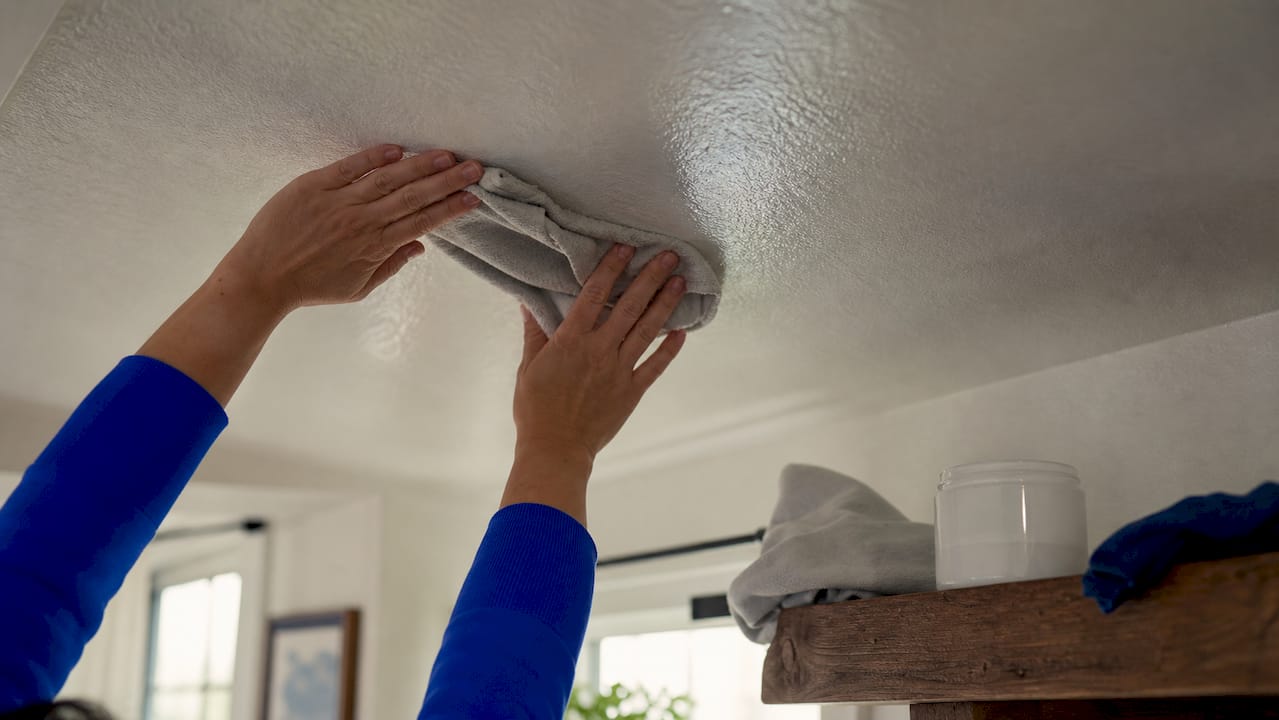
The most common cause of paint damage during cleaning is over-saturation. Cloths must be barely damp with no dripping water. Excess moisture seeps behind the paint film, causes bubbling, and can lead to permanent streaking. Wring your cloth until it feels almost dry before it touches the wall.
Different paint sheens require different physical techniques. Flat and matte finishes are the most delicate. The blot and lift method is the correct approach for these surfaces. Press the damp cloth gently against the mark, hold for a second, then lift straight off. Wiping or rubbing grinds the dirt deeper into the porous surface and spreads the stain.
Glossy finishes tolerate more contact but still require care. Use long, even strokes in one direction, then immediately buff the area dry with a clean, dry cloth. This prevents water marks and preserves the reflective quality of the sheen.
Magic Erasers are abrasive sponges that act like fine sandpaper on paint. They remove surface sheen and leave dull, flat patches that are visible in raking light. Reserve them for genuine emergencies only, use the lightest possible pressure, and test on a hidden area first.
Step-by-step cleaning by paint type
| Paint Type | Step 1 | Step 2 | Step 3 |
|---|---|---|---|
| Flat / Matte | Dust surface dry | Blot mark with barely damp cloth | Allow to air dry; do not rub |
| Eggshell / Satin | Dust surface dry | Wipe gently with damp sponge | Rinse with clean water; pat dry |
| Semi-gloss / Gloss | Dust surface dry | Wipe with long strokes using damp cloth | Buff immediately with dry cloth |
Common mistakes to avoid:
- Using a soaking wet cloth or sponge on any painted surface
- Scrubbing flat or matte paint with a circular motion
- Applying undiluted cleaning products directly to the wall
- Skipping the test patch on a hidden area before full application
- Leaving water sitting on the surface after cleaning
Pro Tip: Always work from the bottom of the wall upward when washing. Dirty water running down a dry wall leaves streaks that are harder to remove than the original grime.
How to handle touch-ups and store leftover paint
Touch-ups are most effective when the paint is stored correctly from the day the job is completed. Store leftover paint in small airtight containers filled nearly to the brim to minimise air exposure. Mason jars work well for small quantities. Half-empty original cans stored in a garage are exposed to temperature fluctuations that cause the paint to skin over and separate.
Label every container with the room name, wall colour, sheen level, and the date of application. Dulux Lexicon Quarter in low sheen looks identical in the tin to Dulux Lexicon Quarter in full gloss. Without a label, you risk applying the wrong sheen to a touch-up and creating a visible patch.
Before applying any touch-up, prepare the surface properly:
- Lightly sand the chipped or scratched area with 220-grit sandpaper to smooth the edges
- Wipe away dust with a barely damp cloth and allow to dry fully
- Apply touch-up paint with a small artist’s brush or foam roller, feathering the edges outward
- Match the original application texture; a brush on a rolled wall will show as a sheen difference
- Allow each coat to dry fully before assessing whether a second coat is needed
Timing matters significantly for freshly painted surfaces. Paint may feel dry to the touch within a few hours, but full cure takes 2–4 weeks. Washing, scrubbing, or placing objects against a newly painted wall before full cure causes permanent marks and surface damage. This is one of the most overlooked aspects of caring for painted finishes.
Pro Tip: When feathering a touch-up, extend the paint slightly beyond the repair area and blend into the surrounding surface. This softens the edge and makes the repair far less visible under different lighting conditions.
Key takeaways
Maintaining painted surfaces requires gentle, regular cleaning matched to the paint finish, combined with humidity control and properly stored touch-up paint.
| Point | Details |
|---|---|
| Match cleaner to finish | Use 5–10 drops of mild dish soap per gallon of warm water; adjust technique for matte versus gloss. |
| Clean little and often | Monthly dusting and quarterly spot cleaning prevent build-up that requires aggressive treatment. |
| Control moisture | Run exhaust fans in bathrooms and kitchens to prevent bubbling, peeling, and mould growth. |
| Store paint correctly | Use airtight mason jars filled to the brim, labelled with room, colour, and sheen details. |
| Wait before washing | New paint takes 2–4 weeks to fully cure; cleaning before then causes permanent surface damage. |
The maintenance habit most homeowners skip
I have seen more paint jobs fail prematurely from neglect than from poor application. The homes I visit where paint looks tired after three years almost always share the same pattern: no ventilation routine, no regular dusting, and cleaning done with whatever spray bottle was under the sink.
The part that surprises most homeowners is how little effort proper maintenance actually requires. A monthly dust-down with a microfibre cloth takes five minutes per room. Running the exhaust fan for 15 minutes after a shower costs nothing. These habits compound quietly over years and are the difference between a repaint at year seven and one at year twelve.
The other thing I advocate strongly is patience with cure time. Homeowners move furniture back against walls, hang pictures, and wipe down surfaces within days of a fresh coat. Paint that feels dry is not paint that has cured. The 2–4 week cure window is not a suggestion. Damage done in that window is permanent and often requires a full repaint of the affected area.
Invest in quality microfibre cloths and keep a labelled jar of touch-up paint for every room. These two things alone will extend the life of your painted surfaces more reliably than any premium product on the market. Good maintenance is not complicated. It is consistent.
— Jarrad
How sol shine helps your paint last longer
Sol Shine’s painting work across Melbourne’s inner east and bayside suburbs is built around preparation and finish quality that makes ongoing maintenance straightforward. When surfaces are properly primed, filled, and painted with premium products like Dulux and Haymes, the paint film bonds correctly and holds up to regular cleaning without degrading.
For homeowners considering an interior repaint or a full exterior refresh, Sol Shine provides guidance on the right products and finishes for each room and surface type. The team also advises on paint longevity strategies specific to Melbourne’s climate. If your current paint is showing signs of wear, get in touch with Sol Shine to discuss a lasting solution.
FAQ
How do i clean painted walls without damaging the finish?
Use a soft microfibre cloth dampened with a mild dish soap solution of 5–10 drops per gallon of warm water. Wring the cloth until barely damp, test on a hidden area first, and use the blot and lift method on matte finishes.
How long does interior paint last with proper maintenance?
Well-maintained interior paint lasts 7–10 years. Exterior paint lasts 5–7 years due to UV and weather exposure. Regular cleaning and humidity control are the primary factors that determine where your paint lands in that range.
Can i use a magic eraser on painted walls?
Magic Erasers act like fine sandpaper and remove paint sheen permanently if used incorrectly. Reserve them for genuine emergencies, use the lightest possible pressure, and always test on a concealed area first.
When can i wash a freshly painted wall?
Paint feels dry within a few hours but takes 2–4 weeks to fully cure. Avoid washing, scrubbing, or placing objects against the surface until the full cure period has passed to prevent permanent damage.
How should i store leftover paint for future touch-ups?
Transfer leftover paint into small airtight containers such as mason jars, filled nearly to the brim to reduce air contact. Label each container with the room name, colour, and sheen level, and store in a climate-controlled space away from temperature extremes.


