
TL;DR:
- Soft washing is the preferred and safest method for Melbourne roofs, using low pressure and chemical solutions to eliminate moss and algae. Pressure washing damages shingles and voids warranties, while chemical treatments require patience and proper vegetation protection. Regular inspections, gutter cleaning, and trimming trees help extend the benefits of professional roof cleaning for long-lasting, healthy roofs.
Roof cleaning is the process of safely removing moss, algae, lichen, and debris from roofing surfaces to protect materials and extend the life of your roof. For Melbourne homeowners, this is not a cosmetic exercise. Melbourne’s temperate climate, with its mix of humidity, rainfall, and shaded rooflines, creates ideal conditions for biological growth that quietly degrades roofing materials year after year. A proper guide to roof cleaning covers the right methods, the right tools, and the safety practices that separate a job done well from one that causes lasting damage. The industry term for the safest and most effective approach is soft washing, and understanding why it outperforms pressure washing is the foundation of everything that follows.
What are the best roof cleaning methods for Melbourne homes?
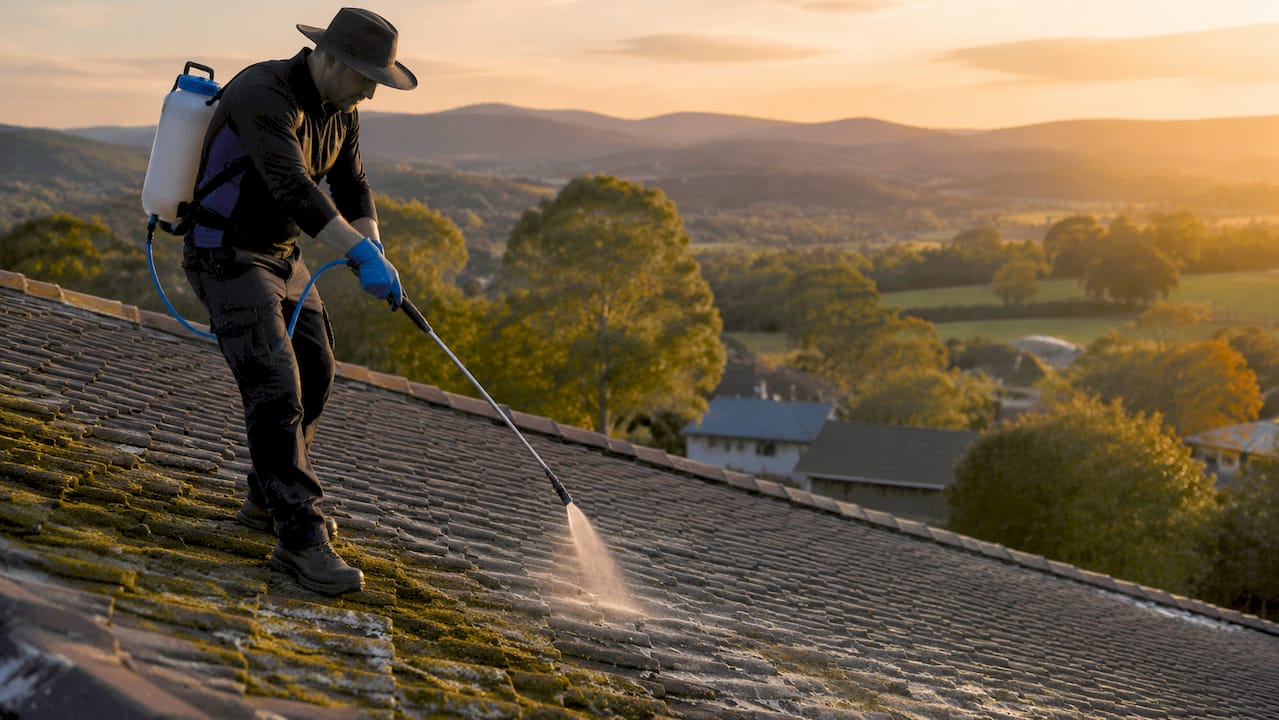
Soft washing is the only method recommended by major roofing manufacturers and the Asphalt Roofing Manufacturers Association (ARMA) for asphalt shingles. It operates at 100 PSI or below, using a sodium hypochlorite solution to kill algae, moss, and lichen at the biological level rather than blasting them off mechanically. The chemical does the work, not the pressure.
Pressure washing, by contrast, operates at 1,200–3,500 PSI. At that force, pressure washing strips granules from asphalt shingles, the very particles that protect your roof from UV damage. Stripping granules voids most manufacturer warranties and accelerates deterioration by years, not months.
The third option is standalone chemical treatment. Products like Wet & Forget are applied and left to work over time. The catch is that these treatments take 3–6 months and require consistent rainfall to show results. They are not a solution for a visibly soiled or heavily algae-covered roof.
| Method | Pressure | Effectiveness | Risk level | Best for |
|---|---|---|---|---|
| Soft washing | ≤100 PSI | High, kills spores | Low | All roof types |
| Pressure washing | 1,200–3,500 PSI | Moderate, removes surface growth | High | Hard surfaces only |
| Chemical treatment | None | Slow, gradual | Low | Light maintenance |
Pro Tip: The biggest misconception in roof cleaning is that ‘clean’ means ‘high pressure.’ Chemical dwell time is what kills biological matter. Pressure only removes what is already dead or loose.
Soft washing results last 2–5 years when done correctly. Pressure washing results last only months because it leaves spores behind in the substrate. For Melbourne homes, particularly those in leafy suburbs like Kew, Hawthorn, and Camberwell where tree canopy creates persistent shade and moisture, soft washing is the clear choice.
What tools and materials do you need to clean your roof safely?
Safe roof cleaning requires the right equipment before you touch a ladder. Cutting corners on gear is where DIY jobs go wrong, both in terms of personal safety and roof damage.
Essential equipment:
- Soft wash pump system or a low-pressure pump sprayer (garden sprayers work for small areas)
- Sodium hypochlorite solution (pool-grade bleach, typically 12.5% concentration, diluted for roof use)
- Surfactant (a wetting agent that helps the solution cling to the roof surface longer)
- Extension ladder rated for your roof height
- Non-slip rubber-soled footwear
- Chemical-resistant gloves and safety goggles
- Safety harness and anchor point for any roof with a pitch above 20 degrees
- Garden hose for pre-wetting and rinsing surrounding plants
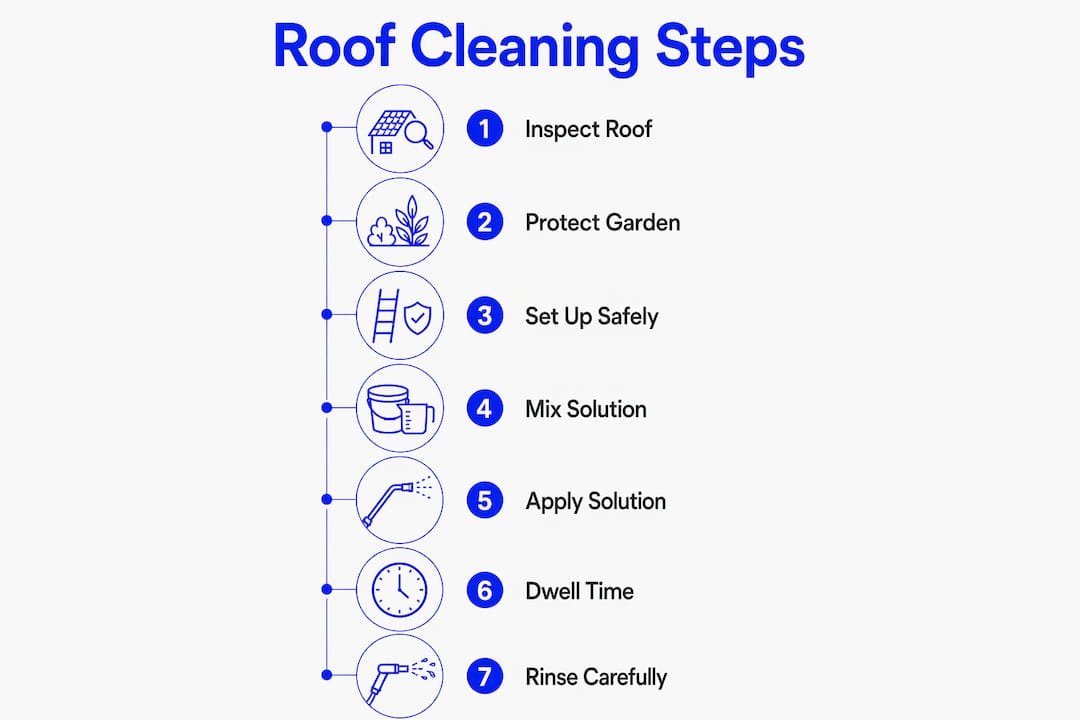
Protecting your garden is not optional. Professionals pre-wet surrounding vegetation and use plastic sheeting over garden beds before applying any chemical solution. Sodium hypochlorite runoff will burn and kill plants if they are not protected. This step is frequently skipped by inexperienced DIYers and the results are obvious within days.
Weather conditions matter significantly. Choose a calm, overcast day with no rain forecast for at least four hours. Direct sunlight causes the solution to evaporate too quickly, reducing dwell time and effectiveness. Wind creates drift, which puts your plants, neighbouring properties, and yourself at risk of chemical exposure.
Pro Tip: Mix your sodium hypochlorite solution at a ratio of roughly one part bleach to three parts water for a standard clean. Add a small amount of dish soap as a surfactant if a commercial product is unavailable. Test a small, inconspicuous area first.
How do you safely clean your roof step-by-step?
A methodical approach to soft washing produces the best results and keeps you safe throughout the process.
Step 1: Inspect before you start
Walk the perimeter of your home and visually assess the roof from the ground. Look for cracked or missing tiles, damaged flashing, sagging sections, or signs of previous repairs. Do not proceed with cleaning if you find structural concerns. Address those first with a qualified roofer.
Step 2: Prepare the surroundings
Pre-wet all garden beds, lawn areas, and plants within the runoff zone using a garden hose. Lay plastic sheeting over any sensitive plantings. Close all windows and doors. Move outdoor furniture away from the work area.
Step 3: Set up safely
Position your ladder on firm, level ground. If your roof pitch is steep or your home is two storeys, fit a safety harness before stepping onto the roof. Never work alone on a roof. Have someone present at ground level at all times.
Step 4: Mix and apply the solution
Mix your sodium hypochlorite solution in the pump sprayer. Apply the solution in small, controlled sections, working from the ridge down toward the gutters. This follows the natural direction of gravity and prevents solution from pooling under tiles. Do not rinse immediately. The solution needs time to dwell on the surface and kill biological matter at the root level.
Step 5: Allow dwell time and observe
Leave the solution on the roof for 15–20 minutes. You will see algae and moss begin to change colour as the sodium hypochlorite kills the organisms. On heavily soiled roofs, a second application may be needed.
Step 6: Rinse carefully
Rinse the roof gently with low-pressure water, again working from ridge to gutter. Avoid standing on wet tiles or shingles. Wet roofing surfaces are significantly more slippery than they appear.
Common mistakes to avoid:
- Walking on the roof unnecessarily during or after application
- Rinsing too soon before dwell time is complete
- Applying solution on a hot, sunny day
- Neglecting to protect plants before starting
- Using a pressure washer because results look faster
Untreated black algae can reduce the lifespan of asphalt shingle roofs by 5–10 years through progressive granule loss. Cleaning your roof is not maintenance. It is preservation.
Pro Tip: Never walk on a freshly cleaned roof. The sodium hypochlorite solution makes surfaces extremely slippery. Wait until the roof is fully dry before any foot traffic.
What roof maintenance tips help prolong the benefits of roof cleaning?
Cleaning your roof is one part of a broader maintenance routine. The work you do between cleans determines how long the results last and how well your roof performs overall.
Experts recommend at least two roof inspections and two gutter cleans per year. Spring and autumn are the ideal times in Melbourne, clearing debris before summer heat and before winter rain. Blocked gutters hold moisture against the roofline, accelerating the very biological growth you just removed.
Overhanging tree branches are a persistent problem in Melbourne’s inner suburbs. Branches deposit leaf matter, create shade that retains moisture, and physically abrade roofing materials in wind. Trimming branches back annually reduces debris load and improves airflow across the roof surface.
Attic ventilation is an area most homeowners overlook entirely. Moisture and heat buildup inside the roof cavity accelerate the deterioration of roofing materials from the inside out. A musty smell in your attic is often an early warning sign of barrier failure, not just a ventilation problem. Proper attic venting reduces internal moisture and extends the life of your roofing system significantly.
Downspout placement is another detail worth attention. Downspouts should direct water at least 1.5 metres from your home’s foundation. Water pooling at the base of external walls causes rising damp, which affects render, brickwork, and internal walls over time.
On the question of DIY versus professional help: single-storey, low-pitch roofs are manageable for a careful, well-equipped homeowner. Multi-storey homes, steep pitches, and heavily soiled roofs are a different matter. Falls are the primary risk, and professionals carry the equipment, insurance, and chemical expertise that a DIY setup cannot replicate. For Melbourne’s heritage homes in particular, where terracotta tiles and heritage materials require careful handling, professional assessment is worth the investment. You can read more about heritage roof care specific to Melbourne’s period homes for detailed guidance on those scenarios.
Key takeaways
Soft washing with sodium hypochlorite is the only safe and effective roof cleaning method for Melbourne homeowners, protecting materials, preserving warranties, and delivering results that last 2–5 years.
| Point | Details |
|---|---|
| Soft washing is the standard | Use ≤100 PSI and sodium hypochlorite solution to kill algae without damaging shingles. |
| Pressure washing causes damage | Operating at 1,200–3,500 PSI strips granules and voids most manufacturer warranties. |
| Plant protection is non-negotiable | Pre-wet and cover all vegetation before applying any chemical solution to the roof. |
| Biannual maintenance matters | Inspect gutters and the roof twice yearly to prevent moisture-driven biological regrowth. |
| Know when to call a professional | Multi-storey or steep roofs carry serious fall risk and require licensed, insured tradespeople. |
Jarrad’s take: why method selection matters more than most homeowners realise
I have seen the aftermath of pressure washing on Melbourne roofs more times than I care to count. Homeowners hire someone with a trailer-mounted pressure washer, the job looks spectacular on the day, and six months later the shingles are visibly degraded and the algae is back. The spores were never killed. They were just moved around.
The shift to soft washing is not a trend. It is the correct response to understanding how biological growth actually works. Algae and moss anchor into roofing materials at a microscopic level. Mechanical force does not address that. Sodium hypochlorite does.
My honest recommendation for Melbourne homeowners is this: if your roof is single-storey with a gentle pitch and you are comfortable working at height with proper safety gear, a DIY soft wash is achievable. But if your home is two storeys, has a steep pitch, or sits in a heavily treed street in suburbs like Northcote, Fitzroy, or Thornbury where biological growth is aggressive, bring in a professional. The cost of a professional clean is a fraction of the cost of early roof replacement.
The importance of roof cleaning is not just about appearance. It is about protecting a significant asset. Treat it accordingly.
— Jarrad
How Solshine can help with your roof and exterior care
Sol Shine works with Melbourne homeowners on exterior care projects where quality and heritage sensitivity matter. From roof painting and preparation through to full façade restoration on Victorian and Edwardian homes, the team brings the same precision to every surface.
Before any exterior paint is applied, Sol Shine assesses the condition of the roof and surrounding surfaces, including any biological growth, render damage, or weatherboard deterioration that could compromise the final result. That preparation work is what separates a finish that lasts from one that fails within a few years. If you are planning a larger exterior project or want a professional assessment of your roof and façade, explore Sol Shine’s heritage painting services or view completed exterior painting projects across Melbourne’s inner east and bayside suburbs. Get in touch to arrange an inspection.
FAQ
What is soft washing and why is it recommended?
Soft washing is a low-pressure cleaning method using sodium hypochlorite solution to kill algae, moss, and lichen at the biological level. It operates at 100 PSI or below and is the only method endorsed by major roofing manufacturers for asphalt shingles.
How often should Melbourne homeowners clean their roof?
Most roofs benefit from a professional clean every 2–3 years, with visual inspections twice a year. Homes in shaded or heavily treed streets may need attention more frequently due to accelerated biological growth.
Can I use a pressure washer on my roof tiles?
Pressure washing is not recommended for asphalt shingles as it strips protective granules and voids warranties. For terracotta or concrete tiles, lower pressures may be used with caution, but soft washing remains the safer and more effective choice.
How do I protect my garden during roof cleaning?
Pre-wet all plants and garden beds thoroughly before applying any chemical solution. Cover sensitive plantings with plastic sheeting and rinse the area again after the job is complete to dilute any runoff.
When should I hire a professional instead of doing it myself?
DIY soft washing suits single-storey homes with low-pitch roofs and a homeowner comfortable working at height with proper safety gear. Multi-storey homes, steep pitches, or heavily soiled heritage roofs should always be handled by a licensed professional with appropriate insurance and equipment.


