
TL;DR:
- Incorrect cleaning methods can permanently damage heritage features of Melbourne’s Victorian and Edwardian homes. Proper assessment, gentle tools, and neutral pH products are essential to preserve the character and value of these period surfaces. Professional help and routine maintenance further protect the long-term integrity of heritage exteriors.
Incorrect cleaning is one of the most common ways homeowners permanently damage the very features that make their period properties valuable. A high-pressure hose aimed at a Victorian rendered façade or a harsh chemical applied to original timber weatherboards can strip protective layers, force moisture into joints, and trigger paint failure within weeks. This guide gives Melbourne homeowners practical, evidence-based steps for cleaning and maintaining the exterior surfaces of period and heritage homes, so you can protect both the timeless character and the long-term value of your property.
Table of Contents
- Assessing exterior surfaces before cleaning
- Selecting the right tools and cleaning agents
- Step-by-step exterior cleaning for period homes
- Common mistakes and troubleshooting for heritage exteriors
- Maintaining results: ongoing care and seasonal checks
- A fresh perspective: why heritage cleaning in Melbourne demands a tailored approach
- Get expert help: restore and protect your heritage home
- Frequently asked questions
Key Takeaways
| Point | Details |
|---|---|
| Always assess materials | Identifying your home’s exterior materials is essential for safe and effective cleaning. |
| Choose gentle tools | Use pH-neutral, non-abrasive cleaners and soft brushes to protect heritage finishes. |
| Avoid high pressure | Pressure washing can damage weatherboards, brickwork, and delicate window details. |
| Test products first | Always check cleaners and tools on a small, hidden area before treating the whole surface. |
| Maintain with seasonal checks | Regular inspections and maintenance keep exterior surfaces clean and help preserve property value. |
Assessing exterior surfaces before cleaning
Before you pick up a brush or reach for a cleaning product, take the time to properly identify every exterior material on your property. Period homes in Melbourne typically feature a mix of surfaces, including face brick, rendered masonry, timber weatherboards, heritage timber window frames, decorative cornices, and terracotta or Colorbond roofing. Each of these materials responds very differently to water, pressure, and chemical agents.
Misidentifying a surface before cleaning can cause irreversible harm. As heritage building cleaning guidance confirms, the same cleaning approach that is safe on hard masonry can be deeply damaging on porous or heritage timber elements. This is a critical decision point every homeowner must get right before starting any cleaning work.
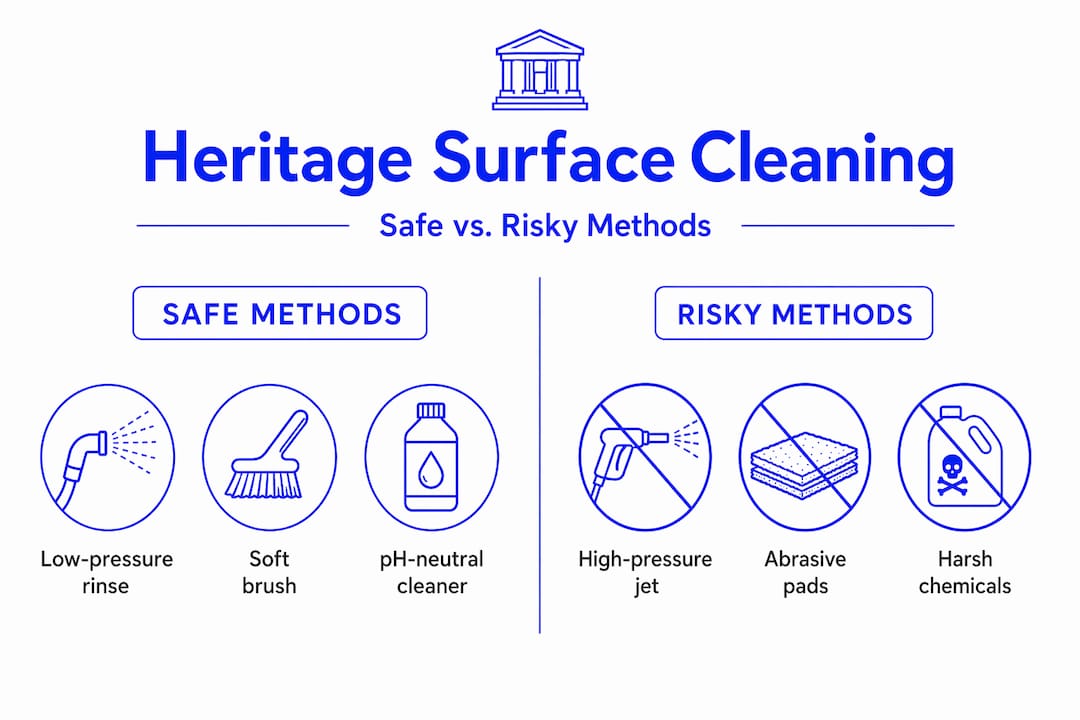
Use the comparison table below as a starting reference:
| Surface | Safe cleaning method | Risky method to avoid |
|---|---|---|
| Face brick | Low-pressure rinse, soft brush, mild detergent | High-pressure washing, acidic cleaners |
| Rendered masonry | Gentle hand wash, pH-neutral solution | Abrasive scrubbing, high pressure |
| Timber weatherboards | Soft brush, mild soapy water, hand wash | Pressure washing, bleach-based cleaners |
| Heritage window frames | Soft cloth, pH-neutral cleaner | Power washing, harsh solvents |
| Terracotta/slate roof | Low-pressure rinse, soft broom for moss | Pressure blasting, stiff wire brushes |
Walk the full perimeter of your home and note problem areas, such as moss on the lower brick courses, peeling paint around window reveals, or staining on render panels. Taking photos makes it easier to monitor changes over time.
Pro Tip: Before cleaning any surface, perform a compatibility test on a discreet area using your chosen product. Wait 24 hours and check for discolouration, softening, or any adverse reaction before proceeding to the full surface. This single step can prevent costly, irreversible damage. Our heritage home cleaning guide covers this assessment process in more detail.
Selecting the right tools and cleaning agents
Once you’ve assessed your exterior surfaces, it’s time to select the safest tools and products for the job. The wrong equipment can undo months of careful maintenance in a matter of minutes. For heritage and other delicate exterior materials, heritage delicate surface cleaning guidance is clear: avoid high-pressure washing or harsh chemicals, and instead use assessment-led, low-pressure, steam, poultice, or gentle chemical approaches with careful testing on a small area first.
| Tool or product | Best suited for | Notes |
|---|---|---|
| Soft-bristle brush | Brick, render, timber | Gentle agitation without surface scoring |
| Microfibre cloth | Window frames, decorative trim | Non-abrasive, lint-free |
| Garden hose with low-flow nozzle | General rinsing | Keeps pressure well below damaging thresholds |
| pH-neutral cleaner | All heritage surfaces | Protects patina and original finishes |
| Oxygen-based bleach | Moss/algae on brick or tile | Diluted only; test first |
| Steam cleaner (low setting) | Painted timber, intricate detailing | Loosens grime without chemical damage |
pH-neutral cleaners (those registering between 6 and 8 on the pH scale) are the safest choice across virtually all heritage surfaces. They clean effectively without stripping the natural patina that adds character to Victorian and Edwardian brickwork. Biodegradable and non-corrosive products are also preferable, particularly for properties with garden beds or water features adjacent to the exterior walls.
The following materials should never be used on period exteriors:
- Stiff wire brushes or metal scourers
- Concentrated hydrochloric or muriatic acid
- Petroleum-based solvents on painted timber
- Industrial-grade bleach at full concentration
- Abrasive scouring powders
The exterior cleaning steps outlined for Melbourne heritage homes reinforce these choices, as does the broader advice on how thoughtful product selection can boost heritage value cleaning outcomes. Investing in the right tools upfront saves significant repair costs down the track.
Step-by-step exterior cleaning for period homes
With your materials ready, let’s break down the exact cleaning approach for each part of your home’s exterior. Follow these steps sequentially to avoid cross-contamination between surfaces and to ensure each area dries properly before being re-exposed to weather.
Brick surfaces
- Brush loose debris and cobwebs from the surface using a soft-bristle brush.
- Rinse the brick lightly with a garden hose at low pressure, working from top to bottom.
- Apply a diluted pH-neutral cleaner to a manageable section using a soft brush.
- Allow the solution to dwell for three to five minutes, then scrub gently in circular motions.
- Rinse thoroughly from top to bottom to carry all residue away from the surface.
Timber weatherboards
Safety warning: High-pressure washing on period timber weatherboards is not recommended under any circumstances. It can force moisture behind boards, swell the timber, and lift or crack existing paint film. Once moisture penetrates behind weatherboards, the resulting damage to both the timber and the underlying structure can be extensive and expensive to fix.
For weatherboard care, always use gentle hand cleaning with soft brushes and suitable mild solutions. Wash from the bottom of each board upward to prevent dirty water streaking over dry surfaces, then rinse from the top downward. This approach protects both paint adhesion and the structural integrity of the timber. Check for any boards that feel soft or spongy as you work, as these may need professional attention. Our heritage roof cleaning tips page includes related advice for maintaining timber fascia and barge boards near the roofline.
Rendered masonry
- Inspect for cracks, bubbling, or hollow-sounding sections before wetting the surface.
- Wet the render gently with a garden hose.
- Apply a diluted pH-neutral cleaner with a soft-bristle brush, working in small sections.
- Rinse thoroughly without directing the hose into any cracks or gaps.
Heritage windows and frames
When cleaning heritage windows and frames in Melbourne, use non-abrasive tools and pH-neutral cleaners at all times. Avoid power washing and harsh chemicals, which can damage original timber detailing and lift putty from the glazing rebates. Use a microfibre cloth for frames and a squeegee for glass panes. Work methodically around each frame, paying particular attention to the junctions between timber and glass where moisture tends to accumulate. Our heritage window repair guide explains what to look for when cleaning reveals signs of deterioration.
Roof surfaces
- Clear gutters and downpipes before beginning any roof cleaning.
- Use a soft broom to sweep loose moss or lichen from terracotta tiles or slate.
- Apply an appropriate moss treatment at low pressure or by hand application.
- Rinse with a low-flow hose, directing water away from any open joints or flashings.
Pro Tip: After cleaning any exterior surface, rinse thoroughly with clean water and allow full drying time before assessing results. Cleaning products left to dry on brick, render, or timber can leave permanent residue or cause surface staining that is difficult to remove.
Common mistakes and troubleshooting for heritage exteriors
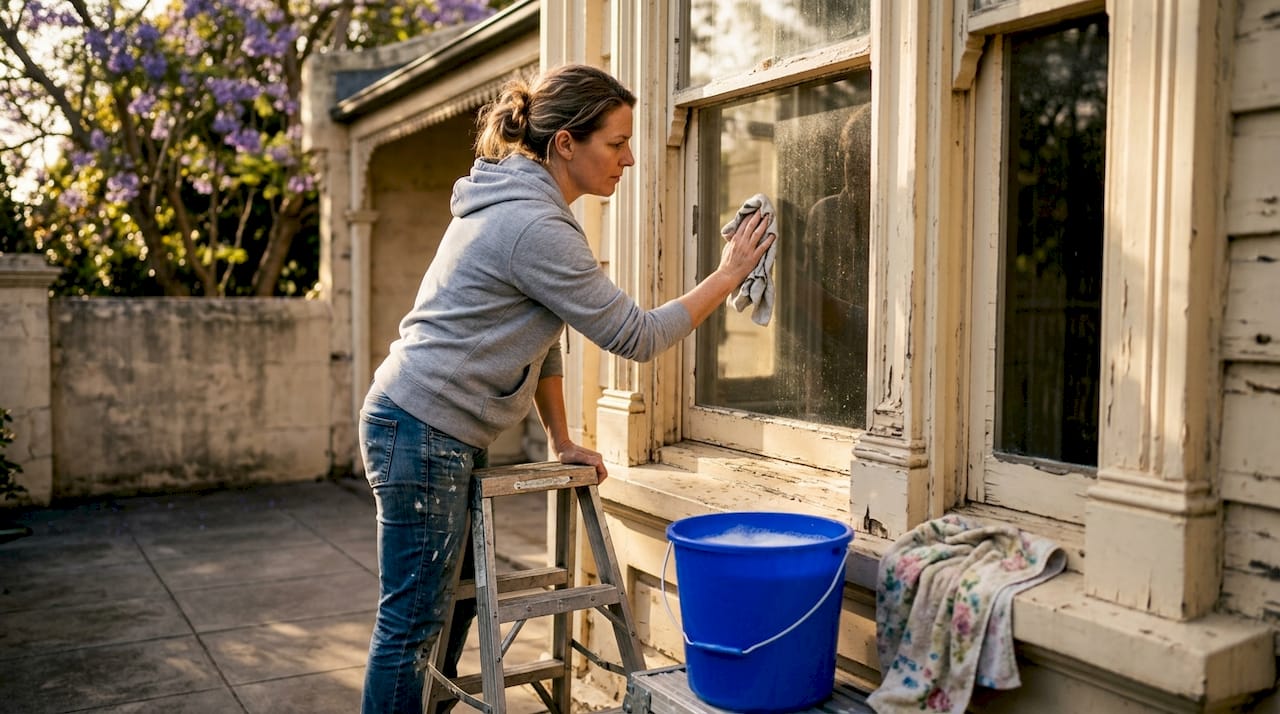
Even with the right methods, subtle missteps can threaten your heritage surfaces. Here’s how to avoid and fix the most common mistakes.
The most frequent errors include:
- Using the incorrect pressure setting on a power washer, which can etch mortar, strip paint, or split timber fibres
- Applying cleaners in direct sunlight, causing them to dry too quickly and leave residue
- Ignoring damp or overcast weather conditions that prevent surfaces from drying adequately after cleaning
- Using the wrong nozzle type, which concentrates pressure into a damaging narrow stream
- Cleaning surfaces that are incompatible with pressure washing, such as vinyl cladding, fibre cement sheeting, or original slate roofing
Power-washing mistakes commonly include using the wrong nozzle and applying pressure to surfaces that simply cannot tolerate it, resulting in etching, paint removal, and water ingress. For heritage properties, even moderate pressure on painted timber or original render can cause problems that take months to become visible.
If you do choose to use a pressure washer on suitable surfaces such as concrete paths or hard masonry retaining walls, follow surface-specific low-pressure practices: use the lowest effective setting on brick to protect mortar and brick integrity, keep pressure gentle on any adjacent wood, and always rinse top to bottom to carry detergent residue fully away.
Common signs that a surface has been over-cleaned or incorrectly treated include:
- Paint bubbling or peeling shortly after cleaning
- White efflorescence (salt deposits) appearing on brick or render
- Water staining or dark tide marks on render panels
- Timber boards cupping or splitting at the edges
Pro Tip: Never use high-pressure washing on weatherboard cladding, original timber trim, or heritage window frames. If you see signs of damage such as lifted paint or softening timber after cleaning, stop immediately and allow the surface to dry fully before attempting any further treatment. Addressing issues early prevents them from escalating into structural repairs. Our article on exterior painting mistakes covers related issues for Melbourne homes.
Maintaining results: ongoing care and seasonal checks
Proper cleaning is only half the story. Consistent maintenance routines are essential for lasting protection and presentation. A well-maintained period home not only looks superb but also commands a stronger position at valuation, particularly in Melbourne’s competitive inner east and bayside markets.
After any restoration or deep cleaning work, continued maintenance plays a decisive role in preserving those results. Annual inspections, keeping gutters and downpipes clear, sweeping early moss growth with a soft broom, and using low-pressure water systems instead of harsh pressure washing all extend the life of your exterior finishes significantly.
Establish a seasonal maintenance routine that covers:
- Autumn: Clear leaves and organic matter from gutters and downpipes before winter rains arrive. Check for any new cracking in render or deterioration around window frames.
- Winter: Inspect weatherboards for swelling or paint failure after prolonged wet weather. Check that all downpipes are directing water away from the foundations.
- Spring: Light clean of all exterior surfaces to remove winter grime and moss. Assess any areas where paint has lifted and arrange touch-up work promptly.
- Summer: Check for UV-related paint fading on north-facing elevations. Inspect timber elements for signs of drying or cracking that may need oiling or repainting.
Keeping a simple photographic record of each elevation, dated annually, makes it straightforward to spot gradual changes before they become significant problems. This proactive approach protects both the presentation and the long-term structural health of your property. Regular attention to cleaning exterior surfaces is one of the most cost-effective ways to preserve heritage homes, and the broader exterior cleaning safeguards available to Melbourne homeowners are well worth understanding in detail.
A fresh perspective: why heritage cleaning in Melbourne demands a tailored approach
Melbourne’s heritage property stock is genuinely distinctive. The concentration of intact Victorian and Edwardian homes across suburbs like Kew, Hawthorn, Camberwell, Fitzroy, and Malvern means that the city carries an unusual responsibility for built heritage. Yet the cleaning products and methods marketed to general homeowners are almost universally designed for modern construction materials, not for limewash-finished render, original red brick, or century-old Baltic pine weatherboards.
The conventional wisdom that “a good pressure wash fixes everything” is not only wrong for period properties, it is actively harmful. Original masonry and lime-based render carry a natural patina that took decades to develop. That patina is not just aesthetic; it forms part of the surface’s protective layer. Strip it with pressure or harsh chemistry, and you accelerate deterioration rather than preventing it. For heritage-sensitive properties, using testing and compatibility checks, neutral pH products, and reversible low-impact methods protects that patina and avoids permanent visual change.
Melbourne’s climate adds further complexity. The city’s notorious four-seasons-in-one-day weather pattern exposes heritage exteriors to rapid cycles of heating, cooling, and moisture. This accelerates the movement of building materials, which opens and closes joints, stresses paint films, and draws moisture into porous surfaces. Generic cleaning routines ignore this entirely.
The real value of tailored heritage cleaning extends well beyond a tidy façade. It preserves original joinery, protects hand-pressed brick from premature erosion, and maintains the architectural details that make these homes genuinely irreplaceable. For homeowners considering significant renovation or restoration work, a well-maintained exterior also signals to trades and project managers that the property has been carefully stewarded, which often translates to more accurate scoping and better outcomes. Our heritage exteriors cleaning guide explores these principles further for anyone wanting to go deeper.
Get expert help: restore and protect your heritage home
When DIY methods become challenging or when you want optimal results, professional assistance is the next logical step.

Sol Shine specialises in heritage exterior painting and full-scale restoration for Victorian and Edwardian properties across Melbourne’s inner east, bayside, and surrounding suburbs. Whether you need a carefully executed exterior repaint, professional assessment of render condition, or specialist heritage painting services tailored to period materials, Sol Shine manages every element under one roof. The team also handles heritage window repairs and heritage weatherboard replacement for homeowners dealing with more significant deterioration. For projects requiring skilled, trustworthy craftsmanship and a genuine understanding of period properties, contact Sol Shine to discuss your restoration goals.
Frequently asked questions
How can I safely clean period weatherboard exteriors?
Use gentle hand washing with soft brushes and mild solutions, avoiding high-pressure or harsh chemicals to protect paint and wood. Weatherboard care guidance recommends washing from the bottom up and rinsing from the top down to prevent streaking and moisture damage.
Should I use pressure washing on heritage brickwork?
Only use a low-pressure setting and a gentle nozzle on heritage bricks, and avoid high pressure to prevent mortar and brick damage. Low-pressure brick cleaning practices protect mortar integrity and reduce the risk of surface etching.
What is the safest cleaner for heritage windows?
Use a pH-neutral, eco-friendly cleaning agent with a soft cloth, and avoid power washing or abrasive tools. Heritage window cleaning in Melbourne requires particular care around original timber detailing and glazing putty.
How often should I clean and maintain gutters on heritage homes?
Clear gutters every three to four months and after storms to prevent water damage and protect your roof and exterior walls. Annual roof inspections and regular gutter maintenance are fundamental to preserving heritage property condition.
Why is testing cleaners in a hidden area important for heritage surfaces?
Testing prevents irreversible damage by ensuring product compatibility before full application, especially with delicate original materials. Heritage surface testing using neutral pH products and test patches protects the patina and avoids permanent visual change to your home’s façade.


