
Choosing the right interior paint finish can mean the difference between a timeless statement and constant touch-ups for australian homes. Many Melbourne homeowners know that the finish you pick directly affects how light plays in a room and how well surfaces withstand daily wear. With over 80 percent of property owners ranking durability as their top concern, understanding paint finishes helps safeguard both style and home value in the ever-changing Melbourne market.
Table of Contents
- What Are Interior Paint Finishes?
- Common Types of Interior Paint Finishes
- How Paint Finishes Impact Room Aesthetics
- Durability and Maintenance Properties
- Selecting the Best Finish for Melbourne Homes
- Mistakes to Avoid With Paint Finishes
Key Takeaways
| Point | Details |
|---|---|
| Understanding Paint Finishes is Essential | Different paint finishes serve unique functions in interior design, influencing both aesthetics and practicality. Selecting the right finish can enhance room durability and appearance. |
| Match Finishes to Room Functions | Consider the traffic and moisture levels of each room when selecting paint finishes, opting for more durable finishes in high-use areas. |
| Testing is Crucial | Always test paint samples in the actual room under varying light conditions before finalising selection to ensure desired outcomes. |
| Proper Preparation is Key | Ensure thorough surface preparation to avoid premature peeling and ensure your chosen finish adheres effectively for long-lasting results. |
What Are Interior Paint Finishes?
Interior paint finishes represent the final surface appearance of painted indoor architectural surfaces like walls, ceilings, and trim. These finishes are far more than just aesthetic choices – they play a crucial functional role in protecting and enhancing interior spaces. Comprehensive paint research reveals that paint finishes consist of carefully formulated compositions including pigments, binders, and vehicles that create a solid protective film upon drying.
The primary categories of interior paint finishes include matte, eggshell, satin, semi-gloss, and high-gloss, each offering unique characteristics and performance attributes. Matte finishes provide a smooth, non-reflective surface ideal for hiding wall imperfections, while high-gloss options deliver maximum durability and easy cleaning potential. University design guidelines emphasise that finish selection depends critically on factors like room traffic, maintenance requirements, and specific environmental conditions.
Understanding the technical composition of paint finishes helps homeowners make informed decisions. Acrylic latex paints dominate the modern market, offering excellent adhesion, colour retention, and flexibility across different surface types. The finish’s sheen level directly impacts its light-reflecting properties, durability, and ability to withstand cleaning and wear. Factors like room humidity, sunlight exposure, and intended usage will significantly influence which paint finish performs best in a given space.
Pro tip: Always test paint samples in the actual room and observe them under different lighting conditions before making a final selection to ensure the finish meets both aesthetic and functional requirements.
Common Types of Interior Paint Finishes
Interior paint finishes range from completely flat to highly reflective, each serving unique purposes in different home environments. University design guidelines outline five primary finish types that homeowners in Melbourne should understand: flat, eggshell, satin, semi-gloss, and high-gloss. These finishes differ dramatically in their light-reflecting properties, durability, and aesthetic characteristics.
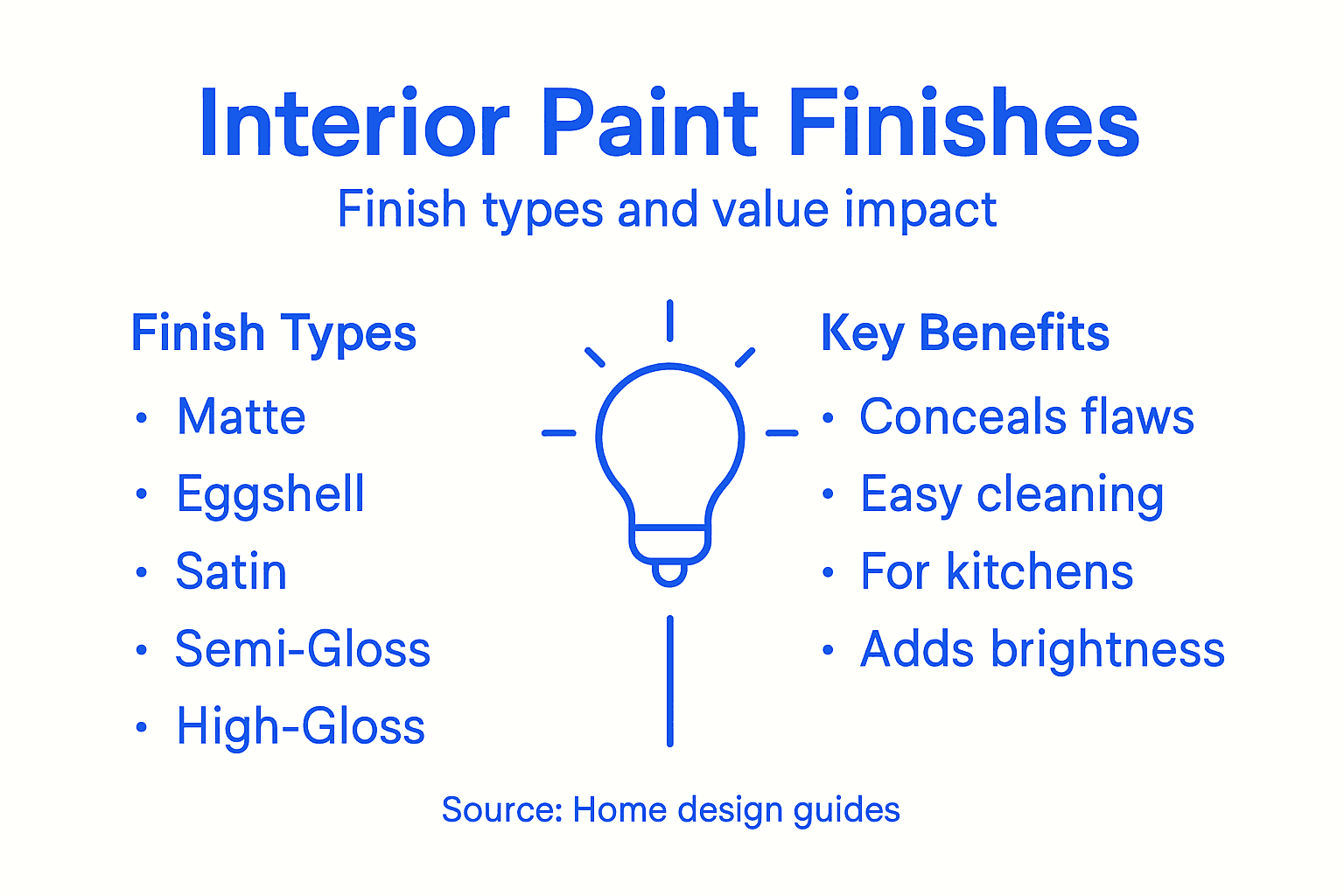
The flat finish offers a completely non-reflective surface perfect for concealing wall imperfections. Ideal for low-traffic areas like adult bedrooms and formal living spaces, flat finishes provide a sophisticated, uniform appearance but are less resistant to cleaning and moisture. In contrast, eggshell and satin finishes offer slightly more sheen and durability. Satin finishes, with their pearl-like appearance, work exceptionally well in high-traffic areas like hallways, children’s rooms, and kitchen spaces where occasional wiping and cleaning are necessary.
Semi-gloss and high-gloss finishes represent the most durable and reflective paint options. These finishes are exceptionally easy to clean and highly resistant to moisture, making them perfect for areas exposed to significant wear and potential staining. Historic paint analysis reveals that these high-sheen finishes not only protect surfaces but also create visual depth and dimension. Typically recommended for trim, doors, window frames, and moisture-prone areas like bathrooms and kitchens, these finishes can dramatically enhance a room’s overall aesthetic while providing superior protection.
Pro tip: When selecting paint finishes, always purchase small test samples and paint a discrete wall section to observe how the finish performs under your specific lighting and room conditions.
Here’s a quick comparison of common interior paint finishes by their recommended room locations and maintenance needs:
| Paint Finish | Ideal Room Type | Maintenance Level | Light Reflection |
|---|---|---|---|
| Matte | Adult bedrooms, formal lounge | Delicate, needs gentle cleaning | Very low |
| Eggshell | Living rooms, bedrooms | Moderate, easy to wipe occasionally | Low |
| Satin | Hallways, kitchens, children’s rooms | Regular, withstands scrubbing | Medium |
| Semi-gloss | Bathrooms, trim, doors | Frequent, highly washable | High |
| High-gloss | Kitchens, feature walls, window frames | Robust, easiest to clean | Very high |
How Paint Finishes Impact Room Aesthetics
Impact of paint finishes on spatial perception reveals the profound psychological and visual transformations different sheens can create within interior spaces. The strategic selection of paint finish goes far beyond mere colour choice, fundamentally altering how rooms are experienced and perceived. Glossy finishes dramatically reflect light, creating an illusion of expansiveness and brightness, while matte surfaces absorb light and generate a sense of intimacy and warmth.
Each paint finish communicates a distinct aesthetic language. Flat finishes offer a sophisticated, understated backdrop that minimises visual distractions, making them ideal for spaces seeking a calm, elegant atmosphere. Eggshell and satin finishes provide a gentle luminosity that subtly enhances architectural details without overwhelming the senses. University design guidelines suggest these mid-sheen options work brilliantly in living rooms, bedrooms, and hallways where a balanced visual texture is desired.
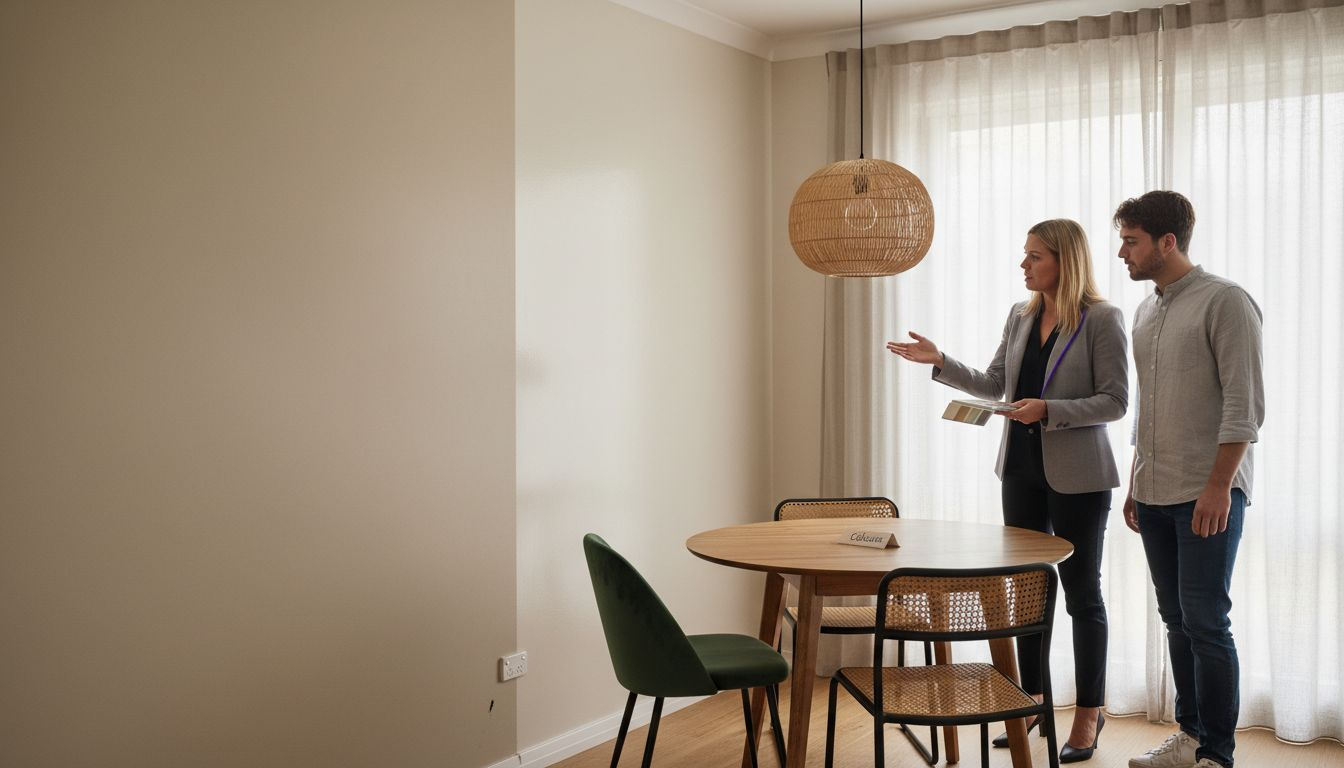
Higher gloss finishes like semi-gloss and high-gloss introduce drama and definition to interior spaces. These reflective surfaces not only amplify light but also highlight architectural elements, creating visual interest and depth. They’re particularly effective for accentuating trim, doors, and feature walls, transforming ordinary surfaces into statement design elements. The interplay between light and finish can dramatically alter a room’s perceived size, mood, and character, making paint finish selection a nuanced art form that extends far beyond simple colour selection.
Pro tip: Always test paint samples under different lighting conditions and times of day to understand how the finish truly interacts with your specific room’s architectural characteristics.
Durability and Maintenance Properties
Paint durability testing methods reveal complex interactions between surface preparation, environmental conditions, and finish performance. Interior paint durability extends far beyond initial application, encompassing critical factors like substrate smoothness, adhesion quality, and resistance to mechanical wear. Different paint finishes demonstrate dramatically varied maintenance requirements, with some demanding more frequent cleaning and touch-ups than others.
The spectrum of durability varies significantly across finish types. Flat finishes, while aesthetically pleasing, typically require the most delicate maintenance, showing scuffs and marks more readily. Satin and eggshell finishes offer a balanced approach, providing moderate durability and easier cleaning capabilities. In contrast, semi-gloss and high-gloss finishes demonstrate exceptional resilience, enabling robust cleaning and showing remarkable resistance to moisture, stains, and everyday wear. Historic preservation research emphasises that proper surface preparation remains crucial in extending paint finish longevity, regardless of the specific sheen selected.
Environmental factors play a substantial role in paint durability. Humidity levels, temperature fluctuations, direct sunlight exposure, and mechanical stress all contribute to paint degradation. High-traffic areas like hallways, kitchens, and children’s rooms require more durable finishes that can withstand frequent cleaning and potential impact. Understanding these nuanced performance characteristics helps homeowners make informed choices about which paint finishes will provide the most robust, long-lasting protection for different interior spaces.
Pro tip: Invest in quality paint and proper surface preparation to significantly extend your interior paint’s durability and reduce long-term maintenance costs.
Selecting the Best Finish for Melbourne Homes
Australian residential architectural styles reveal that paint finish selection requires nuanced understanding of Melbourne’s unique climate and architectural heritage. The city’s temperate conditions and diverse housing landscape demand strategic paint finish choices that balance aesthetic appeal with practical performance. From heritage Victorian terraces to modern inner-city apartments, each architectural style presents distinct requirements for interior paint finishes.
Melbourne homes typically fall into several architectural categories, each benefiting from specific paint finish approaches. Period homes with ornate timber trim and detailed cornices often work best with lower-sheen finishes like eggshell or satin, which highlight architectural details without overwhelming them. Contemporary apartments and renovated spaces might leverage semi-gloss or high-gloss finishes to create crisp, clean lines and enhanced light reflection. Local building regulations emphasise the importance of selecting low-VOC, environmentally compliant paints that meet stringent indoor air quality standards while maintaining aesthetic integrity.
Climate considerations play a crucial role in finish selection. Melbourne’s variable weather – characterised by sudden temperature shifts and occasional high humidity – demands paint finishes with superior adhesion and flexibility. Rooms with significant moisture exposure, such as bathrooms and kitchens, require more durable, moisture-resistant finishes like semi-gloss or high-gloss. Living areas and bedrooms might benefit from softer, more muted finishes that create a sense of warmth and tranquillity while still providing adequate protection against everyday wear and environmental challenges.
Pro tip: Always purchase small paint samples and test them in the specific room under different lighting conditions to ensure the finish complements both the architectural style and the room’s unique characteristics.
For Melbourne homes, finish selection depends on both style and climate. Here’s a summary aligning finish types to local conditions:
| Architectural Style | Preferred Finish | Reason | Climate Benefit |
|---|---|---|---|
| Victorian terrace | Eggshell, satin | Highlights ornate detailing | Handles variable humidity |
| Modern apartment | Semi-gloss, high-gloss | Accentuates clean lines | Resists moisture, stains |
| Renovated period | Satin | Balances old/new features | Flexible for temperature shifts |
Mistakes to Avoid With Paint Finishes
Painting material safety guidelines highlight critical errors that can compromise paint finish quality and performance. Homeowners frequently make fundamental mistakes during paint selection and application that dramatically reduce the longevity and aesthetic appeal of their interior surfaces. Understanding these common pitfalls is crucial for achieving professional-quality results and protecting your home’s interior investment.
One of the most significant errors is inadequate surface preparation. Skipping primer, failing to repair wall imperfections, or painting over unclean surfaces can lead to poor paint adhesion and premature finish failure. Different surfaces require specific preparation techniques – timber demands different treatment compared to plasterboard, and each substrate requires careful cleaning, sanding, and priming. Wood surface painting research emphasises the importance of understanding substrate properties before applying any paint finish, noting that incompatible paint types can cause significant long-term damage.
Another critical mistake involves selecting inappropriate finishes for specific environments. High-moisture areas like bathrooms and kitchens require moisture-resistant, durable finishes, while selecting a delicate matte finish in these spaces will result in rapid deterioration. Homeowners must consider traffic levels, cleaning frequency, and environmental conditions when choosing paint finishes. Purchasing the cheapest paint or selecting a finish based solely on aesthetic preferences without considering functional requirements can lead to costly repainting and surface damage.
Pro tip: Always purchase small paint samples and test them in the actual room, observing how they perform under different lighting conditions and against existing furnishings before committing to a full paint job.
Enhance Your Home Value with Expert Interior Paint Finishes
Choosing the right interior paint finish is more than just selecting a colour or sheen — it is about safeguarding your investment and elevating your home’s appeal. If you are facing challenges with finding the perfect balance between durability, aesthetics, and maintenance, understanding finishes like eggshell, satin or semi-gloss can transform your interiors while boosting property value. Sol Shine specialises in applying premium-quality paint finishes tailored to Melbourne homes, combining expert craftsmanship with materials designed to withstand local climate conditions.
Take the first step to protect and beautify your living spaces by partnering with professionals who understand the intricate role of paint finishes in home value. Discover more about our trusted interior painting services and how we can help you achieve stunning, long-lasting results that complement your home’s style and usage. Don’t wait to enhance your property’s worth and enjoy the peace of mind that comes with exceptional workmanship. Visit Sol Shine today and book your personalised consultation.
Frequently Asked Questions
What is the importance of selecting the right paint finish for my home?
Selecting the right paint finish enhances both the aesthetic appeal and functionality of your space. It affects the room’s perceived size, light reflection, and maintenance requirements, thereby influencing the overall value of your home.
How do different paint finishes impact the durability of interior walls?
Different paint finishes have varying durability levels. Matte finishes can be less resistant to cleaning and moisture, while high-gloss and semi-gloss finishes offer exceptional durability, making them suitable for high-traffic areas.
Can paint finishes affect the resale value of a home?
Yes, the choice of paint finishes can significantly impact resale value. Buyers often prefer finishes that are both visually appealing and easy to maintain, which can make your home more attractive on the market.
What maintenance should I expect with different paint finishes?
Matte finishes require gentle care and are less washable, while eggshell and satin finishes allow for moderate cleaning. Semi-gloss and high-gloss finishes are much easier to clean and maintain, particularly in moisture-prone and high-traffic areas.


