
TL;DR:
- Roof painting on Melbourne heritage homes involves careful assessment, surface cleaning, and tailored priming to ensure longevity and preserve historic materials. Proper preparation, compliance with regulations, and professional expertise are essential for achieving durable, aesthetically appropriate results. Engaging heritage specialists significantly reduces risks and enhances the preservation of Melbourne’s Victorian and Edwardian architectural character.
For owners of Victorian or Edwardian homes in Melbourne, roof painting is far more than a cosmetic exercise. The condition of your roof directly affects the structural integrity of the entire property, and a poorly prepared surface will cause paint to fail within a few seasons rather than lasting a decade or more. Heritage roofs present unique challenges, from aged terracotta tiles and corroded iron ridgecapping to heritage-grade flashings and lime-based mortar bedding that modern prep techniques can easily damage. This guide covers every preparation phase in detail, tailored specifically to the requirements of Melbourne’s heritage-listed properties.
Table of Contents
- Assessing your heritage roof before painting
- Cleaning and repair for heritage roofs
- Priming and sealing for lasting results
- Safety standards and best practices
- Professional vs DIY: choosing your approach
- Why Melbourne heritage roof preparation needs a tailored approach
- Connect with heritage roof painting experts in Melbourne
- Frequently asked questions
Key Takeaways
| Point | Details |
|---|---|
| Detailed roof inspection | Proper evaluation identifies necessary repairs for lasting paint results. |
| Gentle cleaning methods | Use soft brushes and mild cleaners to protect heritage roofing materials. |
| Priming extends paint life | Priming and sealing can boost roof paint longevity past 10 years. |
| Follow safety standards | Always comply with Melbourne heritage rules and safety guidelines. |
| Professional expertise pays off | Heritage roofing often requires specialist knowledge for best outcome. |
Assessing your heritage roof before painting
With the importance clear, let’s detail the first preparation step: assessing your roof. A thorough inspection before any painting work begins is the single most important thing you can do to protect your investment. Skipping this step means unknowingly painting over structural problems, which traps moisture and accelerates deterioration beneath the surface.
Heritage roofing materials age differently from modern alternatives. Terracotta tiles become porous and brittle over time. Corrugated iron sheets on Edwardian-era homes develop pinhole rust that standard visual checks miss. Mortar bedding on ridge capping cracks, crumbles, and separates. Any of these faults, left unaddressed before painting, will compromise even the finest paint system.
The exterior painting checklist used by experienced heritage painters covers the following key inspection points:
- Ridge capping: Check for lifting, cracking, or missing mortar bedding along the entire ridge line
- Tiles or iron sheets: Look for cracks, chips, rust spots, pinholes, and any displacement from the original laying pattern
- Flashings: Inspect lead, zinc, or copper flashings around chimneys, valleys, and skylights for corrosion or lifting
- Gutters and downpipes: Assess corrosion, blockages, and whether water is pooling against the fascia
- Moss and lichen growth: Document all affected areas, as biological growth indicates chronic moisture retention
- Pointing and bedding: Examine the mortar at ridge tiles and hip ends for deterioration
- Fascia and bargeboards: Note any rot or paint failure at the roof’s perimeter timberwork
If you maintain a similar interior painting checklist for your home’s interior, you already understand the discipline of systematic inspection. The same rigour applies externally.
Pro Tip: On heritage properties, use binoculars from ground level first, then conduct a close-range inspection from a properly erected scaffold. Never walk on aged terracotta tiles as they can crack under foot pressure, and the resulting damage will cost far more to repair than any time saved.
A weatherproof roof inspection also considers Melbourne’s specific climate exposure. Properties in Hawthorn, Kew, Camberwell, and Brighton face a mix of intense summer UV, winter rainfall, and the occasional storm that accelerates surface wear. Document your findings with photographs before any work begins.
Cleaning and repair for heritage roofs
Once you’ve inspected your roof, cleaning and repairs are the next crucial steps. Paint applied over a dirty, mossy, or structurally compromised surface will fail quickly, regardless of the paint system used. Proper surface preparation for quality repainting is especially critical on heritage materials that cannot simply be replaced without council approval.
Here is the correct sequence for cleaning and repairing a heritage roof before painting:
- Remove loose debris. Clear all leaves, organic matter, and displaced tile fragments by hand before any water-based cleaning begins.
- Treat moss and lichen. Apply a biodegradable biocide treatment and allow adequate dwell time, typically 24 to 48 hours, before rinsing. This kills the biological growth at its root rather than simply washing the surface.
- Low-pressure wash. Use controlled low-pressure washing at 500 to 800 PSI rather than high-pressure blasting. Heritage terracotta tiles and aged iron are vulnerable to surface damage from excessive water pressure. The cleaning tips for Melbourne heritage homes confirm that gentle, controlled methods preserve historic surface textures.
- Allow full drying time. Heritage materials, particularly terracotta, are highly absorbent. Allow at least 48 hours of dry weather before any primer is applied.
- Repair damaged tiles and iron. Replace cracked or broken tiles using period-appropriate materials where possible. Patch corroded iron sheets with compatible metal repair compounds.
- Re-bed and re-point ridge capping. Remove old, deteriorated mortar bedding, re-bed ridge tiles with a flexible polymer-modified mortar, and re-point with a matching finish.
- Seal exposed metal repairs. Apply a rust-inhibiting primer to any repaired or exposed metal surfaces before the full priming coat is applied.
The following table compares cleaning methods and their suitability for heritage roofing materials:
| Cleaning method | Heritage terracotta tiles | Corrugated iron | Lead/zinc flashings |
|---|---|---|---|
| High-pressure washing (above 1500 PSI) | Not suitable, risks surface damage | Moderate risk of metal stress | Not suitable, risks corrosion acceleration |
| Low-pressure washing (500 to 800 PSI) | Recommended | Recommended | Use with caution |
| Soft brush and biocide treatment | Highly recommended | Suitable for surface growth | Recommended |
| Chemical stripping agents | Avoid entirely | Avoid entirely | Avoid entirely |
| Steam cleaning | Not recommended | Not recommended | Not recommended |
Pro Tip: Avoid chlorine-based cleaning agents on heritage roofs. Strong bleach solutions will strip protective surface coatings from aged terracotta and accelerate corrosion on iron and metal flashings. A pH-neutral, biodegradable biocide is the responsible choice for both the building and the surrounding garden.
Priming and sealing for lasting results
Cleaned and repaired roof surfaces need the right priming and sealing for paint to last. This stage is where many DIY and even inexperienced trade attempts fall short. Without the correct primer system, paint adhesion is compromised from day one, leading to premature peeling, flaking, and moisture penetration.
Key reasons priming is non-negotiable for heritage roofs:
- Porosity control: Aged terracotta absorbs paint unevenly without a dedicated primer, causing a patchy finish and significantly reduced coverage rates
- Rust inhibition: Bare iron and exposed metal flashings require a rust-inhibiting primer specifically formulated for metal substrates
- Adhesion promotion: Heritage surfaces are often dusty, chalky, or slightly friable (prone to crumbling at the surface). A penetrating primer bonds with the substrate and creates a stable base
- Moisture management: Sealing open pores before topcoat application prevents the trapped moisture cycle that causes paint bubbling and eventual structural tile damage
Product selection matters. For terracotta roofs, a water-based acrylic sealer primer is generally preferred. It penetrates deeply, dries to a flexible film, and does not trap residual moisture the way oil-based systems can. For iron and metal surfaces, a single-pack epoxy or zinc phosphate rust-inhibiting primer offers reliable long-term protection.
The data is clear: proper surface preparation improves the functional lifespan of roof paint by over a decade. A painted heritage roof with no preparation may show signs of failure within two to three years. The same roof with thorough preparation, correct priming, and two quality topcoats can perform for 12 to 15 years before requiring attention.
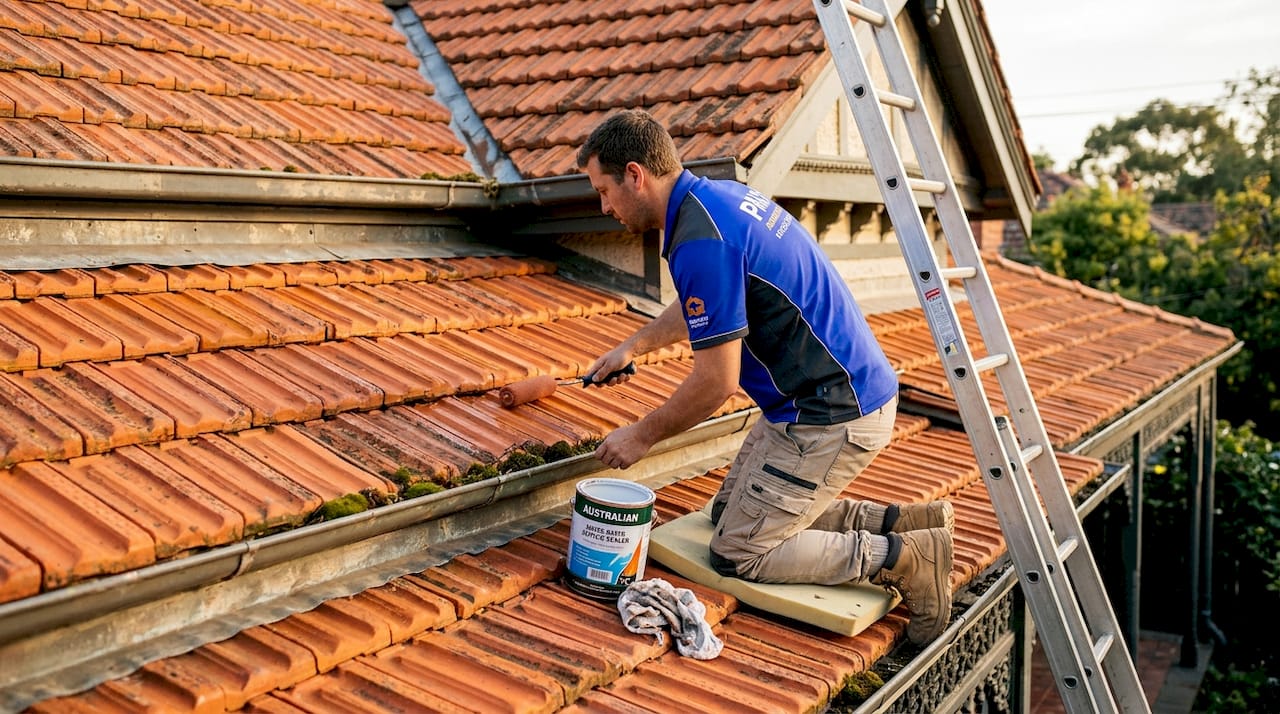
When selecting topcoat products, commercial-grade paints for heritage roofs outperform standard retail options in UV resistance, flexibility, and breathability. For terracotta tiles, a breathable membrane-grade paint allows residual moisture vapour to escape without trapping it beneath the film, which is critical for the long-term health of the tile itself.
Safety standards and best practices
Before applying any paint, safety and compliance come first. Working on a heritage roof in Melbourne requires careful attention to both workplace safety requirements and the specific regulatory obligations that apply to heritage-listed properties. These are not optional considerations.
Key safety steps for roof access and preparation include:
- Scaffold over ladder access: For any heritage roof painting work of substance, properly erected perimeter scaffolding provides a stable, compliant working platform and eliminates the fall risks associated with ladder use
- Edge protection: Install compliant edge protection at all open sides of the working area
- Non-slip footwear: Roof surfaces, particularly after cleaning, can be extremely slippery. Purpose-built roofing footwear with non-slip soles is essential
- Harness and anchor systems: Where scaffold is not practicable, a certified static line anchor system with personal fall arrest harness must be used in compliance with current WorkSafe Victoria requirements
- Weather monitoring: Never work on a wet roof surface. Melbourne’s changeable weather means conditions need to be checked before each working session
“Heritage homes are not standard construction sites. The roof structure, materials, and surrounding fabric of the building require a level of care and technical competence that goes well beyond routine painting work. Compliance with safety standards protects both the workers on site and the historic building beneath them.” — Sol Shine Heritage Restoration Team
Beyond general safety, the safety standards for heritage home painting in Melbourne include obligations specific to council-listed properties. Many Victorian and Edwardian homes in suburbs like Malvern, Fitzroy, Thornbury, and Essendon sit within heritage overlays that restrict not just structural changes but also surface treatments and colour selections. Confirming what approvals are required before work begins is essential.
Avoiding common roof painting mistakes is as important as following best practices. Using the wrong primer, applying paint in unsuitable weather, or failing to protect adjacent surfaces from overspray are errors that create costly remediation work on heritage properties.
Professional vs DIY: choosing your approach
The final step is deciding if you’ll tackle the job yourself or seek professional help. For heritage roofs in Melbourne, this decision carries real consequences, both financially and for the preservation of your home’s historic character.
| Factor | DIY approach | Professional approach |
|---|---|---|
| Initial cost | Lower upfront cost | Higher initial investment |
| Heritage compliance | High risk of non-compliance | Managed by specialist with experience |
| Materials selection | Limited access to commercial-grade products | Full access to professional product ranges |
| Preparation quality | Variable, often insufficient | Consistent, systematic, and documented |
| Long-term outcome | Higher risk of early failure and repeat costs | 12 to 15 year performance expectancy |
| Safety risk | Significant without correct equipment | Managed with compliant systems and training |
| Council requirements | Difficult to navigate without experience | Handled as part of the service |
When is DIY suitable? For minor spot treatments on a small, easily accessible section of a non-heritage roof, an experienced homeowner with the right safety equipment may manage adequately. However, for a full heritage roof repaint on a Victorian or Edwardian property in Melbourne, the complexity of the preparation alone, including re-bedding, re-pointing, rust treatment, and primer selection, makes professional engagement the responsible choice.
The preparation requirements for heritage roof painting vary significantly depending on the roof’s scale, material type, and the property’s heritage overlay status. A two-storey Edwardian home in Kew with a complex hip and valley roof configuration, chimneys, and original terracotta tiles represents a genuinely specialised scope of work. Understanding the roof painting workflow for heritage homes helps set realistic expectations for what the full process involves.
Key reasons to engage a heritage painting specialist:
- Access to commercial-grade primers and topcoats not available in retail stores
- Familiarity with council heritage overlay requirements across Melbourne’s inner east and bayside suburbs
- Correctly equipped and insured for compliant roof access
- Documented preparation process that protects your investment and your home’s heritage value
Why Melbourne heritage roof preparation needs a tailored approach
With the main steps covered, here is a perspective from decades of heritage painting experience. The most common mistake we see is homeowners and tradespeople applying a standard residential painting process to a heritage roof and expecting heritage results. It simply does not work that way.
Generic painting guides are written for modern construction. They assume smooth, even surfaces, consistent substrate types, and the absence of any regulatory constraints. Victorian and Edwardian roofs offer none of these conditions. You are working with materials that are sometimes over 100 years old, under council oversight, and carrying the accumulated effects of Melbourne’s highly variable climate.
The local weather factor is consistently underestimated. Melbourne’s UV intensity, the temperature swings between summer and winter, and the sustained winter rainfall all place extraordinary demand on roof coatings. A paint system that performs well on a modern Colorbond roof in Sydney’s more temperate conditions may fail within three seasons on an aged terracotta roof in Camberwell or Richmond.
What successful Melbourne heritage restoration projects have in common is a commitment to preparation time. The actual painting phase on a quality heritage roof job often represents less than a third of the total project hours. The assessment, cleaning, drying, repair, re-bedding, and priming stages take the majority of the time and deliver the majority of the performance outcome.
Following a proven Melbourne roof painting workflow built specifically for Victorian and Edwardian properties ensures nothing is rushed or skipped. This is where experience in heritage restoration, not just general painting, makes a measurable difference to the longevity and quality of the finished result.
Pro Tip: Always consult a heritage restoration specialist before committing to a product or method for your roof. The cost of getting the right advice upfront is minimal compared to the cost of remedying a failed paint system on a heritage property.
Connect with heritage roof painting experts in Melbourne
If you’re ready for professional results, connect with heritage specialists directly. Sol Shine brings together skilled painters and heritage restoration experts under one roof, offering Melbourne homeowners a seamless, high-quality solution for complex heritage projects.

Sol Shine’s heritage painting services cover every phase of preparation and application for Victorian and Edwardian properties across Kew, Hawthorn, Camberwell, Brighton, Malvern, Richmond, Fitzroy, Doncaster, Thornbury, Northcote, and Essendon. From initial inspection and re-bedding through to priming, topcoat application, and final quality review, every project is managed with the precision and care that heritage properties deserve. Sol Shine works directly with homeowners on projects typically $20,000 and above, bringing genuine expertise to large-scale heritage restoration and painting. Explore the full roof painting workflow or get in touch to discuss your property’s specific needs and arrange a consultation.
Frequently asked questions
How do I identify if my roof needs repairs before painting?
Check for cracked or missing tiles, rust, leaking flashings, and moss growth. These are clear signs that repairs must be completed before any paint preparation begins.
What cleaning methods are best for Victorian and Edwardian roofs?
Gentle low-pressure washing and soft brush techniques are the preferred approach for heritage roof materials. Harsh chemicals should always be avoided as they damage aged surfaces and accelerate corrosion on metal elements.
How long should a heritage roof paint job last?
With proper preparation, priming, and sealing, heritage roof paint can reliably last over 10 years. Thorough surface preparation is the single greatest factor in achieving long-term paint performance.
Are there specific regulations for painting heritage roofs in Melbourne?
Yes. Painting heritage-listed roofs must comply with Melbourne heritage painting standards and relevant local council heritage overlay requirements. Confirming compliance before work begins protects both the homeowner and the historic fabric of the building.
Is DIY roof painting safe for heritage homes?
DIY roof painting carries significant risks on heritage properties. These homes require specialised restoration skills and strict safety precautions that go well beyond standard residential painting experience.


