
TL;DR:
- Anti-mould paint is a biocidal coating designed to inhibit mould and mildew growth on interior walls and ceilings in moisture-prone areas. Proper surface preparation, including eliminating existing mould and fixing moisture sources, is essential for lasting results, as the paint provides preventative rather than curative protection. Using high-quality, tested fungicidal products with correct application techniques ensures the longevity and effectiveness of mould prevention in homes.
Anti-mould paint is a water-based interior coating formulated with biocidal additives that inhibit mould and mildew growth on walls and ceilings in moisture-prone areas. Known in the industry as fungicidal paint, it is the standard solution for bathrooms, kitchens, and laundries where condensation and humidity create ideal conditions for mould spores to take hold. Products like Dulux Trade Mouldshield, Zinsser Perma-White, and MouldX represent the most widely used options available to Australian homeowners and DIY painters. Understanding what this coating can and cannot do is the difference between a lasting result and a frustrating repaint six months later.
What is anti-mould paint and what does it actually do?
Anti-mould paint, or fungicidal paint, is defined as an interior coating that contains biocides to inhibit mould and mildew growth on painted surfaces. The biocidal agents are embedded directly into the paint film, creating a surface that actively discourages mould spore germination rather than simply covering it. This is the core distinction between anti-mould paint and standard interior wall paint, which offers no such protection.
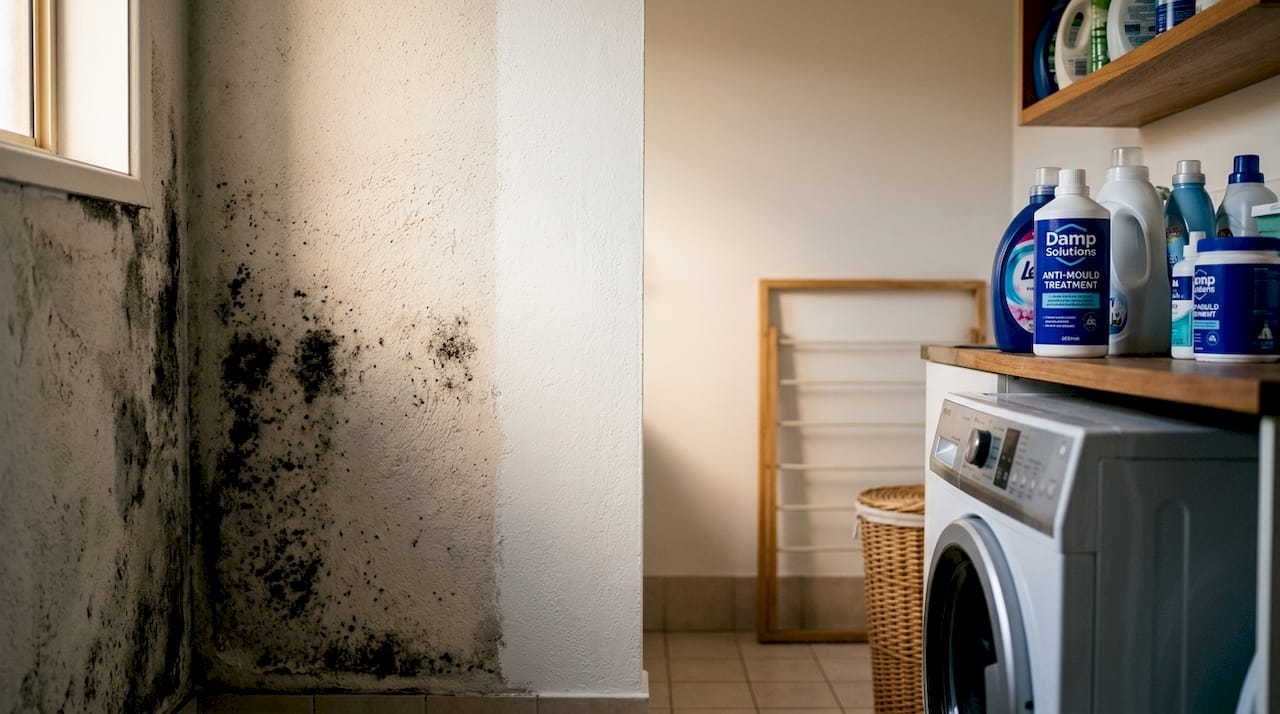
The anti-mould paint benefits are most apparent in rooms where steam and condensation are a daily occurrence. Bathrooms, shower recesses, kitchen ceilings, and poorly ventilated bedrooms are the primary candidates. In these spaces, standard paint fails within months, while a quality fungicidal coating can maintain its protective film for several years when applied correctly.
It is worth knowing that anti-mould paint does not kill mould that already exists inside your walls or beneath the surface. It works on the paint film itself, not on the substrate below. This distinction matters enormously for anyone dealing with an active mould problem rather than trying to prevent one from starting.
How does anti-mould paint work at a chemical level?
The protective action of anti-mould paint relies on biocidal additives embedded within the dried paint film. These agents disrupt the cellular processes of mould spores that land on the surface, preventing them from germinating and colonising. Without this inhibition, mould spores present in any indoor environment would find painted walls an easy surface to establish growth.
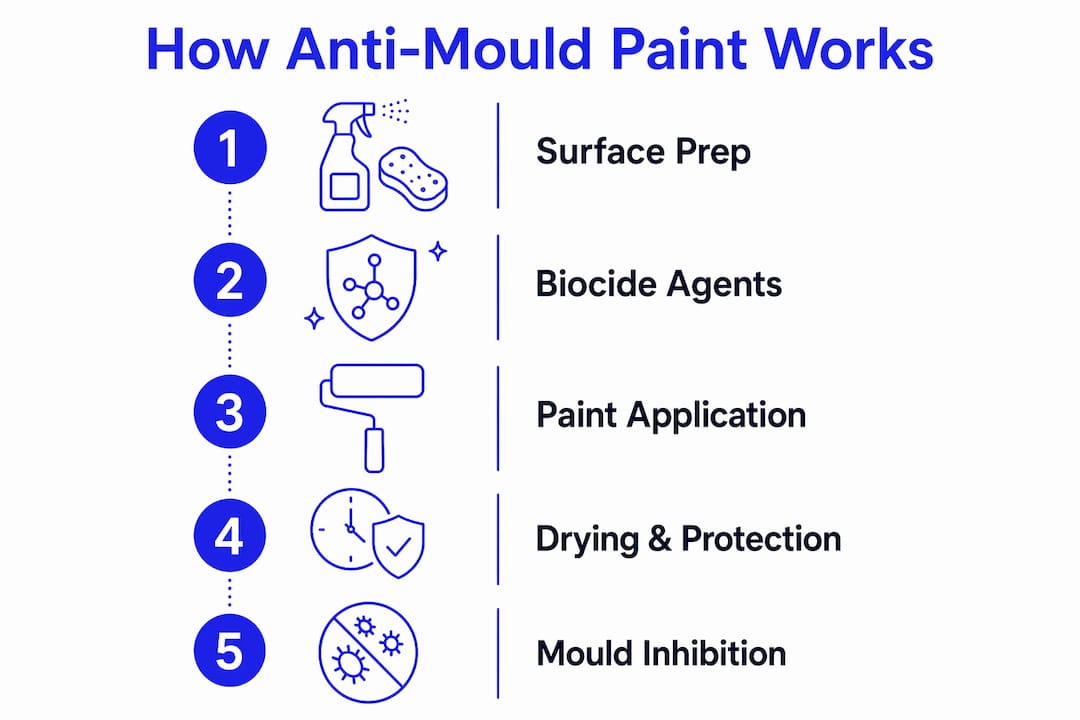
There is an important difference between fungicidal and moisture-resistant coatings. Fungicidal paints like Dulux Trade Mouldshield are tested to antifungal standards such as BS 3000 Part G6, confirming their active biological protection. Moisture-resistant paints, by contrast, reduce water absorption into the substrate but carry no biocidal agents. The two are often confused, but they serve different purposes.
Some premium products incorporate advanced antimicrobial technology. BioCote antimicrobial additives, for example, are independently tested and embedded in certain paint formulations to deliver protection beyond what standard fungicidal agents provide. This level of additive technology is what separates a quality anti-mould product from a basic moisture-resistant wall paint.
- Biocidal agents prevent mould spore germination on the paint film surface
- Fungicidal testing (e.g., BS 3000 Part G6) confirms active antifungal performance
- Moisture resistance reduces water absorption but does not replace biocidal protection
- Antimicrobial additives like BioCote provide an additional layer of surface protection
- Coverage and drying vary by product. MouldX, for instance, covers approximately 6m² per litre with a drying time of 6 to 8 hours
Pro Tip: If you are unsure whether a product is genuinely fungicidal or simply moisture resistant, check the product data sheet for a BS or ISO antifungal test reference. If none is listed, the paint is moisture resistant only.
Why surface preparation matters more than the paint itself
Anti-mould paint is a preventive coating, not a curative one. Painting over existing mould without treating it first is the single most common cause of paint failure in bathrooms and kitchens. Mould can push through a freshly painted surface within months when the underlying growth has not been eliminated. The paint film simply cannot contain active biological growth beneath it.
Moisture from behind walls is equally problematic. If rising damp, a leaking pipe, or inadequate ventilation is driving moisture into the wall cavity, no paint product will deliver lasting results. The moisture source must be identified and resolved before any coating is applied.
The correct preparation workflow is as follows:
- Identify and fix the moisture source. Check for leaking pipes, inadequate ventilation, and rising damp. Address these before touching the walls.
- Kill existing mould. Apply a dedicated mould killer or a diluted bleach solution to all affected surfaces. Products like RMR-86 are effective for stubborn growth. Allow full drying time before proceeding.
- Clean and dry the surface thoroughly. Remove all residue from the mould treatment. The surface must be completely dry before priming.
- Apply a stain-block or biocidal primer. This seals any remaining staining and provides a sound base for the topcoat.
- Apply two coats of anti-mould paint. Follow the manufacturer’s recoat timing, typically 2 to 6 hours between coats depending on conditions.
Pro Tip: Never skip the primer step on a previously mould-affected surface. A stain-block primer prevents bleed-through and gives the anti-mould topcoat the best possible adhesion.
What types of anti-mould paint are available?
The anti-mould paint types available to homeowners range from basic fungicidal matt finishes to premium eggshell coatings with advanced antimicrobial technology. Choosing the right product depends on the room, the finish you want, and the level of moisture exposure the surface faces.
Matt finishes are better suited to ceilings and low-traffic walls where a flat, non-reflective appearance is preferred. Eggshell finishes offer a slight sheen and are more washable, making them the preferred choice for bathroom walls and kitchen splashback areas where cleaning is frequent. Dulux Trade Mouldshield is available in both fungicidal eggshell and matt formulations, giving you the flexibility to match the finish to the room.
Some homeowners ask whether they can add anti-mould additives to standard paint rather than buying a dedicated product. Additives are available, but the concentration and distribution of biocides in a purpose-formulated product is far more reliable than a DIY additive mix. For areas with genuine mould risk, a purpose-built product is the correct choice. For selecting reliable anti-mould paints suited to your home, product quality and independent testing credentials matter more than price.
| Product | Finish | Key feature | Best use |
|---|---|---|---|
| Dulux Trade Mouldshield | Matt and eggshell | BS-tested fungicidal protection | Bathrooms, kitchens, ceilings |
| Zinsser Perma-White | Satin | Self-priming, mould and mildew resistant | Bathrooms, high-humidity rooms |
| MouldX | Matt | 6m² per litre coverage, 6 to 8 hour dry time | General interior mould-prone areas |
When comparing products, also consider VOC (volatile organic compound) levels, particularly for non-toxic paint options in bedrooms or children’s rooms. Low-VOC anti-mould paints are widely available and perform comparably to standard formulations in most residential applications.
How to apply anti-mould paint correctly
Correct application is where most DIY anti-mould projects succeed or fail. The paint itself is only as effective as the surface it goes onto and the conditions in which it cures.
- Prepare the surface following the workflow described above. No active mould, no moisture, no loose or flaking paint.
- Prime with a biocidal or stain-block primer on any previously affected areas. Allow full drying time before applying the topcoat.
- Apply the first coat using a quality roller or brush, working in consistent strokes to achieve even coverage. Avoid overloading the roller, which can cause runs and uneven film thickness.
- Allow the recoat window. Recoat timing of 2 to 6 hours is standard, but humidity and temperature affect this. In a humid bathroom, allow the full 6 hours before applying the second coat.
- Apply the second coat for full film build and maximum biocidal protection. One coat is rarely sufficient for areas with genuine mould risk.
- Allow full cure time before exposing the surface to steam or moisture. Most products reach full cure within 7 to 14 days, even if they feel dry to the touch within hours.
Ventilation is not optional. A bathroom without extractor fans will develop mould despite the use of anti-mould paint, because the coating cannot compensate for persistent, uncontrolled moisture. Anti-mould paint works best as part of a system that includes adequate ventilation, regular cleaning, and prompt attention to any new moisture sources.
Pro Tip: Paint in conditions above 10°C and below 35°C with relative humidity under 85%. Cold or excessively humid conditions slow curing and reduce the integrity of the paint film, which directly affects mould resistance longevity.
Key takeaways
Anti-mould paint delivers lasting protection only when paired with proper surface preparation and ongoing moisture control.
| Point | Details |
|---|---|
| Definition and purpose | Anti-mould paint is a fungicidal coating that inhibits mould spore germination on interior surfaces. |
| Preparation is non-negotiable | Existing mould must be killed and moisture sources fixed before any anti-mould paint is applied. |
| Product type matters | Fungicidal paints with independent test certifications outperform basic moisture-resistant coatings. |
| Application technique | Two coats with correct recoat timing and full cure time are required for maximum protection. |
| Ventilation is part of the system | Anti-mould paint alone cannot compensate for persistent moisture from poor ventilation or leaks. |
What I have learned from years of painting mould-prone rooms
The most common mistake I see homeowners make is treating anti-mould paint as a solution rather than a safeguard. They paint over a stained ceiling, the product performs well for a season, and then the mould returns because the extractor fan was never fixed or the roof leak was never addressed. The paint did its job. The system around it failed.
Product quality genuinely matters here. There is a real performance gap between a purpose-formulated fungicidal paint tested to BS standards and a generic moisture-resistant product sold at a lower price point. For interior painting in Melbourne homes, particularly in older Victorian and Edwardian properties where ventilation can be limited and wall cavities hold moisture for extended periods, that gap is the difference between a result that lasts three years and one that lasts six months.
I also think homeowners underestimate the importance of the primer step. A biocidal primer beneath a quality topcoat creates a layered defence that is far more durable than topcoat alone. It is an extra hour of work that pays for itself many times over.
The other thing worth saying plainly: if you have significant mould growth covering more than a square metre, or mould that keeps returning despite correct preparation and painting, the problem is structural. That is a moisture management issue, not a paint issue, and it needs professional assessment before any coating is applied.
— Jarrad
Protect your home with professional anti-mould painting
Solshine’s interior painting services include thorough surface preparation, biocidal priming, and the application of premium anti-mould coatings suited to Melbourne’s climate and the specific demands of heritage homes. The team assesses moisture conditions before any paint is applied, so the result is built on a sound foundation rather than painted over an existing problem. For homeowners in Kew, Hawthorn, Brighton, Camberwell, and surrounding suburbs who want a lasting, professionally executed anti-mould solution, Solshine handles every step under one roof. Get in touch to discuss your interior painting project.
FAQ
What is the difference between anti-mould paint and moisture-resistant paint?
Anti-mould paint contains biocidal agents that actively prevent mould spore germination on the paint film. Moisture-resistant paint reduces water absorption into the substrate but carries no biocidal protection, so it does not inhibit mould growth.
Can I use anti-mould paint indoors on any surface?
Anti-mould paint is designed for interior use on walls and ceilings in moisture-prone rooms such as bathrooms and kitchens. It adheres to plaster, plasterboard, and previously painted surfaces, provided the surface is clean, dry, and properly primed.
Does anti-mould paint kill existing mould?
Anti-mould paint does not kill existing mould. Mould must be treated and removed before painting, or it will push through the new paint film within months.
How long does anti-mould paint last?
Durability depends on the product quality, application method, and whether the underlying moisture source has been resolved. A correctly applied fungicidal coating in a well-ventilated bathroom can remain effective for three to five years before repainting is needed.
Is anti-mould paint safe to use in bedrooms and children’s rooms?
Low-VOC anti-mould paint formulations are available and suitable for bedrooms and children’s rooms. Check the product data sheet for VOC classification and allow full ventilation during and after application before occupying the room.


