
TL;DR:
- VOC levels in paints are complex, with many formulations still releasing unwanted chemicals into indoor air.
- In well-sealed heritage homes, even low-VOC paints can accumulate harmful off-gases without proper ventilation.
- Choosing natural or mineral paints offers safer, breathable alternatives for preserving Melbourne’s historic buildings.
If you’ve ever assumed that grabbing a tin labelled “low VOC” is enough to protect your family during a heritage restoration, you’re not alone — and you’re not entirely wrong. But VOC in paints explained properly is a more layered story than the label suggests. VOCs are volatile organic compounds that evaporate during application and continue to off-gas long after the brushes are put away. For Melbourne homeowners restoring Victorian or Edwardian properties, where rooms are often sealed, ornate, and occupied by sensitive family members, understanding VOC levels in paint is not optional. It’s essential.
Table of Contents
- What are VOCs in paints and how do they affect indoor air quality?
- Regulations and trends in VOC levels: what has changed and what remains
- Understanding low-VOC and zero-VOC paints: myths and realities for heritage homes
- Choosing and using paint safely in Melbourne heritage homes: practical guidelines
- Natural and mineral paints as low-VOC alternatives for heritage restoration
- Why thinking beyond VOCs matters for heritage paint choices
- Professional heritage painting services for Melbourne homeowners
- Frequently asked questions
What are VOCs in paints and how do they affect indoor air quality?
VOCs are carbon-based chemicals that evaporate at room temperature, releasing into indoor air during application, drying, and the curing period that follows. This process is called off-gassing, and it’s the reason freshly painted rooms have that distinctive smell. The smell itself is not the danger. The danger is the invisible accumulation of chemical compounds in enclosed spaces.
Common VOCs found in conventional paints include:
- Toluene — a solvent linked to neurological effects at high exposure levels
- Xylene — associated with headaches and dizziness
- Formaldehyde — a known carcinogen, present in some paint additives and preservatives
- Acetone and ethanol — lower toxicity but contributing to overall indoor VOC load
- Benzene — found in some oil-based formulations, with long-term health implications
Symptoms linked to elevated indoor VOC exposure range from eye and throat irritation to persistent headaches, fatigue, and nausea. For occupants with asthma, chemical sensitivities, or young children, the threshold for noticeable impact is lower.
Heritage homes in Melbourne’s inner east and bayside suburbs often have limited passive ventilation by modern standards. Ornate cornices, picture rails, and single-glazed sash windows create sealed pockets where off-gassing compounds accumulate and linger far longer than they would in a newer, more open-plan home.
Understanding why non-toxic paint matters in these environments is the starting point for responsible restoration planning.
Regulations and trends in VOC levels: what has changed and what remains
The paint industry has changed significantly over the past two decades. Regulatory pressure on VOC emissions has driven reformulation across major manufacturers, moving away from hydrocarbon solvents toward water-based carriers and alternative chemical systems.
In the United Kingdom, paint VOC emissions fell by 60% since the mid-2000s due to directives and large-scale reformulation. Australian standards have followed a similar trajectory, with voluntary industry codes and state environment policies gradually pushing product VOC content downward. The result for consumers is that most mainstream paint products sold today are genuinely lower in VOCs than those used in restorations twenty or thirty years ago.
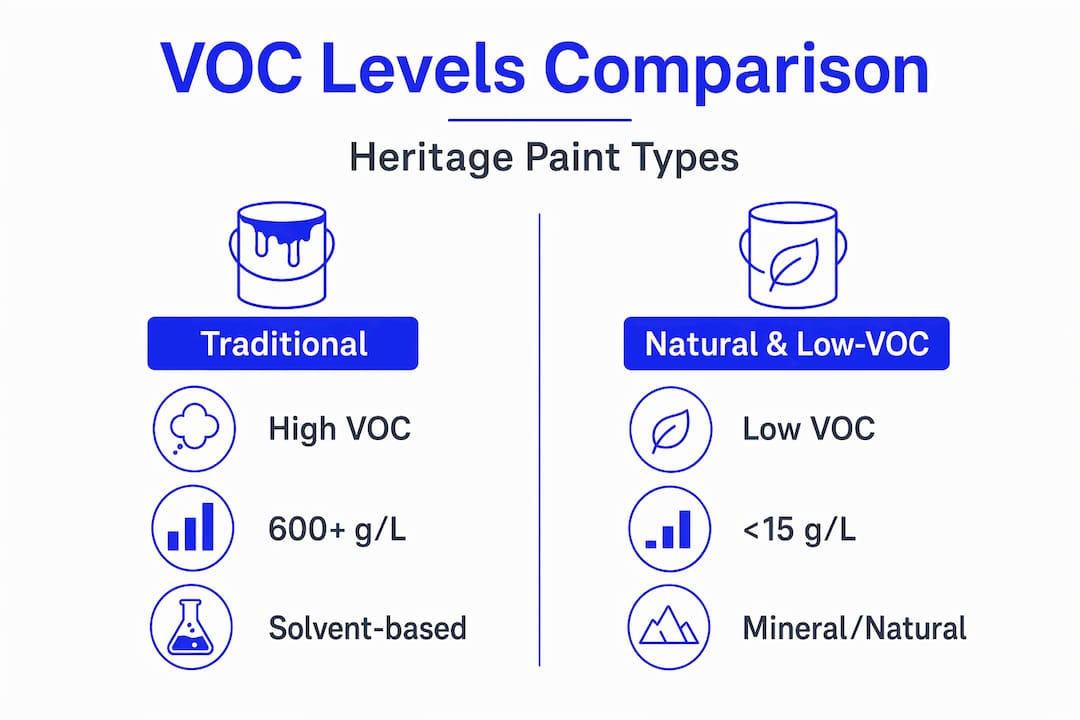
Comparison of typical VOC levels by paint category
| Paint type | Typical VOC level (g/L) | Common use |
|---|---|---|
| Traditional solvent-based | 300 to 600+ | Trims, joinery, older heritage work |
| Standard water-based | 50 to 150 | Interior walls, ceilings |
| Low-VOC water-based | 5 to 50 | Interior and exterior residential |
| Zero-VOC water-based | 0 to 5 | Interior, sensitive occupants |
| Natural / mineral paints | 0 to 10 | Heritage restoration, breathable substrates |
The improvement in outdoor air quality has been real and measurable. Indoors, however, the picture is more complicated. As homes become better insulated and draughts are sealed to reduce energy costs, the indoor environment traps whatever off-gases are present more effectively. A well-sealed Victorian terrace in Fitzroy or Northcote can accumulate VOCs at concentrations higher than the same products would produce in a less airtight space.
Key issues that remain despite lower VOC paint formulations:
- Tinters and colourants added at point of sale can significantly raise VOC content above the base paint’s labelled level
- Primer coats often carry higher VOC loads than the topcoat products they sit beneath
- Solvent-based trims and joinery finishes remain the preferred choice for durability on heritage timber, contributing meaningfully to indoor VOC load
Exploring eco-friendly paint options and understanding the difference between premium and standard paint formulations will help you make informed decisions at the product selection stage.
Understanding low-VOC and zero-VOC paints: myths and realities for heritage homes
The terms “low VOC” and “zero VOC” appear on packaging with increasing frequency. What they actually mean depends on the regulatory framework the manufacturer is referencing, and in Australia, the definitions are not uniformly standardised across all product categories.
Low-VOC products reduce emissions compared to older formulations, but they are not VOC-free. A product carrying a zero-VOC claim typically contains fewer than 5 grams per litre of VOCs in the base paint. Add a colourant, and that figure can rise substantially depending on the pigment system used.
Common misconceptions worth addressing directly:
- “If it doesn’t smell, it’s safe.” Some VOCs are odourless. The absence of a strong paint smell does not confirm low VOC concentration.
- “Zero VOC means no off-gassing.” It means negligible VOC content in the base. Other compounds such as biocides, preservatives, and surfactants are often excluded from VOC calculations.
- “Once it’s dry, the risk is over.” VOC concentrations peak in the first days and fall over time, but airflow and re-occupancy timing should account for curing beyond surface dryness.
Ventilation and scheduling are essential even with low-VOC and zero-VOC products. Opening windows is not enough in many heritage room configurations. Cross-ventilation, mechanical assistance, and staged room use are practical tools for managing indoor air quality during and after painting.
Pro Tip: Always request the technical data sheet for any paint product before committing to it. Marketing claims on tins vary widely. The TDS will confirm actual VOC content, curing times, and ventilation requirements specific to that formulation.
Careful paint selection for heritage homes means going beyond colour and sheen level. It means reading the technical data before the job starts.
Choosing and using paint safely in Melbourne heritage homes: practical guidelines
Knowing the theory is one thing. Applying it to an actual heritage restoration in Kew, Hawthorn, or Camberwell requires a structured approach that accounts for the specific conditions of older homes.
- Select your products before the job starts. Compare VOC content across base paints, primers, tinters, and topcoats as a combined system. A low-VOC topcoat applied over a high-VOC primer delivers limited benefit.
- Plan ventilation before the first tin is opened. Identify which windows and doors create genuine cross-ventilation. In rooms with single-hung sashes, opening top and bottom sashes simultaneously dramatically improves air movement.
- Schedule painting for warmer months where possible. Melbourne’s spring and autumn weather allows for natural ventilation without the cold-related need to seal rooms. Paint also cures more reliably in moderate temperatures.
- Use appropriate respiratory protection during application. A quality P2 respirator is the minimum standard for interior painting. For solvent-based products on heritage joinery, a respirator with organic vapour cartridges is appropriate.
- Maintain airflow through the full curing period. Residual off-gassing can continue for weeks to months, even after surfaces feel fully dry. Running a window fan in exhaust mode during this period reduces indoor VOC accumulation significantly.
- Delay re-occupancy for sensitive household members. Children, elderly occupants, and those with respiratory conditions should avoid freshly painted spaces for a minimum of 48 to 72 hours, and ideally longer for rooms with low ventilation.
Pro Tip: In Melbourne, the window between mid-September and mid-November offers reliable warmth with lower humidity than summer. For interior heritage painting, this is the optimal scheduling period for maximum natural ventilation and consistent curing conditions.
Detailed guidance on interior painting for heritage properties, as well as safety standards for heritage painting and surface preparation, are all worth reviewing before your restoration begins.
Natural and mineral paints as low-VOC alternatives for heritage restoration
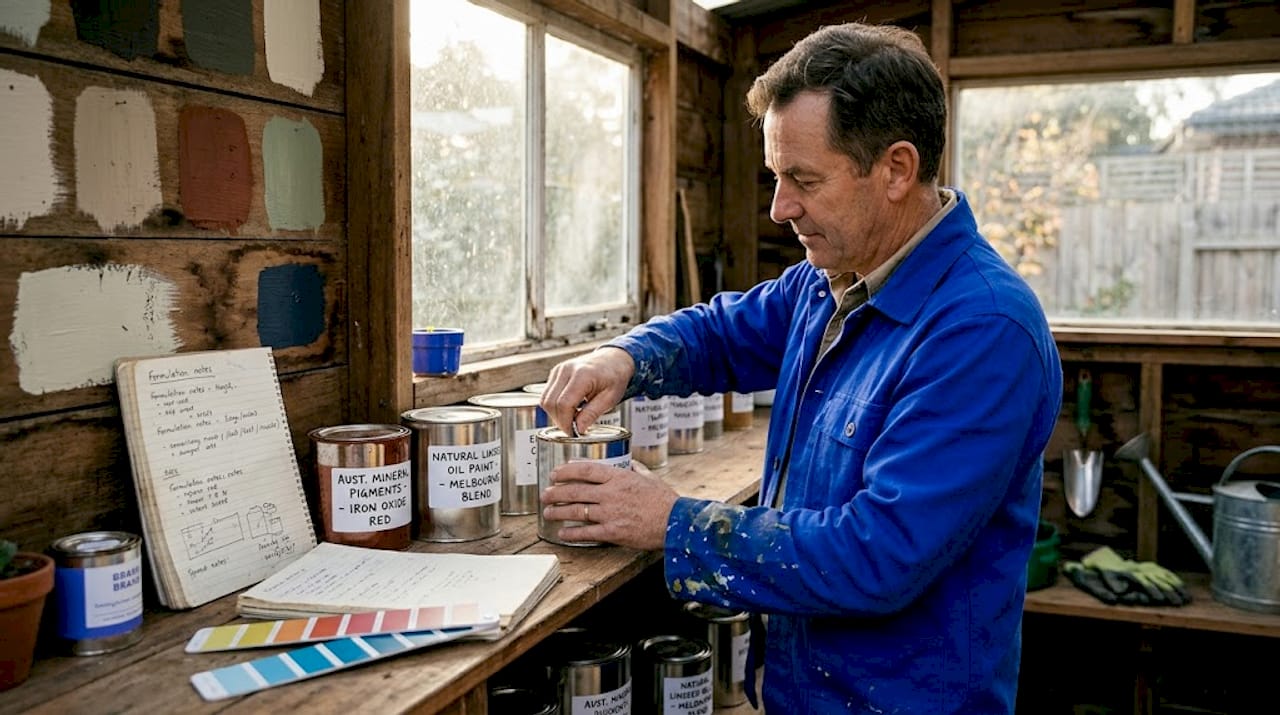
Beyond reformulated conventional paints, a separate category of products deserves attention for heritage restoration: natural and mineral paints. These have been used on historic buildings for centuries and align well with both the aesthetic and environmental needs of Victorian and Edwardian homes.
Natural paints typically require fewer volatile solvents and carry significantly lower VOC content, offering milder odour and a breathability that is well suited to heritage building fabric.
Comparison of natural and mineral paint types
| Paint type | VOC level | Breathability | Best applications |
|---|---|---|---|
| Lime wash | Near zero | Very high | Render, masonry, period interiors |
| Clay paint | Near zero | High | Interior walls, plaster substrates |
| Silicate mineral paint | Very low | High | Brick, stone, render, façades |
| Milk paint (casein) | Near zero | Moderate | Interior timber, decorative surfaces |
Key benefits relevant to Melbourne heritage homes:
- Several natural paints with low VOCs and hypoallergenic properties reduce common irritants and support moisture regulation within heritage building fabric
- Lime and silicate finishes are vapour-permeable, allowing walls to breathe and reducing the risk of moisture entrapment in older masonry and render
- These products are typically free from synthetic biocides, which are among the additives excluded from standard VOC calculations but capable of causing allergic reactions in sensitive occupants
Pro Tip: Before specifying any natural paint product, confirm the preservative system used. Some “natural” formulations include plant-derived biocides that can still trigger reactions in sensitive individuals. Ask the supplier for a full ingredient disclosure, not just a VOC content figure.
For more detail on eco-friendly and natural paint options suited to Melbourne’s heritage stock, it’s worth reviewing product specifications alongside your trades team before any restoration phase begins.
Why thinking beyond VOCs matters for heritage paint choices
After working across hundreds of Victorian and Edwardian properties in Melbourne’s inner east and bayside suburbs, the team at Sol Shine has observed something consistently: homeowners who focus exclusively on VOC labels often miss other factors that are equally important to health, longevity, and heritage outcomes.
VOC content is a useful starting point. It is not a complete safety measure, nor is it a reliable indicator of paint quality or restoration suitability.
Preservatives in paint formulations are one example. Isothiazolinone-based biocides, commonly added to water-based paints to extend shelf life, are a recognised cause of contact dermatitis and respiratory sensitisation. These compounds are largely excluded from VOC calculations. A paint can carry a genuine low-VOC certification and still cause significant reactions in occupants with chemical sensitivities.
Breathability is another factor that matters more in heritage contexts than in new construction. Victorian and Edwardian homes were built with moisture-active materials: lime plaster, brick, and old-growth timber that flex with seasonal humidity changes. A low-VOC acrylic applied directly to original lime render without appropriate preparation traps moisture, leading to delamination, bubbling, and accelerated substrate damage. The health and conservation consequences of that failure often cost far more to remediate than the original project.
Finish durability on heritage substrates also requires attention. A broader perspective on non-toxic paints and a sustainable heritage painting approach both require balancing low emissions with genuine performance on period materials.
The most considered approach to heritage painting weighs VOC content, breathability, allergy risk, substrate compatibility, and finish durability together. Choosing a paint solely because it carries a low-VOC label, and then applying it incorrectly to an original heritage substrate, is a common and costly mistake. The label is the beginning of the conversation, not the end of it.
Professional heritage painting services for Melbourne homeowners
Managing VOCs thoughtfully during a heritage restoration takes more than good product selection. It requires sequencing, scheduling, ventilation planning, and experienced hands who understand what period substrates demand.

Sol Shine specialises in heritage painting and restoration across Melbourne’s inner east and bayside, including Kew, Hawthorn, Camberwell, Brighton, and Malvern. Our team works with low-VOC and natural paint systems as standard practice on heritage projects, selecting formulations based on substrate compatibility, occupant sensitivity, and long-term finish performance rather than label claims alone. From interior repaints of original plaster walls to full-scale façade restorations, every project is planned with health and conservation in mind. If you’re planning a heritage restoration and want to discuss paint selection and VOC management as part of your project scope, get in touch with the Sol Shine team.
Frequently asked questions
What are VOCs in paint and why should I be concerned?
VOCs are carbon-based chemicals in paint that evaporate into indoor air, potentially causing eye irritation, headaches, and respiratory issues during and after application, particularly in poorly ventilated heritage rooms.
How long do VOCs off-gas after painting a room?
VOC off-gassing can last weeks to months at low levels after the initial peak emission period; maintaining consistent ventilation throughout the curing phase is the most effective way to manage indoor air quality.
Are low-VOC and zero-VOC paints completely safe?
Low-VOC is not zero VOC; these products greatly reduce harmful emissions but still contain trace compounds and other additives, meaning ventilation and careful re-occupancy scheduling remain important even with these formulations.
What paint types are best for heritage home restorations?
Natural paints have significantly lower VOCs and support healthy heritage building environments; lime, clay, and silicate mineral paints offer breathability and moisture regulation that aligns well with original Victorian and Edwardian building materials.


