
Cracked panes, draughty gaps, and timber decay plague older windows across Melbourne’s Victorian and Edwardian suburbs. Heritage window repair restores original charm while delivering modern comfort and energy efficiency. This guide walks you through identifying common issues, preparing for repairs, executing restorations, and avoiding costly mistakes that compromise your heritage home’s character and value.
Table of Contents
- Understanding Common Problems With Heritage Windows
- Preparing For Heritage Window Repair: Tools And Considerations
- Step-By-Step Guide To Executing Heritage Window Repairs
- Troubleshooting Common Mistakes And Ensuring Long-Lasting Results
- Enhance Your Heritage Home With Expert Painting Services
- FAQ
Key takeaways
| Point | Details |
|---|---|
| Energy efficiency gains | Proper restoration can improve window efficiency by up to 50%, reducing heating and cooling costs significantly. |
| Property value preservation | Original timber windows professionally restored increase property appeal and maintain authentic heritage character. |
| Expert craftsmanship essential | Traditional joinery skills and period-appropriate materials ensure repairs last decades, not just years. |
| Cost-effective alternative | Repairing heritage windows often costs less than full replacement while preserving irreplaceable original features. |
| Maintenance extends lifespan | Regular inspections and timely interventions prevent major deterioration, extending window life by 30-40 years. |
Understanding common problems with heritage windows
Victorian and Edwardian windows face predictable deterioration patterns after decades of Melbourne weather exposure. Recognising these issues early prevents expensive structural damage and preserves your home’s authenticity.
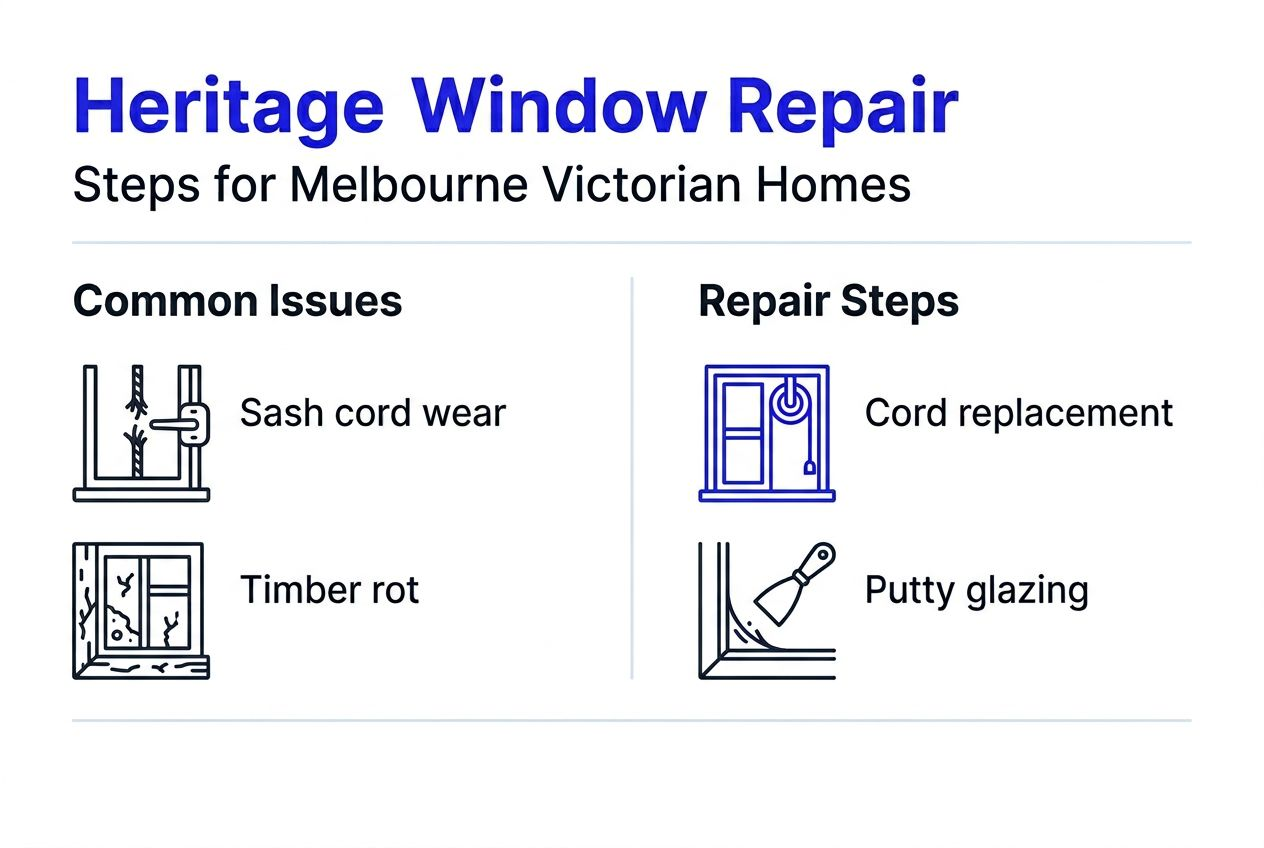
Sash cords deteriorate after 40-60 years, causing upper sashes to fall unexpectedly. This creates safety hazards and prevents proper window operation. Cotton ropes fray from constant friction and UV exposure through decades of use.
Timber frames rot due to moisture accumulation, particularly affecting bottom rails and external sills. Water penetrates through failed glazing putty or damaged paint, softening timber and creating breeding grounds for fungal decay. Left untreated, rot spreads throughout the frame structure.
Other prevalent issues include:
- Perished glazing putty allowing glass panes to rattle, leak air, and admit water during storms
- Paint buildup over multiple repainting cycles binding sashes shut or creating friction
- Warped timber from moisture cycles preventing smooth sash operation
- Loose joints and gaps in frame corners causing draughts and reducing structural integrity
- Missing or damaged weights inside sash boxes throwing off balance mechanisms
Projects like our Deepdene heritage restoration demonstrate how addressing these interconnected problems preserves original windows while dramatically improving performance. Each issue compounds others when ignored, accelerating overall deterioration.
Preparing for heritage window repair: tools and considerations
Successful heritage window restoration demands careful planning and appropriate materials. Rushing repairs with modern shortcuts damages irreplaceable historic fabric and creates maintenance headaches.
Start by thoroughly assessing each window’s condition. Probe timber with a sharp tool to identify soft rot requiring epoxy consolidation or dutchman repairs. Document which sashes need cord replacement and which panes have failing putty. Understanding the full scope prevents mid-project surprises.
Essential preparation steps:
- Test paint for lead content, as pre-1970s homes typically contain lead paint requiring safe removal protocols
- Measure existing glass thickness and note any etched or textured heritage glass needing specialist replication
- Source period-appropriate materials including linseed oil putty, cotton sash cord, and matching timber species
- Gather restoration tools: sharp chisels, putty knives, heat guns, orbital sanders, scrapers, and protective equipment
- Consider modern improvements like draught sealing strips and retrofit double glazing that respect heritage aesthetics
Pro Tip: Photograph windows from multiple angles before starting work. These images guide reassembly and document original details often overlooked during disassembly.
Expert craftsmen bring extensive knowledge of traditional joinery techniques and heritage-appropriate glazing methods. Their experience identifies structural issues invisible to untrained eyes. Hiring specialist painters familiar with heritage properties ensures repairs integrate seamlessly with your home’s architecture.
Draught sealing deserves special attention during planning. Modern brush seals installed discreetly dramatically improve comfort without altering appearance. Retrofit double glazing systems like Thermawood fit within existing frames, maintaining street-facing authenticity while delivering contemporary thermal performance.
Step-by-step guide to executing heritage window repairs
Proper execution separates lasting restoration from temporary fixes. Following proven methods preserves original materials while upgrading performance.
Begin removal work carefully:
- Remove interior stops and carefully extract lower sash, disconnecting any intact cords
- Extract parting beads separating upper and lower sashes, noting their precise positioning
- Remove upper sash and inspect weight pockets for damaged pulleys or broken cords
- Carefully remove glass panes by softening old putty with gentle heat, avoiding thermal shock cracking
- Extract any decayed timber sections while preserving maximum original material
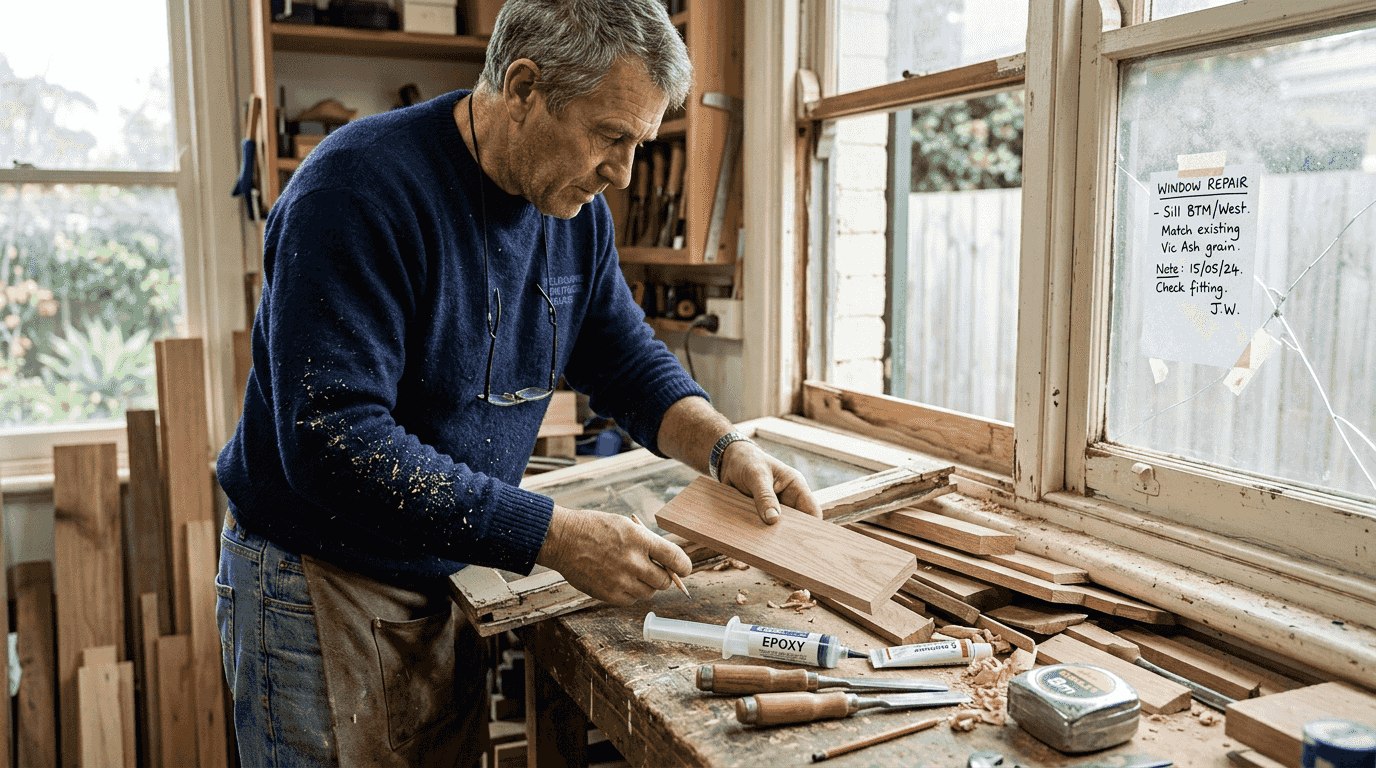
Timber repair requires matching original species and grain direction. Use epoxy consolidants for surface rot, injecting resin deep into softened fibres. Larger voids need dutchman repairs, splicing new timber sections invisibly into original frames. Sand repairs flush once cured, creating seamless surfaces for painting.
| Repair Method | Application | Durability | Skill Level |
|---|---|---|---|
| Epoxy consolidation | Surface rot, minor decay | 20-30 years | Intermediate |
| Dutchman splice | Deep rot, missing sections | 50+ years | Advanced |
| Full rail replacement | Extensive decay | Lifetime | Expert |
| Filler compounds | Cosmetic only | 3-5 years | Beginner |
Replace worn sash cords with new cotton rope, maintaining original weight-to-sash ratios for smooth operation. Some homeowners upgrade to spring balance systems, eliminating cords entirely while preserving traditional appearance.
Pro Tip: Weigh sashes before reassembly. Matching original weights to new cords ensures effortless operation and prevents binding.
Reglaze windows using linseed oil putty applied in consistent bevels. Press glass firmly into fresh putty beds, secure with glazing points, then tool external putty to shed water. Retrofit double glazing significantly reduces heat loss when installed by specialists who maintain slim sightlines matching single-pane profiles. Our heritage window restoration methods demonstrate how modern thermal performance integrates invisibly with Victorian aesthetics.
Install draught seals along meeting rails and frame edges after painting. Quality brush seals compress when windows close, blocking air infiltration without preventing operation. Position seals carefully to avoid paint adhesion or operation interference.
Troubleshooting common mistakes and ensuring long-lasting results
Even experienced restorers encounter pitfalls that compromise heritage window longevity. Recognising these mistakes protects your investment and preserves authenticity.
Improper timber repair causes premature failure when modern materials incompatible with heritage timber create moisture traps or differential movement. Polyester fillers crack out within years, while properly executed epoxy repairs last decades. Always match timber species and grain orientation when splicing new sections.
Glazing errors frequently undermine otherwise quality restoration:
- Using modern silicone instead of linseed putty prevents future reglazing and traps moisture
- Applying putty over dirty glass creates weak bonds that fail within months
- Installing incorrect glass thickness alters sightlines and compromises heritage appearance
- Skipping glazing points allows panes to shift, cracking putty seals
Structural issues demand attention before cosmetic repairs proceed. Sagging lintels, cracked sills, and deteriorated brickwork surrounding windows will damage new repairs if left unaddressed. Inspect thoroughly and remediate foundation problems first.
| Repair Approach | Immediate Cost | 10-Year Cost | Heritage Value |
|---|---|---|---|
| Proper restoration | Higher | Lower (minimal maintenance) | Preserved |
| Quick fix | Lower | Higher (repeated repairs) | Compromised |
| Full replacement | Highest | Medium | Lost permanently |
Maintenance after restoration extends window life dramatically. Inspect annually for paint failure, putty cracks, or early timber softening. Address small problems immediately before they escalate. Repaint every 7-10 years using quality exterior systems, and windows reward you with generations of reliable service.
Our heritage paint guide details coating systems protecting timber while maintaining breathability essential for heritage joinery. Modern paints formulated for heritage applications offer vastly superior durability compared to traditional oil paints, reducing maintenance frequency without compromising authenticity.
Enhance your heritage home with expert painting services
Restored windows deserve equally thoughtful exterior and interior painting to maximise their renewed beauty and protection. Specialised heritage painting complements window restoration, creating cohesive aesthetics while safeguarding your investment.

Sol Shine’s experienced painters understand Victorian and Edwardian architecture intimately. We apply coating systems specifically formulated for heritage timber, ensuring breathability while delivering weather protection lasting over a decade. Our heritage painting services extend beyond windows to weatherboards, eaves, and decorative timber elements, creating unified presentation that honours your home’s character.
Combining window restoration with comprehensive painting maximises value and minimises disruption. Our teams coordinate timing to protect fresh repairs while completing exterior work efficiently. We also offer premium interior painting services that complement restored windows, using low-VOC products safe for occupied heritage homes while delivering flawless finishes on plaster, timber, and decorative features.
FAQ
How often should heritage windows be maintained to prevent major repairs?
Inspect heritage windows annually for early signs of paint failure, putty deterioration, or timber softening. Professional maintenance every 3-5 years catches problems before they escalate into expensive structural repairs. Regular repainting every 7-10 years protects timber from moisture damage that causes rot. Early intervention saves thousands compared to delayed repairs that allow decay to spread throughout frames.
Can retrofit double glazing be installed without altering the original window appearance?
Yes, systems like Thermawood preserve original appearance while dramatically improving thermal and acoustic performance. Specialist installers remove existing glass, rout frame rebates deeper, and install slim double-glazed units matching original sightlines. From the street, windows maintain authentic heritage character while interior comfort improves dramatically. Expert installation ensures weathertight seals and smooth operation without compromising heritage aesthetics.
What are common causes of difficulty opening sash windows and how can they be fixed?
Swollen timber from moisture absorption creates friction preventing smooth sash movement. Paint buildup over decades adds further resistance, sometimes binding windows completely shut. Careful sanding removes high spots without excessive material removal. Planing swollen rails returns them to original dimensions. Remove paint buildup using heat guns and scrapers rather than aggressive power tools that damage heritage timber profiles. Proper sealing and regular painting prevents future swelling cycles.
Should I repair or replace severely deteriorated heritage windows?
Repair remains viable even for extensively deteriorated windows if structural frames stay intact. Dutchman splices replace rotten sections invisibly, epoxy consolidates softened timber, and new sashes can replicate originals exactly. Replacement destroys irreplaceable heritage fabric and rarely matches original quality or aesthetics. Modern reproduction windows lack the craftsmanship and material quality of period originals. Financial analysis typically favours repair once long-term maintenance and property value impacts are considered.


