
Many heritage homeowners believe painting is purely cosmetic, a fresh coat to brighten faded weatherboards. The reality? Preventative maintenance painting forms your property’s first defence against moisture infiltration, timber decay, and structural deterioration. Melbourne’s humid climate and seasonal temperature swings accelerate these processes, making strategic paint maintenance essential for preservation. This guide reveals expert-backed strategies to protect your Victorian or Edwardian home’s integrity while maintaining its historical character.
Table of Contents
- The Importance Of Breathable Paints For Heritage Homes
- Preparing Surfaces For Lasting Paint Protection
- Early Detection And Timely Repairs To Save Costs
- Authentic Techniques And Materials For Heritage Preservation
- Explore Solshine’s Heritage Painting Services In Melbourne
- Frequently Asked Questions
Key takeaways
| Point | Details |
|---|---|
| Breathable paints prevent damage | Mineral-based and limewash formulations allow moisture vapour transmission, stopping trapped water that causes blistering and decay |
| Surface preparation ensures longevity | Thorough cleaning and moisture remediation before painting prevents the 70-80% of paint failures caused by inadequate preparation |
| Early repairs halve restoration costs | Regular inspections and prompt attention to minor issues can reduce major restoration expenses by up to 50% |
| Traditional materials protect heritage | Authentic lime renders and handcrafted details maintain structural integrity while preserving historical character |
The importance of breathable paints for heritage homes
Modern acrylic and vinyl paints create impermeable barriers on your walls. While they look glossy and fresh initially, they trap moisture inside porous heritage materials like brick, lime render, and aged timber. This trapped moisture has nowhere to escape, leading to paint blistering, render failure, and timber rot within two to three years.
Breathable paints work differently. Mineral-based formulations allow moisture vapour transmission, letting your walls release trapped water naturally whilst still providing weather protection. This breathing action maintains the health of original building materials, preventing the decay cycle that destroys heritage fabric.
Melbourne’s climate compounds these challenges. Our humid summers and wet winters create constant moisture pressure on external walls. Properties in bayside suburbs like Brighton and Malvern face additional salt-laden air that accelerates paint degradation. Using inappropriate modern paints in these conditions guarantees premature failure.
Breathable paint systems can last over a decade with proper application and maintenance. Compare this to non-porous alternatives that need replacement every few years, and the cost benefit becomes clear. More importantly, you avoid the structural damage that occurs during those replacement cycles.
Pro Tip: When selecting breathable paints, prioritise mineral silicate or traditional limewash formulations over modern “breathable” acrylics. True mineral paints chemically bond with substrates rather than forming surface films, providing superior vapour permeability and longevity.
Consider these breathable paint characteristics:
- High vapour permeability ratings measured in SD values (lower is better)
- Alkaline pH that inhibits mould and algae growth naturally
- Mineral pigments that resist UV fading better than organic dyes
- Compatibility with lime-based renders and historic masonry
- Application requirements that differ from conventional paints
Choosing the right paint system forms the foundation of effective preventative maintenance. Your heritage house paint selection determines whether you’re protecting or slowly destroying your property’s original fabric.
Preparing surfaces for lasting paint protection
Even the finest breathable paint will fail without proper surface preparation. Heritage Victoria benchmarks show that inadequate surface preparation causes 70-80% of paint failures on historic properties. This statistic reflects a harsh reality: shortcuts during preparation guarantee expensive remediation later.
Surface preparation begins with thorough cleaning to remove accumulated grime, salt deposits, and biological growth. Melbourne’s pollution and coastal conditions create stubborn surface contamination that prevents paint adhesion. Pressure washing alone won’t suffice. You need careful hand scraping, wire brushing, and sometimes chemical treatments to achieve a sound substrate.
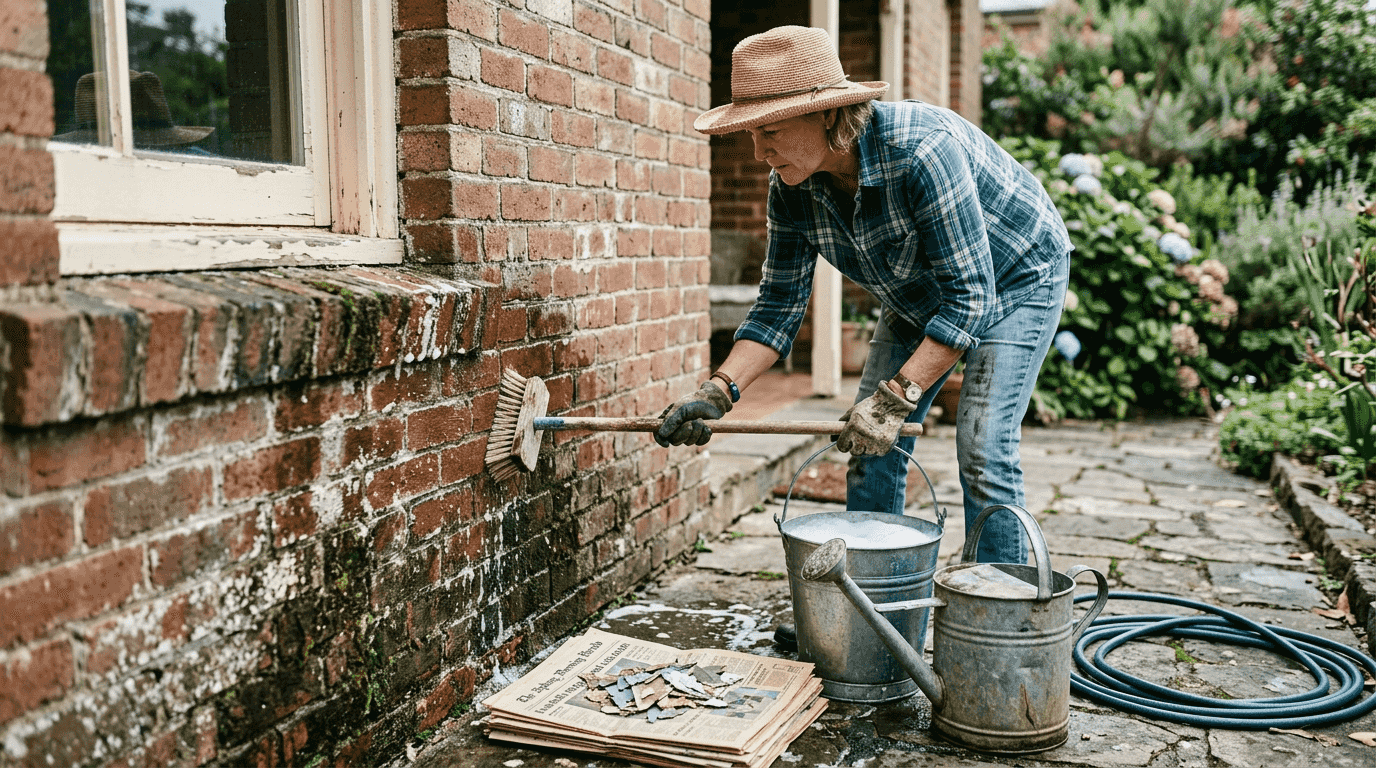
Loose and flaking paint must be completely removed. Painting over failing coatings simply delays the inevitable whilst trapping more moisture beneath. This creates larger areas of failure when the system eventually collapses. Strip back to stable paint layers or bare substrate in affected areas.
Moisture issues require resolution before any paint touches the surface. Leaking gutters, rising damp, and failed flashings will destroy new paintwork within months. Address these underlying problems first, then allow adequate drying time before repainting. Painting over damp substrates locks in moisture and guarantees rapid failure.
Fungal growth indicates persistent moisture problems. Black mould, green algae, and lichen don’t just look unsightly. They actively break down paint films and substrate materials. Kill biological growth with appropriate treatments, identify the moisture source, and rectify it permanently.
Follow this preparation sequence:
- Inspect the entire property for structural issues and moisture entry points
- Repair all identified defects including gutters, downpipes, and flashings
- Remove loose paint, biological growth, and surface contamination
- Allow adequate drying time, typically four to six weeks after moisture repairs
- Prime bare substrates with appropriate breathable primers
- Apply finish coats following manufacturer specifications for coverage and recoat times
Pro Tip: Document your preparation work with photographs. This creates a maintenance record showing which areas received attention and when, helping you schedule future inspections and identify recurring problem zones.
“Proper preparation isn’t expensive. It’s the foundation of value. Rush this stage and you’ll pay triple the cost in premature repainting and substrate repairs.”
Investing in thorough preparation extends paint lifespan from three years to over ten. The labour costs remain similar, but you avoid repeated disruption and compounding damage. Quality paint materials for heritage homes deserve quality preparation to deliver their full protective potential.
Early detection and timely repairs to save costs
Regular inspections catch small problems before they become structural crises. A minor crack in render today becomes major spalling and timber decay within two years if ignored. Walking your property’s perimeter twice yearly, particularly after Melbourne’s winter rains, reveals emerging issues whilst they’re still manageable.
Look for paint blistering, which signals trapped moisture. Small blisters indicate localised problems, perhaps from a blocked weep hole or minor gutter overflow. Address these immediately. Large-scale blistering across entire walls suggests systemic moisture issues requiring comprehensive investigation.
Cracks in render and mortar allow water penetration that accelerates deterioration exponentially. A hairline crack seems insignificant, but Melbourne’s freeze-thaw cycles widen it rapidly. Water enters, freezes, expands, and progressively destroys surrounding material. Repoint and repair cracks promptly using appropriate lime mortars, not modern cement products.
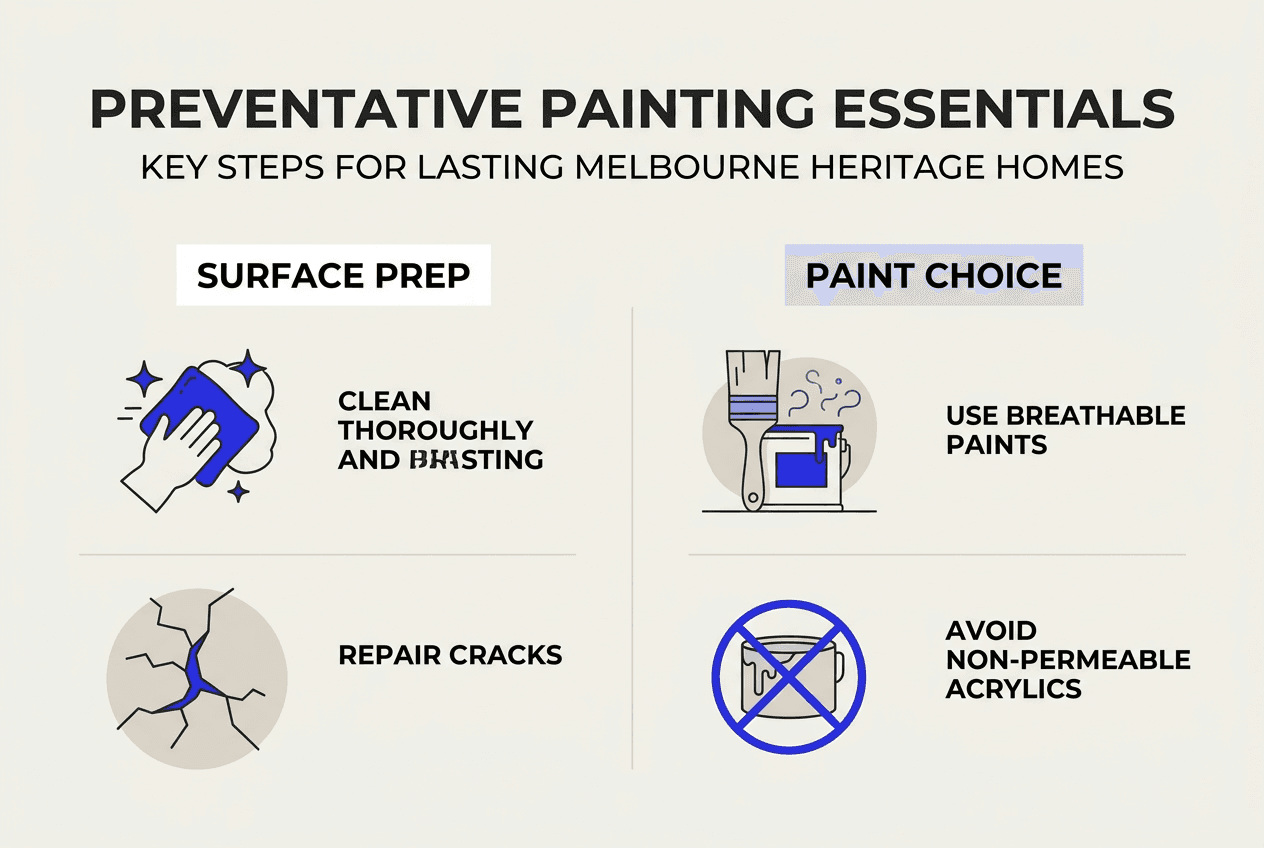
The Victorian Heritage Council demonstrates that early intervention reduces restoration costs by up to 50% compared to deferred maintenance approaches. This isn’t theoretical savings. Catching render failure early might cost two thousand dollars. Waiting until timber framing rots could exceed twenty thousand for structural repairs plus heritage joinery replacement.
Modern cement renders create particular problems on heritage properties. Their impermeability traps moisture against original lime renders and soft bricks, causing hidden decay behind apparently sound surfaces. When cement render finally fails, you discover extensive damage to historic fabric underneath.
Pro Tip: Create a simple maintenance log noting inspection dates, observations, and repairs completed. This record helps identify patterns, such as areas that consistently develop problems, indicating underlying defects requiring permanent solutions.
Consider these cost implications:
| Repair timing | Typical cost | Scope of work |
|---|---|---|
| Immediate (minor crack) | $500-$2,000 | Localised repointing and paint touch-up |
| Delayed (render failure) | $8,000-$15,000 | Section render replacement and repainting |
| Deferred (structural damage) | $20,000-$50,000+ | Timber frame repairs, joinery replacement, full restoration |
“Heritage homes reward attention. Inspect regularly, repair promptly, and your property maintains its value and character. Neglect compounds exponentially, turning small maintenance into major restoration.”
Working with specialist heritage painters who understand these principles ensures problems get identified during routine maintenance visits. Their trained eyes spot subtle indicators homeowners often miss, preventing small issues from escalating.
Authentic techniques and materials for heritage preservation
Traditional lime renders differ fundamentally from modern cement products. Lime remains flexible, accommodating the natural movement of heritage buildings without cracking. Its porosity allows moisture evaporation, preventing the trapped dampness that destroys historic fabric. Cement renders, conversely, are rigid and impermeable, creating the perfect conditions for concealed decay.
Authentic restoration requires matching original material ratios and application methods. Victorian-era lime renders used specific lime-to-sand proportions developed through centuries of building practice. These formulations achieved optimal strength whilst maintaining breathability and flexibility. Modern approximations often fail because they prioritise speed over traditional curing requirements.
Handcrafted architectural details demand skilled reproduction. Original mouldings, corbels, and decorative elements were hand-formed by craftsmen who understood material properties intimately. Machine-made replacements lack the subtle variations and precise profiles that define heritage character. More critically, inappropriate materials in these details create moisture traps and structural weaknesses.
The risks of modern materials extend beyond aesthetics. Cement mortars are significantly harder than heritage bricks and lime renders. When moisture-induced movement occurs, something must give. The cement remains intact whilst softer historic materials crumble around it. This process, called “sacrificial erosion,” steadily destroys irreplaceable original fabric.
Melbourne’s heritage overlay controls require authentic materials and methods for protected properties. These regulations recognise that inappropriate repairs damage heritage values as surely as neglect does. Compliance isn’t bureaucratic interference. It’s protection for architectural heritage that defines our city’s character.
Compare traditional versus modern approaches:
| Aspect | Traditional lime-based | Modern cement-based |
|---|---|---|
| Flexibility | Accommodates building movement | Rigid, causes cracking |
| Breathability | High vapour permeability | Impermeable barrier |
| Compatibility | Matches original materials | Harder than historic fabric |
| Longevity | Decades with maintenance | Fails within years on heritage buildings |
| Heritage value | Maintains authenticity | Compromises character |
Authentic material selection protects both structure and heritage significance:
- Natural hydraulic lime for renders and mortars
- Breathable mineral paints compatible with lime substrates
- Seasoned hardwood for joinery repairs matching original species
| Traditional iron oxide pigments for historically accurate colours - Hand-mixed mortars avoiding modern plasticisers and accelerants
Pro Tip: Source materials from suppliers specialising in heritage restoration products. Standard building merchants rarely stock authentic lime putty, natural pigments, or appropriate timber species. Specialist suppliers also provide technical guidance for proper application.
Working with tradespeople who understand these distinctions ensures your maintenance protects rather than damages heritage fabric. Proper heritage window repairs using traditional techniques maintain functionality whilst preserving original details that machine-made replacements cannot replicate.
Explore Solshine’s heritage painting services in Melbourne
Protecting your heritage home requires expertise that understands both traditional techniques and Melbourne’s unique challenges. Solshine specialises in premium heritage painting that applies the preventative maintenance principles discussed throughout this guide. Our team works extensively across Melbourne’s inner east and bayside suburbs, from the Victorian terraces of Fitzroy and Richmond to the grand Edwardian homes of Brighton and Malvern.

We’re painters first, but our heritage restoration service encompasses the complete scope your property needs. Render repair, brickwork restoration, timber replacement, and custom joinery all integrate under one roof. This comprehensive approach means your preventative maintenance addresses underlying issues alongside protective painting. When you’re ready to preserve your heritage home with specialist painters who understand heritage requirements, our team provides the expertise and craftsmanship your property deserves. We focus on projects over twenty thousand dollars where quality and authenticity matter. Discover how heritage paint systems lasting ten years protect your investment whilst maintaining historical character.
Frequently asked questions
How often should heritage homes be repainted?
Heritage homes using quality breathable paint systems typically need repainting every seven to ten years. This timeframe assumes proper surface preparation, appropriate paint selection, and basic maintenance like gutter cleaning. Exposed elevations facing weather may require attention sooner, whilst protected areas often last longer. Regular inspections help you identify when repainting becomes necessary rather than following arbitrary schedules.
Can I use modern acrylic paints on my heritage home?
Modern acrylic paints trap moisture inside heritage building materials, causing blistering, render failure, and timber decay. These problems often appear within two to three years of application. Breathable mineral or lime-based paints are essential for heritage properties, allowing walls to release moisture naturally whilst providing weather protection. The short-term cost savings of acrylics become expensive failures requiring complete remediation.
Why is surface preparation so important before painting?
Poor surface preparation causes seventy to eighty percent of paint failures on heritage properties. Inadequate cleaning, failure to remove loose paint, and painting over damp or contaminated surfaces prevents proper adhesion. Paint then fails prematurely, requiring complete removal and reapplication. Thorough preparation ensures paint bonds correctly and delivers its full protective lifespan, typically over a decade for quality systems.
How do I know if my heritage home needs restoration beyond painting?
Look for crumbling brickwork, large areas of render failure, rotten timber elements, and persistent dampness that returns after repairs. These signs indicate structural issues requiring comprehensive restoration rather than cosmetic painting. Consulting heritage conservation specialists helps you understand the scope of work needed. They can assess whether problems stem from deferred maintenance or require more extensive intervention. Professional evaluation through heritage window specialists often reveals interconnected issues affecting multiple building elements simultaneously.


