
Choosing paint for your Melbourne heritage home isn’t as simple as picking a colour from the local hardware store. Many homeowners believe all paints deliver similar longevity, only to discover costly peeling, blistering, and fading within a few years. Heritage properties demand specialised coatings that breathe, resist Melbourne’s UV exposure and humidity, and comply with strict conservation guidelines. This guide explains what determines paint durability, which products suit Victorian and Edwardian homes, and how to protect your investment for decades.
Table of Contents
- Key takeaways
- How paint durability is measured and tested
- What paint types and materials offer the best durability for Melbourne heritage homes
- Challenges and special considerations for paint durability in Melbourne’s heritage house restoration
- Practical tips for applying and maintaining durable paint on Melbourne heritage homes
- Explore professional heritage painting services in Melbourne
- Paint durability explained: frequently asked questions
Key Takeaways
| Point | Details |
|---|---|
| Film hardness and adhesion | Durability depends on how hard the film is, how well it sticks to substrates, and its resistance to UV, moisture and temperature changes. |
| Breathable heritage paints | Heritage properties need paints that breathe to prevent moisture damage and comply with conservation guidelines. |
| Lab tests vs real wear | Accelerated tests guide quality, but actual wear varies with local climate and exposure. |
| Mould and UV resistant coatings | Melbourne humidity and UV exposure require coatings that resist mould and stay UV stable. |
| Professional application and compliance | Skilled application and adherence to Heritage Victoria guidelines extend paint life. |
How paint durability is measured and tested
Paint durability isn’t guesswork. Paint durability is primarily determined by film hardness, impact resistance, and resistance to environmental degradation such as UV radiation, moisture, and temperature fluctuations. Film hardness measures how well the dried coating resists scratching and denting, critical for timber windows and weatherboards exposed to Melbourne’s wind-borne debris. Impact resistance matters when branches scrape facades during storms or hail strikes painted surfaces.
Manufacturers rely on standardised laboratory tests to predict how coatings perform over years of exposure. Key methodologies for testing paint durability include accelerated weathering (QUV), natural exposure, adhesion tests, abrasion and gloss retention measurements. QUV chambers simulate decades of sunlight in weeks by cycling UV lamps and moisture spray, revealing which pigments fade and which binders crack. Adhesion crosscut tests score how firmly paint grips substrates after weathering, using a grid pattern and tape pull to quantify bond strength. Abrasion resistance tests measure surface wear from cleaning and environmental friction, whilst gloss retention tracks how quickly coatings lose their sheen under UV exposure.
Australian standards like AS/NZS 1580 and international ASTM protocols set benchmarks for these tests. Premium exterior paints typically maintain 80% gloss retention after 2,000 hours of accelerated weathering, equivalent to roughly 5 years of Melbourne sun. Adhesion scores should reach 5B (no peeling) on the ASTM D3359 scale. Paint testing services verify these claims, and paint adhesion standards-en.pdf) provide the technical framework.
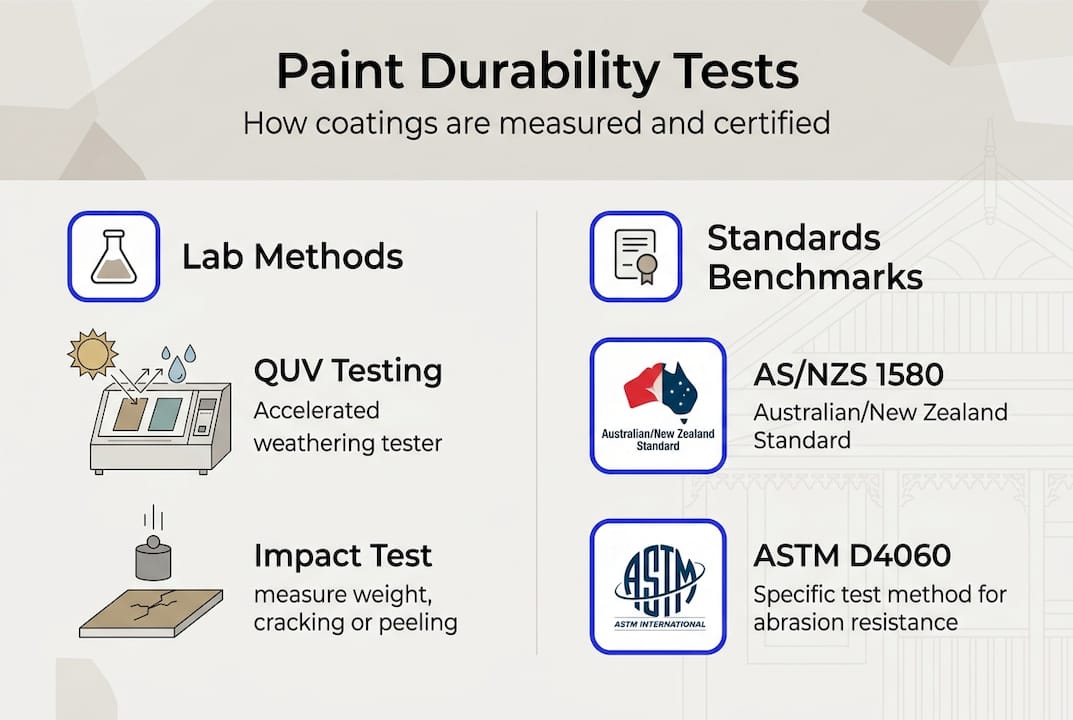
| Test method | Purpose | Durability benchmark |
|---|---|---|
| QUV accelerated weathering | Simulates years of UV and moisture exposure | 80% gloss retention after 2,000 hours |
| Crosscut adhesion (ASTM D3359) | Measures paint bond strength to substrate | 5B rating (no peeling) |
| Abrasion resistance (ASTM D4060) | Tests surface wear from cleaning and friction | <50mg loss per 1,000 cycles |
| Colour retention (ASTM D2244) | Tracks pigment stability under UV | ΔE <2 after 1,000 hours |
Pro Tip: Ask your painter which brands they use and request lab test certificates showing QUV weathering and adhesion scores. Reputable manufacturers publish this data, and experienced paint durability factors specialists know which products meet Australian standards for heritage applications.
What paint types and materials offer the best durability for Melbourne heritage homes
Not all paints suit heritage homes equally. Modern formulations balance durability with breathability, a critical requirement for century-old masonry and timber. Acrylic paints show superior gloss retention and dirt pickup resistance; exterior paints last 6 to 10 years on heritage facades with good preparation, whilst linseed oil paints, historically durable for 50 to 100 years, degrade over 6 years under modern exposure testing. Acrylic and styrene-acrylic binders dominate today’s market because they resist UV degradation and shed moisture without trapping it inside walls.
Heritage homes built before 1940 often feature lime mortar, soft bricks, and timber frames that need to breathe. For Melbourne heritage homes, use breathable, conservation-grade paints such as lime-based or vapour-permeable acrylics to prevent moisture damage and comply with Heritage Victoria guidelines. Lime washes and mineral paints allow water vapour to escape, preventing the blistering and peeling common with impermeable modern coatings. Traditional linseed oil paints offer authentic finishes and natural breathability, but require skilled application and longer drying times compared to synthetic alternatives.
Dulux Weathershield stands out as a durable option for Melbourne conditions. Dulux Weathershield durability features advanced acrylic technology with UV inhibitors and mould resistance, backed by warranties extending beyond 25 years when applied correctly. This makes it suitable for exposed weatherboards and rendered facades in bayside suburbs where salt spray accelerates wear.
Best paint materials by substrate type:
- Weatherboards and timber trim: Acrylic or styrene-acrylic low-sheen for UV resistance and flexibility with timber movement
- Rendered masonry: Vapour-permeable acrylic or lime-based paints to allow moisture escape
- Brick and stonework: Breathable mineral paints or lime washes to preserve historic character
- Heritage windows and joinery: Traditional linseed oil paints or modern heritage restoration coatings formulated for fine detail
- Roofs and metal surfaces: Specialised roof coatings with high UV and thermal resistance, often acrylic or elastomeric
Pro Tip: Always test your chosen paint on a small, inconspicuous section of your heritage home before committing to the full project. This reveals how the colour appears in natural light and confirms the coating breathes properly without causing surface damage. Premium paint materials designed for heritage work often look different on century-old substrates than on modern plasterboard, and a test patch saves costly mistakes. Consult the paint longevity guide for detailed product comparisons.
Challenges and special considerations for paint durability in Melbourne’s heritage house restoration
Melbourne’s climate and heritage regulations create unique durability challenges. Non-breathable modern paints trap moisture in heritage masonry, causing blistering and peeling, whilst UV-sensitive pigments fade faster and humidity accelerates chalking and mould growth. Polyurethane and high-build acrylics designed for new construction often fail on heritage homes because they seal moisture inside walls, leading to efflorescence, spalling bricks, and rotting timber frames. South-facing walls in suburbs like Brighton and Malvern receive intense UV exposure, fading reds and blues within three years if inferior pigments are used.
Melbourne’s environmental factors affecting paint durability:
- UV radiation: Intense summer sun degrades organic pigments and breaks down binder resins, especially on north and west elevations
- High humidity: Bayside and riverside locations experience moisture levels that promote mould, mildew, and paint film softening
- Temperature fluctuations: Daily swings between cool mornings and hot afternoons cause expansion and contraction, stressing paint films
- Salt spray: Coastal suburbs face airborne salt that corrodes substrates and accelerates paint breakdown
- Pollution and dirt: Inner-city areas accumulate grime that holds moisture against painted surfaces, reducing longevity
Red and blue pigments contain organic compounds particularly vulnerable to UV photodegradation. Without light stabilisers and UV absorbers, these colours lose intensity within 18 months on exposed facades. Modern formulations combat this with inorganic iron oxide reds and phthalocyanine blues, but cheaper paints still rely on fugitive organic dyes.
Heritage Victoria and local councils impose strict controls on painting significant properties. Compliance with Heritage Victoria guidelines and council permits is required for significant heritage properties to prevent damage and maintain historical value. Changing colours, finishes, or paint types often requires approval, and using non-breathable coatings can breach permit conditions. Homeowners in overlay zones must submit colour samples and material specifications before starting work, adding weeks to project timelines.
Steps to ensure paint durability in heritage restorations:
- Assess substrate condition: Inspect for moisture damage, loose mortar, and timber rot before painting
- Choose breathable, conservation-grade paints: Select vapour-permeable formulations that comply with heritage guidelines
- Prepare surfaces thoroughly: Remove failing paint, clean substrates, repair defects, and prime correctly
- Apply paint in suitable weather: Avoid painting in extreme heat, cold, or humidity to ensure proper curing
- Engage heritage specialist painters: Work with professionals experienced in period homes and familiar with council controls
- Maintain regularly: Inspect annually for peeling, moisture ingress, and touch up damage promptly
Moisture management and heritage compliance are non-negotiable for paint durability on Melbourne’s period homes. Breathable coatings protect historic fabric whilst modern sealants trap water, causing irreversible damage. Always prioritise conservation-grade materials and expert application to preserve your home’s character and value for generations.
Understanding surface preparation importance is essential, as poor prep accounts for 80% of premature paint failures on heritage properties.
Practical tips for applying and maintaining durable paint on Melbourne heritage homes
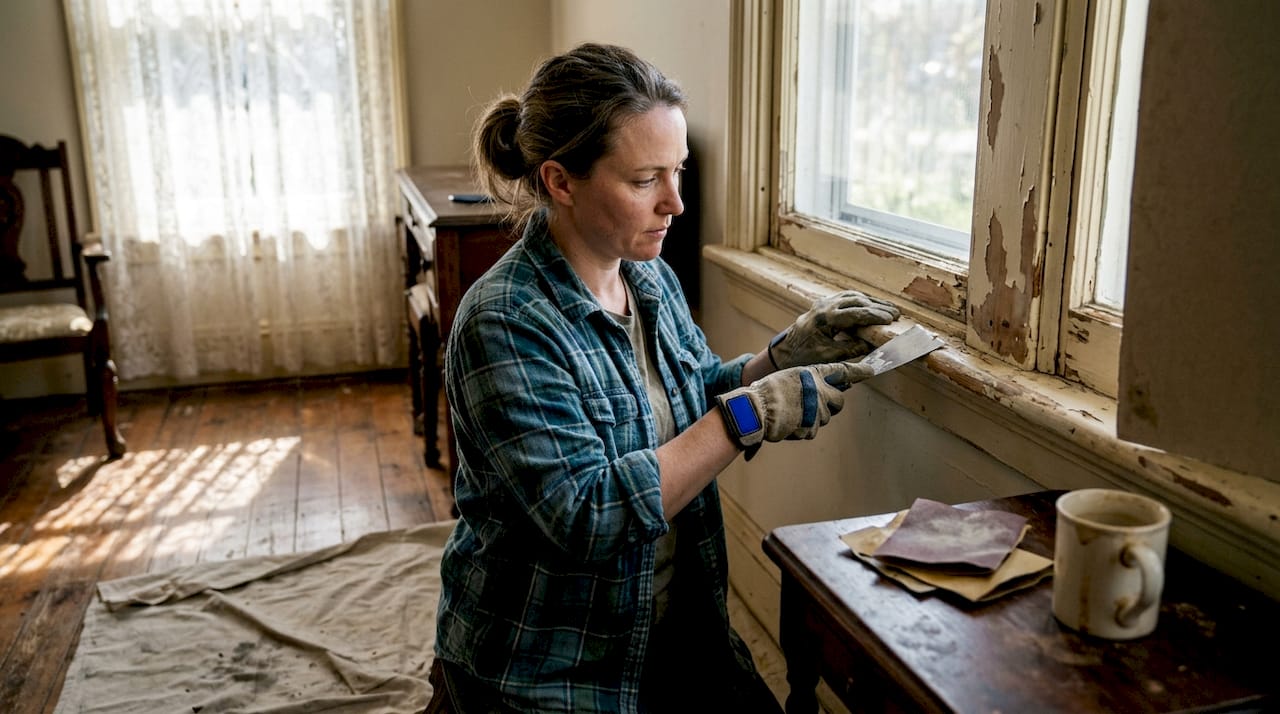
Proper application and ongoing care multiply paint longevity. Surface preparation accounts for 80% of paint performance, yet many homeowners underestimate its importance. Start by thoroughly cleaning all surfaces to remove dirt, mould, and chalking old paint. Scrape loose and flaking coatings back to sound substrate, then sand smooth to create a uniform profile. Repair cracks, fill gaps, and replace damaged timber or mortar before priming. Use a breathable primer suited to your substrate type, such as alkali-resistant primer for lime renders or oil-based primer for timber joinery.
Key surface preparation steps:
- Clean: Pressure wash or hand scrub to remove dirt, mould, and chalking paint
- Scrape: Remove all loose, flaking, and poorly adhered coatings back to sound substrate
- Repair: Fill cracks, replace damaged timber, and repoint mortar joints as needed
- Sand: Smooth surfaces and feather edges of remaining paint for uniform finish
- Prime: Apply breathable primer appropriate to substrate type and chosen topcoat
Application process for maximum durability:
- Check weather conditions: Paint when temperatures are 10 to 30°C, humidity below 85%, and no rain forecast for 24 hours
- Apply first coat: Use brush or roller to ensure even coverage, working paint into substrate texture
- Allow proper curing: Wait manufacturer-recommended time between coats, typically 4 to 24 hours depending on product
- Apply second coat: Build film thickness to specified levels, usually 100 to 150 microns dry film for exterior work
- Inspect and touch up: Check for missed spots, runs, or thin areas and correct before final cure
Optimal binders are acrylic/styrene-acrylic for cost-effective UV resistance, with aliphatic polyurethane for premium durability, whilst additives like light stabilisers enhance longevity. Modern formulations incorporate hindered amine light stabilisers (HALS) and UV absorbers that sacrifice themselves to protect pigments and binders, extending colour retention by years.
Pro Tip: Hire painters experienced with heritage homes and familiar with council controls in your suburb. They understand which products comply with Heritage Victoria requirements, how to prepare delicate substrates without damage, and the importance of breathability. Check they carry public liability insurance and can provide references from similar period property projects.
Ongoing maintenance preserves your investment. Inspect painted surfaces annually, focusing on areas prone to moisture exposure such as window sills, eaves, and south-facing walls. Look for peeling, blistering, chalking, or mould growth, and address problems immediately before they spread. Clean painted surfaces gently with mild detergent and soft brush to remove dirt and mould spores. Touch up damaged areas promptly using the same paint batch if possible, or test-match colours on scrap material first.
Before committing to full repainting, test your chosen product on a small, hidden area such as behind downpipes or under eaves. This reveals how the colour appears on your specific substrate, confirms the paint breathes properly, and checks for any adverse reactions with existing coatings. Wait at least two weeks and inspect the test patch through different weather conditions before proceeding. Refer to the exterior painting guide for detailed step-by-step instructions, and explore preventative painting tips to protect your heritage home proactively.
Explore professional heritage painting services in Melbourne
Protecting your Melbourne heritage home requires more than off-the-shelf paint and a weekend DIY effort. Sol Shine specialises in heritage painting and restoration across Melbourne’s inner east, bayside, and surrounding suburbs including Kew, Hawthorn, Brighton, and Malvern. We understand Heritage Victoria compliance, select conservation-grade coatings that breathe and endure, and apply advanced techniques honed over decades working with Victorian and Edwardian properties.
Our premium heritage painting services combine expert surface preparation, tailored paint selection, and meticulous application to deliver finishes that last 15 years or more. Beyond painting, we offer complete heritage restoration including render repair, timber restoration, and custom joinery, all under one roof. Whether you need professional exterior painting or comprehensive restoration, our team ensures your period home retains its character whilst gaining modern durability. Consult our hiring heritage specialist painters guide to understand what sets experienced professionals apart, then contact Sol Shine to discuss your project and receive a detailed assessment.
Paint durability explained: frequently asked questions
How often should I repaint my Melbourne heritage home?
Most heritage homes need repainting every 8 to 12 years with quality breathable paints, though south-facing walls and exposed weatherboards may require attention sooner. Regular maintenance and prompt touch-ups extend this interval. Consult the heritage paint longevity guide for substrate-specific timelines.
What paint types are best for protecting heritage timber windows?
Traditional linseed oil paints or modern breathable acrylics formulated for timber offer the best protection. Linseed oil penetrates deeply and moves with timber, whilst premium acrylics provide UV resistance and faster drying. Both allow moisture to escape, preventing rot.
Are there specific paints required to comply with Heritage Victoria rules?
Heritage Victoria doesn’t mandate specific brands but requires breathable, conservation-grade paints that don’t trap moisture or alter historic character. Lime-based paints, mineral coatings, and vapour-permeable acrylics typically comply. Always check your permit conditions and submit samples if required.
Can modern paints damage heritage masonry?
Yes, non-breathable modern paints like polyurethanes and high-build acrylics trap moisture inside heritage masonry, causing blistering, efflorescence, and structural damage. Always choose vapour-permeable formulations designed for historic substrates.
How can I test if my current paint is failing?
Look for visible signs like peeling, blistering, chalking (powdery surface), colour fading, or mould growth. Press adhesive tape firmly onto the paint and pull quickly; if paint lifts easily, adhesion has failed. Inspect after rain for water stains or bubbling, indicating moisture problems beneath the coating.


