
TL;DR:
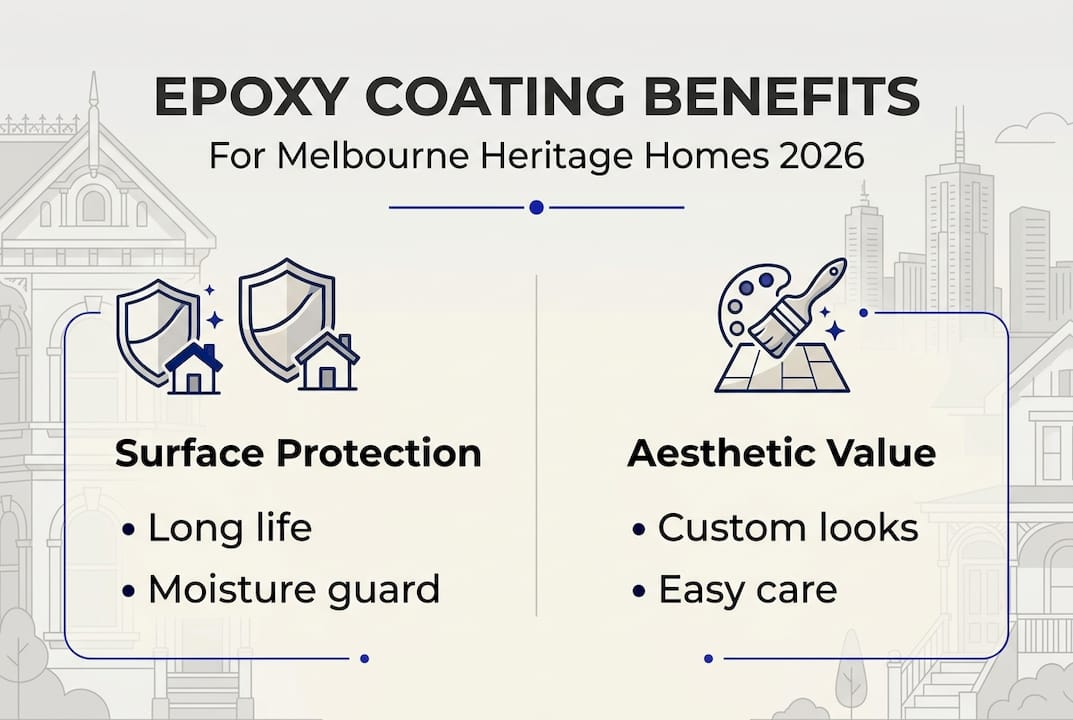
- Epoxy coatings are highly durable, long-lasting, and suitable for heritage homes’ surfaces.
- Modern epoxy finishes enhance period features with minimal visual impact and customizable appearances.
- Proper application and maintenance make epoxy a cost-effective preservation solution for Melbourne’s historic properties.
Epoxy coatings have a reputation problem. Most homeowners picture cold factory floors or grey garage slabs when they hear the term, and that image alone is enough to dismiss the option entirely. But for Melbourne’s Victorian and Edwardian homes, epoxy is one of the most practical and visually refined surface solutions available. It offers decades of protection, requires minimal upkeep, and can be tailored to complement the original character of a period property. If you’ve been overlooking epoxy because it seemed too industrial, it’s worth reconsidering.
Table of Contents
- What is epoxy coating and why consider it for heritage homes?
- Durability you can rely on: How epoxy protects period property surfaces
- Aesthetic upgrades: Enhancing historical charm with epoxy finishes
- Low maintenance and lasting value: Why epoxy is a smart investment
- Choosing the right epoxy solution: Mistakes to avoid and best practices
- A fresh take: Rethinking epoxy for Melbourne’s heritage character
- Get expert heritage epoxy solutions for your Melbourne home
- Frequently asked questions
Key Takeaways
| Point | Details |
|---|---|
| Exceptional durability | Epoxy coatings outlast standard paints, protecting surfaces for decades with minimal wear. |
| Heritage-friendly finishes | Custom epoxy options preserve and enhance period details without sacrificing historical character. |
| Low maintenance | Non-porous epoxy makes cleaning heritage floors a breeze and reduces long-term upkeep costs. |
| Smart property investment | Epoxy increases home value by safeguarding historic features and slashing maintenance needs. |
What is epoxy coating and why consider it for heritage homes?
Epoxy coating is a two-part resin system, combining a base resin with a hardener that chemically bonds to form an exceptionally durable surface. Unlike standard wall or floor paint, which simply sits on top of a substrate, epoxy penetrates and adheres at a molecular level. The result is a finish that is far harder, more resistant, and longer lasting than anything a traditional paint system can offer.
For heritage homes in Melbourne, this matters enormously. Older properties present a range of challenging substrates: aged timber floors, original stone thresholds, worn concrete in cellars or laundries, and tessellated tile entries that have seen a century of foot traffic. Traditional paints can struggle to bond properly to these surfaces, often peeling or fading within a few years. Epoxy, by contrast, is engineered to protect surfaces from water, stains, and abrasion, making it particularly well suited to the demands of heritage environments.
A common concern among period homeowners is that epoxy will somehow overwhelm or obscure original features. This is a misconception worth addressing directly. Applied correctly, epoxy does the opposite. A clear or low-sheen epoxy over original Baltic pine floorboards, for example, brings out the warmth and grain of the timber while locking in protection that keeps the boards looking their best for years. The character of the space is preserved, not buried.
Key reasons heritage homeowners choose epoxy:
- Bonds reliably to aged substrates including timber, stone, and old concrete
- Resists moisture ingress, which is critical in older homes with limited damp-proofing
- Available in clear finishes that protect without altering the appearance of original materials
- Reduces the frequency of recoating cycles compared to traditional paint
- Complements restoration work on surfaces that have already been repaired or patched
“Epoxy coatings can protect surfaces from water, stains, and abrasion, making them ideal for heritage environments.”
Understanding why coatings last on heritage surfaces comes down to preparation and product selection, both of which are covered in detail further in this article. For now, the key takeaway is that epoxy is a serious option for period properties, not just commercial ones. Exploring exterior coatings for restoration alongside internal applications gives you a complete picture of what’s possible.
Durability you can rely on: How epoxy protects period property surfaces
Heritage homes face wear pressures that newer builds simply don’t. Decades of foot traffic, seasonal moisture movement, and multiple restoration cycles leave surfaces in a more vulnerable state. Traditional paints, even premium ones, typically need recoating every three to five years in high-traffic areas. Epoxy changes that equation significantly.
In practical terms, epoxy offers impact resistance, abrasion resistance, and chemical resistance in a single system. A hallway floor in a Hawthorn terrace, for instance, endures constant foot traffic, tracked-in moisture, and the occasional furniture scrape. Standard floor paint in this environment rarely lasts more than two or three years before showing wear. Epoxy, professionally applied, delivers superior resistance to wear in exactly these high-traffic heritage areas.
| Surface type | Traditional paint lifespan | Epoxy coating lifespan |
|---|---|---|
| Heritage timber floors | 2 to 4 years | 10 to 15 years |
| Old concrete (laundry, cellar) | 3 to 5 years | 15 to 20 years |
| Stone thresholds and porches | 2 to 3 years | 10 to 18 years |
| Wet area walls and floors | 1 to 3 years | 10 to 15 years |
The numbers above reflect professionally applied systems on properly prepared surfaces. The lifespan range reflects variables like traffic volume, substrate condition, and the specific epoxy product selected.
Pro Tip: Surface preparation is the single most important factor in how long your epoxy coating lasts. Old adhesive residue, moisture in the substrate, or unpatched cracks will all compromise adhesion. Never rush this stage.
For ongoing care, understanding maintenance with epoxy is straightforward compared to traditional painted surfaces. There are no annual touch-ups, no peeling edges to address, and no colour fading to manage in the short term. The durability factors that make epoxy exceptional on heritage surfaces come down to its chemistry, but the practical outcome is simple: you recoat far less often.
Aesthetic upgrades: Enhancing historical charm with epoxy finishes
Beyond hardwearing protection, epoxy’s aesthetic adaptability gives it a genuine edge for design-conscious Melburnians who take their period homes seriously. The assumption that epoxy produces only a shiny, industrial look is outdated. Modern epoxy systems are available in a wide range of finishes, and the right choice can genuinely enhance the character of a heritage space.
For Victorian and Edwardian homes, the most relevant options include:
- Matte finish: Subtle and understated, ideal for period hallways or living areas where you want protection without visual noise
- Low-sheen finish: A refined middle ground that adds depth without the mirror-like quality of high gloss
- Gloss finish: Best suited to wet areas, kitchens, or feature walls where vibrancy and easy cleaning are priorities
- Clear finish: The preferred choice for original timber floors, stone hearths, or tessellated tile entries where the material itself is the feature
- Colour-matched tints: Allows seamless integration with existing period palettes, including heritage greens, ochres, and deep reds
Epoxy finishes can be tailored to suit the style and colour palette of any period property, which makes them far more versatile than most homeowners realise. A clear epoxy over an original Minton tile entry, for example, protects the irreplaceable surface while allowing every detail of the pattern to remain visible.
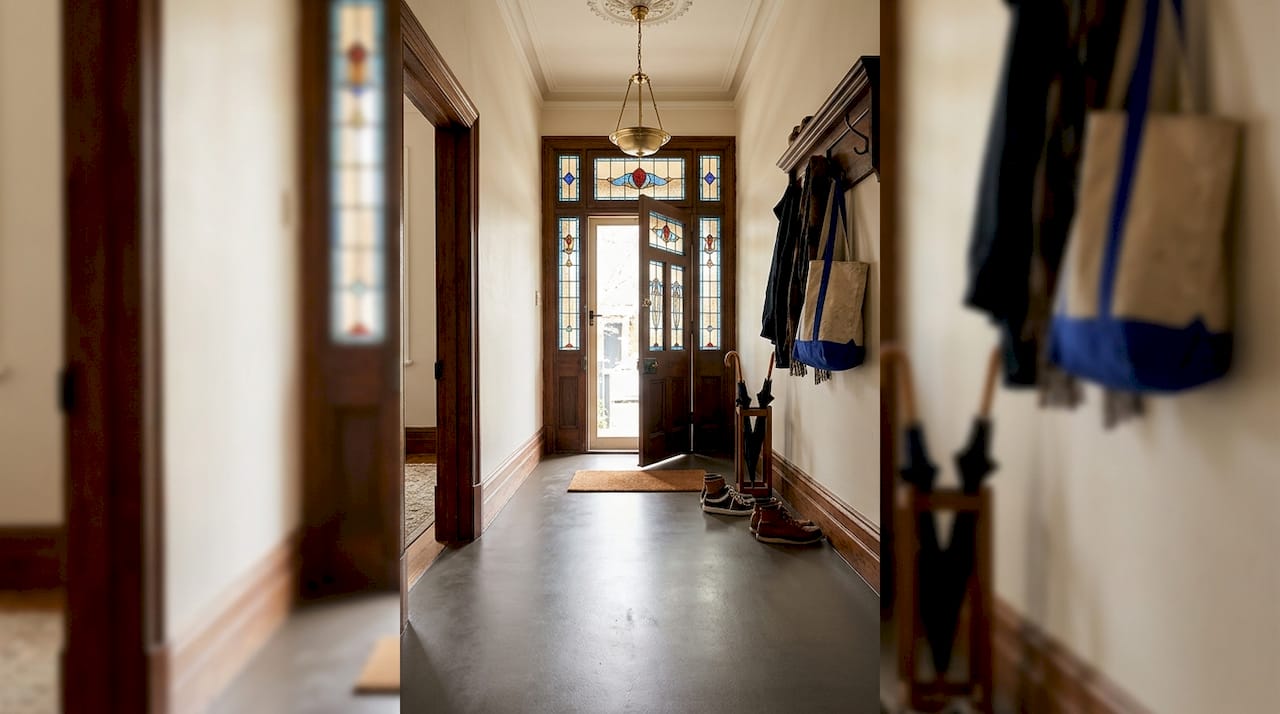
Pro Tip: For period properties, always lean toward low-sheen or clear finishes in living and entry areas. High-gloss epoxy in these spaces can feel at odds with the warmth of original timber and plasterwork.
The relationship between paint finishes and home value is well established in Melbourne’s property market. A well-preserved and thoughtfully finished period home commands a premium, and epoxy plays a meaningful role in achieving that outcome without compromising original character.
Low maintenance and lasting value: Why epoxy is a smart investment
Heritage homeowners want surfaces that age gracefully and don’t demand constant attention. Epoxy delivers on both counts. Because the surface is non-porous, spills, tracked-in dirt, and moisture simply sit on top rather than soaking in. A quick mop or wipe is all that’s needed in most cases.
Here’s how epoxy maintenance compares to traditional paint in a period home:
- Sweep or vacuum the surface weekly to remove grit that could cause micro-scratches over time
- Mop with a mild, pH-neutral cleaner as needed, no specialist products required
- Spot clean spills immediately using a damp cloth, the non-porous surface prevents staining
- Inspect annually for any edge lifting or surface damage, particularly in high-traffic zones
- Schedule a professional assessment every five years to determine whether a topcoat refresh is warranted
| Maintenance task | Epoxy-coated surface | Traditionally painted surface |
|---|---|---|
| Annual repainting required | No | Often yes, in high-traffic areas |
| Stain resistance | High | Low to moderate |
| Moisture sensitivity | Very low | Moderate to high |
| Estimated annual upkeep cost | Low | Moderate to high |
| Recoating frequency | Every 10 to 20 years | Every 2 to 5 years |
The financial case is clear. Epoxy coatings significantly reduce the need for repainting and repairs in heritage properties, which means lower ongoing costs over the life of the home. For homeowners managing large Victorian or Edwardian properties, those savings accumulate quickly. Epoxy is also worth considering for driveways and external areas, where the same durability benefits apply.
Choosing the right epoxy solution: Mistakes to avoid and best practices
Knowing the benefits is only half the picture. Applying epoxy correctly, particularly on valued heritage surfaces, is where the real skill lies. There are several common mistakes that compromise results, and most of them are avoidable.
The most frequent errors include:
- Skipping or rushing surface preparation: Applying epoxy over a dusty, damp, or cracked substrate is the leading cause of premature failure
- Choosing the wrong product type: A high-gloss, water-resistant epoxy designed for wet areas is not the right choice for a period living room floor
- Underestimating moisture content: Old concrete and stone in Melbourne homes often retain moisture. Testing before application is essential
- DIY application on complex substrates: Aged timber, stone, and original tiles require specific priming and application techniques that go beyond standard DIY capability
- Ignoring breathability requirements: Some heritage substrates need breathable coatings to allow moisture vapour to escape. Sealing them completely can cause issues
Surface preparation is the number one factor in successful epoxy applications, and this is where professional involvement pays for itself. Proper surface preparation tips for heritage homes include patching cracks with compatible fillers, conducting moisture tests, and selecting primers appropriate for the substrate.
“Investing in quality prep and the right system means up to two decades of protection.”
For Melbourne heritage homes, the best outcomes come from working with specialists who understand both the material and the architecture. The combination of the right epoxy system and meticulous preparation is what separates a coating that lasts twenty years from one that fails in three.
A fresh take: Rethinking epoxy for Melbourne’s heritage character
Conventional wisdom treats epoxy as a purely functional product. Something you use when you need toughness, not beauty. After working across Victorian and Edwardian homes throughout Melbourne’s inner east and bayside suburbs, we’d push back on that view.
Epoxy, when chosen and applied thoughtfully, is one of the most respectful things you can do for a heritage surface. It doesn’t mask history. It stabilises it. A century-old Baltic pine floor treated with a clear epoxy system is protected from the moisture and wear that would otherwise require sanding and recoating every few years, each cycle removing a fraction of irreplaceable timber.
The homeowners who get the best results are those who stop thinking of epoxy as a compromise and start seeing it as a preservation tool. The durability for heritage surfaces that epoxy provides isn’t about covering up the past. It’s about ensuring the past is still there in another fifty years. That’s a perspective worth holding onto.
Get expert heritage epoxy solutions for your Melbourne home
If you’re managing a period property in Melbourne and want surfaces that look refined, last for decades, and require minimal upkeep, Sol Shine is the team to call. We specialise in heritage painting and restoration across Kew, Hawthorn, Camberwell, Brighton, Malvern, and surrounding suburbs, handling everything from surface preparation through to final finish.
Our approach covers heritage painting projects of all scales, with tailored advice on the right epoxy system for your specific surfaces and style. Whether you need heritage painting services for your façade or interior painting solutions that complement your period features, Sol Shine brings the expertise and care your home deserves. Get in touch to discuss your project.
Frequently asked questions
Can epoxy coating damage the original features of a heritage home?
No. When expertly applied, epoxy enhances and protects heritage features without masking them, preserving original materials for decades to come.
How long does epoxy coating last in period properties?
With proper preparation and professional installation, epoxy provides long-lasting protection, often lasting 10 to 20 years or more on heritage surfaces.
Is epoxy coating safe for old timber and stone floors?
Yes. Epoxy is well suited to aged timber and stone, and protects heritage materials including timber and stone by making them more resistant to water and everyday wear.
How do I maintain my epoxy-coated heritage surfaces?
Regular sweeping and occasional mopping with a mild cleaner is all that’s needed. Epoxy surfaces resist stains and are easy to clean thanks to their non-porous finish.


