
TL;DR:
- The right paint finish influences a heritage home’s appearance, durability, and compliance with regulations.
- Melbourne heritage zones often require permits for exterior paint changes, especially color alterations.
- Selecting appropriate finishes and brands ensures longevity and authenticity in restorations.
Choosing the wrong paint finish for a Victorian or Edwardian home is one of the most common and costly mistakes Melbourne homeowners make. It’s easy to assume that any quality paint will do the job, but on period properties, the finish matters as much as the colour. The wrong sheen level can make original timber trims look cheap, trap moisture in porous brick, or trigger compliance issues in heritage overlay zones. This guide walks you through the key finish types, Melbourne’s planning requirements, material-specific recommendations, and expert-backed brand choices so you can approach your restoration project with confidence.
Table of Contents
- Understanding paint finishes for period homes
- Permit rules and colour choices in Melbourne heritage zones
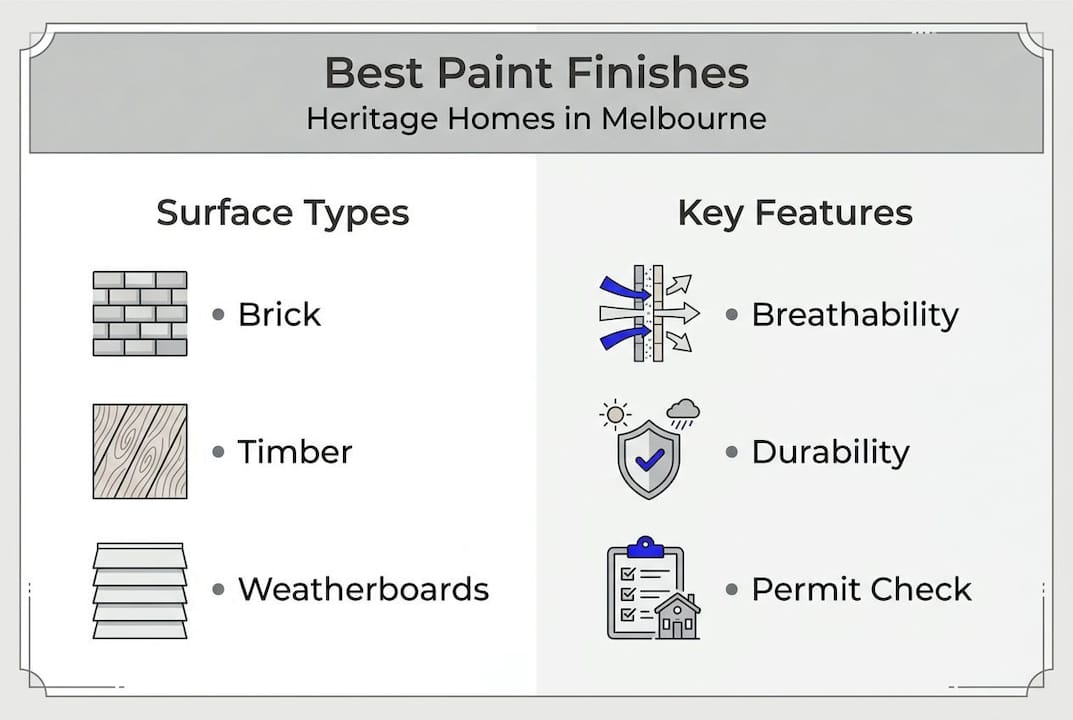
- Preserving brick, weatherboards and timber: finish selection essentials
- Expert-recommended brands and finish matching
- Our take: authenticity vs. practical enhancement in heritage finishes
- Find trusted heritage painting experts in Melbourne
- Frequently asked questions
Key Takeaways
| Point | Details |
|---|---|
| Permit compliance matters | You must check permit requirements and approved colour palettes to avoid costly issues when repainting heritage homes. |
| Finish impacts preservation | Choosing the right paint finish for brick, timber, or weatherboards can prolong your home’s life and historical value. |
| Specialist paints perform best | Brands like Dulux Heritage Range and Porters Paints deliver better durability and period-matching results in Melbourne. |
| Balance authenticity and practicality | Combining historical accuracy with modern, durable finishes gives both aesthetic and functional benefits. |
Understanding paint finishes for period homes
A paint ‘finish’ refers to the level of sheen or reflectivity in the dried paint film. It’s not just an aesthetic choice. Finish directly affects how a surface handles moisture, how easily it can be cleaned, and how long the paint job will last. For heritage homes, these factors carry extra weight because the materials involved, such as original timber weatherboards, unpainted brick, and decorative render, are often more sensitive than modern substrates.
The three finishes most relevant to Victorian and Edwardian homes are:
- Matt finish: Low sheen, absorbs light, and hides surface imperfections well. Ideal for interior ceilings and walls in period homes where a flat, traditional appearance is desired. Less durable in high-moisture areas.
- Satin finish: A subtle sheen that offers a balance between aesthetics and durability. Commonly used on heritage timber trims, window surrounds, and interior feature walls. It’s forgiving on aged surfaces without looking overly modern.
- Gloss finish: High sheen, highly durable, and moisture-resistant. Best suited to heritage joinery, front doors, skirting boards, and exterior timber details where a refined, classic look is expected.
For period homes specifically, the compatibility between finish and substrate is critical. A high-gloss finish applied to rough, aged render will highlight every imperfection. A flat matt finish on exterior weatherboards will absorb moisture and degrade quickly. Getting this pairing right is fundamental to both the look and the longevity of the result.
The right paint finishes and home value relationship is well established: homes with period-appropriate finishes consistently present better at sale and appraise higher. When selecting products, top paint brands for heritage homes offer formulations specifically designed for aged substrates.
| Finish type | Sheen level | Best use in heritage homes | Durability |
|---|---|---|---|
| Matt | Very low | Interior ceilings, walls | Moderate |
| Satin | Low to medium | Timber trims, window surrounds | Good |
| Gloss | High | Joinery, front doors, skirting | Excellent |
“The Dulux Heritage Range and Porters Paints are specifically recommended for era-specific, durable finishes on period homes, offering formulations that respect original materials while providing long-term protection.”
Understanding these fundamentals sets the foundation for every decision that follows, from permit requirements to material-specific application.
Permit rules and colour choices in Melbourne heritage zones
Once you know which finishes can enhance your home, it’s important to understand Melbourne’s heritage painting regulations and your options for colour. Many homeowners are surprised to learn that repainting the exterior of a heritage-listed property isn’t always a straightforward decision.
In Melbourne, properties located within a Heritage Overlay are subject to planning controls under the Victorian Planning Provisions. Permit rules and Heritage Victoria palettes confirm that planning permits are often required for external painting, particularly when you are changing an existing colour scheme or painting a surface that has never been painted before.
Key permit considerations include:
- Changing colour on a heritage-listed façade generally requires a permit, even if the new colour is historically appropriate.
- Painting previously unpainted brick or render is considered a significant alteration and almost always requires council approval.
- Repainting in the same colour may be exempt in some councils, but this varies. Always confirm with your local council before proceeding.
- Heritage Victoria palettes provide a curated range of historically accurate colours that are generally viewed favourably by councils during the permit assessment process.
Non-compliance carries real consequences. You may be required to repaint at your own cost, face fines, or deal with enforcement orders that complicate future property sales. These are not theoretical risks. Melbourne councils actively monitor heritage precincts, particularly in suburbs like Fitzroy, Kew, Hawthorn, and Camberwell.
When it comes to colour selection, homeowners generally have two paths:
| Approach | Description | Best for |
|---|---|---|
| Historical replication | Matching original colours using paint scraping analysis | Strict heritage listings |
| Approved modern palette | Using Heritage Victoria-endorsed contemporary colours | Practical updates with council approval |
The historical replication approach involves analysing paint layers on the original surface to identify the earliest colour schemes. This is a detailed process but produces the most authentic result. The approved modern palette approach offers more flexibility while still meeting heritage guidelines.
For guidance on navigating heritage painting permits and understanding what’s required in your specific council area, specialist advice is invaluable. Knowing how to select finishes that support heritage paint longevity is equally important once approvals are in place.
Preserving brick, weatherboards and timber: finish selection essentials
With legal and colour options established, the next consideration is picking the right finish for materials unique to Melbourne’s period homes. Victorian and Edwardian properties typically feature a combination of brick, timber weatherboards, and decorative timber joinery, each requiring a different approach.
Brick surfaces
Many Melbourne heritage bricks were not originally intended to be painted. If your brick has been previously sandblasted or is particularly porous, breathable finishes for brick such as breathable masonry paints or siloxane sealers are essential. These allow moisture vapour to escape from within the wall rather than becoming trapped beneath a film-forming paint, which leads to spalling, efflorescence, and long-term structural damage.
Recommended steps for brick painting:
- Assess the brick’s porosity and existing paint history before selecting a product.
- Clean the surface thoroughly to remove salt deposits, mould, and loose material.
- Apply a breathable masonry primer compatible with the chosen topcoat.
- Use a low-sheen or flat finish to maintain the natural texture and appearance of the brick.
- Allow adequate drying time between coats, particularly in cooler Melbourne conditions.
Weatherboards
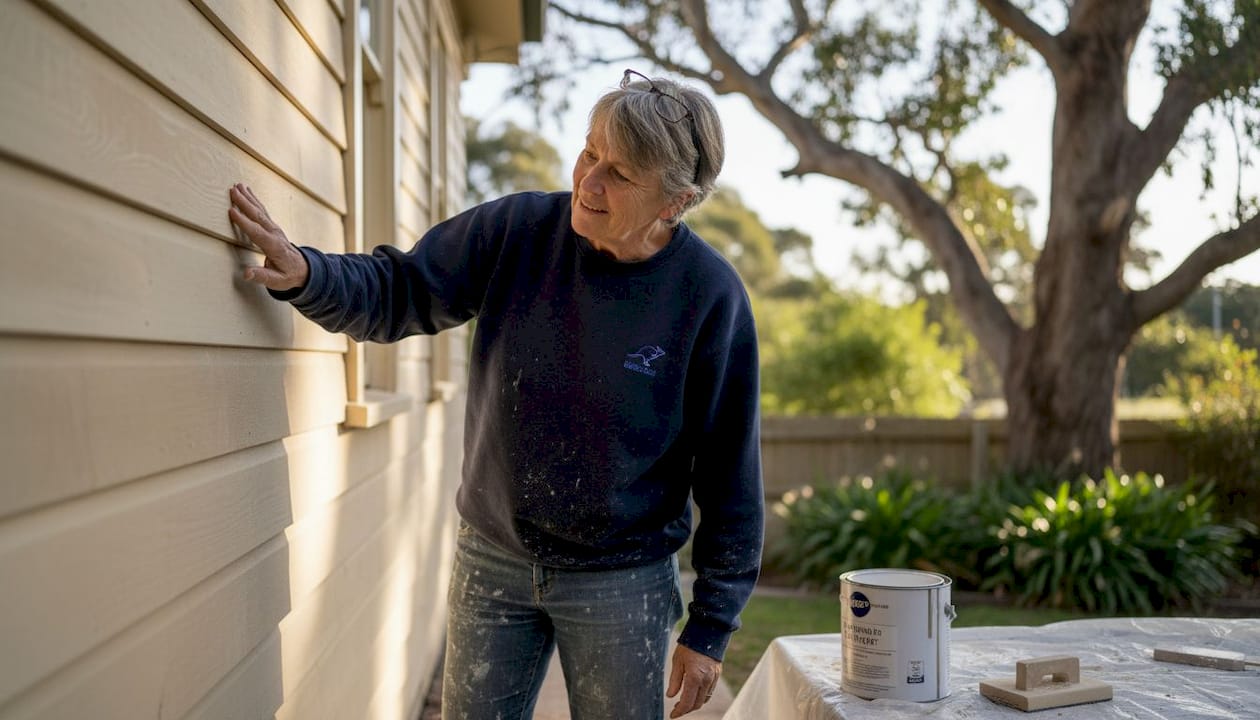
Timber weatherboards are among the most demanding surfaces on a period home. They expand and contract with temperature changes, making flexibility in the paint film critical. A satin finish acrylic is generally preferred over gloss for weatherboards because it offers sufficient sheen for protection without becoming brittle over time. Gloss can be used on feature trims and window surrounds for visual contrast.
Timber joinery and decorative details
Victorian and Edwardian homes are defined by their decorative timber work, including fretwork, verandah brackets, and ornate window hoods. These elements demand a full-gloss oil-based or water-based enamel for maximum durability and a crisp, refined finish.
Pro Tip: Before applying any finish to heritage timber, assess whether the existing paint contains lead. Homes built before 1970 frequently have lead-based paint layers. Disturbance without proper precautions is a health and safety risk.
For a thorough understanding of paint durability for heritage homes, including how surface preparation affects finish performance, specialist resources provide detailed guidance. Selecting premium paint solutions appropriate to the substrate is one of the most important decisions in any restoration project. Understanding the durability factors for period finishes helps homeowners set realistic expectations for maintenance intervals.
Expert-recommended brands and finish matching
Now, let’s make your finish selection easier with expert advice and proven product recommendations from heritage specialists. Not all paint brands are created equal, and for period homes, generic hardware store ranges often fall short.
Two brands consistently recommended by heritage painting professionals in Melbourne are:
- Dulux Heritage Range: Formulated with period homes in mind, this range offers colours and finishes that align with Victorian and Edwardian aesthetics. The products are designed for compatibility with aged substrates and provide strong coverage with a refined result.
- Porters Paints: Known for their artisan finishes and historically inspired colour palettes, Porters Paints are a strong choice for interior feature walls, decorative ceilings, and surfaces where texture and depth are important. Their limewash and distemper finishes are particularly suited to period interiors.
The Dulux Heritage Range and Porters Paints are both recommended for era-specific, durable finishes on period homes, offering formulations that respect the character of original materials.
Matching finishes to period style:
- Victorian homes (1840s to 1900s): Favour deeper, richer colours with high-gloss joinery and flat or low-sheen wall surfaces. Decorative details should be highlighted with contrasting gloss finishes.
- Edwardian homes (1900s to 1920s): Tend toward lighter, more refined palettes with satin or semi-gloss trims. The aesthetic is cleaner and less ornate than Victorian, so finish choices should reflect that restraint.
Pro Tip: Avoid using standard builder’s-grade paint on heritage surfaces. These products are formulated for new construction and lack the flexibility and breathability that aged materials require. Investing in the right product upfront reduces the frequency and cost of repainting.
For long-lasting heritage paint outcomes, product selection and surface preparation work together. Understanding how paint protection insights apply to period materials helps you make informed decisions that protect your investment for years ahead.
Our take: authenticity vs. practical enhancement in heritage finishes
Every heritage homeowner eventually faces the same question: should you aim for perfect historical replication, or adapt for longevity and practicality? It’s a genuine dilemma, and most articles sidestep it entirely.
At Sol Shine, our view is that context drives the answer. Strict historical replication is appropriate when a property carries significant heritage significance and is subject to rigorous council controls. In those cases, paint scraping analysis, archival research, and period-accurate products are the right approach. But for the majority of Melbourne’s Victorian and Edwardian homes, a thoughtful blend of historical inspiration and modern performance is not only acceptable, it’s often the better outcome.
Modern vs. historical finishes present contrasting views: traditional historical replication through paint scraping versus modern palettes that enhance overall heritage significance. The key insight is that preserving value doesn’t always mean strict replication. A home that is well-maintained with durable, sympathetic finishes will retain its character and appeal far better than one repainted in historically exact colours that peel within three years.
What most guides miss is that the best finish choice is the one that suits your specific home, your council’s requirements, and your long-term maintenance capacity. Explore our heritage paint insights to see how this thinking translates into real project outcomes across Melbourne.
Find trusted heritage painting experts in Melbourne
For anyone ready to restore or repaint their period home, the right team can make all the difference. Navigating finish types, permit requirements, and material compatibility is complex work, and mistakes are costly to correct.

Sol Shine specialises in Melbourne heritage painting for Victorian and Edwardian homes across the inner east, bayside, and surrounding suburbs. From premium interior painting to full façade restorations, our team handles every aspect of the project under one roof. Browse our heritage painting professionals portfolio to see the quality of our work and the range of period homes we’ve restored. Get in touch to discuss your project and receive tailored advice from specialists who understand Melbourne’s heritage requirements.
Frequently asked questions
What paint finish is best for Victorian brick homes in Melbourne?
For Victorian brick, breathable masonry paints or siloxane sealers are the preferred choice, as they allow moisture to escape and prevent the spalling and decay that film-forming paints can cause on porous brick surfaces.
Do I need a permit to repaint my heritage home in Melbourne?
In most cases, yes. External painting in heritage overlays requires a planning permit when changing colours or painting previously bare surfaces, so always confirm requirements with your local council before starting work.
Are modern paint finishes suitable for heritage restoration?
Modern finishes can be entirely suitable when selected for breathability, flexibility, and moisture resistance, though they should also complement the home’s historical character and meet any council colour guidelines.
Which brands are trusted for heritage home painting in Melbourne?
The Dulux Heritage Range and Porters Paints are consistently recommended by heritage specialists for their era-specific formulations and proven durability on period home substrates.
How does paint finish affect the long-term value of a heritage property?
Finishes chosen for both authenticity and durability help maintain the home’s period character, reduce maintenance costs over time, and support stronger market value, particularly in Melbourne’s heritage-conscious inner suburbs.


