
TL;DR:
- Choosing the correct paint finish ensures durability and authentic heritage appearance in period homes.
- Gloss and semi-gloss finishes are optimal for exterior joinery and high-traffic areas for longevity.
- Matte and low-sheen paints suit heritage ceilings and decorative interiors, offering period authenticity.
Choosing the wrong paint finish for a Victorian or Edwardian property is a costly mistake that goes far beyond aesthetics. The wrong sheen level can highlight surface imperfections in original render, strip away period authenticity, or fail under Melbourne’s variable coastal and inland weather conditions. Whether you’re restoring a Hawthorn weatherboard cottage or refreshing the façade of a double-fronted Camberwell terrace, the finish you select determines how long your investment lasts and how faithfully it honours the character of the home. This guide covers everything you need to make a confident, informed decision.
Table of Contents
- Key criteria: What to consider before selecting a paint finish
- Gloss, semi-gloss, and satin: Core commercial paint finishes explained
- Matte and low-sheen paints: Underused finishes with unique benefits
- Choosing the right paint finish for each area of your home
- Comparing commercial paint finish classes: How durability impacts your restoration
- Our take: Why classic finish choices aren’t always best for your home
- Get expert help with paint finishes for your Melbourne heritage property
- Frequently asked questions
Key Takeaways
| Point | Details |
|---|---|
| Prioritise durability | Class 1 commercial paint finishes provide superior longevity and ease of maintenance. |
| Match finish to feature | Doors, trims, and high-traffic surfaces need higher sheens, while matte suits ceilings and ornate detail. |
| Heritage compliance matters | Authentic looks can be balanced with modern performance through careful finish selection. |
| Use product labels wisely | Check scrub resistance and class ratings before buying to ensure optimal results. |
Key criteria: What to consider before selecting a paint finish
Before you order a single tin of paint, you need to understand what your heritage home demands. Victorian and Edwardian properties present a unique set of conditions that standard residential painting guides rarely address. Surface substrates vary widely, from soft sandstock brick and lime render to original hardwood timber and decorative pressed metal ceilings. Each material responds differently to paint, and the finish you choose must suit both the substrate and the role the surface plays in the home.
The core criteria to evaluate are:
- Durability and scrub resistance: How well will the finish hold up to cleaning, moisture, and daily contact?
- Heritage compliance and finish authenticity: Does the sheen level align with period expectations and, where applicable, local heritage overlay requirements?
- Sheen level and colour accuracy: Higher sheens can shift the perceived colour of a space and draw attention to surface irregularities.
- Environmental resistance: UV exposure, salt air near Brighton or Elwood, and Melbourne’s seasonal humidity all affect paint performance.
- Surface compatibility: A commercial finish suited to new plasterboard may not adhere correctly to original lime-based render without specialist preparation.
- Long-term maintenance: Lower-maintenance finishes reduce the frequency of repainting cycles over a decade.
When evaluating commercial-grade paint options, durability ratings deserve particular attention. According to EN ISO 11998 benchmarks, 56.8% of paints tested achieve class 1 scrub resistance, the highest durability rating, while 31.5% reach class 2. Choosing class 1 paints for high-use surfaces is the single most effective way to extend the life of your restoration work.
Proper surface preparation for paint is equally important before any finish is applied. Even the finest commercial finish will fail prematurely on a poorly prepared surface.
Pro Tip: Always check the product’s scrub rating before purchase. Class 1 paints outlast alternatives significantly and are the recommended choice for any heritage restoration where longevity is a priority.
Gloss, semi-gloss, and satin: Core commercial paint finishes explained
With criteria in mind, let’s explore the primary finish types you’ll encounter.
These three finishes form the foundation of most commercial painting projects, including heritage restorations. Each sits at a different point on the sheen spectrum, and each brings distinct advantages depending on where and how it’s applied.
Gloss delivers the highest light reflectivity. It creates a hard, smooth surface that resists moisture, grime, and physical contact exceptionally well. On heritage timber trims, window sashes, verandah columns, and exterior joinery, gloss has long been the traditional choice because it both performs and looks correct in a period context. Its strong sheen highlights fine craftsmanship but also reveals surface imperfections, so thorough preparation is non-negotiable.
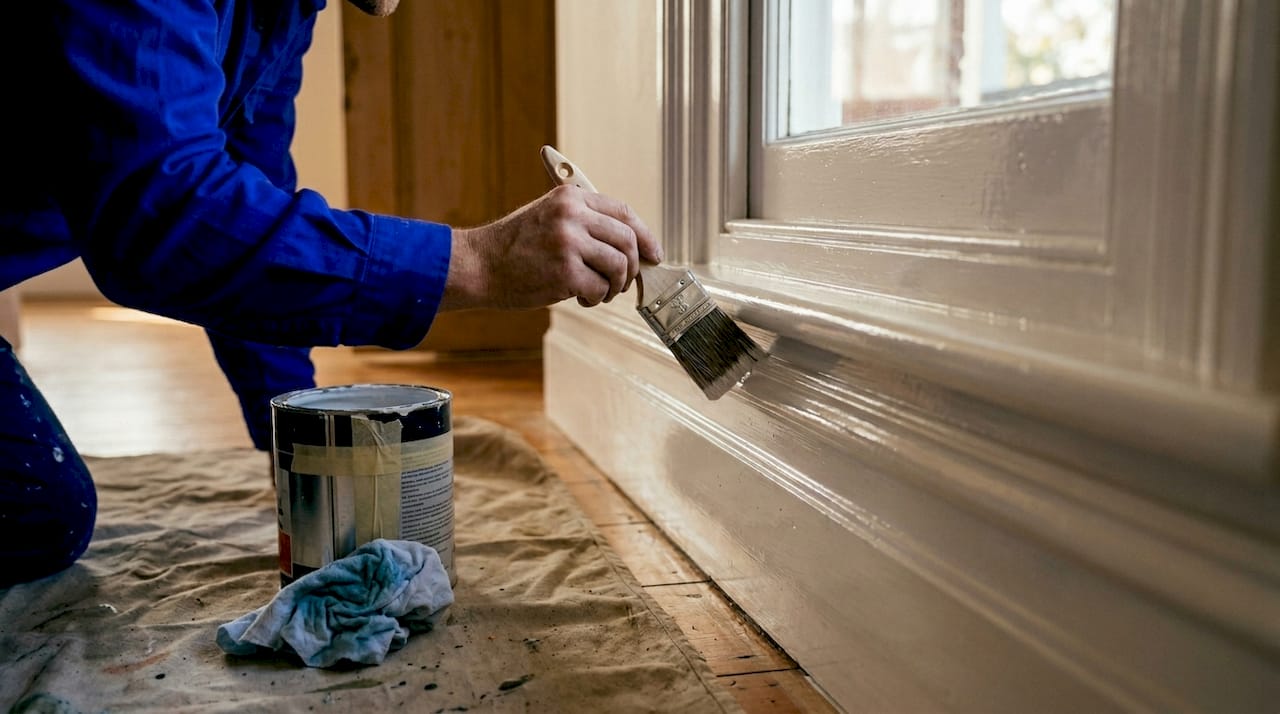
Semi-gloss sits in the middle of the spectrum. It offers a balanced combination of durability and a softer appearance than full gloss. Heritage doors, skirting boards, dado rails, and window frames respond well to semi-gloss. It’s easy to clean, holds up to frequent contact, and provides a refined look that suits the restrained elegance of Edwardian interiors.
Satin offers a subtle sheen that sits just above low-sheen finishes. It’s a practical choice for interior walls in rooms with moderate traffic, such as hallways, living rooms, and bedrooms. Satin conceals minor surface irregularities better than gloss or semi-gloss, which is a practical advantage in older homes where walls may carry decades of repairs and patches. For interior finishes and value, satin is frequently the recommended middle ground.
For best exterior paints, gloss and semi-gloss consistently deliver superior weather resistance. Higher classes for commercial longevity support the use of these finishes in exposed outdoor environments.
| Finish | Sheen level | Durability | Recommended uses |
|---|---|---|---|
| Gloss | High | Excellent | Exterior timber, trims, verandah joinery |
| Semi-gloss | Medium-high | Very good | Doors, window frames, skirting boards |
| Satin | Medium | Good | Interior walls, hallways, moderate-traffic rooms |
Matte and low-sheen paints: Underused finishes with unique benefits
In contrast to the high and mid-sheen options, matte and low-sheen finishes serve particular heritage purposes.
These finishes are often underestimated, yet they’re historically correct for many interior surfaces in Victorian and Edwardian homes. Period interiors favoured flat or near-flat finishes on walls and decorative plasterwork, partly for aesthetic reasons and partly because the paint technology of the era produced little else. Today’s matte and low-sheen paints offer improved washability compared to their historical equivalents, but they still require careful placement within the home.
Matte paints absorb light rather than reflecting it. This quality softens the appearance of a room, reduces glare, and lends a quiet depth to colour that higher sheens can’t replicate. For ornate heritage ceilings with original pressed metal or decorative plaster cornices, matte finishes are genuinely the best choice. They allow the texture and relief of the surface to read clearly without the distraction of reflected light.
Low-sheen paints occupy a position just above matte, offering slightly improved cleanability while retaining most of the flat appearance. They work well for formal reception rooms, dining rooms, and bedrooms in period homes where traffic is lower and a refined, classic look is preferred.
The limitation of both finishes is scrub resistance. Class 2 paints represent 31.5% of the market and include many low-sheen products. Class 2 offers reasonable durability for low-traffic areas, but it should not be applied to kitchens, bathrooms, or children’s rooms where regular cleaning is required. For those spaces, satin or semi-gloss is the stronger choice. Explore interior painting solutions for tailored guidance on surface-specific selections.
Pro Tip: Matte paint on an ornate heritage ceiling creates a beautiful, light-absorbing effect that draws the eye to the plasterwork itself rather than the surface reflection. It’s a detail that sets a truly refined restoration apart from a standard repaint.
| Finish | Sheen | Scrub resistance | Maintenance demand | Best applications |
|---|---|---|---|---|
| Matte | None | Low (class 2/3) | Higher | Ceilings, formal rooms, decorative plasterwork |
| Low-sheen | Very low | Moderate (class 2) | Moderate | Bedrooms, formal reception areas, low-traffic walls |
Choosing the right paint finish for each area of your home
Having covered the characteristics, next is matching them to your unique space.
Victorian and Edwardian homes contain a wide variety of surfaces, and no single finish is correct for all of them. The key is pairing the finish to the function of the space, the level of traffic and moisture, and the heritage character of the specific element. Here is a practical guide to help you match surface to finish.
-
Interior walls in living and formal rooms: Low-sheen or satin. These finishes support the period character of the room and perform adequately in spaces with light foot traffic and minimal cleaning demands.
-
Interior walls in hallways and high-traffic areas: Satin or semi-gloss. Hallways take considerable contact wear in older homes, and a more durable finish reduces the need for frequent touch-ups.
-
Ceilings: Matte or flat. Ceilings rarely need cleaning and benefit most from a non-reflective finish that draws attention to any heritage cornice or ceiling rose above.
-
Heritage timber trims, architraves, and skirting boards: Semi-gloss or gloss. These elements are often touched, knocked, and scuffed, so durability matters greatly. A gloss or semi-gloss finish also provides the period-appropriate look that suits the fine joinery of Victorian and Edwardian interiors.
-
Exterior walls and façades: Low-sheen or satin exterior grade. Maintaining a softer appearance on brick, render, or weatherboard walls is typically more appropriate to the period than a high-gloss finish, while still providing adequate weather protection.
-
Exterior timber joinery, verandah posts, and window frames: Gloss. Exterior timber joinery is exposed to the full force of Melbourne’s weather, and gloss provides the most effective barrier against moisture penetration and UV degradation.
-
Wet areas including bathrooms and kitchens: Semi-gloss minimum. Moisture resistance is non-negotiable in these spaces. Class 1 dominant finishes are strongly recommended wherever water and steam are present.
When assessing exterior paint options for your property, consider both the aesthetic intention and the practical performance requirements of each surface. For a full understanding of paint longevity for heritage homes and how finish selection ties into maintenance cycles, Sol Shine’s paint durability guide provides additional detail specific to Melbourne’s conditions.
Comparing commercial paint finish classes: How durability impacts your restoration
To crystallise your choice, see how finishes measure up side by side.
Durability class is not always front-of-mind when selecting a paint finish, but for heritage restoration projects where the goal is a lasting result, it should be a primary consideration. The EN ISO 11998 wet scrub resistance test classifies paints from class 1 through to class 5, with class 1 offering the highest durability and class 5 the lowest. Understanding where each finish falls on this scale directly influences how often your surfaces will need repainting and how much ongoing maintenance your home will require.
Remarkably, 56.8% of paints achieve class 1 scrub resistance, making it achievable across a wide range of finish types. This means you don’t necessarily have to sacrifice aesthetics to gain durability. The key is knowing which products in each finish category reach this standard.
| Durability class | Typical finish types | Scrub resistance | Recommended settings |
|---|---|---|---|
| Class 1 | Gloss, semi-gloss, quality satin | Highest | All high-traffic, wet areas, and exterior surfaces |
| Class 2 | Low-sheen, standard satin | Moderate | Bedrooms, formal rooms, low-traffic interior walls |
| Class 3 | Matte, flat | Lower | Ceilings, decorative features, very low-traffic spaces |
How durability class affects your restoration budget and schedule:
- Class 1 finishes typically extend repainting cycles by several years compared to class 2 or 3.
- Lower-class finishes on high-traffic surfaces can require touch-ups within two to three years.
- Selecting the correct class for each surface from the start reduces lifecycle costs considerably.
- Class 1 finishes on exterior timber joinery resist moisture penetration far more effectively, protecting the substrate beneath and reducing the risk of costly timber repairs.
For a detailed interior paint class comparisons breakdown, Sol Shine’s team can assess your specific surfaces and recommend the right class for each area of your home.
Our take: Why classic finish choices aren’t always best for your home
Now let’s step back and consider the real-world implications for restoration projects.
There is a deeply held assumption among heritage homeowners that strict period accuracy in paint finish selection is always the correct approach. Sol Shine respects that instinct. The character of a Victorian or Edwardian home is one of its greatest assets, and preserving it thoughtfully is something we take seriously on every project.
However, strict replication of historical finishes can be a false economy. Original Victorian-era paints were oil-based, contained lead, and had a quite different sheen profile to what we associate with period authenticity today. What many homeowners believe is the “authentic” matte finish of heritage walls was actually the result of decades of chalking and surface degradation, not the original product choice.
“Prioritising period accuracy at the expense of lifecycle cost is one of the most common and expensive mistakes we see in heritage restoration. The best restorations honour the spirit of the original while using superior materials where it matters most.”
Modern water-based paints in satin and low-sheen finishes can replicate the quiet depth and refined appearance of period interiors while offering dramatically better scrub resistance, lower VOC (volatile organic compound) emissions, and longer repainting cycles. For exterior surfaces, using a premium class 1 acrylic gloss on heritage joinery rather than a period-formula oil-based product provides far better UV and moisture resistance without compromising the look.
Where Sol Shine recommends diverging from strict period replication is on surfaces that receive significant wear or weather exposure, any wet area, and high-contact joinery. Where we recommend staying true to the period is on decorative ceilings, formal room walls, and ornate plasterwork, where a matte or low-sheen finish genuinely enhances the visual character of the original craftsmanship.
Getting this balance right requires judgement that comes from experience. Ensuring that long-lasting surface prep underpins every finish decision is just as important as the product itself. Consult a qualified period-paint specialist before committing to a full-scale restoration, and ask them to walk through not just product selection but the full lifecycle cost of each choice.
Get expert help with paint finishes for your Melbourne heritage property
If you’re ready to take action or still have questions, consider working with professionals who specialise in finishes for heritage homes.
Selecting the right commercial paint finish for a Victorian or Edwardian property is a decision that shapes both the appearance and durability of your home for years to come. Sol Shine brings specialised knowledge of heritage surfaces, period-appropriate finishes, and commercial-grade products to every project across Melbourne’s inner east, bayside, and surrounding suburbs.
Our exterior painting services cover everything from weatherboard repaints to full façade restorations, while our dedicated team of heritage painting specialists understands the nuances of period properties inside and out. If you’d like clear, practical commercial-grade paint advice tailored to your specific home, get in touch with the Sol Shine team today. We work directly with homeowners on projects typically $20,000 and above, and we handle every aspect of the restoration under one roof.
Frequently asked questions
Which paint finish is best for heritage trim and mouldings?
A gloss or semi-gloss commercial finish is optimal for heritage trims, providing both a period-appropriate look and maximum cleanability in high-traffic areas. Class 1 scrub resistance ensures the finish withstands regular contact without deteriorating quickly.
Can I use matte paint in bathrooms and kitchens of historic properties?
Matte finishes are less ideal for wet areas because they’re harder to clean and less resistant to moisture, so semi-gloss or satin is usually preferred. Higher classes for commercial longevity are particularly important wherever steam and water are present.
How do I know if a paint is class 1 or class 2 durability?
Look for EN ISO 11998 scrub resistance scores on the product label or technical data sheet. Class 1 offers highest durability while class 2 remains suitable for residential low-traffic applications.
Are lower-sheen finishes appropriate for outdoor heritage features?
Lower-sheen finishes can provide a softer period appearance on rendered walls, but gloss or semi-gloss is recommended for external joinery and timber elements for enhanced weather resistance and cleanability. Higher class finishes are consistently preferred for outdoor durability.
What is the top mistake homeowners make with commercial paint finish selection?
Many overlook durability ratings entirely, leading to premature wear and costly repainting cycles. Always confirm class 1 finishes for high-traffic, wet, and exterior surfaces to achieve the best long-term result in heritage restoration projects.


