
TL;DR:
- Painting offers high returns, with interior repainting delivering over 107 percent ROI.
- Exterior and interior painting significantly boost heritage property value through improved curb appeal and move-in readiness.
- Proper surface preparation, heritage-appropriate colours, and expert application are crucial for lasting, authentic results.
Most Melbourne homeowners think of painting as maintenance. A fresh coat when things look tired, a quick spruce before sale. What they rarely expect is for painting to be one of the highest-returning renovations available, outperforming kitchens, bathrooms, and landscaping in many cases. For owners of Victorian and Edwardian homes across Kew, Hawthorn, Brighton, Camberwell, and Malvern, the stakes are even higher. Heritage properties carry a premium that depends almost entirely on how well they present, and professional painting is the fastest, most cost-effective way to protect and grow that premium.
Table of Contents
- How painting influences property value: The evidence
- Curb appeal and first impressions: Beyond the surface
- Interior painting: The secret weapon for move-in buyers
- Heritage painting and restoration: Melbourne’s competitive edge
- Our take: What most homeowners get wrong about painting and value
- Enhance your property with expert painting and restoration
- Frequently asked questions
Key Takeaways
| Point | Details |
|---|---|
| Painting delivers high ROI | Fresh painting offers up to 107% return on investment, outperforming many renovations. |
| First impressions matter | Quality exterior paint instantly lifts curb appeal and buyer interest, especially for heritage homes. |
| Interior updates attract buyers | Move-in-ready, period-appropriate interiors increase perceived value and final sale prices. |
| Heritage accuracy adds value | Staying true to period colours and details enhances price premiums and avoids buyer turn-offs. |
How painting influences property value: The evidence
The numbers behind painting’s return on investment are striking, yet they rarely come up in conversations about home improvement. Most homeowners assume a kitchen renovation or bathroom update will deliver the biggest bang for their dollar. The data tells a different story.
Exterior painting ROI figures show returns of 51 to 55 percent on the cost of exterior painting, while interior repaints can deliver returns of over 107 percent. That means for every dollar spent on a quality interior repaint, you can expect to recover more than one dollar in added value. When both exterior and interior painting are completed before a sale, the combined effect on curb appeal and move-in readiness compounds those returns further.
“A well-presented home signals care and quality to buyers before they’ve crossed the threshold. In Melbourne’s prestige suburbs, perception shapes price.”
Why does painting punch so far above its weight? Two reasons: curb appeal and move-in readiness. Buyers form an impression within seconds of arriving at a property. A tired, peeling façade tells a story of neglect, even if everything behind the front door is in excellent order. Conversely, a freshly painted exterior in a considered, heritage-appropriate colour instantly signals that the home has been maintained with care.
Inside, buyers in Melbourne’s inner east and bayside areas are competing fiercely for properties. Many are prepared to pay a premium to avoid the disruption of immediate renovation. A move-in ready interior, painted in refined neutral tones that complement period details, removes a significant psychological barrier to bidding.
Compare painting to other common pre-sale renovations:
| Renovation type | Approximate cost | Estimated ROI |
|---|---|---|
| Interior repaint | $5,000 to $15,000 | Up to 107% |
| Exterior repaint | $8,000 to $20,000 | 51 to 55% |
| Kitchen update | $20,000 to $50,000 | 60 to 80% |
| Bathroom renovation | $15,000 to $35,000 | 55 to 75% |
| Landscaping | $5,000 to $15,000 | 15 to 30% |
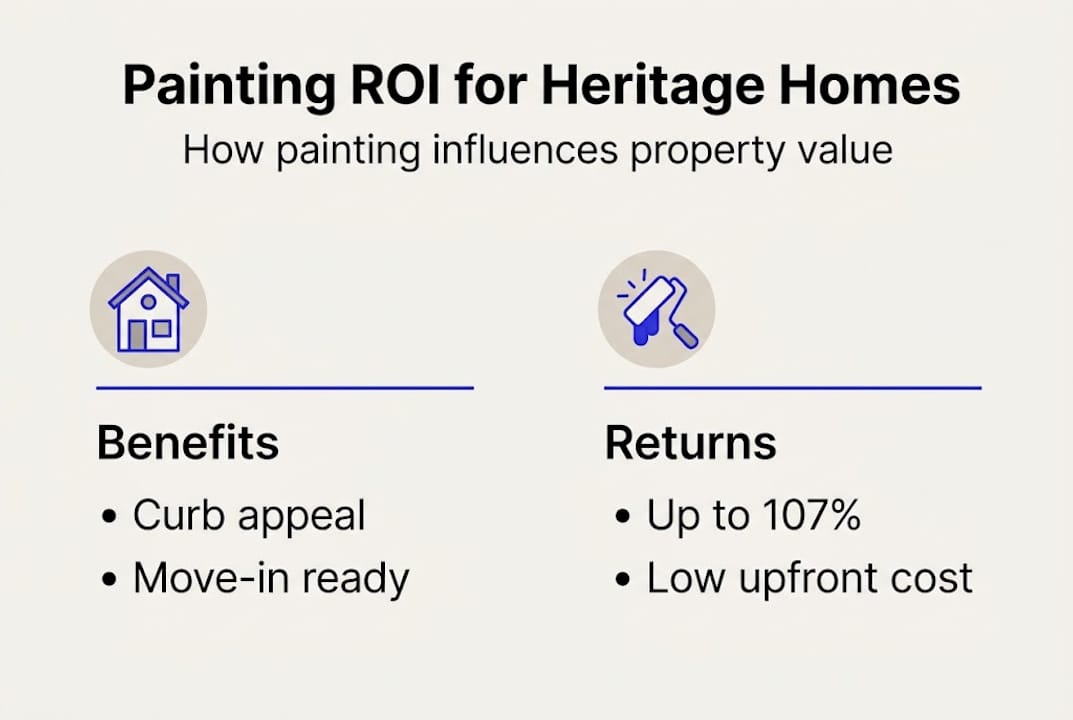
Painting consistently delivers strong returns at a lower upfront investment. For heritage homes where buyers are already expecting to pay a premium, the interior painting value boost is particularly meaningful because it confirms the quality of the property and reduces buyer hesitation.
The Melbourne auction market is also a unique environment. Competitive bidding on period homes in suburbs like Hawthorn and Brighton means that first impressions on auction day directly influence the mood in the crowd. A home that photographs beautifully and presents with a clean, cohesive palette is far more likely to attract the competitive atmosphere that drives strong results.
Curb appeal and first impressions: Beyond the surface
Now that we understand the data, it becomes clear why the exterior of a heritage home deserves serious attention before any sale or significant improvement project.
In Melbourne’s prestige inner east and bayside suburbs, the streetscape matters enormously. A Victorian terrace in Richmond or an Edwardian home in Camberwell sits in a visual context where neighbouring properties often present beautifully. A tired exterior can look conspicuously out of place, undermining the perceived value of an otherwise excellent property.
Research into home styling value boost consistently confirms that external presentation is the single most powerful driver of perceived value before an inspection begins. Photographs for real estate listings, drive-by visits, and auction day all depend on a property’s exterior making an immediate positive impact.
Here is how different exterior conditions typically compare in buyer perception:
| Exterior condition | Buyer perception | Likely impact on price |
|---|---|---|
| Freshly painted, heritage-appropriate colour | High-quality, well-maintained | Strong positive effect |
| Weathered but original paintwork | Characterful but needing attention | Neutral to minor negative |
| Peeling or faded modern colours on period home | Neglected or poorly restored | Significant negative effect |
| Recently cleaned but not repainted | Presentable, minor concerns | Minor positive effect |
Colour selection is just as important as the quality of application. Heritage homes in Melbourne’s established suburbs carry architectural details that respond beautifully to period palettes. Window surrounds, fretwork, verandah brackets, and decorative cornices all come to life when painted in colours that respect the era of construction.
Common mistakes homeowners make with exterior painting on period properties include:
- Choosing contemporary grey palettes that flatten heritage detail
- Applying a single colour to all elements, losing the definition of trims and architraves
- Using low-quality paint that weathers quickly and undermines the investment
- Skipping preparation work, allowing old paint and surface defects to telegraph through the finish
- Ignoring council guidelines for heritage overlay properties
Pro Tip: A targeted exterior touch-up three to four weeks before an auction, focusing on the front façade, gate, fretwork, and verandah, can dramatically lift street appeal without the cost of a full repaint. This is one of the most cost-effective pre-sale moves for a heritage property.
The heritage home exterior cleaning and preparation phase is equally critical. Painting over dirty, chalky, or poorly adhered surfaces shortens the life of the new paint and can lead to early failure, which buyers will notice if they look closely during an inspection. Proper surface preparation is the foundation of any quality result.
For homeowners considering painting projects in suburbs like Camberwell, reviewing painting projects in Camberwell gives a clear picture of what a well-executed exterior repaint looks like on comparable properties in the area.
Interior painting: The secret weapon for move-in buyers
If the exterior draws buyers in, the interior is where the decision to bid is made. And the interior painting benefits for heritage homes go well beyond aesthetics.
Interior repainting consistently delivers the highest ROI of any painting work, with figures of over 107 percent reported. The reason is straightforward. Buyers who walk into a freshly painted, move-in ready home feel they can simply unpack and begin living. That removes a significant source of negotiating leverage for the buyer and a source of anxiety for the seller.
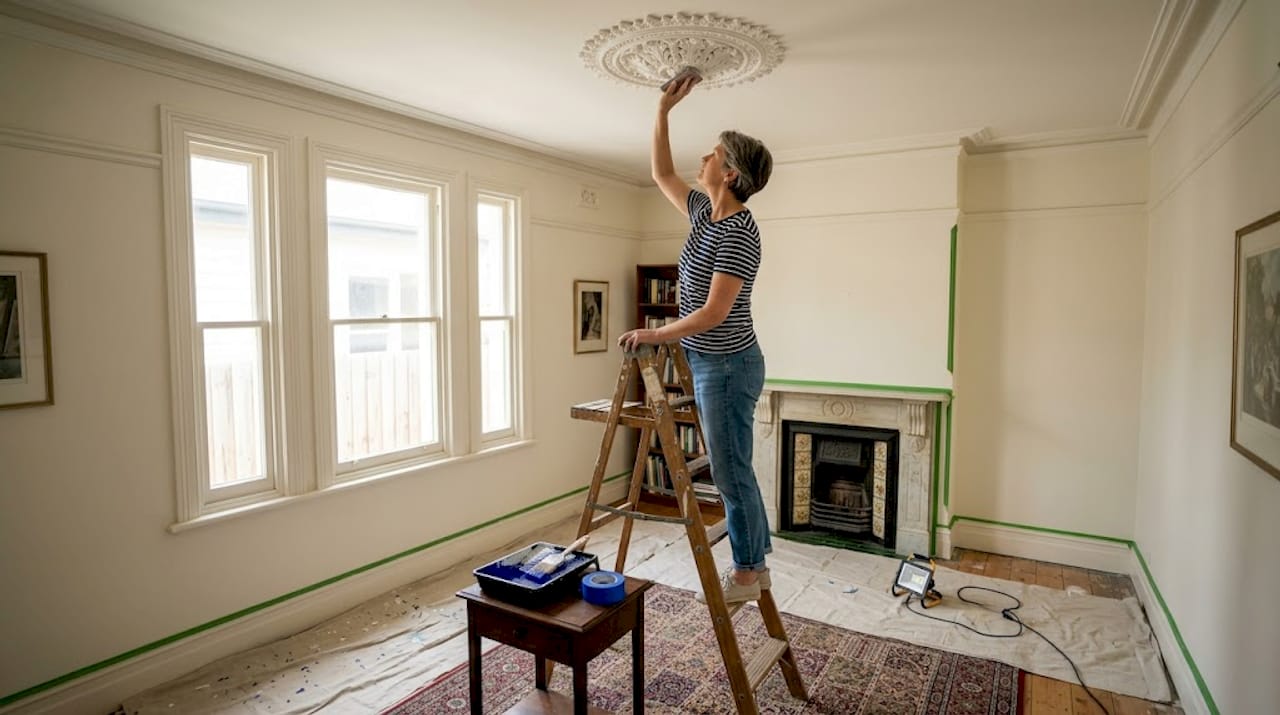
In Melbourne’s competitive inner east and bayside market, buyers are often choosing between two or three comparable properties. The one that feels immediately liveable, clean, and well-presented tends to win the bidding. A home with scuffed, tired, or mismatched paint sends a subtle message that the property hasn’t been loved, even when the structure and fixtures are in excellent order.
Here is a practical approach to maximising interior painting ROI before a sale:
- Assess the entire home neutrally. Walk through as a buyer would. Note every scuffed skirting, yellowed ceiling, and tired accent wall.
- Repair before you paint. Fill cracks, repair plaster damage, and fix any minor defects first. Paint will highlight surface problems, not hide them.
- Choose a cohesive neutral palette. For period homes, warm whites and soft creams complement original timber and plaster details without competing.
- Prioritise the rooms buyers remember most. Entry hall, main living area, master bedroom, and kitchen are the spaces that form the strongest impressions.
- Use appropriate finishes for heritage detail. Low-sheen on walls, semi-gloss on heritage timber trims and architraves to bring out definition and character.
The impact of interior paint finishes on period homes is a detail many homeowners overlook. Applying a flat finish to decorative plasterwork or heritage joinery can make the home feel dull, while over-glossing walls creates a clinical appearance that conflicts with the warmth of a Victorian or Edwardian interior. Getting the finish right is as important as the colour itself.
Statistic to note: Interior repainting delivers returns of over 107%, making it one of the highest-ROI pre-sale improvements available to homeowners.
Pro Tip: Before any interior painting begins, address minor plaster repairs and patch any water-damaged areas. Buyers notice surface irregularities far more clearly on a freshly painted wall than on an existing tired finish. A small investment in preparation protects the larger investment in paint.
Period homes also contain heritage details that deserve specific attention. Decorative cornices, ceiling roses, dado rails, and original timber joinery are features buyers actively seek in Melbourne’s historic suburbs. These elements should be painted with care, using products and techniques that preserve their definition rather than filling in the fine detail that makes them special.
Heritage painting and restoration: Melbourne’s competitive edge
Painting a heritage home is not simply a matter of selecting a colour and rolling it on. The most competitive properties in Melbourne’s inner east and bayside suburbs benefit from painting that respects the architectural history of the building and restores, rather than merely covers, the details that define its character.
Heritage-accurate paint colours and finishes, applied by specialists who understand Victorian and Edwardian architecture, elevate a property’s appeal in ways that a standard repaint cannot. Buyers and their agents in suburbs like Brighton, Hawthorn, and Malvern are often knowledgeable about period homes and notice immediately when a restoration has been done with care and authenticity.
There is also a practical consideration. Many properties in Melbourne’s established suburbs carry heritage overlays or are located within heritage precincts. Selecting non-compliant colours or finishes can create complications with local council, which in turn can affect the property’s marketability. Working with painters who understand heritage requirements removes that risk entirely.
The restoration details that add the most value to Victorian and Edwardian homes include:
- Window surrounds and sills, repainted or restored to their original definition
- Decorative fretwork on verandahs and gable ends, highlighted in contrasting period tones
- Timber fascias and bargeboards, sealed and painted to prevent weathering and rot
- Cast iron lacework, carefully cleaned and repainted to restore its visual presence
- Front door and surround, often the focal point of a heritage façade
- Heritage cornices and plaster detail on interior ceilings, preserved with appropriate products
“Heritage period homes consistently command price premiums when restored with care. The detail work signals quality and authenticity to buyers who know what they’re looking for.”
Ongoing paint maintenance essentials are equally important for protecting a heritage property’s value over time. Paintwork on period homes is doing more than looking good. It is sealing timber from moisture, protecting render from cracking, and preventing decay in the fine details that give the home its character. A property that has been maintained consistently is far easier and less expensive to restore than one where deferred maintenance has allowed serious deterioration.
Combining painting with complementary restoration work, including render repair, timber restoration, and window repairs, delivers the most complete result. This kind of integrated approach, where a single specialist handles all aspects of the heritage façade, ensures consistency and protects every element of the investment.
The exterior cleaning for heritage value stage before any restoration or painting project sets the foundation for a result that lasts and performs well over many years.
Our take: What most homeowners get wrong about painting and value
After working on heritage homes across Melbourne’s inner east and bayside suburbs, Sol Shine has seen a consistent pattern. Homeowners focus on colour. They spend time researching trending palettes, debating whether to go darker or lighter, and choosing between warm and cool whites. Colour matters, but it is rarely the thing that makes or breaks the outcome.
What actually determines value is authenticity, preparation, and execution. A period home painted in the correct heritage palette but with poor surface preparation and inconsistent application will still look tired. Conversely, a property painted with meticulous preparation, quality products, and careful attention to every detail in the right heritage tones will present beautifully and hold its finish for years.
Common misconceptions to avoid:
- Bold accent colours on heritage homes always add personality (they often detract from period character)
- A single coat saves money (it typically costs more in the long run)
- Any painter can handle a Victorian or Edwardian façade (heritage work requires specific knowledge and skill)
- Painting is just a pre-sale exercise (regular maintenance protects the asset year-round)
Knowing when your home needs repainting is the first step toward proactive maintenance rather than reactive spending. A heritage property that is repainted on a considered schedule is always worth more than one that has been neglected and requires expensive remediation before it can present well.
Pro Tip: Before committing to any painting or restoration project on a period property, seek professional advice on colour selection, surface condition, and scope. The consultation cost is negligible compared to the cost of redoing work that doesn’t deliver the right result.
Enhance your property with expert painting and restoration
Ready to protect your heritage home’s character and maximise its value? Sol Shine specialises in painting and restoration for Victorian and Edwardian homes across Melbourne’s inner east and bayside suburbs, bringing together the skills, local knowledge, and heritage expertise that discerning homeowners need.
Whether you are preparing for a sale, maintaining your investment, or undertaking a full restoration, Sol Shine offers specialist interior painting, expert exterior painting, and dedicated heritage restoration painting services, all handled under one roof. Contact Sol Shine today to discuss your property and take the next step toward a result that honours your home’s history and strengthens its value.
Frequently asked questions
What’s the return on investment for painting a heritage home in Melbourne?
Recent figures show that exterior painting delivers 51 to 55% ROI and interior repainting up to 107%, particularly when both are completed before a sale to maximise curb appeal and move-in readiness.
Does paint colour really impact the sale price of heritage homes?
Yes, using heritage-appropriate colours that suit the property’s era can significantly increase buyer interest and perceived value, while mismatched or contemporary palettes on period homes often reduce appeal.
How often should I repaint a period property to maintain value?
Most period homes benefit from exterior repainting every 7 to 10 years and interior repainting as needed, with regular maintenance touch-ups in between to keep finishes in optimal condition.
Are buyers in Melbourne’s inner east and bayside suburbs put off by non-original paintwork?
Many buyers actively seek authentic, era-appropriate finishes and can be deterred by modern or mismatched paintwork that conflicts with the architectural character of a Victorian or Edwardian home.


