
TL;DR:
- Sealing timber surfaces protects against moisture, UV damage, and environmental wear, significantly extending their lifespan. Proper preparation, including moisture measurement and surface sanding, is essential for effective sealing, especially for heritage and exterior timber in climates like Melbourne’s. Regular resealing every few years maintains the timber’s appearance and structural integrity, preventing early failure.
Sealing timber surfaces is defined as applying a protective coating that blocks moisture, UV radiation, and environmental wear from penetrating wood fibres. The importance of timber sealing cannot be overstated: proper sealing extends timber life by 3 to 5 times compared to untreated surfaces. For homeowners managing decks, weatherboards, window frames, or heritage joinery, understanding why seal timber surfaces matter is the difference between timber that lasts decades and timber that fails within years.
Why seal timber surfaces: the science behind wood and moisture
Timber is hygroscopic. That means it continuously absorbs and releases moisture from the surrounding air. This is not a flaw in the material. It is simply how wood behaves, and it has real consequences for any surface left unprotected.
Dimensional changes up to 8% across the grain occur when timber responds to moisture fluctuations. That movement stresses joints, loosens fixings, and causes surface finishes to crack and peel. Indoor environments with 30–60% relative humidity are enough to trigger these cycles repeatedly throughout the year.
The risks are not evenly distributed across a timber surface. End grain, the cross-cut face of a board, behaves like a bundle of open straws. End grain absorbs moisture 3–5 times faster than flat grain surfaces. That accelerated absorption is why unsealed end grain splits and checks long before the face of the same board shows any sign of wear.
Moisture stress is the leading cause of timber surface degradation. Sealing interrupts the absorption cycle before it begins.
- Warping and cupping occur when one face of a board absorbs more moisture than the other, creating uneven tension across the timber.
- Joint failure follows repeated expansion and contraction cycles that gradually loosen glued or nailed connections.
- Surface checking appears as fine cracks running along the grain, caused by the outer surface drying faster than the timber core.
- Fungal growth takes hold in persistently damp timber, accelerating decay from the inside out.
Pro Tip: Check the moisture content of any timber before you apply a sealer. A basic moisture meter costs very little and confirms whether the timber is ready. Sealing too early traps moisture inside and causes the finish to fail.
How does sealing protect timber durability and appearance?
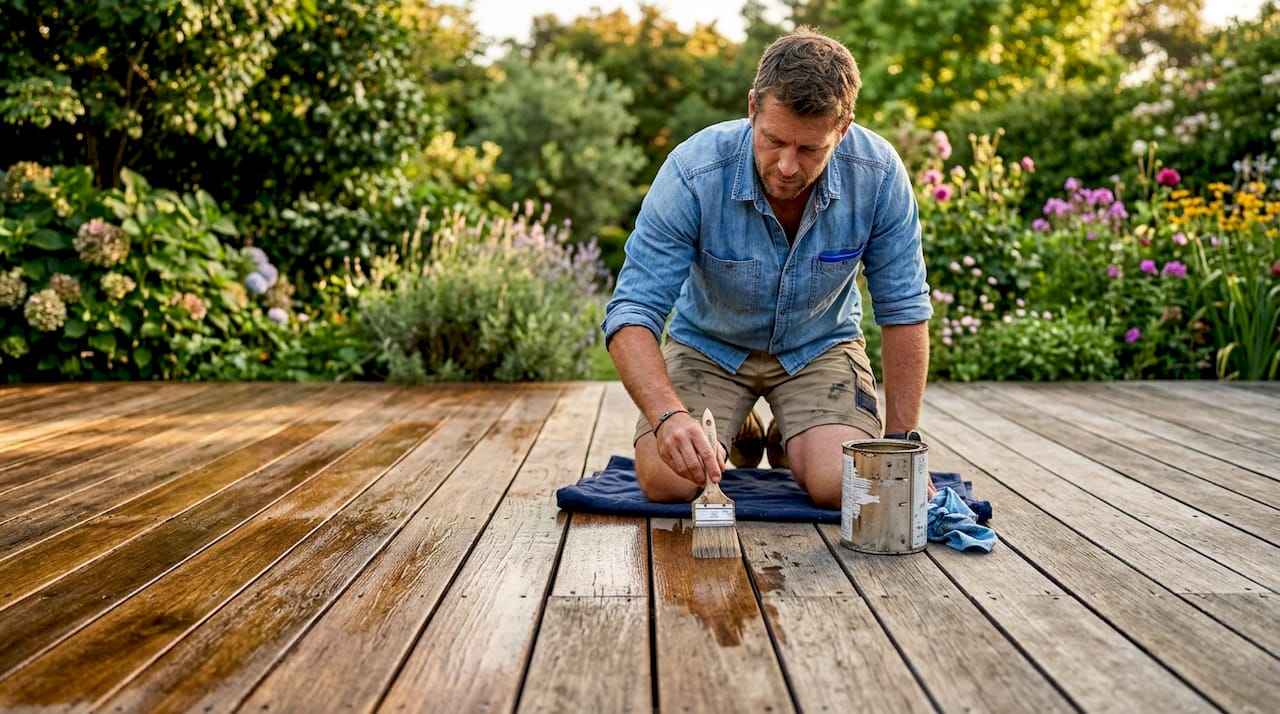
Sealing creates a water-repellent barrier that reduces moisture swelling and shrinking cycles, cutting the risk of cracks and splits significantly. The barrier does not make timber waterproof in an absolute sense. It slows the rate of moisture exchange enough to prevent the structural stress that causes failure.
Unsealed timber absorbs 25% more water than sealed samples under field conditions. That difference accumulates over seasons. More water absorption means more swelling, more shrinking, more cracking, and faster rot.
UV damage is the other major threat. UV rays degrade lignin, the natural binding agent in wood fibres, leading to surface fuzziness, greying, and weakened structural integrity. A quality sealant with UV inhibitors slows this process and preserves both the colour and the surface strength of the timber. For heritage homes in Melbourne’s inner east and bayside suburbs, where Victorian and Edwardian timber trims are exposed to full sun, UV protection is not optional.
“Moisture stress and UV degradation work together to break down unsealed timber far faster than either would alone. Addressing both with a quality sealer is the most cost-effective maintenance decision a homeowner can make.”
The table below compares the typical condition of sealed versus unsealed timber over time.
| Condition | Sealed timber | Unsealed timber |
|---|---|---|
| Water absorption | Significantly reduced | Up to 25% higher |
| Surface cracking | Minimal with correct prep | Common within 1–2 seasons |
| UV greying | Slowed by UV inhibitors | Rapid, within months |
| Fungal and rot risk | Low | High in wet climates |
| Expected service life | 3–5 times longer | Baseline, unprotected |
The aesthetic benefits of sealing wood for protection are equally significant. A sealed surface holds its colour, resists surface staining, and maintains the refined appearance that heritage timber is known for. Unsealed timber weathers to a grey, rough finish that is difficult and costly to restore.
How to seal timber surfaces: best practices for lasting results
The quality of a sealing job depends more on preparation than on the product used. Skipping surface preparation is the most common cause of early finish failure. Preparation directly affects how well the sealer bonds to the timber and how long it performs.
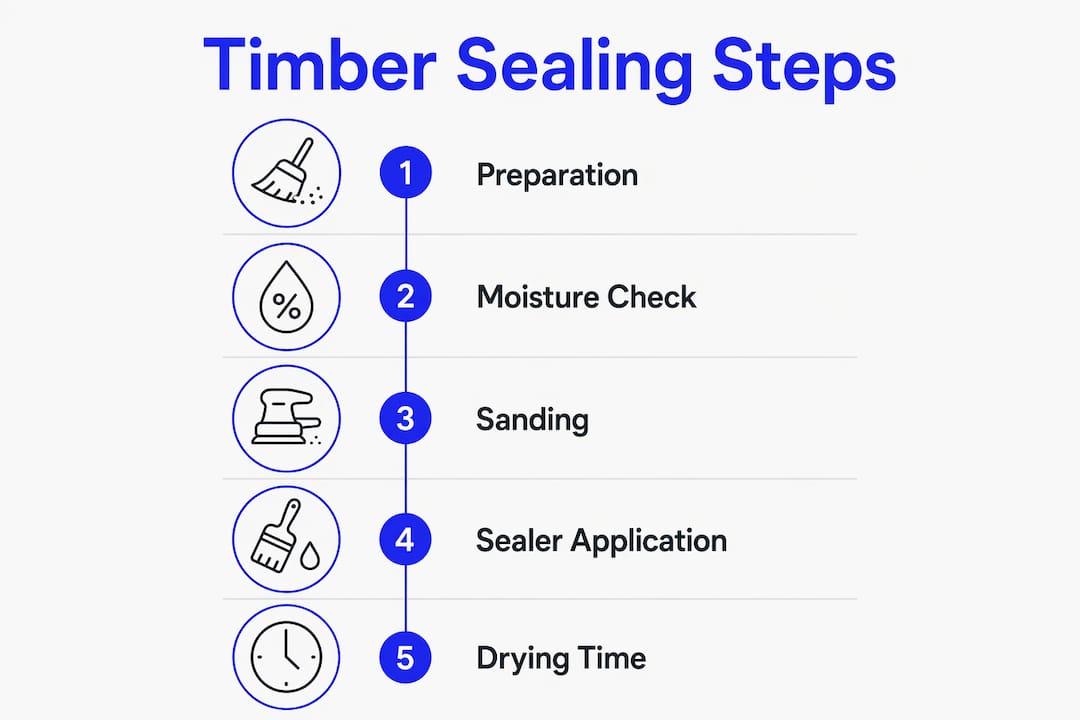
Follow these steps for a finish that holds:
- Measure moisture content. Dry timber to 12% or less moisture content before applying any sealer. Sealing over damp timber traps water inside, causing peeling, cracking, and mould within weeks.
- Sand the surface. Sanding with 100-grit and removing all dust before sealing doubles the service life of many water-based timber coatings. Do not skip this step, even on new timber.
- Seal the end grain first. Apply a dedicated end grain sealer or an extra coat of your chosen product to all cut ends before coating the face. End grain absorbs finish at a much higher rate and needs additional product to achieve the same level of protection.
- Choose the right sealant type. Penetrating sealers soak into timber fibres, repelling water while maintaining the flexibility the timber needs to move. Film-forming finishes create a hard shell over the surface but may crack if the timber moves significantly beneath them. For exterior applications in Melbourne’s variable climate, penetrating sealers generally perform better over time.
- Apply thin coats. Multiple thin coats bond better than a single heavy application. Allow each coat to dry fully before applying the next.
- Avoid sealing green timber. Freshly milled or recently installed timber needs time to acclimatise and reach a stable moisture content. Sealing too early locks in moisture and guarantees finish failure.
Pro Tip: For heritage timber window frames and exterior woodwork on period homes, apply sealer to all six faces of each board before installation. This is called back-priming and it dramatically reduces moisture uptake through the unfinished rear face.
Is sealing wood always necessary?
Sealing wood is necessary in most situations, but the type of sealing required varies by timber species, treatment status, and the specific part of the board being protected.
Homeowners often confuse end sealing with surface oiling. They serve different purposes. End sealing controls moisture movement through the most vulnerable part of the board. Surface oiling or coating provides UV protection and aesthetic finish. Both matter, but for different reasons.
- Pressure-treated timber does not need sealing for rot resistance. The preservative treatment handles that. Sealing pressure-treated timber still reduces UV damage, surface checking, and splintering, which the treatment does not address.
- Hardwood decking species with high natural oil content may not require surface oiling for basic durability. However, sealing the end grain remains critical regardless of species, because end grain sealing prevents cracking and splitting that no natural oil content can prevent.
- Interior timber in stable, climate-controlled environments faces less moisture stress than exterior surfaces. Sealing is still beneficial for protecting against spills, humidity fluctuations, and surface wear.
- Heritage timber trims on Victorian and Edwardian homes require both surface protection and end grain sealing. These surfaces are often exposed to full weather and have been in place for over a century. Protecting them with appropriate sealers is part of responsible heritage timber preservation.
Climate plays a significant role in how often sealing needs to be repeated. Melbourne’s combination of hot summers, wet winters, and coastal humidity in bayside suburbs accelerates surface wear. Exterior timber in these conditions typically needs resealing every 2–3 years to maintain full protection.
Key takeaways
Sealing timber surfaces is the single most effective step a homeowner can take to prevent moisture damage, UV degradation, and premature structural failure.
| Point | Details |
|---|---|
| Sealing extends timber life | Proper sealing extends timber surface life by 3 to 5 times compared to untreated surfaces. |
| Moisture prep is non-negotiable | Dry timber to 12% or less moisture content before sealing to prevent peeling and mould. |
| End grain needs dedicated attention | End grain absorbs moisture 3–5 times faster than flat surfaces and must be sealed separately. |
| Surface prep doubles coating life | Sanding with 100-grit and removing dust before sealing significantly extends finish performance. |
| Sealing type depends on context | Penetrating sealers suit exterior timber movement; pressure-treated timber still benefits from UV sealing. |
What I’ve learned from sealing timber on Melbourne’s heritage homes
The most common mistake I see homeowners make is treating sealing as a cosmetic step rather than a structural one. They focus on the colour of the finish and skip the moisture meter. They sand lightly and wonder why the sealer peels within a season.
Preparation is where the job is won or lost. A premium sealer applied over damp or poorly sanded timber will fail faster than a basic product applied correctly over properly prepared timber. The product matters less than the process.
Timing matters too. Autumn is the best time to seal exterior timber in Melbourne. The timber has dried out after summer heat, and you have a window before winter rain arrives. Sealing in the middle of a wet winter, or on a scorching summer day above 35 degrees, compromises adhesion and drying.
The other thing I tell homeowners is this: do not wait until the timber shows visible damage. By the time you see surface checking or greying, the UV and moisture damage is already well advanced. Sealing is maintenance, not repair. The homeowners who get the best results are the ones who treat it as a regular part of their property care, not a crisis response.
For heritage properties in particular, the weatherproofing of Victorian and Edwardian homes requires a level of care and knowledge that goes beyond a weekend DIY project. The timber on these homes is often irreplaceable. Getting the preparation and product selection right the first time is worth every bit of effort.
— Jarrad
Sol Shine’s timber sealing and painting services in Melbourne
Sol Shine specialises in professional timber sealing, painting, and heritage restoration across Melbourne’s inner east, bayside, and surrounding suburbs.

Every project begins with thorough surface preparation, including moisture measurement, sanding, and end grain treatment, before any coating is applied. This preparation-first approach is what separates a finish that lasts from one that fails within a season. Sol Shine’s team works across exterior painting and timber sealing projects for Victorian and Edwardian homes, as well as interior timber finishing. For homeowners managing heritage properties or large-scale restoration work, Sol Shine offers a complete service from preparation through to final coat. Contact Sol Shine to discuss your timber sealing or restoration project.
FAQ
Why is sealing timber surfaces necessary?
Sealing timber prevents moisture absorption, UV degradation, and the structural movement that causes warping, cracking, and rot. Unsealed timber absorbs significantly more water and deteriorates far faster than sealed surfaces.
How often should exterior timber be resealed?
Exterior timber in Melbourne’s climate typically needs resealing every 2–3 years. Surfaces exposed to direct sun, coastal humidity, or heavy rain may need attention sooner.
Does pressure-treated timber need to be sealed?
Pressure-treated timber does not need sealing for rot resistance, but sealing still reduces UV damage, surface checking, and splintering that the treatment does not address.
What moisture content should timber be before sealing?
Timber should be at 12% or less moisture content before any sealer is applied. Sealing over damp timber traps moisture inside and causes the finish to peel, crack, and develop mould.
What is the difference between a penetrating sealer and a film-forming finish?
Penetrating sealers soak into timber fibres and repel water while allowing the timber to move naturally. Film-forming finishes create a hard surface shell that can crack if the timber expands or contracts beneath it.


