
TL;DR:
- A professional colour consultation helps homeowners choose harmonious paint colours for their homes considering lighting and fixed finishes. It involves assessment, sample testing, and a detailed plan, preventing costly mistakes and ensuring cohesive results. Always confirm fixed elements before consulting to achieve the most accurate and lasting colour outcomes.
A colour consultation is a professional service where a trained consultant recommends specific paint colours tailored to your home’s unique lighting, finishes, and personal style. The process goes well beyond picking a shade from a fan deck. It involves a structured assessment of your space, your existing materials, and how natural light behaves throughout the day. Brands like Dulux and Haymes produce thousands of colours, and the difference between a warm white and a cool white can make or break a room. A professional colour consultation gives you clarity, confidence, and a written plan before a single drop of paint is applied.
What is colour consultation and why does it matter?
Colour consultation is the recognised industry term for a professional advisory service focused on selecting harmonious paint colours for interior and exterior surfaces. A consultant analyses your home’s fixed elements, including flooring, cabinetry, tiles, brickwork, and joinery, then recommends colours that work with those surfaces rather than against them.
The role of colour consultation extends beyond aesthetics. Undertone identification in flooring, cabinetry, and tiles is the most critical consultant skill for preventing colour clashes that homeowners routinely overlook. A grey tile with a green undertone, for example, will make a warm white wall look yellow. Without training, that clash is nearly impossible to predict from a small swatch.
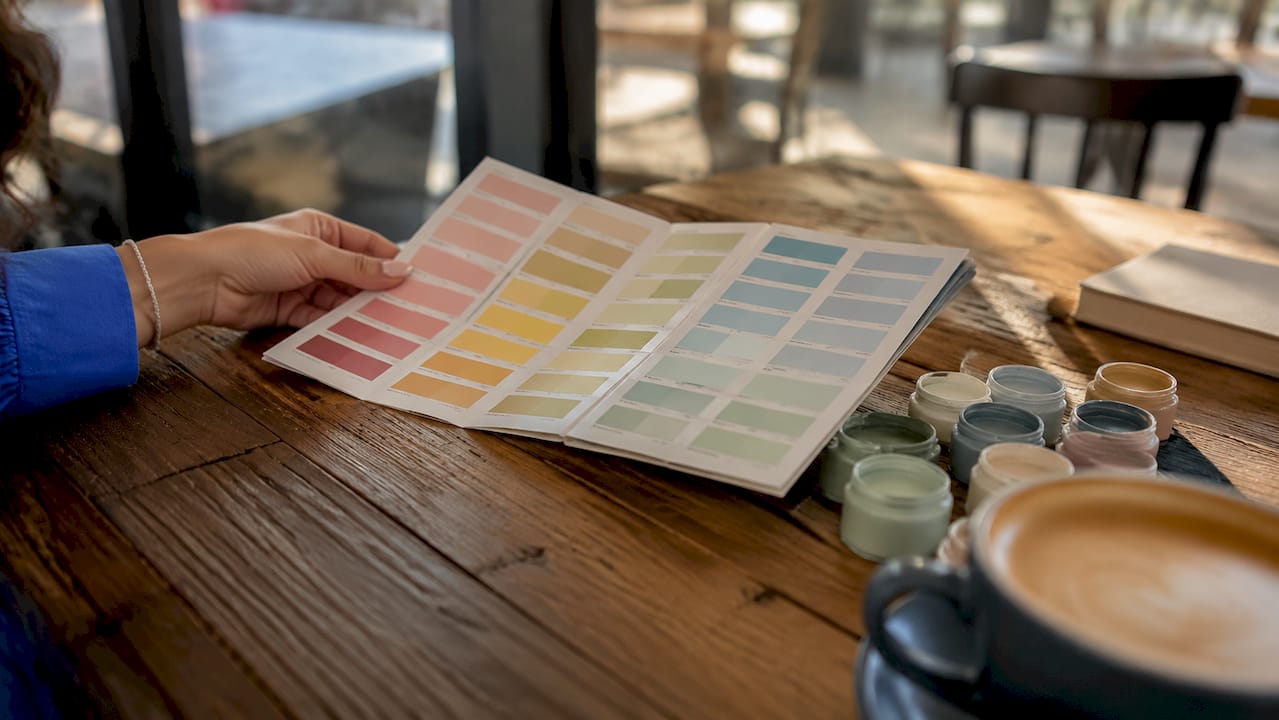
Colour consultants use professional tools including physical fan decks, large sample pots, and paint-out boards. They account for light direction, window orientation, and the way artificial lighting shifts colour temperature at night. The result is a palette that holds together across every room and surface.
How does a colour consultation work step by step?
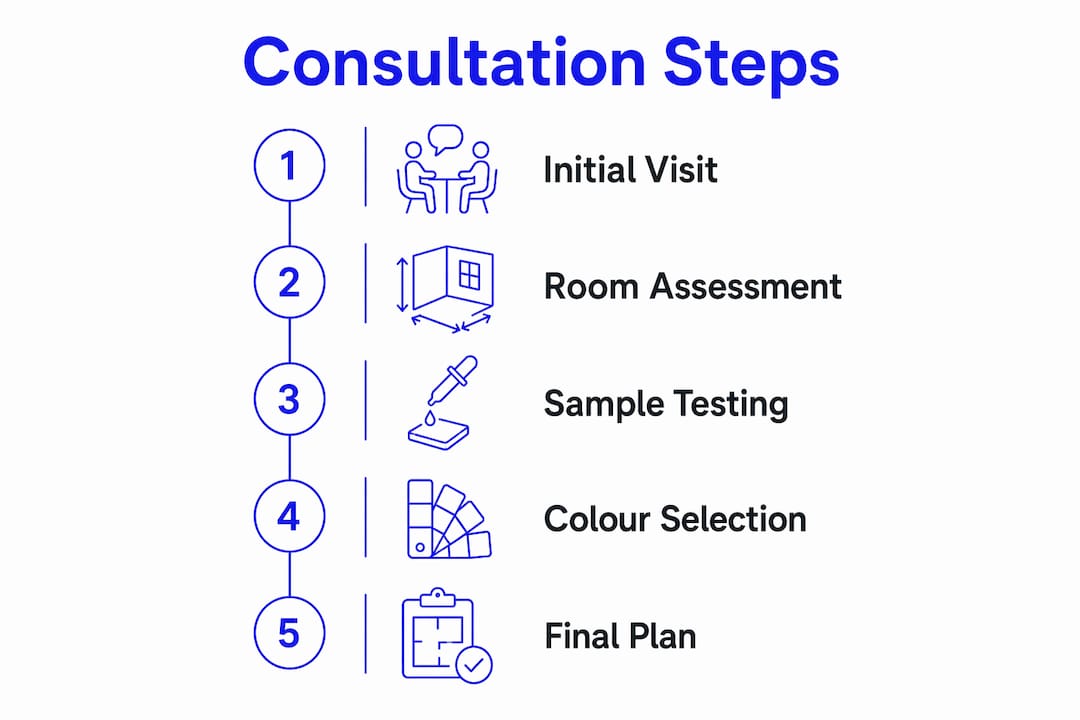
A standard in-home consultation typically lasts 1–2 hours and results in 5–15 specific colour recommendations, each with brand names, colour codes, and professional reasoning. That written plan is the key deliverable. It removes guesswork entirely and gives your painter a precise brief to work from.
The process follows a clear sequence:
- Space and light assessment. The consultant walks through each room, noting light direction, window size, ceiling height, and how natural light changes from morning to afternoon.
- Fixture and finish analysis. Existing permanent elements such as timber floors, stone benchtops, and heritage joinery are examined for their undertones.
- Style and preference discussion. The consultant asks about your lifestyle, the mood you want each room to create, and any colours you want to avoid.
- Fan deck and sample selection. Professional fan decks from Dulux, Haymes, or Taubmans are used to shortlist candidates against the actual surfaces in the room.
- Large-scale sample testing. Paint colours are tested on multiple walls using large 12×12 inch samples to account for light direction and time of day. Small swatches are misleading because colours shift significantly in north-facing versus south-facing rooms.
- Written colour plan delivery. You receive a documented list of recommended colours with brand names and codes, ready to hand to your painter.
Pro Tip: Ask your consultant to test samples on at least two different walls in each room. The same colour can read completely differently on a wall that catches morning sun versus one that sits in afternoon shadow.
Consultation services are tiered, ranging from a brief single-room session to a whole-home palette development covering every interior and exterior surface. Knowing your scope before you book saves time and keeps the session focused.
What are the key benefits of booking a colour consultation?
A colour consultation acts as a financial insurance policy by preventing costly labour, material waste, and repeat paint jobs caused by incorrect colour choices. One consultation often saves more money than it costs. Repainting a room because the colour looked different on the wall than it did on the swatch is an expensive lesson.
The practical benefits for homeowners include:
- Reduced decision fatigue. Paint ranges from Dulux alone contain thousands of colours. A consultant narrows the field to a shortlist that suits your specific space, so you are not paralysed by choice.
- Undertone expertise. Paint undertones and their reaction to light are complex and often misunderstood. Guessing based on small swatches regularly leads to colours looking incorrect once painted across a full wall.
- Whole-home colour flow. A consultant develops a palette that creates visual continuity from room to room, avoiding the disjointed look that comes from selecting colours in isolation.
- Increased property value. A well-planned, cohesive palette lifts the perceived quality of a home. This matters particularly for heritage properties in Melbourne’s inner east and bayside suburbs, where architectural character is a key part of the home’s appeal.
- Confidence in your decisions. You go into the painting project knowing the colours are right, rather than hoping they will work out.
“Treating colour as the final layering step after all architectural and layout decisions are made avoids disjointed looks from piecemeal painting.” — A Season For Home
The importance of colour consultation becomes clearest when you consider the cost of getting it wrong. A full interior repaint of a large heritage home in Hawthorn or Camberwell represents a significant investment. Spending a small amount upfront on expert advice protects that investment.
What makes interior and exterior colour consultations different?
Interior and exterior consultations share the same core methodology but address very different challenges. Understanding the distinction helps you book the right service and set realistic expectations.
| Factor | Interior consultation | Exterior consultation |
|---|---|---|
| Key fixed elements | Flooring, cabinetry, tiles, benchtops | Siding, brickwork, roof, landscape |
| Primary light consideration | Window orientation, artificial lighting | Sun exposure, sky reflection, street context |
| Colour testing method | Large samples on interior walls | Large samples on façade surfaces |
| Main goal | Harmony across rooms and finishes | Curb appeal, architectural respect, cohesion |
| Complexity | Undertone matching across surfaces | Coordinating multiple exterior surfaces |
Interior consultations place the greatest emphasis on undertone matching. Your timber floors, stone benchtops, and heritage joinery all carry undertones that must be read correctly before any wall colour is chosen. A consultant examining a Victorian home in Kew will spend considerable time on the existing heritage timber trim and original cornices before recommending a palette.
Exterior colour consultations handle the complexity of coordinating paint with siding, trim, brickwork, and landscape to enhance curb appeal and architectural character. A heritage façade in Brighton or Malvern involves balancing the body colour, trim colour, and accent colour across multiple surfaces while respecting the home’s period style. Getting this wrong is visible from the street and affects the entire neighbourhood’s streetscape.
Pro Tip: For heritage homes, ask your consultant to reference the original period colour palettes used by Dulux or Haymes. Both brands publish heritage colour ranges specifically designed for Victorian and Edwardian architecture, and these provide a historically grounded starting point.
Exterior testing also presents practical challenges. Colours dry differently on rendered surfaces versus timber weatherboards, and the scale of an exterior wall means a small sample reads very differently to the finished result. A skilled consultant accounts for this by testing larger samples and revisiting them at different times of day. For more on exterior colour selection for Melbourne heritage homes, the range of period-appropriate options is broader than most homeowners expect.
How to prepare for a colour consultation and what to expect on the day
Preparation makes the difference between a productive session and one that runs out of time before covering every room. Coming ready means your consultant can focus on the work rather than gathering basic information.
Before the consultation, gather the following:
- Inspiration images. Collect photos from Pinterest, Houzz, or magazine clippings that reflect the mood and style you want. These give your consultant a clear reference point for your preferences.
- Architectural or joinery plans. If you are planning renovations alongside the repaint, share the plans so the consultant can factor in new materials and finishes.
- A clear scope. Decide whether you want advice on a single room, a full interior, or both interior and exterior surfaces. Consultation services are tiered from single-room sessions to whole-home palette development, so knowing your scope keeps the session on track.
- A list of fixed elements you cannot change. Note any flooring, tiles, or cabinetry that will remain in place. These are the anchors your consultant will work around.
- An open mind on your existing preferences. Many homeowners arrive with a colour in mind that does not suit their space. A good consultant will explain why and offer a better alternative.
On the day, expect the consultant to move through each room methodically. They will hold fan deck samples against your walls, floors, and fixtures. They will ask questions about how you use each space and what feeling you want it to create. Colour consultation is not a full interior design service. It focuses on surface finishes and colour harmony, not structural changes or furniture layout. Setting that expectation clearly avoids disappointment.
After the session, you should receive a written colour plan with specific brand names and codes. This document is your brief for the painter. For heritage homes, understanding paint selection principles for your specific property type helps you have a more informed conversation with both your consultant and your painting team.
Key takeaways
A professional colour consultation saves money, reduces decision fatigue, and produces a written colour plan that gives your painter a precise brief to work from.
| Point | Details |
|---|---|
| Core purpose | A colour consultation matches paint colours to your home’s fixed finishes, lighting, and architecture. |
| Financial value | One consultation prevents costly repaints by eliminating guesswork before the job starts. |
| Testing method | Large 12×12 inch samples tested on multiple walls at different times of day give accurate results. |
| Interior vs exterior | Interior work focuses on undertone matching; exterior work coordinates multiple surfaces for curb appeal. |
| Preparation | Bring inspiration images, a clear scope, and a list of fixed elements you cannot change. |
Colour is more complex than most homeowners expect
After years of working on heritage homes across Melbourne’s inner east and bayside suburbs, I have seen the same pattern repeat. A homeowner picks a colour they love on a small swatch, the painter applies it, and the result looks nothing like what they imagined. The colour is too yellow, too cold, or it fights with the timber floors. The swatch looked perfect in the paint shop under fluorescent lighting. In the actual room, facing south, it tells a completely different story.
The complexity of undertones is genuinely surprising to most people. A white that looks clean and neutral in isolation can pull strongly green or purple once it is on the wall next to your existing finishes. This is not a flaw in the paint. It is physics. And it is exactly what a trained consultant is equipped to read before the paint goes on.
What I find homeowners most underestimate is the value of the written colour plan. It is not just a list of colours. It is a document that aligns your painter, your consultant, and your own expectations. When everyone is working from the same brief, the project runs more smoothly and the result matches what you agreed on. For heritage homes in particular, where paint selection involves respecting the original architecture while meeting modern preferences, that alignment is worth every cent of the consultation fee.
The one mistake I see most often is homeowners treating colour as the first decision rather than the last. Confirm your flooring, your joinery, your tiles, and your fixtures first. Then bring in a consultant to build the palette around what is already committed. That sequence produces the most cohesive results.
— Jarrad
Colour consultation and painting services from Solshine
Selecting the right colours is only half the work. The other half is having a skilled team apply them with the care and precision your home deserves.
Solshine pairs professional colour guidance with quality interior and exterior painting across Melbourne’s inner east and bayside suburbs, including Kew, Hawthorn, Camberwell, Brighton, and Malvern. Whether you are repainting a single room or undertaking a full heritage restoration, the team brings the same attention to surface preparation, material compatibility, and finish quality. Explore Solshine’s interior painting projects to see the standard of work applied to homes like yours, or review the exterior painting services for façade and heritage work. Contact Solshine to discuss your project and get a tailored colour and painting plan.
FAQ
What does a colour consultation include?
A colour consultation includes a space and light assessment, undertone analysis of fixed finishes, style preference discussion, fan deck sampling, large-scale wall testing, and a written colour plan with specific brand names and codes.
How long does a colour consultation take?
Standard in-home consultations typically last 1–2 hours, though tiered services range from a brief single-room session to a full whole-home palette development.
Is a colour consultation worth the cost?
A colour consultation acts as a financial insurance policy by preventing costly repaints and wasted materials. For most homeowners, the upfront cost is far less than the expense of repainting a room that did not turn out as expected.
What is the difference between colour consultation and interior design?
Colour consultation focuses strictly on surface finishes and colour harmony. It does not cover structural changes, furniture layout, or broader interior design decisions.
When should I book a colour consultation?
Book a colour consultation after confirming your fixed elements such as flooring, cabinetry, and tiles, and before engaging your painter. Treating colour as the final layering step after architectural decisions are made produces the most cohesive result.


