
TL;DR:
- Protect heritage homes by managing bulk water first, then air leaks, and finally thermal upgrades.
- Water ingress and water management are critical to prevent damage in Victorian and Edwardian homes.
- Proper sequencing, specialist assessment, and council compliance are essential for effective long-term weatherproofing.
Melbourne’s weather is notoriously unpredictable. Scorching summers, cold and wet winters, and everything in between create a challenging environment for any home. But for owners of Victorian and Edwardian properties, the stakes are considerably higher. These homes were built with materials and techniques that perform differently from modern construction, and without a well-considered weatherproofing strategy, even minor oversights can lead to costly damage, loss of heritage character, and declining property value. This guide provides a practical, sequenced approach to protecting your period home from the elements while respecting its original fabric and meeting heritage overlay requirements.
Table of Contents
- How to approach weatherproofing heritage homes
- Keep water out: roofs, gutters, and drainage
- Control draughts and air leaks without causing damp
- Tune insulation and glazing the right way
- Heritage overlays and council permissions: what you need to know
- Why quick fixes rarely work for Victorian and Edwardian homes
- Get expert help and long-term protection for your period home
- Frequently asked questions
Key Takeaways
| Point | Details |
|---|---|
| Sequence is crucial | Start with the roof and drainage before addressing draughts and insulation to avoid hidden damage. |
| Respect heritage features | Use reversible methods and check council rules before changing windows, doors, or exteriors to preserve your home’s integrity. |
| Moisture balance matters | Never fully block original vents; removable covers maintain airflow and reduce damp risk in period homes. |
| Plan for compliance | Many exterior works in Heritage Overlays need council consent—avoid costly remedial works by planning ahead. |
| Expert help adds value | Professional advice delivers lasting protection, preserves heritage character, and improves comfort. |
How to approach weatherproofing heritage homes
The most common mistake heritage homeowners make is treating weatherproofing as a collection of individual fixes. A draught strip here, a fresh coat of paint there. The reality is that older homes function as an integrated system, and changes to one element affect others in ways that are not always obvious.
Weatherproofing works best as a system for Melbourne heritage owners: manage bulk water first via roof, gutters, and drainage; then control air leakage through draughts and vents; then tune thermal performance via insulation and glazing in a moisture-safe way. This sequence matters because, for example, sealing draughts before fixing a leaking roof can actually trap moisture inside wall cavities, accelerating rot in original timbers.
Here is the correct order of works to follow:
- Assess the entire building envelope before starting any repairs. Look at the roof, walls, sub-floor, windows, and drainage as a connected whole.
- Repair bulk water entry points first. This means fixing the roof, flashings, gutters, and ground drainage before anything else.
- Address air leakage once water intrusion is under control. Focus on doors, windows, floor junctions, and unused vents.
- Upgrade thermal performance only after the above two steps are complete. Insulation, glazing upgrades, and window treatments are most effective when installed into a dry, airtight building fabric.
- Check heritage overlay requirements at every stage to ensure compliance with council guidelines.
It is also worth reading our weatherproof painting guide for Melbourne heritage homes, which outlines how protective coatings fit into this broader system.
Pro Tip: Before spending money on insulation or window upgrades, invest in a professional building inspection to identify hidden moisture issues. Fixing damp problems first saves significantly more money than rectifying damage caused by sealing a wet building.
Keep water out: roofs, gutters, and drainage
Water ingress is the single greatest threat to a Victorian or Edwardian home. Original terracotta tiles, slate roofs, ornate timber bargeboards, and decorative cornices are all vulnerable to water damage over time. The good news is that these elements are durable when properly maintained.
Start with the roof and drainage: inspect and repair tiles or slates, check flashings, and keep gutters, downpipes, and valleys clear to prevent internal water damage. Here is what to check during a thorough inspection:
- Roof tiles and slates: Look for cracked, slipped, or missing tiles, especially after storms. Even one displaced tile can allow significant water entry.
- Flashings: Metal flashings around chimneys, skylights, and valleys deteriorate over time. Corroded or lifted flashings are a primary cause of concealed water damage.
- Gutters and downpipes: Blocked or sagging gutters overflow against fascia boards, causing rot in original timber and potentially allowing water into wall cavities.
- Roof valleys: Leaf and debris accumulation in valleys accelerates deterioration of the underlying material. Clear these at least twice a year.
- Timber details: Inspect bargeboards, fascias, and eaves for paint breakdown or soft spots that indicate moisture penetration.
A blocked gutter on a period home is more than a nuisance. It can saturate the wall structure, soften original timber, and allow mould to establish inside the building fabric before you notice any visible sign from inside.
Installing quality leaf guards in downpipes and vulnerable valleys is a practical and generally low-cost investment. For homes in Kew, Hawthorn, and Camberwell where established trees are nearby, this can save significant maintenance effort each autumn.
Keeping on top of paint maintenance essentials is closely linked to water management. Deteriorating paint on timber surfaces allows moisture to penetrate the wood itself, meaning weatherproofing is as much about surface protection as it is about plumbing and roofing.
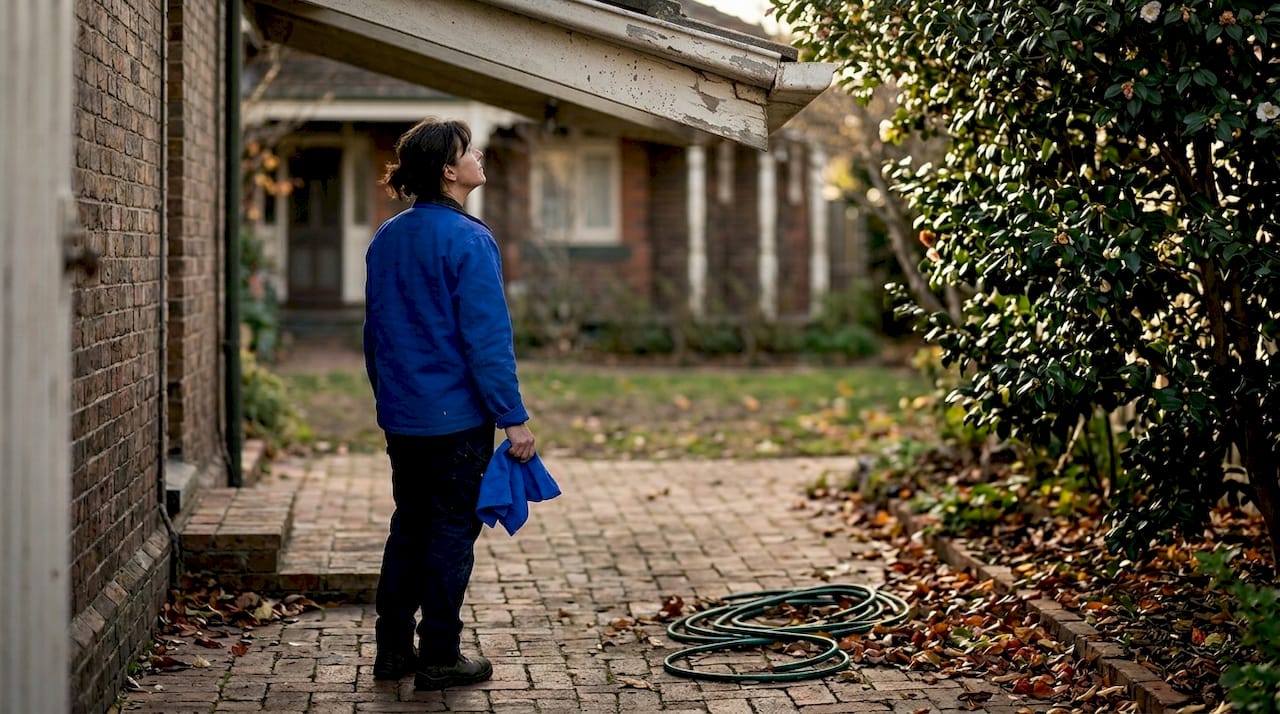
If you notice softness in weatherboards or fascias, read our weatherboard repair guide to understand when repair is possible and when replacement is the right call.
Pro Tip: Never attempt to inspect a complex or steeply pitched roof yourself. Falls from height are among the most common causes of serious injury for homeowners. Engage a licensed trades professional who carries appropriate insurance for high-access work.
Control draughts and air leaks without causing damp
Once bulk water entry is addressed, the next priority is managing air movement through the building fabric. Heritage and Victorian homes benefit from careful draught control, sealing gaps around doors and windows, floor junctions, and redundant vents as a key weatherproofing step. Done well, this dramatically improves comfort and reduces heating costs. Done poorly, it can cause significant moisture problems.
Key areas to address include:
- Doors and windows: Apply removable weather-strips to door frames and window sashes. These are effective, reversible, and generally do not require a planning permit.
- Floor junctions: Gaps between floorboards and skirting boards are common in older homes. A flexible caulk or purpose-made draught strip is appropriate here.
- Unused chimney flues: These are among the largest sources of heat loss in period homes. Fit a removable chimney balloon or draught excluder that can be removed when the fireplace is in use.
- Service penetrations: Modern cable, plumbing, or ventilation penetrations through walls and ceilings are often poorly sealed. These can be addressed with appropriate fire-rated sealant.
- Redundant wall vents: Original air vents were placed to manage moisture and protect timber subfloors. Blocking airflow in older homes can worsen damp; use removable covers and consult specialists before sealing older wall or ceiling vents.
The instinct to seal everything tightly is understandable, but Victorian and Edwardian homes were designed to breathe. Their solid masonry walls and timber floors need some airflow to manage moisture safely. Over-sealing without specialist advice can create condensation issues that are far more expensive to fix than the original draughts.
Nowhere is this more critical than around original windows. Our heritage window repairs guide explains how to restore draught-leaking sashes without compromising original joinery or triggering heritage permit requirements.
Pro Tip: Focus draught-sealing efforts on modern service entries, unused chimney flues, and poorly fitted doors first. These typically contribute the majority of air leakage and carry the least risk of inadvertently causing moisture problems.
Tune insulation and glazing the right way
With water and air managed properly, thermal performance upgrades become both safer and more effective. The right insulation and glazing choices can meaningfully reduce heating bills and improve year-round comfort, but only when they are compatible with the original building fabric.
Ceiling and underfloor insulation are part of a moisture-safe weatherproofing system for Melbourne heritage owners, best installed after bulk water and air leakage issues are resolved. For glazing, insulating windows effectively with secondary glazing added to original sashes performs well and preserves the original window appearance. Additionally, shutters and fitted blinds can meaningfully cut heat loss and are generally acceptable under heritage guidelines.
| Upgrade option | Thermal benefit | Visual impact | Moisture risk | Typical cost range |
|---|---|---|---|---|
| Ceiling insulation | High | None (concealed) | Low if dry ceiling | Low to moderate |
| Underfloor insulation | Moderate to high | None | Low with ventilation | Moderate |
| Secondary glazing | Moderate | Minimal from street | Low | Moderate to high |
| Draught-proof shutters | Moderate | Adds character | None | Moderate |
| Heavy lined curtains | Low to moderate | Interior only | None | Low |
Some additional points worth knowing:
- Install ceiling insulation so it does not block eave ventilation. Restricted eave airflow increases condensation risk in the roof space, which can damage original timber framing.
- Avoid insulating against unventilated subfloors. Timber floors need airflow beneath them. Pair underfloor insulation with maintained or improved subfloor ventilation.
- Secondary glazing installed to the interior of existing sashes is generally the most heritage-sensitive glazing upgrade. It avoids altering the exterior appearance and works well with original single-pane glass.
- Choose products and colours that complement the period character of the home when selecting shutters or blinds.
Our paint durability and weather guide is worth reading alongside this section, as the right exterior coatings also contribute to thermal performance by reducing moisture cycling in wall materials. For specific product recommendations, see our overview of exterior coatings suited to heritage restoration in Melbourne.
Heritage overlays and council permissions: what you need to know
Many Melbourne suburbs sit within Heritage Overlays under the Victorian Planning Provisions. These overlays exist to protect the character and historical significance of streetscapes and individual properties. Visible exterior changes such as replacing windows, re-roofing, and many other external works in Heritage Overlays require a planning permit. Understanding this before starting any works avoids costly delays and potential enforcement action.
| Weatherproofing work | Permit typically required? | Notes |
|---|---|---|
| Internal draught sealing | No | Generally exempt from permits |
| Gutter cleaning and maintenance | No | Routine maintenance is exempt |
| Roof tile repair (like-for-like) | No | Replacement in kind is usually exempt |
| Re-roofing with different materials | Yes | Requires permit in Heritage Overlay |
| Window draught-stripping (interior) | No | Interior, non-visible works generally exempt |
| Window replacement | Yes | Almost always requires permit |
| Secondary glazing (interior) | No in most cases | Verify with your council |
| External render repair | Often yes | Check with your local council |
If your weatherproofing works require a planning permit, follow these steps:
- Obtain a copy of the relevant Heritage Overlay schedule from your local council. This details what is protected and what flexibility exists.
- Engage a heritage architect or consultant to prepare a heritage impact statement if the works are significant.
- Submit a planning permit application to your council with plans, specifications, and any required heritage documentation.
- Allow for assessment time. Heritage permit applications often take several weeks to months, so plan ahead.
- Only commence works after the permit is issued and any conditions have been reviewed.
For guidance on preserving heritage exteriors within council requirements, our team has extensive experience navigating Heritage Overlay conditions across Melbourne’s inner east and bayside suburbs. For window-specific considerations, shutter tips for heritage homes provides useful context on what is and is not typically acceptable.
Why quick fixes rarely work for Victorian and Edwardian homes
It is tempting to reach for off-the-shelf weather-seal products or book the first available trades person for a quick repair. Many homeowners do exactly this, and the results are often disappointing, or worse, damaging.
The fundamental issue is that Victorian and Edwardian homes do not perform like modern construction. Their walls are typically solid brick or rendered masonry without a cavity. Their timbers are old-growth hardwood that, when properly maintained, can last indefinitely but deteriorate rapidly when moisture is trapped against them. Their original design relied on a level of air movement that modern weatherproofing products actively prevent.
Sol Shine sees this pattern repeatedly: a homeowner seals gaps, installs insulation, and notices damp appearing within a season. The moisture was always there in the wall fabric, but previously it could escape. Now it cannot. The repair that was meant to protect the home has created a new problem. Preventative painting and a considered approach to surface protection can form an important part of managing this moisture cycle before major interventions are needed.
The consistent advice from heritage councils, building scientists, and experienced restorers is to treat weatherproofing as an integrated system rather than a collection of isolated repairs. That means sequencing works correctly, choosing materials that are compatible with the original building fabric, and seeking specialist assessment before making changes to original features. It also means resisting the pressure to do everything at once. A staged approach, starting with the most impactful and lowest-risk measures, consistently delivers better long-term results than a rushed, comprehensive intervention.
Heritage properties reward patience and expertise. The investment in getting this right is justified by the protection of significant architectural value and the avoidance of expensive remediation down the track.
Get expert help and long-term protection for your period home
Protecting a Victorian or Edwardian home from Melbourne’s weather is not a job for guesswork. The sequence of works, material choices, and council compliance requirements all need to be managed carefully to achieve lasting results without compromising heritage value.

Sol Shine specialises in exactly this kind of work. From heritage painting services across Kew, Hawthorn, Brighton, and Camberwell, to detailed window protection and full weatherboard restoration, our team understands the unique demands of period properties. We handle all works under one roof, from initial assessment through to a compliant, premium finish that respects the character of your home. If your property is ready for a significant heritage restoration or exterior painting project, we would welcome the opportunity to discuss what is possible.
Frequently asked questions
What’s the first thing to check when weatherproofing a Victorian home?
Always start by inspecting the roof and drainage for leaks, damage, or blockages before moving on to air leaks or insulation. Roof, flashing, and gutter integrity must be confirmed before any other weatherproofing step.
Do I need a permit for draught-proofing in a Heritage Overlay?
No, most draught-proofing works like gap-sealing do not require a permit, but check for any exterior changes that might. Draught-blocking itself does not necessarily require a planning permit, though external works may trigger one.
How do I prevent condensation and damp after blocking draughts?
Use removable vent covers and avoid permanently sealing all wall and ceiling vents in older homes to let them breathe. Sealing vents or blocking airflow can worsen damp in older building fabric, so consult a specialist before making permanent changes.
What insulation is best for heritage homes in Melbourne?
Ceiling and underfloor insulation that does not trap moisture, plus heritage-compatible secondary glazing, are generally safe and effective. A moisture-safe weatherproofing system sequences insulation and glazing upgrades after bulk water and air leakage are already resolved.
What weatherproofing works typically require a council permit?
Visible changes like replacing windows, roofing, or works to the façade almost always require a planning permit in Heritage Overlays. Exterior works in Heritage Overlays such as window replacement and re-roofing with different materials require a planning permit before work begins.


