
TL;DR:
- Heritage exteriors require gentle, low-pressure cleaning to preserve fragile materials.
- Proper assessment and testing prevent damage and guide safe cleaning practices.
- Professional help ensures preservation through precise, heritage-compatible restoration methods.
Cleaning the exterior of a Victorian or Edwardian home in Melbourne is not like hosing down a modern brick veneer. The materials are older, often more fragile, and in many cases irreplaceable. One wrong move with a pressure washer or the wrong chemical can strip lime render, erode soft brick, or lift original paintwork that took decades to develop its patina. Many homeowners feel genuine uncertainty about where to start, what to use, and how hard to scrub. This guide walks you through a proven, careful process that respects your home’s heritage fabric and aligns with best-practice guidelines, so you can clean with confidence rather than anxiety.
Table of Contents
- Assessing your home’s exterior before cleaning
- Essential tools and materials for cleaning heritage exteriors
- Step-by-step exterior cleaning process for period homes
- Troubleshooting and common cleaning mistakes to avoid
- A heritage expert’s take: Why slow, simple cleaning always wins
- Ready for expert help on your period home’s exterior?
- Frequently asked questions
Key Takeaways
| Point | Details |
|---|---|
| Always start with assessment | Know your materials and condition before choosing any cleaning method for your heritage home. |
| Gentle techniques are essential | Use low pressure, soft brushes, and heritage-approved products to avoid damaging historic fabric. |
| Follow Heritage Victoria guidance | Refer to official guidelines and only use cleaning methods approved for period exteriors. |
| Avoid common pitfalls | Never use harsh chemicals or high-pressure water, and address any visible defects before washing. |
| Seek professional help when needed | If you encounter damage or uncertainty, call a heritage specialist for advice. |
Assessing your home’s exterior before cleaning
Now that the risks are clear, begin by making a practical assessment of your home’s façade. This is not a step to rush. A thorough inspection before you pick up a single brush will shape every decision that follows and help you avoid costly mistakes.
Start by identifying the materials on your exterior. Most Melbourne Victorian and Edwardian homes feature a combination of:
- Brick or bluestone masonry (often with lime mortar, not cement)
- Stucco or render (usually lime-based, breathable, and sensitive to moisture)
- Painted or unpainted weatherboards (hardwood or softwood, prone to swelling if over-wetted)
- Cast iron lacework (decorative, prone to rust if protective coatings are compromised)
- Decorative timber trim (architraves, fascias, and veranda posts)
Once you know what you are dealing with, look closely at the condition of each material. Note any flaky or peeling paint, soft or crumbling mortar joints, cracks in render, biological growth such as lichen or moss, and any areas where water appears to be tracking or pooling. These are not just cosmetic issues. They are warning signs that cleaning could make things worse if you proceed without care.
For homes listed on the Victorian Heritage Register or within a heritage overlay, Heritage Victoria recommends low-pressure cleaning and lime mortar repointing for period masonry. Familiarise yourself with any specific conditions that apply to your property before starting work.
Document what you find. Photographs taken before cleaning give you a clear baseline and protect you if any questions arise later about pre-existing damage. This is something the team at Sol Shine always does on heritage projects, and it is a habit worth adopting yourself. For a broader overview of what this process involves, the expert guide to heritage exteriors is a useful starting point, and understanding why cleaning protects heritage homes will reinforce why this preparation matters.
‘Never use harsh chemicals or high pressure on heritage masonry — it can cause irreversible damage.’
Pro Tip: Always test your chosen cleaning method on an inconspicuous area first, such as a side wall or rear section, and wait 24 hours to assess the result before proceeding.
Essential tools and materials for cleaning heritage exteriors
With a condition survey in hand, assemble the right tools and materials for the job. Using the wrong equipment is one of the most common reasons heritage exteriors are damaged during cleaning.
The table below outlines recommended tools and materials for each surface type:
| Surface | Recommended tools | Recommended cleaner |
|---|---|---|
| Brick and lime mortar | Soft natural bristle brush, low-pressure hose | pH-neutral cleaner or plain water |
| Stucco or render | Natural sponge, soft cloth | Breathable, pH-neutral solution |
| Painted weatherboards | Soft brush, gentle hand sprayer | Mild detergent, diluted |
| Cast iron lacework | Small soft brush, cotton cloth | Mild soapy water, rust inhibitor |
| Decorative timber trim | Natural bristle brush, dry cloth | Timber-safe pH-neutral cleaner |
For masonry and stucco, use only breathable cleaners and natural fibre brushes as recommended by Heritage Victoria. Breathable products allow moisture to escape from the wall rather than trapping it behind the surface, which is critical for lime-based materials.
Equally important is knowing what to avoid entirely:
- High-pressure hoses or pressure washers (even on a low setting, the risk is too high for soft masonry)
- Acid-based cleaners (these dissolve lime mortar and can etch brick surfaces permanently)
- Steel wool or abrasive pads (they scratch and score surfaces, creating entry points for moisture)
- Bleach or chlorine-based products (they can discolour masonry and kill beneficial biological patinas)
- Unbreathable sealants applied after cleaning (these trap moisture and cause spalling)
Investing in quality natural bristle brushes and a gentle garden hose with a soft spray setting will serve you far better than any power tool. These are the tools that allow you to boost property value through cleaning without risking the fabric of your home.
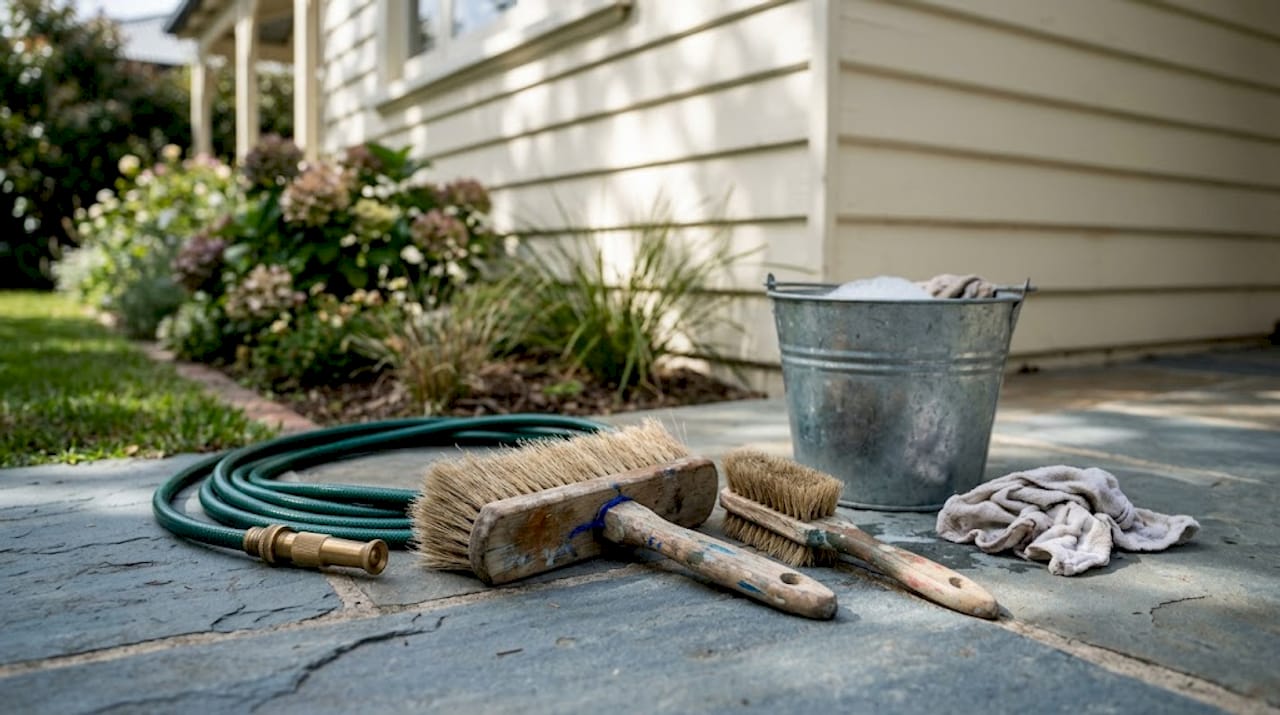
Pro Tip: Invest in a pair of natural bristle brushes in two sizes, one wider for broad surfaces and one narrow for mortar joints and decorative details. Always rinse with a gentle water flow, never a direct jet.
Step-by-step exterior cleaning process for period homes
Now you are ready for hands-on action. Follow these steps for safe, effective results on your heritage exterior.
- Prepare the site. Cover garden beds, remove loose furniture, and close all windows and doors. Lay drop sheets over any paving or surfaces below where water and debris will fall.
- Remove loose dust and dry debris. Use a soft dry brush to sweep away cobwebs, loose dirt, and surface dust before introducing any moisture. This prevents grime from being ground into surfaces when wet.
- Pre-wet the surface. Lightly dampen the area with a gentle hose spray before applying any cleaner. This reduces absorption of cleaning solutions into porous materials.
- Apply cleaner and agitate gently. Work your pH-neutral cleaner into the surface using a natural bristle brush in small circular motions. Do not scrub aggressively. Let the product do the work.
- Spot-treat biological growth. For lichen or moss, apply a heritage-safe biocide and allow it to dwell according to the product instructions before gently brushing away.
- Final rinse. Rinse thoroughly with a low-pressure, gentle flow from top to bottom. Ensure no cleaner residue remains in mortar joints or on timber surfaces.
The Heritage Victoria technical guides outline safe cleaning sequences and repointing practices that align with these steps.
| Scenario | Low-pressure water | pH-neutral detergent |
|---|---|---|
| General surface dust | Sufficient alone | Not required |
| Light organic staining | Sufficient alone | Optional |
| Heavier grime or soiling | Use as pre-wet only | Required |
| Biological growth | Pre-wet only | Required with biocide |
The majority of heritage damage seen by professionals comes from incorrect pressure or chemical use, not from dirt itself. Patience is the most valuable tool you have. Always tackle upper surfaces first so loosened dirt flows downward rather than back over areas you have already cleaned. For homes approaching a repaint, this process also forms the foundation of preparing for exterior repainting. For reference on how similar principles apply to other outdoor surfaces, paver maintenance techniques offer a useful parallel.
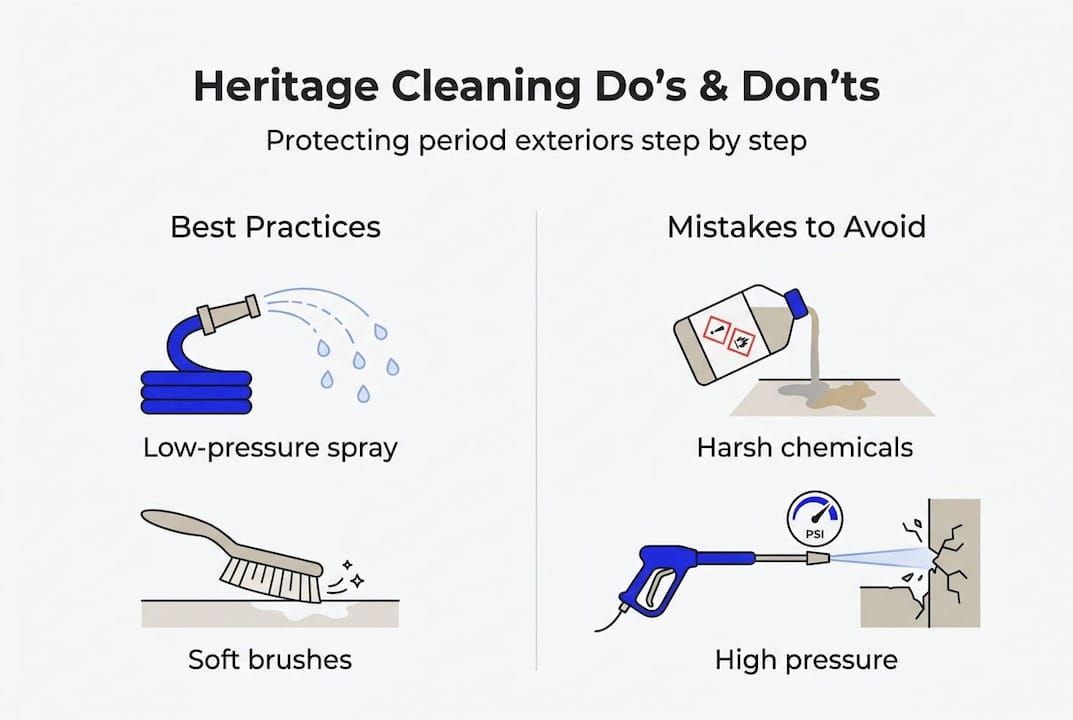
Pro Tip: Tackle upper surfaces first so dirt flows downward, and always work in manageable sections of around one square metre at a time.
Troubleshooting and common cleaning mistakes to avoid
After cleaning, check your results carefully and be alert for signs of trouble. Even a careful approach can reveal underlying issues that need professional attention.
The most common avoidable errors include:
- Over-wetting timber weatherboards, which causes swelling, paint lifting, and eventual rot
- Using unbreathable paints or sealants after cleaning, which traps moisture inside the wall
- Applying the wrong chemical to the wrong surface, such as an acid cleaner on lime render
- Scrubbing too hard on soft brick, which erodes the face and exposes the more porous interior
- Skipping the test patch, which leaves no margin for error if a product reacts badly
Heritage Victoria’s technical guides highlight these common cleaning issues and the methods to address them. Reviewing them before you start is time well spent.
After cleaning, look closely at mortar joints for any new discolouration or crumbling. Check painted surfaces for blistering or bubbling, which can indicate moisture has been forced into the substrate. Look for any new staining patterns that suggest water is tracking from a previously unnoticed source.
Knowing when to stop and call a professional is just as important as knowing how to clean. If you find visible cracks in render or brickwork, persistent biological growth that returns quickly, or structural staining that does not respond to gentle cleaning, these are signs that the work has moved beyond routine maintenance. The benefits of regular exterior cleaning are well established, but they depend on the work being done correctly. For guidance on caring for other structural elements around your property, retaining wall care tips offer a useful reference.
‘Where cleaning uncertainty exists, slow and gentle is always the safest path.’
A heritage expert’s take: Why slow, simple cleaning always wins
There is a tendency in DIY culture to equate effort with results. The harder you scrub, the more powerful the product, the better the outcome. With heritage exteriors, this logic causes real harm. The homes Sol Shine works on across Kew, Hawthorn, Camberwell, and Brighton frequently show damage that was not there before an owner attempted a thorough clean.
The truth is that heritage cleaning is not about transformation. It is about preservation. Low-pressure water, patience, and breathable products will outperform any shortcut every single time. Most of the damage we see professionally comes from mass-market advice that was written for modern materials and applied without adjustment to 120-year-old lime render or original hardwood weatherboards.
Less is genuinely more. A façade that looks 90 per cent clean after a careful session is in far better condition than one that looks pristine but has had its mortar joints eroded and its render saturated. The exterior cleaning safeguards that experienced heritage specialists follow are built around this principle. Slow down, use less product, apply less pressure, and your home will thank you for it.
Ready for expert help on your period home’s exterior?
If you want the confidence that your heritage home’s exterior receives specialist care, professional support is available. Cleaning a period home correctly is only the beginning. What follows, whether that is render repair, repointing, or a full exterior repaint, requires the same level of precision and respect for original materials.

Sol Shine works with homeowners across Melbourne’s inner east and bayside suburbs on large-scale heritage restoration and painting projects. From heritage painting services to full façade restoration, every project is handled under one roof with skilled, trustworthy craftsmanship. Browse our exterior painting archives to see completed heritage projects, and get in touch to discuss what your home needs.
Frequently asked questions
What is the safest cleaning method for Victorian brickwork?
Use low-pressure water and a soft natural brush, and avoid acids or abrasive chemicals entirely. Heritage Victoria guidelines are clear that gentle methods preserve the integrity of original masonry.
Can I use a pressure washer on stucco or weatherboards?
No. High-pressure washing on heritage exteriors risks permanent damage to fragile surfaces. Always use a low-pressure setting or gentle manual cleaning with a soft brush and mild solution.
What should I do if I find crumbling mortar or paint?
Stop cleaning immediately and consult a heritage professional. As Heritage Victoria advises, continuing to work over defects risks permanent damage to heritage fabric that may be impossible to reverse.
How often should I clean my period home’s exterior?
Routine, light cleaning annually or as needed is far better for heritage exteriors than infrequent, intensive sessions. Gentle maintenance keeps biological growth manageable and reduces the risk of embedded staining.


