
TL;DR:
- Proper house washing protects Melbourne’s heritage homes from mould, algae, and moisture damage that can be costly to repair. Soft washing with low pressure and biodegradable detergents is preferred for delicate surfaces to extend cleanliness and preserve paint and timber integrity. Regular professional cleaning, combined with scheduled maintenance, enhances property value while safeguarding structural and aesthetic features.
Many Melbourne homeowners treat exterior cleaning as a cosmetic task, something to consider before a garden party or an open inspection. But for those who own a Victorian or Edwardian home, the benefits of house washing go far deeper than appearances. Mould, algae, and grime accumulate quietly on timber façades, brick mortar, and decorative cornices, causing damage that is expensive to reverse. Melbourne’s humid climate accelerates this process faster than most people realise. This guide explains what professional house washing actually protects, which methods are appropriate for heritage surfaces, and how to maintain your home’s character and structural integrity season after season.
Table of Contents
- Why regular house washing matters for Victorian and Edwardian homes
- Soft washing vs pressure washing: choosing the right method for heritage homes
- How often should you wash your heritage home in Melbourne?
- Practical benefits of professional house washing for Melbourne heritage homeowners
- Best practices and expert tips for maintaining your heritage home’s exterior
- Rethinking house washing: what most Melbourne heritage homeowners miss
- Professional heritage home painting and exterior care in Melbourne
- Frequently asked questions
Key Takeaways
| Point | Details |
|---|---|
| Protects heritage structures | Regular house washing removes damaging mould and moisture that cause rot and paint decay in Victorian and Edwardian homes. |
| Soft washing preferred | Soft washing kills mould and algae at the root safely, extending cleaning results and preserving delicate heritage surfaces. |
| Recommended frequency | In Melbourne’s humid climate, washing every 6 to 12 months is ideal for maintaining a healthy exterior and avoiding buildup. |
| Enhances curb appeal | A clean exterior improves your home’s look and boosts property value, making it more attractive to buyers. |
| Professional expertise matters | Hiring experienced professionals ensures safe washing methods that protect your home’s heritage features and garden. |
Why regular house washing matters for Victorian and Edwardian homes
Heritage homes in Melbourne face a specific combination of threats. The humid climate, shaded verandahs, and aged timber surfaces create ideal conditions for mould, algae, and lichen to establish themselves year-round. What begins as surface discolouration becomes something far more destructive if left unaddressed.
Professional house washing removes mould and mildew that retain moisture against surfaces, preventing rot, cracking, and tile lifting while extending paint life by years. On a Victorian home with original weatherboards or ornate timber trim, this is not a minor maintenance point. Moisture trapped beneath mould growth softens timber fibres, compromises paint adhesion, and can introduce damp into wall cavities. The repair bill for rot remediation on heritage joinery runs into thousands of dollars, far exceeding the cost of routine cleaning.
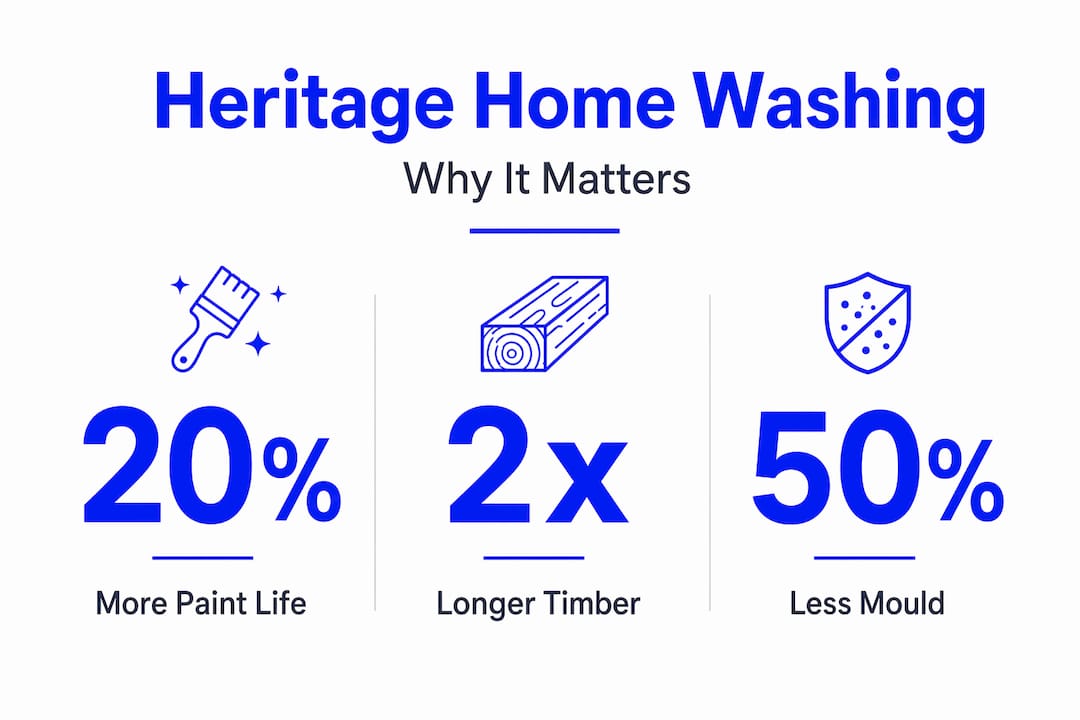
The heritage home exterior cleaning benefits extend beyond structural protection. A freshly washed façade restores the visual depth and colour accuracy of heritage paint schemes, allowing the architectural details that define these homes to be appreciated as intended.
Regular house washing delivers these key advantages for heritage homes:
- Removes biological growth before it penetrates brick mortar or timber grain
- Extends the life of exterior paint by maintaining a clean, stable substrate
- Improves curb appeal, which directly influences property value and buyer perception
- Protects decorative features including cast iron lacework, corbels, and render detailing
- Reduces moisture retention on surfaces susceptible to rising damp
“A clean exterior is not simply an aesthetic choice for a Victorian or Edwardian home. It is the first layer of structural defence, protecting paint, timber, and mortar from the cumulative damage of biological growth.”
Cleaning exterior surfaces protects heritage homes from a range of deterioration pathways that are easy to miss until the damage is already advanced.
Soft washing vs pressure washing: choosing the right method for heritage homes
Not all washing methods are equal, and for heritage homes this distinction is critical. The two primary approaches are soft washing and pressure washing, and they suit different surfaces and risk profiles.
Soft washing operates at low pressure, typically under 500 PSI, combined with biodegradable detergents that kill mould, algae, and lichen at the root level. It does not rely on mechanical force to dislodge growth. Instead, it uses a chemical process that eliminates biological matter without disturbing fragile mortar joints or stripping paint from Victorian-era timber. Soft washing for delicate surfaces like Victorian and Edwardian painted wood and brick extends cleaning results to 2 to 4 years by killing algae and mould at the root.
Pressure washing, by contrast, uses high-force water delivery to blast contaminants from surfaces. On robust modern concrete or newer masonry, this is effective. On heritage homes with aged brick, lime mortar, or painted timber, high-pressure water can erode mortar joints, force water behind cladding, and strip paint. Pressure washing prevents structural damage from mould and algae oxidation, but soft washing is preferred for heritage homes to avoid forcing water behind delicate siding.
| Feature | Soft washing | Pressure washing |
|---|---|---|
| Pressure used | Under 500 PSI | 1,500 to 3,000+ PSI |
| Best suited for | Painted timber, brick, render, heritage surfaces | Concrete, pavers, modern masonry |
| Mould elimination | Kills at root level with detergent | Removes surface growth only |
| Result longevity | 2 to 4 years | 6 to 12 months |
| Risk to heritage surfaces | Low | Moderate to high |
| Mortar and joint safety | Safe with correct application | Risk of erosion on lime mortar |
The benefits of exterior cleaning for heritage homes are maximised when the right method is matched to the surface. A Camberwell or Malvern home with original face brick and painted timber verandah posts requires a fundamentally different approach than a post-war rendered property.
Key considerations when choosing a washing method:
- Assess mortar condition before selecting pressure or volume settings
- Check paint type and age, as chalk-based heritage paints are particularly vulnerable to high pressure
- Identify shaded areas where mould density is highest and dwell time with detergent is most important
- Confirm the technician’s experience with exterior cleaning steps for heritage homes
Pro Tip: Ask your washing contractor to demonstrate pressure settings on a small test area before committing to a full façade clean. On Victorian-era painted brick, even moderate pressure can displace surface paint if the substrate is aged or chalky.
How often should you wash your heritage home in Melbourne?
Frequency is one of the most practical questions heritage homeowners ask, and the answer depends on both Melbourne’s climate and the specific characteristics of your property.
Homeowners should wash their exterior at least once a year, or every 6 to 12 months in high humidity areas like Melbourne, to prevent mould and algae buildup. Properties with significant tree canopy, north-facing shaded walls, or close proximity to bay or creek environments may need attention toward the more frequent end of that range.
Soft washing extends this interval. Because the detergent kills biological growth at the cellular level rather than simply removing it from the surface, regrowth occurs significantly more slowly. A home soft washed professionally can typically go 12 to 24 months before requiring the next full treatment, with spot maintenance addressing isolated areas in between.
A practical maintenance schedule for a Melbourne Victorian or Edwardian home looks like this:
- Annual professional wash covering all exterior surfaces, focusing on mould-prone areas including soffits, eaves, and shaded walls
- Post-winter inspection in September or October to identify any mould growth or paint lifting that developed through the wet season
- Gutter and downpipe clearance alongside each exterior wash to prevent overflow and water tracking down freshly cleaned walls
- Roof clean assessment every 18 to 24 months, combining with regular roof cleaning for heritage homes to prevent moss and lichen from migrating to the façade
- Paint condition review after each wash to identify areas where adhesion has weakened and early repainting may prevent deeper timber damage
Key figure: In Melbourne’s humid inner suburbs, unmanaged mould growth on an Edwardian weatherboard home can degrade exterior paint by 30 to 40 per cent faster than on the same home with annual professional washing. That acceleration directly shortens repaint cycles and increases long-term maintenance costs.
Pairing your washing schedule with paint maintenance essentials for Melbourne homes gives you a complete exterior care programme rather than a series of reactive repairs.
Practical benefits of professional house washing for Melbourne heritage homeowners
The house washing advantages extend well beyond a clean façade. Professional washing addresses several interconnected concerns that heritage homeowners often manage separately, at greater overall cost.
Structural protection. Mould and algae oxidise surface materials over time. On Victorian brick, this process darkens mortar and weakens the surface layer. On painted timber, it drives moisture into the grain, accelerating rot. Pressure washing prevents structural damage from mould and algae oxidation and boosts curb appeal and property value, making it one of the highest return-on-investment maintenance tasks available to Melbourne homeowners.
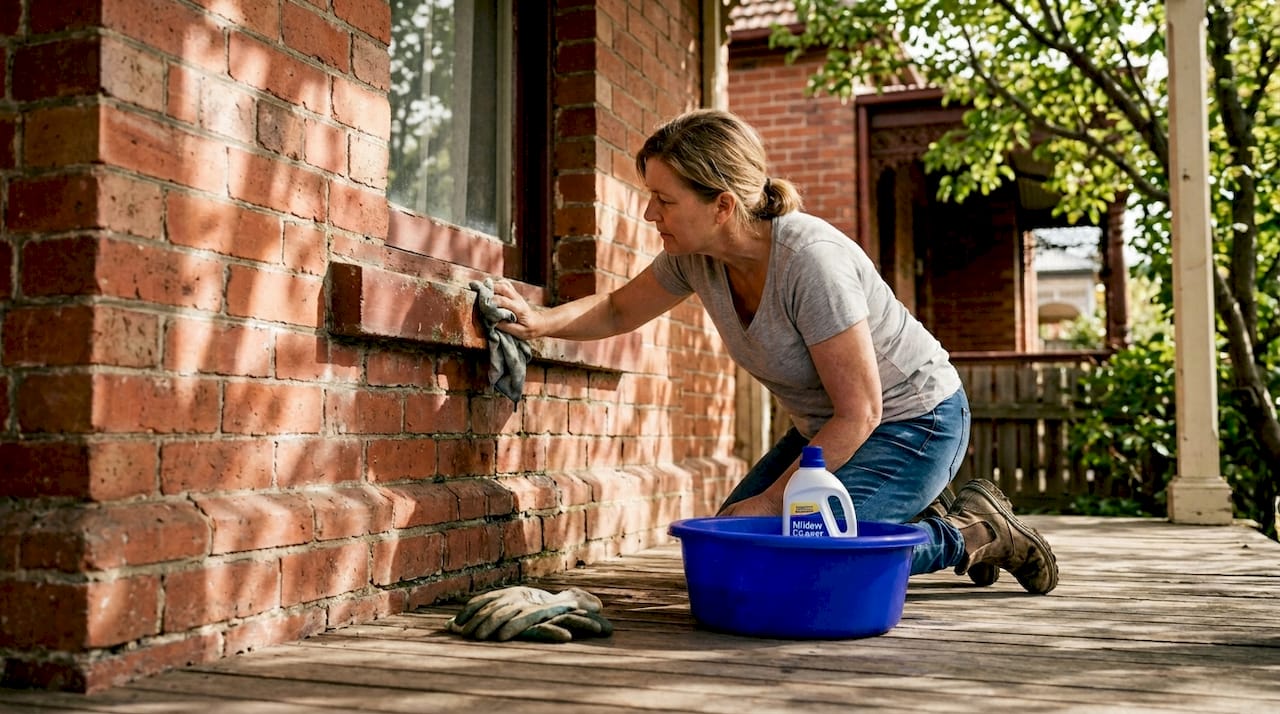
Paint preservation. Paint adheres to a clean, biologically stable surface. When mould colonises painted timber, it physically disrupts the bond between paint film and substrate. House washing using soft methods preserves paint adhesion and colour vibrancy, delaying repainting needs by several years. For a large Victorian with detailed timber trim, delaying a repaint cycle by two to three years represents a substantial financial saving.
Health and safety. Mould spores present a genuine health concern, particularly for children and those with respiratory sensitivities. Algae growth on paths, steps, and verandah floors creates slip hazards. A thorough professional wash eliminates both risks at once.
“For heritage homeowners, regular professional washing is not a maintenance luxury. It is one of the most cost-effective ways to protect the investment, the architecture, and the people who live in the home.”
Benefits of regular professional washing include:
- Extended time between repaints, reducing lifetime exterior maintenance costs
- Improved heritage home exterior cleaning boost value, supporting stronger sale prices
- Removal of allergens and mould spores from external surfaces and window surrounds
- Elimination of slip hazards on verandahs, steps, and paths
- Cleaner surfaces for paint inspection, allowing early detection of adhesion loss or timber movement
Pro Tip: Schedule your professional house wash in early autumn, after summer dust and pollen accumulation and before the wet Melbourne winter accelerates mould growth. This timing gives your exterior paint the best possible protection heading into the season when moisture damage is most likely.
Best practices and expert tips for maintaining your heritage home’s exterior
A professional wash is only as effective as the technique behind it. These practices distinguish a careful, heritage-appropriate clean from a treatment that removes surface grime but introduces new problems.
- Start with shaded areas. Soffits, eaves, and south-facing walls accumulate mould fastest. Prioritising these areas ensures the highest-risk zones receive maximum detergent dwell time.
- Keep pressure under 500 PSI on painted timber, face brick, and render. Victorian-era lime mortar is particularly vulnerable to mechanical erosion, and once mortar joints are compromised, water ingress follows quickly.
- Pre-treat shaded walls and eaves with eco-detergent, allowing 5 to 15 minutes dwell time before a low-pressure rinse, to ensure mould roots are killed without stripping heritage paint.
- Protect your garden. Pre-wet landscaping before soft washing and use biodegradable solutions safe for gardens to prevent chemical damage to plants and lawn.
- Detail drip lines, corners, and soffits. These areas collect dirt and retain moisture, and inadequate cleaning here means rapid re-contamination within weeks of the main wash.
- Rinse from the top down. This prevents dirty runoff from settling on already-cleaned lower sections of the façade, reducing streaking and uneven results.
Pro Tip: After washing, allow your exterior surfaces to dry fully before conducting a paint inspection. Wet surfaces mask adhesion problems, bubbling, and micro-cracking that become visible only once moisture has evaporated. A post-wash inspection is the ideal moment to identify areas where a fresh coat from an expert guide to cleaning heritage exteriors or repainting schedule would be most beneficial.
Rethinking house washing: what most Melbourne heritage homeowners miss
There is a persistent assumption among homeowners that more pressure equals a better clean. It is understandable. The immediate visual result of high-pressure washing looks impressive. Grime lifts. Surfaces look bright. But on a Hawthorn terrace or a Kew Edwardian villa, that visible result can conceal damage that accumulates over time.
Soft washing chemically kills biological growth at the cellular level, preventing mortar erosion common with high-pressure methods on heritage properties. The lime mortar used in Victorian and Edwardian construction was not designed to resist water delivered at 2,000 PSI. Once that mortar begins to erode, water enters wall cavities, damp spreads, and the cost of rectification escalates quickly.
Melbourne’s heavy rains and humidity make low-pressure washing essential to remove mould roots without damaging timber or painted surfaces. The city’s climate is genuinely demanding on heritage exteriors, and the cleaning method needs to account for that rather than compound the problem.
The other misconception worth addressing is frequency. More washes do not always mean better protection. Washing too often with inadequate technique can gradually strip paint films and destabilise mortar. The right approach is annual or biannual professional soft washing with proper dwell times and correct chemistry, combined with timely paint maintenance as needed. That combination delivers genuine, lasting protection.
Sol Shine’s view, drawn from years of working on Victoria’s finest Victorian and Edwardian homes, is that the homeowners who see the best long-term results are those who treat exterior washing and exterior painting as a coordinated programme rather than separate tasks. A clean surface ready for paint is fundamentally different from a clean surface that has been left exposed for another two years. Knowing the difference, and acting on it, is what separates preserved heritage homes from those that require costly exterior cleaning safeguards for heritage homes and full remediation further down the line.
Professional heritage home painting and exterior care in Melbourne
House washing and heritage painting work together as part of a complete exterior care programme. A professionally washed façade provides the ideal substrate for a high-quality repaint, maximising paint adhesion and extending the life of your new colour scheme. Without it, even premium paint applied over a contaminated surface will underperform.

Sol Shine specialises in heritage painting services for Victorian and Edwardian homes across Melbourne’s inner east and bayside suburbs, including Kew, Hawthorn, Camberwell, Brighton, and Malvern. Their team understands the specific demands of aged timber, lime render, and ornate heritage detailing. From exterior painting services to full façade restoration, every project is managed with the care these properties deserve. If you are planning your next exterior maintenance cycle, explore paint maintenance essentials to understand how washing and painting can be scheduled together for the best possible outcome.
Frequently asked questions
How often should I schedule house washing for my Victorian or Edwardian home in Melbourne?
You should have your home’s exterior professionally washed at least once a year, with high humidity areas like Melbourne often requiring attention every 6 to 12 months to prevent mould and algae buildup that damages paint and timber surfaces.
Is soft washing better than pressure washing for heritage homes?
Yes, soft washing is the preferred method for heritage homes. It uses low pressure combined with detergents that kill algae and mould at the root, delivering results that last 2 to 4 years without risking damage to delicate brick, mortar, or painted timber.
Can house washing help protect the paint and timber on my older home?
Absolutely. Soft washing preserves paint adhesion and colour vibrancy by removing biological growth before it compromises the bond between paint film and timber substrate, delaying the need to repaint by several years.
Will regular house washing increase my property’s value?
Yes. Clean homes sell faster and real estate professionals consistently rank exterior cleaning as one of the most cost-effective ways to prepare a heritage property for sale, with curb appeal directly influencing buyer perception and price.


