
TL;DR:
- Modern paint incorporates advanced technologies like self-cleaning, self-healing, and eco-friendly formulations, significantly extending durability and improving indoor air quality. These coatings can last up to 8–12 years, reduce maintenance costs, and maintain vibrant colors longer, especially when properly applied and protected from UV exposure. Selecting qualified professionals and ensuring surface readiness maximize benefits, making modern coatings a valuable investment for property longevity and aesthetic appeal.
Modern paint is not what it was ten years ago. The benefits of modern painting tech now extend well beyond colour choice, touching on durability, air quality, maintenance costs, and long-term property value. Yet most homeowners still choose paint the same way they always have, relying on a colour swatch and a price point. That approach leaves significant performance gains on the table. This article cuts through the confusion to show you exactly what advanced painting technology delivers, and how you can put it to work on your next renovation or investment property project.
Table of Contents
- Key takeaways
- What makes modern painting tech different
- Durability and maintenance: a real comparison
- Aesthetic and functional advantages
- Limitations and what to watch for
- How to get the most from modern painting tech
- My perspective on modern paint tech in Melbourne homes
- How Sol Shine applies modern painting tech
- FAQ
Key takeaways
| Point | Details |
|---|---|
| Modern paint lasts far longer | Advanced coatings can extend repaint cycles from 3–5 years to 8–12 years, reducing long-term costs. |
| Self-cleaning tech is real and tested | TiO2 nanoparticle paints break down dirt at a molecular level and have survived 40 abrasion cycles in lab testing. |
| Not all products perform equally | Look for ISO 22197 compliance when selecting photocatalytic or self-cleaning coatings for reliability assurance. |
| Upfront cost is offset by savings | Premium coatings carry a 15–35% price premium but deliver favourable returns within the first maintenance cycle. |
| Professional application matters as much as product choice | Surface preparation and application method directly determine how long modern coatings actually perform. |
What makes modern painting tech different
Most people think of paint as a covering. Modern paint is better understood as a coating system, one that blends design intelligence, sustainability, and material science to create surfaces that actively perform over time.
Here are the key technologies worth knowing:
- Nanoparticle and TiO2 self-cleaning coatings. Titanium dioxide particles embedded in paint work through photocatalysis and superhydrophilicity. In plain terms, UV light activates the coating to break down organic dirt at a molecular level, while water sheets off the surface carrying contaminants with it. The particles are invisible to the naked eye and the surface remains breathable.
- Low-VOC and eco-friendly formulations. Volatile organic compounds are the chemicals that off-gas from traditional paints and degrade indoor air quality for months after application. Low-VOC paints improve indoor air quality, reduce headaches and respiratory irritation, and are particularly worthwhile in bedrooms and children’s spaces.
- Self-healing and antimicrobial coatings. These paints contain microcapsules that release repair agents when the film is scratched, or antimicrobial compounds that prevent mould growth on interior walls. Both properties reduce visible wear and protect the substrate beneath.
- Thermal regulation coatings. Certain advanced formulations reflect heat rather than absorb it, meaningfully reducing cooling loads in summer. For Melbourne homes facing 35-plus degree days, this is more than a novelty.
- Digital colour-matching tools. Technology in painting has moved well beyond physical swatches. Digital shade visualisation tools now allow homeowners to see how a colour will read on their actual façade or room, under their specific light conditions, before a drop of paint is applied.
Pro Tip: Ask your painter whether the product they are specifying carries any independent performance certification, not just a manufacturer’s data sheet. Certifications like APAS approval or photocatalytic activity testing give you an objective measure of what the coating will actually do.
Durability and maintenance: a real comparison
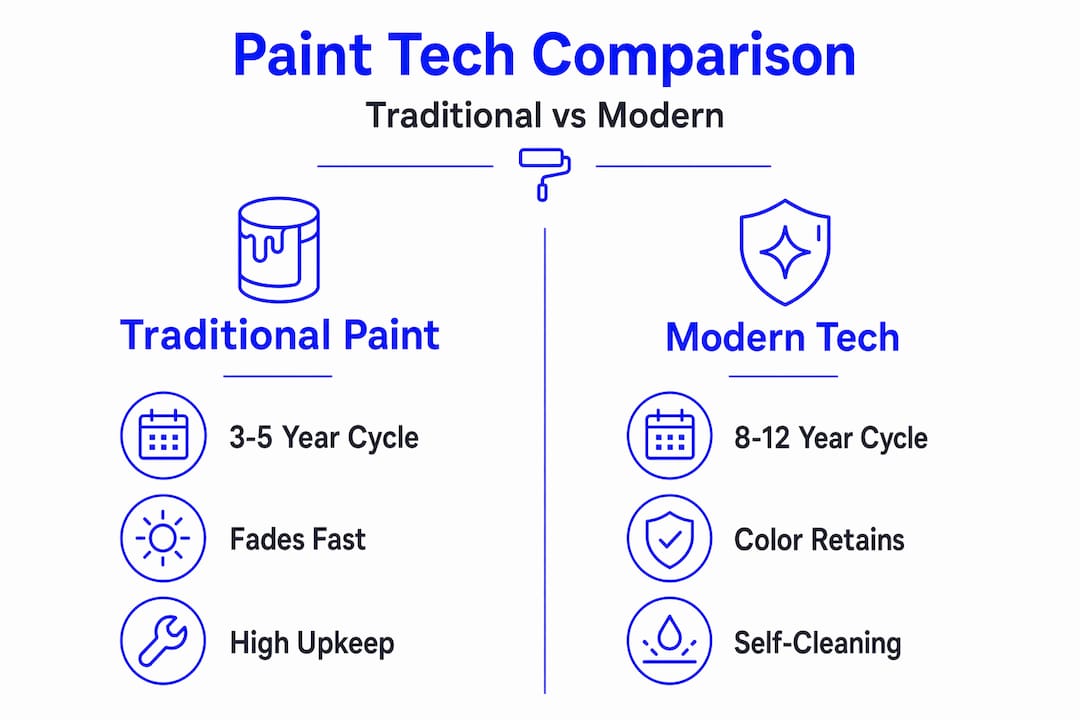
The most compelling advantages of modern painting sit in long-term performance. Traditional alkyd and acrylic paints in residential settings typically require repainting every three to five years. Advanced TiO2 coatings can extend paint lifecycle to 8–12 years, and the financial case stacks up quickly when you factor in labour, scaffold hire, and disruption costs.
| Feature | Traditional paint | Modern advanced coating |
|---|---|---|
| Repaint cycle | 3–5 years | 8–12 years |
| Self-cleaning ability | None | Active via photocatalysis |
| Abrasion resistance | Moderate | High (nanoparticle-enhanced) |
| Upfront cost | Lower | 15–35% premium |
| Long-term cost | Higher (frequent repainting) | Lower (reduced maintenance) |
| Indoor air quality impact | Can be significant (VOCs) | Minimal (low-VOC formulas) |
The scratch and abrasion resistance improvements are not theoretical. UCL researchers developed a TiO2 nanoparticle paint that withstands 40 abrasion cycles with sandpaper while remaining waterproof and self-cleaning. Historically, mechanical weakness was the biggest barrier to practical self-cleaning coatings. Pairing the coating with purpose-designed adhesives produces a surface tough enough for real-world use, including automotive and textile applications.
For homeowners, this means exterior walls, rendered façades, and weatherboard cladding can genuinely hold their appearance between repaints. You can read more about how paint durability factors play out specifically on Melbourne heritage homes, where substrates are often more variable and demanding.
Pro Tip: When specifying a self-cleaning or photocatalytic exterior coating, look for ISO 22197 compliance on the product data sheet. This standard tests photocatalytic activity under accelerated weathering conditions and is the most reliable independent benchmark available.
Aesthetic and functional advantages
Durability alone does not tell the full story. The impact of painting technology on aesthetics is equally significant, particularly for investors and heritage property owners who need their homes to hold visual appeal over time.
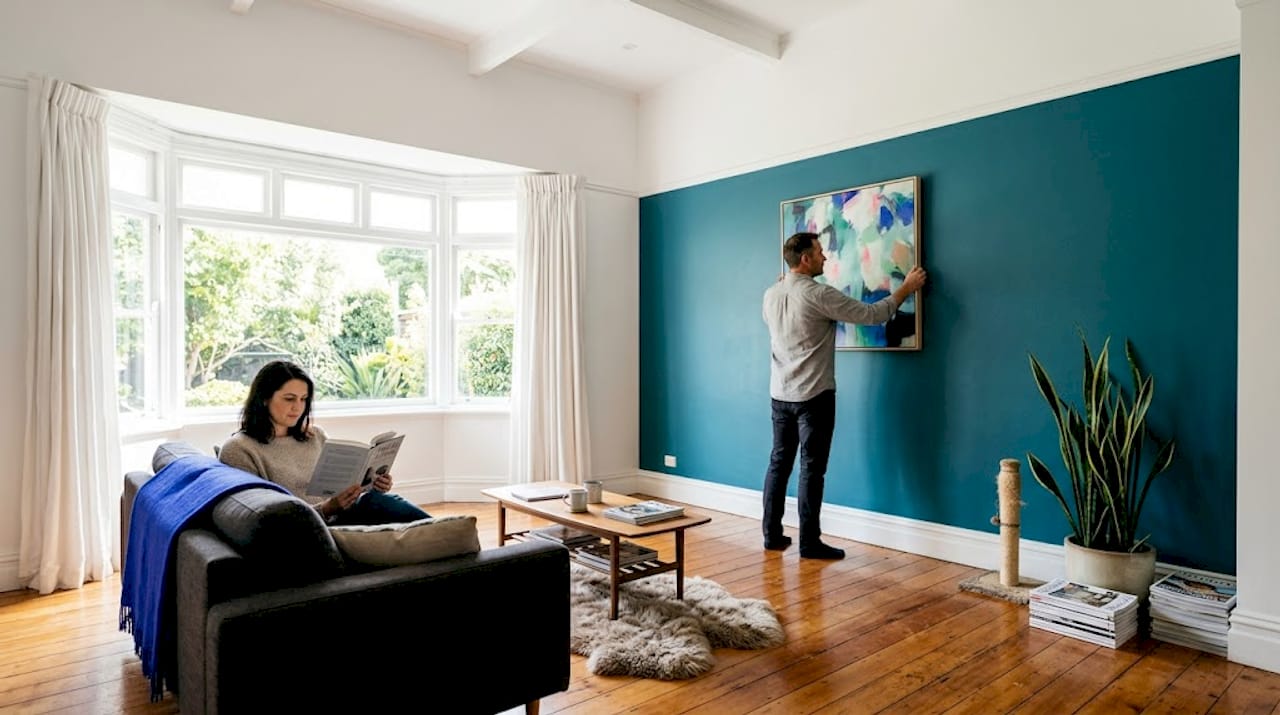
Modern nano-pigments maintain colour vibrancy far longer than conventional pigments. Exterior colours that once faded noticeably within two Melbourne summers now hold their depth and saturation through the UV intensity and coastal humidity of the region. For a heritage home in Camberwell or Brighton, where original period colour schemes are part of the property’s character and value, this matters considerably.
The functional benefits extend further:
- Air-purifying coatings containing TiO2 can reduce nitrogen oxide concentrations on interior and exterior surfaces, contributing to a cleaner living environment in high-traffic urban locations like Richmond or Fitzroy.
- Colour-shifting and iridescent finishes produced through multilayer nano-coatings offer bespoke interior design options that were previously the domain of commercial fit-outs. They are gaining ground in high-end residential renovations.
- Façade brightening effects in certain reflective coatings make rendered or brick exteriors appear cleaner and lighter for longer, without requiring pressure washing.
- Digital colour tools reduce the risk of costly mismatch between what you approved on a swatch and what reads on your walls at full scale. Several premium paint brands now offer augmented reality previews that read your room’s specific light conditions.
The combination of retained vibrancy, self-cleaning performance, and precision colour selection gives homeowners a genuine advantage in maintaining and lifting property presentation, which directly supports resale value and rental appeal.
Limitations and what to watch for
Modern painting technology is not without its caveats, and understanding them upfront prevents expensive disappointment.
-
Climate and UV exposure are critical variables. Self-cleaning coatings depend on photocatalysis, which requires UV light. Properties with heavily shaded north-facing walls or those under deep eaves will see reduced self-cleaning effectiveness. Sufficient rain cycles are also needed to wash away the broken-down particles. Dry periods reduce performance further.
-
Product quality varies significantly. Not every coating marketed as “self-cleaning” or “nano-enhanced” has been independently tested. Verify that the specific product has data behind it, not just marketing language. Ask for the technical data sheet and cross-reference against ISO 22197 or equivalent testing.
-
Upfront investment is higher. Photocatalytic coatings carry a 15–35% cost premium over standard exterior paints. The return is favourable over a maintenance cycle, particularly in coastal suburbs like Brighton or exposed elevated properties, but the budget allocation needs to reflect this from the outset.
-
Surface preparation is non-negotiable. The most advanced coating applied over poor substrate preparation will fail prematurely. Proper priming, crack filling, and surface profiling are prerequisites, not optional extras.
-
Professional application is required. Many high-performance coatings have specific application requirements around temperature, humidity, and film thickness. Applying them incorrectly negates the technology entirely. This is where surfaces prepared to last over 10 years starts with the tradesperson as much as the product.
How to get the most from modern painting tech
Knowing the technology exists is only part of it. Translating that knowledge into outcomes for your property requires deliberate choices at every stage of a project.
- Match the product to your location and property type. Coastal properties in Bayside suburbs deal with salt air and high UV. A self-cleaning TiO2 exterior coating is well suited there. A south-facing terrace in Fitzroy with heavy tree canopy is a different situation entirely, and a premium low-VOC acrylic with strong UV resistance may perform better overall.
- Work with painters who understand advanced products. Specifying a high-performance coating is straightforward. Applying it correctly is a trade skill. Ask your painter directly whether they have experience with the specific product you are considering, and whether they follow manufacturer application guidelines in full.
- Build a maintenance and inspection schedule. Even the best coatings benefit from a professional inspection every two to three years. Early identification of adhesion failure, micro-cracking, or moisture ingress allows for targeted repairs rather than full repaints. Detailed guidance on paint maintenance essentials is worth reviewing before you set your renovation budget.
- Prioritise eco-friendly options for indoor spaces. In living areas, bedrooms, and particularly children’s rooms, low-VOC antimicrobial paints deliver health benefits that standard paints simply cannot. The cost difference is modest, and the air quality improvement is immediate.
- For heritage and high-value properties, invest in professional specification. Victorian and Edwardian homes in Melbourne’s inner east and bayside suburbs have substrates, profiles, and environmental exposures that require specific product knowledge. Premium painting services that understand heritage materials will always outperform a generic quote.
Understanding how exterior paint longevity is affected by preparation, product, and application gives you the clearest picture of what your investment buys.
My perspective on modern paint tech in Melbourne homes
I have watched the conversation around paint technology change considerably over the past decade. Homeowners who once asked only about colour are now asking about VOC ratings, self-cleaning claims, and expected repaint cycles. That shift is a good one.
What I have noticed on actual projects, though, is that the gap between the product’s potential and the result on the wall almost always comes down to two things: preparation and specification. I have seen premium coatings fail within two years on surfaces that were not properly primed, and I have seen standard acrylic products outperform “advanced” alternatives simply because the application conditions were right. The paint choice matters, but it is not the whole story.
My genuine advice is to treat the technology as a tool, not a shortcut. If you are investing in a property in a coastal suburb or a heritage home with exposed rendered surfaces, a self-cleaning or extended-lifecycle coating is worth the premium. But pair that product choice with proper surface preparation and a painter who understands how it works. Emerging technologies like multifunctional nano-layers that combine thermal regulation and self-cleaning in a single film are genuinely exciting for Australian housing. We are not far from those becoming standard specification on premium residential projects. When they do, the homeowners who understood the foundations early will be best placed to benefit.
— Jarrad
How Sol Shine applies modern painting tech
Sol Shine brings the advantages of modern painting technology to heritage and contemporary homes across Melbourne’s inner east and bayside suburbs. Whether you are planning an exterior repaint on a Victorian weatherboard in Hawthorn or a full interior repaint in a Malvern period home, the product and application approach matters as much as the colour choice. Sol Shine’s team specifies premium, high-performance coatings suited to each property’s orientation, substrate, and maintenance expectations. Surface preparation is thorough and professional, giving every coating the foundation it needs to perform for its full expected lifespan.
Explore Sol Shine’s exterior painting projects and interior painting work to see the results these methods deliver across a range of Melbourne properties. For large-scale heritage restoration and painting projects, Sol Shine handles everything under one roof. Get in touch to discuss your property and receive a considered, detailed quote.
FAQ
What are the main benefits of modern painting tech?
Modern painting technology improves durability, extends repaint cycles, reduces maintenance frequency, enhances colour retention, and improves indoor air quality through low-VOC formulations. Self-cleaning coatings also reduce the need for manual cleaning of exterior surfaces.
How long do advanced paint coatings actually last?
TiO2 nanoparticle coatings can extend the paint lifecycle from the traditional 3–5 years to 8–12 years. Longevity depends on surface preparation quality, application method, and environmental conditions including UV exposure and rainfall.
Do self-cleaning paints work in all locations?
No. Self-cleaning coatings rely on UV light and rain cycles to activate and rinse surfaces. Properties in heavily shaded locations or dry climates will see reduced effectiveness. ISO 22197 compliance is the most reliable way to verify a product’s photocatalytic performance before specifying it.
Is the higher cost of modern paint technology worth it?
For most exterior applications, particularly in coastal or high-UV environments, the answer is yes. The upfront premium of 15–35% is typically recovered within the first maintenance cycle through reduced cleaning costs, fewer repaints, and lower scaffold hire expenses.
How do I find a painter who understands modern coating products?
Ask directly whether the painter has experience applying the specific product you are considering, and whether they follow the manufacturer’s application requirements for temperature, humidity, and film thickness. Painters who can speak to these details are the ones who have actually worked with advanced coatings, not just sold them.


