
TL;DR:
- Warranties on heritage home paint often have conditions that limit coverage and can be easily voided.
- Statutory warranties in Victoria provide legal protection but require proper documentation and prompt action.
- Proper surface preparation and skilled application are crucial, as warranties are no substitute for craftsmanship.
Many Melbourne homeowners assume a long product warranty on their period home’s paintwork is as good as a guarantee. The truth is more nuanced, and the fine print matters. Warranties covering 10 or even 15 years often contain exclusions that could leave you without recourse precisely when you need it most. For owners of Victorian and Edwardian properties in suburbs like Kew, Hawthorn, Brighton, and Malvern, understanding the full picture of statutory and manufacturer warranties is not just useful, it is essential to protecting a significant investment.
Table of Contents
- What is a paint warranty and why does it matter?
- What do typical paint warranties cover (and what do they exclude)?
- Statutory vs. manufacturer paint warranties in Melbourne
- How to get the most out of your paint warranty
- The reality of paint warranties for Melbourne’s period homes
- Trusted heritage painting and guidance for your Melbourne home
- Frequently asked questions
Key Takeaways
| Point | Details |
|---|---|
| Know your coverage | Paint warranties combine statutory and manufacturer protections that every Melbourne homeowner should understand. |
| Watch for exclusions | Many failures are not covered if prep, maintenance, or unusual conditions affect your heritage home. |
| Document everything | Keep thorough records and act early to enforce your warranty rights and keep your period property protected. |
| Statutory rights matter | Victoria’s statutory warranties provide legal backup that often surpasses commercial paint brand promises. |
What is a paint warranty and why does it matter?
A paint warranty is a formal promise about how a coating product or painting service will perform over a defined period. It can cover the paint itself, the labour involved, or both. Most homeowners encounter two types: the manufacturer warranty that comes with the tin, and the statutory warranty that Victorian consumer law automatically applies to qualifying building work.
Understanding the difference between these two types is the foundation of any smart approach to home warranty basics. Manufacturer warranties are brand-specific documents. They often look impressive at face value, but they come with a list of conditions that must be met before any claim is considered valid. Statutory warranties, on the other hand, exist regardless of what is printed on the tin or in a contract.
Statutory warranties in Victoria automatically apply to domestic building work and provide legal recourse that no manufacturer warranty can override or replace.
For period homes specifically, warranty coverage becomes even more critical. A Victorian terrace or an Edwardian weatherboard home in Fitzroy or Camberwell has surfaces that behave differently from modern substrates. Aged timber, lime render, and heritage-specific coatings all present unique challenges that a standard warranty may not fully address. Choosing long-lasting heritage paint that is suited to these surfaces is a critical first step, but understanding the warranty behind that choice is equally important.
Key things to look for in any paint warranty include:
- Whether it covers both materials and labour
- The specific surfaces and substrates included
- Maintenance obligations the homeowner must meet
- The claims process and required documentation
- Whether the warranty is transferable to a future owner
Statutory warranties in Victoria cover all domestic work over $16,000 and ensure proper workmanship, suitable materials, and legal compliance. For large-scale heritage restoration projects, which routinely exceed that threshold, statutory protections apply as a matter of law, not just goodwill.
Pro Tip: Request a written summary from your painter that lists every warranty applying to your project, including the product brand warranty, any workmanship guarantee, and the statutory coverage. Keep this with your project documentation from day one.
What do typical paint warranties cover (and what do they exclude)?
With the basics understood, it is essential to know precisely what you are getting and not getting when you rely on a paint warranty. Most premium exterior coatings, such as those from Dulux or Wattyl, promise coverage against a specific list of failures. But that list has two sides.
Common inclusions across most paint warranties:
- Fade resistance under normal UV exposure
- Resistance to blistering and bubbling
- Protection against peeling and flaking
- Defence against cracking under standard conditions
- Coverage for excessive chalking or powdering of the surface
Common exclusions that often surprise homeowners:
- Failures resulting from inadequate surface preparation before painting
- Damage caused by extreme weather events or flooding
- Application to surfaces not recommended by the manufacturer
- Roofs and certain speciality substrates
- Neglect of regular maintenance cleaning or touch-ups
This is where period home owners need to be especially alert. User reviews note failures if preparation is inadequate or on roofs, despite long warranty claims. A Victorian home with peeling weatherboards that were not properly stripped and primed before repainting is almost certain to fall outside manufacturer warranty coverage, regardless of the product’s advertised durability.
The comparison below illustrates how inclusions and exclusions typically stack up:
| Failure type | Typically covered? | Common condition applied |
|---|---|---|
| Peeling from poor adhesion | No | Requires proper prep documented |
| Fading from UV exposure | Yes | Must be within manufacturer’s rated use |
| Blistering from moisture | Conditional | Only if substrate was sound and dry |
| Cracking over old render | No | Substrate warranty is separate |
| Roof paint failure | No | Roofs often excluded entirely |
| Chalking beyond rated level | Yes | Applies to exterior products only |
| Damage from storm or hail | No | Weather events are excluded |
For owners of Edwardian and Victorian homes, the substrate issue is particularly significant. Aged lime render, porous brick, and softwood timber all require specialist preparation before painting. If that preparation is not completed to the manufacturer’s specification, or not documented, a warranty claim can be rejected even when the failure seems obvious. Understanding paint durability explained in the context of heritage surfaces helps set realistic expectations from the start.
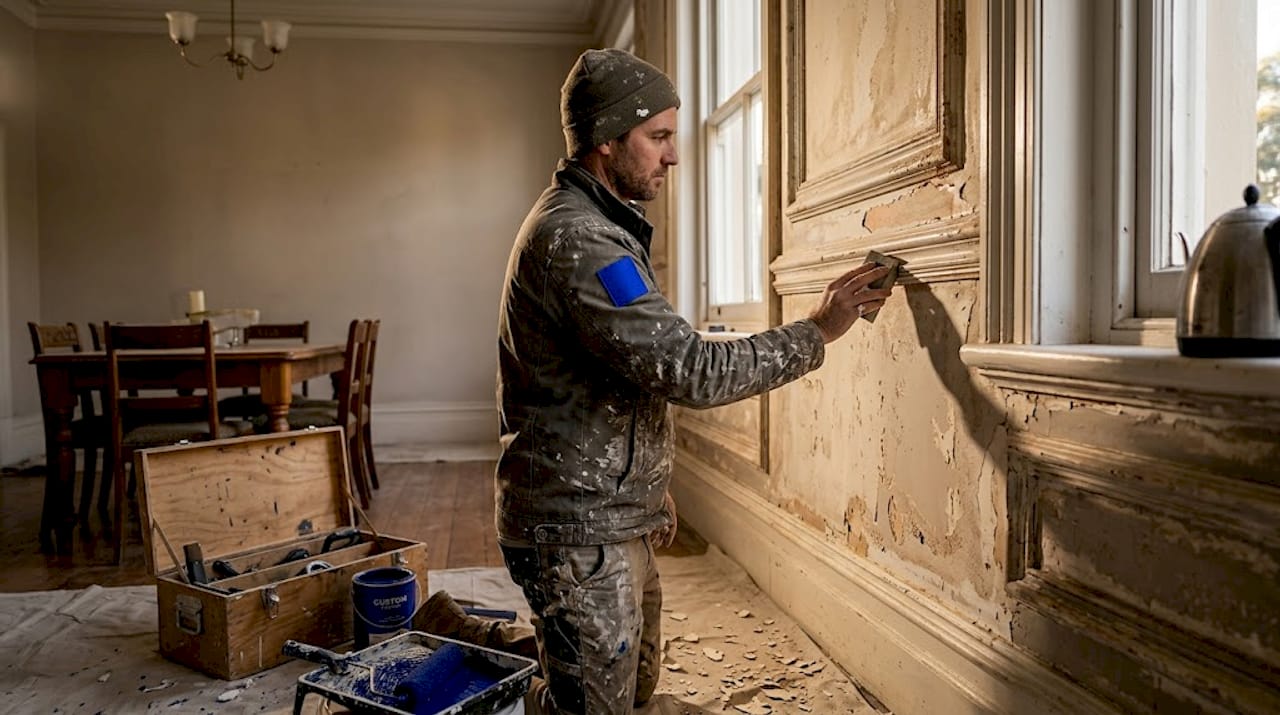
Pro Tip: Always ask your painter to document surface preparation in writing, including any priming or sealing steps taken. This documentation is often the deciding factor in whether a warranty claim succeeds or fails.
Always confirm whether the warranty you are being offered covers service warranty definitions for both labour and materials separately. Some warranties cover the paint product but leave the workmanship entirely to the painter’s discretion.
Statutory vs. manufacturer paint warranties in Melbourne
Having seen the fine print, it is important to directly compare the two warranty types affecting your project. They operate very differently, and understanding both gives you a much stronger position as a homeowner.
Statutory warranty: the legal baseline
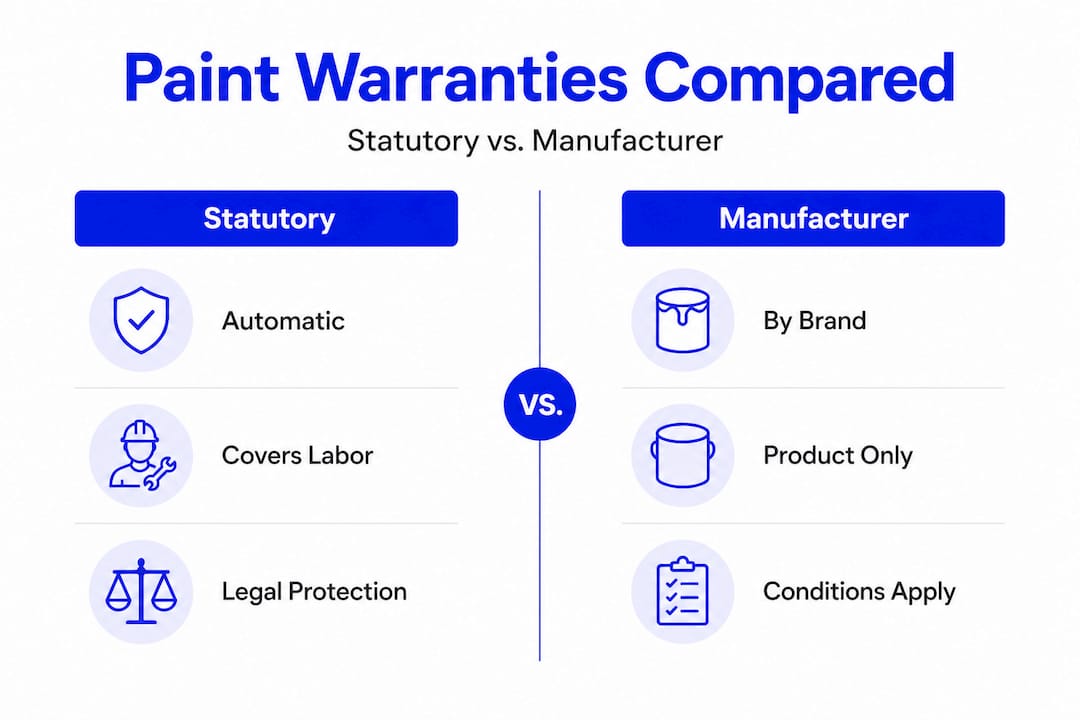
Statutory warranties in Victoria are not optional. They arise automatically when you engage a registered builder or tradesperson for domestic building work. Statutory warranties are valid for 2 years for non-structural defects and 6 years for structural defects, and can be transferred up to 10 years. This is significant. If you sell your Malvern terrace five years after a major restoration, the new owner can still rely on the statutory warranty for structural issues.
Manufacturer warranty: the product promise
Manufacturer warranties are contractual promises from the paint brand. They depend heavily on the conditions being met, including correct surface preparation, approved application methods, and ongoing maintenance. They are brand-specific and typically non-transferable unless explicitly stated otherwise.
| Feature | Statutory warranty | Manufacturer warranty |
|---|---|---|
| How it applies | Automatic by law | Must be registered or claimed |
| Duration (non-structural) | 2 years | Varies, often 10 to 15 years |
| Duration (structural) | 6 years | Usually not applicable |
| Transferable? | Yes, up to 10 years | Rarely, unless stated |
| Covers workmanship? | Yes | Sometimes, depends on product |
| Covers materials? | Yes | Yes, with conditions |
| Enforced by | Consumer Affairs Victoria | Manufacturer’s process |
Here is a practical numbered overview of what you need to know when comparing these warranty types for your heritage project:
- Register your manufacturer warranty as soon as the job is complete. Many homeowners miss this step and find their claim is denied because registration was never completed.
- Keep your statutory rights separate in your mind. Even if a manufacturer warranty expires or is voided, statutory protections may still apply depending on the nature of the defect.
- Check transferability before selling. Statutory warranty transfer can be a genuine selling point for a well-maintained heritage home. Review all paint warranty guides to understand your obligations during transfer.
- Understand the distinction between structural and non-structural defects. A failed paint system over cracked render may be classified differently from a simple surface peel.
- Seek clarity on paint durability factors specific to Melbourne’s climate, which includes high UV exposure, humid summers, and cold winter moisture.
Key fact: Victorian statutory warranty protections cover domestic work over $16,000, which means most significant heritage painting and restoration projects in Melbourne qualify automatically.
For buyers of heritage homes currently on the market, asking about outstanding warranties before settlement is a straightforward way to reduce risk and gain insight into the quality of past restoration work.
How to get the most out of your paint warranty
To finish, here is how to ensure all that legal protection actually supports your goals as a Melbourne homeowner. A warranty is only as useful as your ability to activate and enforce it. Practical documentation and proactive habits are what bridge the gap between a written promise and real protection.
Steps to maximise your warranty coverage:
- Request full written documentation at the start of the project. This includes the scope of work, all paint products to be used including brand, product name, and batch number, and the preparation steps to be completed before any coating is applied.
- Photograph the surface at each stage. Before painting, after preparation, after priming, and after each coat. This visual record is invaluable if a claim arises later.
- Keep all invoices, quotations, and delivery receipts. Proof of purchase for the specific products used is often required in a warranty claim. Without it, claims can be delayed or dismissed.
- Schedule annual maintenance inspections. Many manufacturer warranties contain a clause requiring the homeowner to maintain the painted surfaces. Light cleaning, prompt touch-up of minor chips, and addressing moisture sources are typically included in this obligation.
- Act immediately when you notice a problem. Do not wait to see if peeling worsens or a crack grows wider. Statutory warranties in Victoria are enforceable and offer substantial consumer rights, but delays in reporting can complicate claims.
- Follow a consistent maintenance routine suited to Melbourne’s variable climate. Painted timber surfaces on a Brighton home face different stresses than rendered masonry in Doncaster.
- Consult heritage paint maintenance tips tailored to Victorian and Edwardian homes. Generic maintenance advice often misses the nuances of aged substrates, lime-based renders, and heritage joinery.
Pro Tip: Create a simple property folder or digital file for your home that includes every painting project document. Batch numbers, product names, application dates, and painter contact details all belong in this record. If you sell, hand it over to the new owner. It demonstrates care and supports warranty transfer.
One area that is easy to overlook is the relationship between your painter’s workmanship guarantee and the manufacturer’s product warranty. These are separate promises. A painter who offers a two-year workmanship guarantee is covering their labour. The product manufacturer is covering the coating itself. Both can be relevant to a single defect, and you may need to pursue both if the cause is unclear.
For period homes in particular, the investment in quality preparation is directly tied to whether any warranty holds up in practice. A rushed job on a Northcote Victorian may technically use a premium product with a long warranty, but if the surface was not properly cleaned, sanded, and primed, neither the manufacturer nor the statutory warranty will save the result.
The reality of paint warranties for Melbourne’s period homes
Let’s step back. With all this in mind, here is the hard-won truth about paint warranties for your Melbourne period home. At Sol Shine, we have seen first-hand how much distance there can be between what a warranty document promises and what actually happens when something goes wrong.
Manufacturer warranties are drafted to protect brands as much as homeowners. The long headline figure, whether that is 10 or 15 years, is a marketing statement. The real value is buried in the conditions, and on complex heritage surfaces, those conditions are harder to satisfy than on a freshly plastered new build. While brands claim long warranties, user reviews note failures if prep is inadequate. Statutory warranties provide legal backup beyond manufacturer claims, but even those require you to act.
What actually protects your period home is skilled preparation, appropriate product selection, and a painter who understands the specific behaviour of heritage materials. The statutory framework gives you rights. A good warranty document gives you a process. But neither substitutes for getting the fundamentals right from the start.
The question to ask before any painting project is not “what is the warranty?” It is “how will you prepare this surface?” Understanding the difference between premium vs standard paint matters, but it matters far less than whether the person applying it knows how to treat aged timber, crumbling render, or a previously painted surface with multiple unknown layers.
Warranties are a safety net, not a foundation. The foundation is craft, knowledge, and honest communication before a brush is picked up.
Trusted heritage painting and guidance for your Melbourne home
If you are planning a significant painting or restoration project for your period home, working with a team that genuinely understands heritage surfaces makes every aspect of warranty coverage more meaningful.
Sol Shine specialises in heritage painting and full restoration for Victorian and Edwardian homes across Melbourne’s inner east and bayside suburbs. Every project is guided by thorough preparation, correct product selection, and clear documentation that supports both statutory and manufacturer warranty coverage. From the initial consultation through to the final coat, the process is designed to give you confidence and lasting results. Explore the heritage painting services Sol Shine offers, review the interior painting workflow to understand the preparation standards applied, or read about how quality restoration boosts value for heritage properties. Contact the team to discuss your project and receive clear, straightforward guidance on what your restoration will involve.
Frequently asked questions
How long does a statutory paint warranty last in Victoria?
Statutory paint warranties cover non-structural defects for 2 years and structural defects for 6 years in Victoria. Both timeframes begin from the date of practical completion of the building work.
Are paint warranties transferable when selling a Melbourne heritage home?
Statutory warranties can be transferred to a new owner for up to 10 years after the project is completed. Manufacturer warranties are generally not transferable unless the brand’s terms explicitly state otherwise.
What isn’t covered by most paint warranties?
Most paint warranties exclude damage from poor prep, extreme weather, roofs, or lack of maintenance. User reviews note failures if preparation is inadequate or surfaces such as roofs are involved, despite long warranty claims on the label.
What do I do if my paint starts peeling within the warranty period?
Document the issue with clear photographs and contact your painter promptly to report the defect. If the matter is not resolved satisfactorily, statutory warranty rights in Victoria are enforceable and provide a formal path to resolution through Consumer Affairs Victoria.


