
Choosing a paint labelled ‘eco-friendly’ feels like the responsible choice. But for Melbourne homeowners with Victorian or Edwardian properties, that label alone can be misleading. Non-breathable modern paints cause damp in more than 30% of pre-1919 properties, making the wrong paint choice a costly mistake. Sustainable painting for heritage homes goes well beyond low chemical content. It demands breathability, material compatibility, and a deep understanding of period architecture. This guide unpacks what genuine sustainability looks like for large-scale restorations across Melbourne’s inner east, bayside, and surrounding suburbs.
Table of Contents
- What does sustainable painting really mean for heritage homes?
- How do heritage paints compare? Limewash, mineral and modern options
- Why breathability matters: Damp, damage, and paint performance
- Matching paints to Melbourne’s Victorian and Edwardian details
- How to plan your large-scale sustainable painting project
- Finding Melbourne’s trusted sustainable heritage painting experts
- Frequently asked questions
Key Takeaways
| Point | Details |
|---|---|
| Breathability is essential | Only use paints with proven breathability to prevent costly damp damage in heritage homes. |
| Choose period-appropriate systems | Authentic colour and material choices protect both looks and value in Melbourne’s unique architecture. |
| Regular assessment prevents risk | Professional surveys and tailored preparation catch problems before they escalate in large projects. |
| Limewash vs mineral paint | Limewash requires more frequent maintenance, while mineral paints combine durability with period-true results. |
| Plan every step | A step-by-step restoration plan delivers sustainable results that stand the test of time. |
What does sustainable painting really mean for heritage homes?
Most homeowners associate sustainable painting with low-VOC (volatile organic compound) products. That is a good start, but it is only part of the picture. For a Victorian or Edwardian home, a truly sustainable paint system must also be breathable, compatible with original lime plaster and masonry, and capable of protecting the building fabric for decades.
“Breathable, low-VOC, conservation-grade paints are essential for heritage fabric integrity.”
Conservation paint systems, when correctly specified and applied, can extend a home’s lifespan by well over 100 years. Unsuitable systems, by contrast, may need replacing within 20 to 30 years and can cause irreversible damage to original materials in the process. Melbourne’s clay soils also contribute to seasonal movement in older structures, which places additional stress on rigid, non-breathable coatings.
Key factors that define sustainable painting for heritage homes include:
- Breathability: The paint must allow moisture vapour to pass through walls, preventing trapped damp.
- Material compatibility: Products must suit lime render, soft brick, and heritage timber without causing chemical reactions.
- Durability: A longer-lasting system reduces the frequency of repainting and the associated environmental impact.
- Heritage authenticity: Colours and finishes should align with period-accurate schemes and any applicable heritage overlays.
For a deeper look at how proactive care protects period properties, explore preventative painting for heritage homes and browse Sol Shine’s heritage painting guides for Melbourne-specific advice. You can also find broader eco painting guides that cover sustainable principles across different building types.
How do heritage paints compare? Limewash, mineral and modern options
Not all heritage-appropriate paints are equal. The three main options each carry distinct advantages and trade-offs, particularly in Melbourne’s variable climate.
| Paint type | Breathability (SD value) | Lifespan | Authenticity | Relative cost |
|---|---|---|---|---|
| Limewash | Excellent (SD <0.05m) | 3 to 5 years per coat | Highest | Lower upfront, higher long-term |
| Mineral silicate | Very good | 15 to 20 years | High | Higher upfront, lower long-term |
| Modern conservation-grade | Good | 8 to 12 years | Moderate | Mid-range |
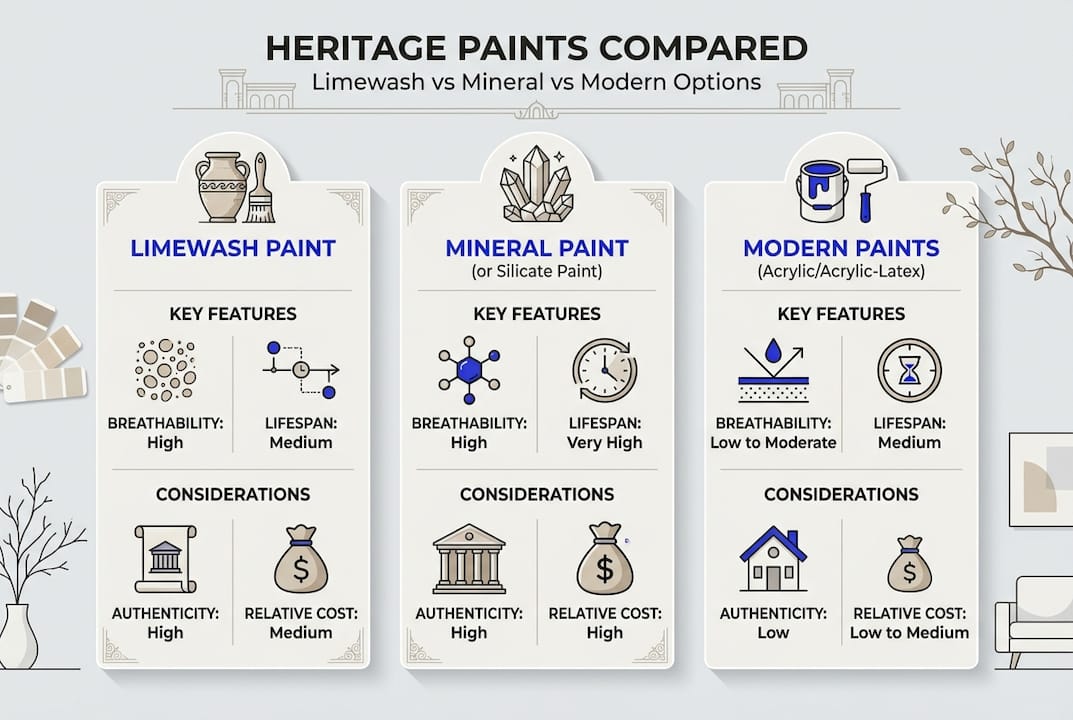
Limewash requires recoating every 3 to 5 years, while mineral paint lasts 15 to 20 years. Over a 20-year period, a 100m² limewash system can cost between £8,500 and £13,700 in total, factoring in repeated applications. Mineral silicate paint carries a higher upfront cost but delivers a lower total spend over time.
Key considerations for each option:
- Limewash suits properties seeking maximum authenticity and where regular maintenance is manageable. It bonds directly with masonry and improves with age.
- Mineral silicate is ideal for homeowners who want a long-lasting, low-maintenance result that still respects the building’s breathability needs. Learn more about long-lasting heritage paints for Melbourne conditions.
- Modern conservation-grade products offer a practical middle ground, particularly where heritage overlay requirements allow some flexibility. Compare options in Sol Shine’s guide to premium vs standard paints and review premium paint materials suited to period homes.
For a thorough technical overview, breathable paints explained provides useful background on how permeability ratings work in practice.
Pro Tip: Always request the SD (water vapour diffusion resistance) value from your paint supplier before committing to a product. For heritage masonry and lime plaster, an SD value below 0.1m is the benchmark to aim for.
Why breathability matters: Damp, damage, and paint performance
Breathability is not a technical nicety. It is the single most important performance factor for paint on a pre-1940s Melbourne home. Older walls were designed to absorb and release moisture naturally. Seal that process with a non-breathable coating and moisture becomes trapped, leading to a cascade of problems.
60% of heritage damage stems from moisture-related issues, and an SD value of 0.01 to 0.05m is considered ideal for breathable heritage coatings. The consequences of getting this wrong are significant.
| Moisture-related issue | Likelihood with non-breathable paint | Typical repair cost range |
|---|---|---|
| Paint peeling and blistering | Very high | $500 to $3,000 |
| Timber rot in window frames | High | $2,000 to $8,000 |
| Render delamination | Moderate to high | $3,000 to $15,000 |
| Structural damp penetration | Moderate | $10,000 and above |
“Non-breathable paints cause damp in more than 30% of pre-1919 properties.”
Before any large-scale repaint, a structured assessment process is essential. Follow these steps:
- Commission a professional moisture survey to identify existing damp and its source.
- Conduct a substrate analysis to confirm whether lime, cement, or mixed render is present.
- Arrange a paint analysis to identify any prior incompatible coatings that must be removed.
- Strip non-breathable coatings carefully, using methods that do not damage the underlying material.
- Allow adequate drying time before applying any new paint system.
Proper preparing of heritage surfaces is the foundation of a lasting result. Understanding paint durability factors specific to Melbourne’s climate will also help you set realistic expectations. It is equally important to clean surfaces before painting to remove contaminants that compromise adhesion.
Pro Tip: If you notice paint bubbling or peeling within two years of a previous repaint, this is a strong indicator that a non-breathable coating was applied over a breathable substrate. Do not simply repaint over the problem.
Matching paints to Melbourne’s Victorian and Edwardian details
Melbourne’s heritage streetscapes are defined by their detail. Ornate fretwork, decorative timber bargeboards, double-hung sash windows, and rendered façades each require a considered approach. Choosing the right paint is only part of the task. Applying it correctly to the right surfaces, in the right colours, is equally important.
Period-accurate colour schemes vary by era and style:
- Victorian homes (1840s to 1900): Deep, rich tones including burgundy, forest green, and cream, often with contrasting trim colours to highlight decorative elements.
- Edwardian homes (1901 to 1915): Lighter, more refined palettes featuring cream, soft red, and warm white, reflecting the era’s shift toward airiness and natural light.
- Californian bungalows (1910s to 1930s): Earthy tones such as ochre, terracotta, and olive, suited to their more horizontal, nature-inspired forms.
Using period palettes and conducting in-house restoration for weatherboards and timber repairs ensures colour and material decisions are made together, not in isolation. A professional paint analysis and survey can prevent up to 40% of problems in properties with a history of incompatible painting.
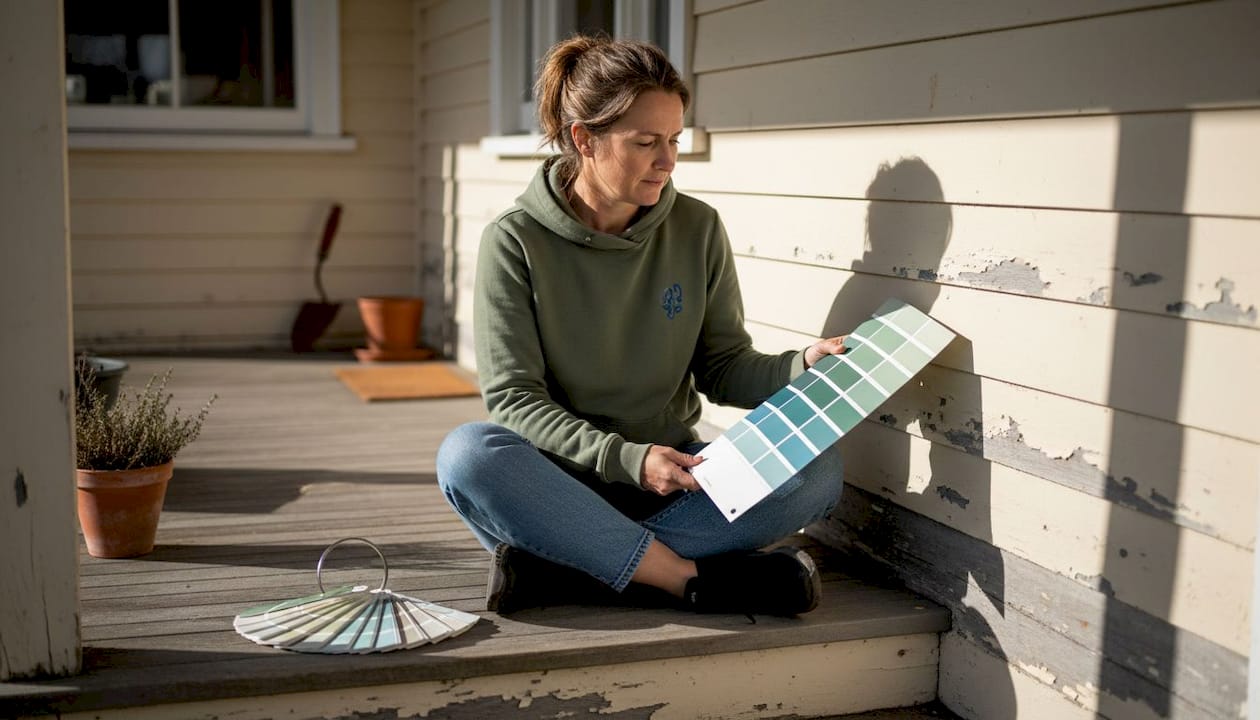
For heritage timber trim and fretwork, high-gloss enamel remains the most durable and period-appropriate finish. It resists moisture, holds its sheen, and highlights the craftsmanship of original joinery. Off-the-shelf colour selections rarely capture the nuance of an authentic heritage scheme. A custom colour study, matched to your home’s era and existing materials, delivers a far more refined result.
For properties with deteriorating window frames, Sol Shine’s guide to Victorian window repairs outlines the repair process in detail. Ongoing painting maintenance for heritage homes is also worth planning from the outset. Thorough pre-paint washing can extend paint life by up to 30%, making it a worthwhile step before any repaint.
Pro Tip: Before finalising your colour scheme, request a physical sample board painted on the same substrate as your home’s exterior. Colours shift significantly between a paint chip and a rendered or weatherboard surface in natural light.
How to plan your large-scale sustainable painting project
A large-scale heritage repaint or restoration is a significant investment. For Melbourne homeowners, projects of this scale typically involve multiple trades, careful sequencing, and a clear understanding of what needs to happen before a brush touches the wall.
Follow this structured approach:
- Commission a heritage survey. Identify the building’s materials, existing coatings, moisture levels, and any structural issues before planning begins.
- Conduct a risk analysis. Assess which areas are most vulnerable to damp, movement, or paint failure based on the survey findings.
- Complete all structural and repair work first. Render repairs, brickwork, window restoration, and weatherboard replacement must precede any painting. Surface prep prevents re-cracking and in-house repair for weatherboards and windows is essential to a lasting outcome.
- Select your paint system. Choose products based on substrate compatibility, breathability ratings, and heritage overlay requirements.
- Apply in correct sequence. Primer, undercoat, and finish coats must be compatible with each other and with the substrate.
- Document everything. Keep records of all products used, including batch numbers and SD values, for future reference.
For interior projects, Sol Shine’s interior painting workflow provides a step-by-step guide. If weatherboards are beyond repair, the weatherboard replacement guide covers material selection and installation. A well-executed restoration also boosts property value for historical homes valued above $2 million.
Pro Tip: Avoid the temptation to shortcut surface preparation to save time or cost. In heritage restoration, preparation accounts for the majority of a project’s long-term success. Rushing this stage is the most common cause of premature paint failure.
Finding Melbourne’s trusted sustainable heritage painting experts
To ensure your restoration delivers lasting, authentic results, expert help can be the most sustainable choice. Sol Shine specialises in large-scale heritage painting and restoration across Melbourne’s inner east, bayside, and surrounding suburbs, including Kew, Hawthorn, Camberwell, Brighton, and Malvern. Every project is managed under one roof, from initial colour studies and substrate assessment through to specialist repairs and final finish coats.
Whether your home needs a full exterior repaint, timber restoration, render repair, or custom joinery work, Sol Shine’s team brings the skills and heritage knowledge to match. Explore Sol Shine’s heritage painting services to understand the full scope of what is available, or browse completed interior painting projects for inspiration. To discuss your property’s specific requirements and book a consultation with Melbourne’s sustainable painting experts, get in touch with the Sol Shine team directly.
Frequently asked questions
What makes a paint sustainable for a heritage home?
A sustainable paint for heritage homes is highly breathable, low in VOCs, and designed to protect period materials. Breathable, low-VOC paints prevent damp and damage to traditional lime plaster, masonry, and timber substrates.
Is limewash or mineral paint better for my Victorian house?
Limewash is the most authentic option but requires more frequent maintenance, while mineral paint lasts considerably longer and still protects Melbourne’s heritage materials. Limewash needs recoating every 3 to 5 years, whereas mineral paints last 15 to 20 years.
Why can’t I use standard eco paints on heritage homes?
Most standard eco paints lack sufficient breathability and can trap moisture within older walls, risking damp and structural damage. Non-breathable modern paints cause damp in more than 30% of pre-1919 properties.
Do I need a professional assessment before repainting?
For large-scale Melbourne heritage projects, a professional pre-paint survey is strongly recommended to avoid costly errors. A professional survey can prevent problems in up to 40% of heritage properties with a history of incompatible prior coatings.
How often will I need to repaint a heritage home sustainably?
Expect limewash to require recoating every 3 to 5 years, while mineral paints provide up to 15 to 20 years before touch-up is needed. Recoating frequency depends on the paint system chosen and the level of exposure to Melbourne’s weather conditions.
Recommended
- Why preventative painting preserves Melbourne heritage homes
- Heritage home painting maintenance tips for Melbourne
- Heritage paint lasting 10+ years: Melbourne 2026 guide
- Premium paint vs standard: best for Melbourne heritage homes
- Why clean before painting: ensure lasting exterior results – white-diamond-pressure


