
TL;DR:
- Traditional paint methods use natural, breathable materials like limewash and distemper to preserve heritage surfaces. Modern paints rely on synthetic formulas, offering faster application, greater durability, and lower VOC emissions. Choosing the right approach depends on substrate compatibility, long-term maintenance, and heritage preservation needs.
Traditional paint methods use natural, breathable materials applied by hand, while modern paint methods rely on synthetic formulations and advanced application technologies designed for speed and durability. For homeowners weighing up a renovation or heritage restoration, the distinction between tradition vs modern paint methods is more than aesthetic. It directly affects substrate health, maintenance frequency, indoor air quality, and long-term cost. This guide covers the key differences, practical trade-offs, and how to choose the right approach for your specific project.
What are traditional painting methods and materials?
Traditional painting techniques centre on natural binders and mineral pigments. The most common include limewash, distemper, and oil-based paints. Each was developed to work with the building materials of its era, particularly lime plaster, stone, and timber.
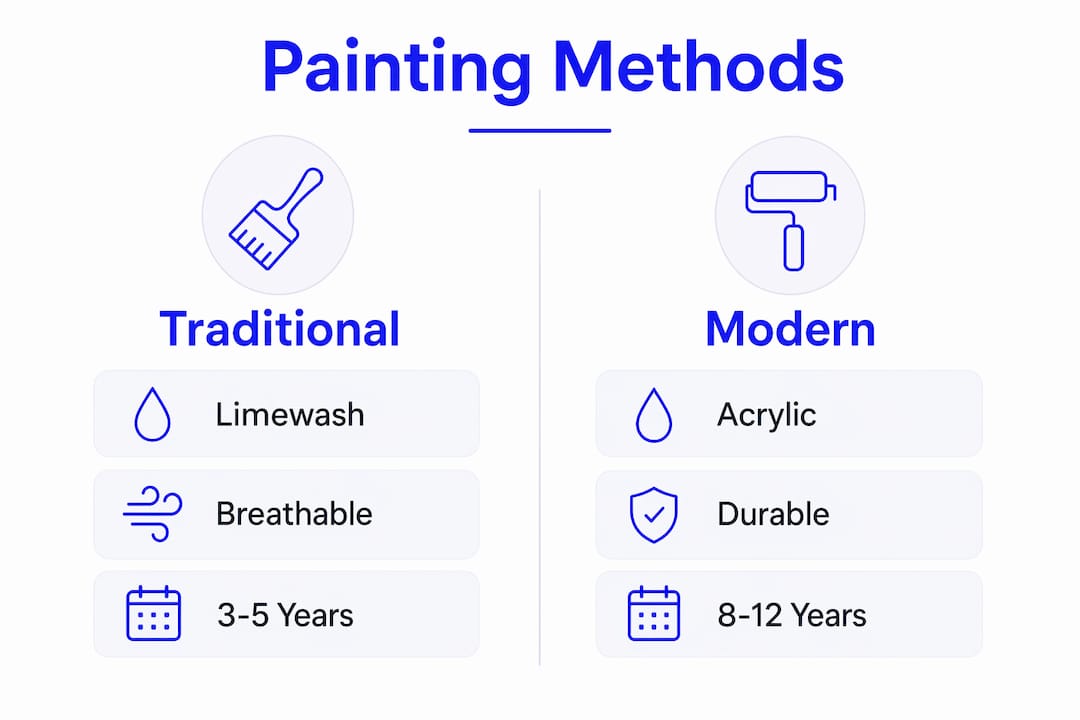
Limewash is made from slaked lime and water, sometimes with natural pigments added. It bonds chemically with lime plaster and masonry, creating a finish that breathes with the wall. Breathable paints for lime walls have Sd values around 0.05–0.2 m, which is compatible with lime plaster substrates. That matters because modern vinyl emulsions trap moisture in old lime walls, leading to condensation and decay.
Distemper uses chalk, water, and a natural binder such as animal glue or casein. It produces a soft, matte finish well suited to Victorian and Edwardian interiors. Oil-based paints, traditionally made with linseed oil, offer a harder, more washable surface and were the standard for timber joinery and skirting boards for over a century.
| Paint Type | Durability | Breathability | Washability |
|---|---|---|---|
| Limewash | 3–5 years exterior | Very high | Low |
| Distemper | 5–10 years interior | High | Low |
| Oil-based (traditional) | 7–10 years | Low | High |
Application follows a disciplined process. Limewash requires multiple thin coats, with recoating possible in as little as four hours and coverage around 50m² per 5L per coat. Rushing the process or applying too thickly produces uneven colour and poor adhesion.
Pro Tip: When applying limewash to an exterior façade, avoid direct sunlight and temperatures above 30°C. Rapid drying causes the lime to carbonate unevenly, leaving patchy results that no second coat will fix.
Traditional methods excel on heritage surfaces, particularly the lime-plastered walls of Melbourne’s Victorian and Edwardian homes in suburbs like Kew, Hawthorn, and Camberwell. Using the wrong product on these substrates is not just an aesthetic mistake. It causes structural damage over time.
What defines modern painting methods?
Modern painting methods are built on synthetic chemistry and purpose-engineered application technology. Acrylic emulsions are the most widely used product category today, offering fast drying times, broad colour ranges, and good washability. Silicate paints and advanced mineral paints occupy a middle ground, offering better breathability than standard acrylics while retaining the durability advantages of modern chemistry.
VOC regulations have driven reformulation of paints, reducing emissions by approximately 60% over two decades. Low-VOC flat finishes now sit under 50 g/L, and zero-VOC products are widely available from brands including Dulux, Taubmans, and Haymes. That shift has made modern paints considerably safer for indoor use than their predecessors.
Key characteristics of modern paint products include:
- Fast drying times: Most acrylic emulsions are recoatable within 2–4 hours.
- Low maintenance: Washable surfaces resist staining and scuffing better than traditional finishes.
- Colour consistency: Factory-tinted products deliver repeatable results across large areas.
- Low-VOC and zero-VOC options: Reduced off-gassing during and after application.
- Spray-compatible formulations: Viscosity is engineered for airless spray equipment.
However, zero-VOC labelling can be misleading. Colorants added during tinting introduce additional VOCs, and emissions can persist for weeks despite low-VOC claims on the tin. Homeowners should treat zero-VOC as a starting point, not a guarantee.
Pro Tip: Always check the VOC rating after tinting, not just the base paint. A white base rated at 1 g/L can exceed 50 g/L once a deep colour is added.
The advantages of modern paint technology are real, particularly for new construction, drywall surfaces, and exterior cladding on contemporary homes. The challenge is knowing when those advantages apply and when they work against you.
How do traditional and modern methods compare?
The most practical comparison between painting styles comes down to four factors: durability, maintenance frequency, breathability, and VOC impact.
Limewash service life outdoors is typically 3–5 years, with sheltered or interior applications lasting 5–10 years. Modern acrylic exterior paints from Dulux or Haymes typically carry 10-year warranties on prepared surfaces. That gap is significant for homeowners weighing up long-term costs.
Breathability is where traditional methods hold a clear advantage on old substrates. Matching paint chemistry to substrate drying is more important than marketing claims. Highly breathable coatings have Sd values at or below 0.05 m. Applying a low-breathability modern paint to a lime-plastered wall traps moisture inside the substrate, causing blistering, peeling, and eventually structural damp. The impact of humidity on paint is a factor that catches many DIYers off guard.
| Factor | Traditional Methods | Modern Methods |
|---|---|---|
| Durability (exterior) | 3–5 years | 8–12 years |
| Maintenance frequency | Higher | Lower |
| Breathability | High (Sd ≤ 0.2 m) | Low to moderate |
| VOC emissions | Low to negligible | Low to moderate (varies) |
| Substrate compatibility | Lime plaster, masonry | Drywall, fibre cement, most surfaces |
Ventilation after painting is essential regardless of paint type, with bulk off-gassing occurring in the first 24–72 hours. Low-odour modern paints still require airing out for health. Planning ventilation is not optional. It is a basic safety step for any painted interior. For more detail on VOC considerations for heritage homes, the substrate type and room size both affect how long you need to ventilate.
Which application techniques suit each method?
The brush and roller remain the primary tools for traditional painting techniques. They allow the painter to work material into the substrate, control coat thickness, and maintain the recoat discipline that lime and distemper finishes demand. For small to medium rooms and heritage surfaces, brush and roller application produces the most reliable results.
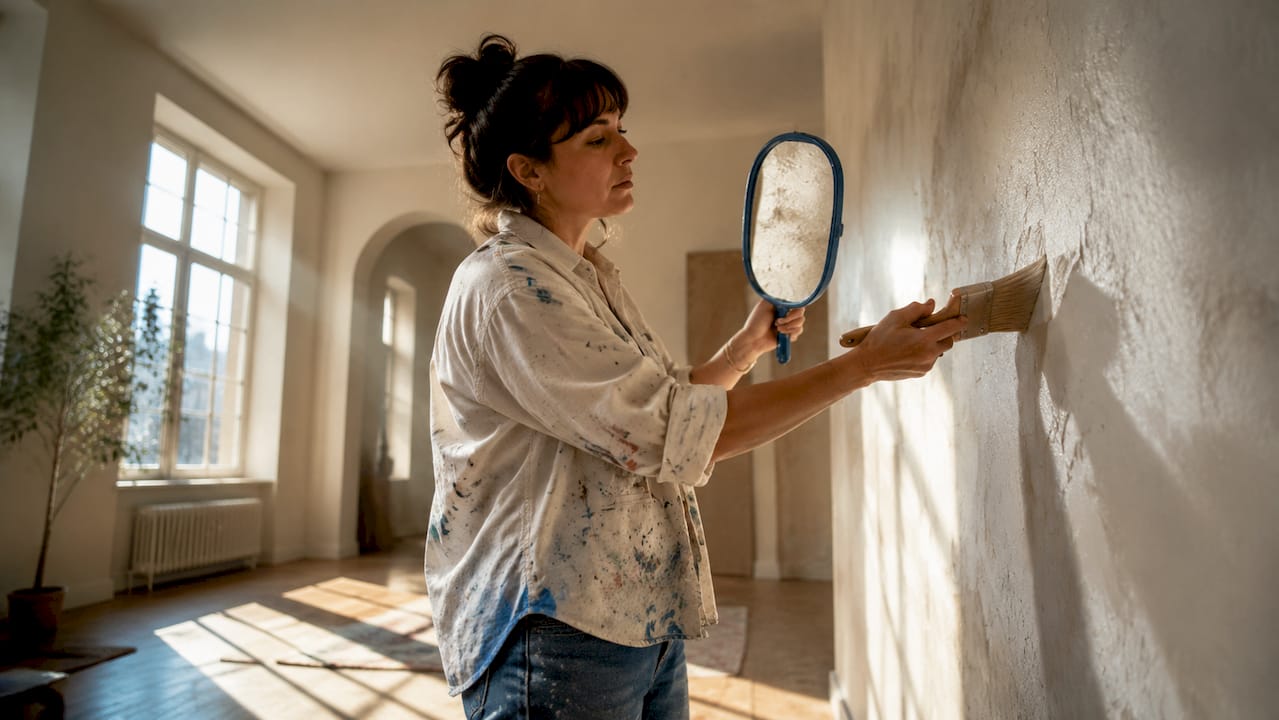
Spray application changes the economics of larger jobs. Spray can be 3–4 times faster than brush or roller, but material use increases by 20–40% due to overspray. Masking and setup typically add 30–60 minutes per room. That setup time often negates the speed advantage in furnished or complex interiors.
Practical guidance for choosing your application method:
- Use brush and roller for heritage surfaces, detailed joinery, and rooms with furniture or fixed fittings that are difficult to mask.
- Use spray application for large open areas, new construction, exterior cladding on unoccupied properties, and ceiling work where speed matters.
- Combine both on large heritage projects: spray the broad field coats and brush the heritage timber trim, window reveals, and decorative mouldings.
- For DIY projects, roller application on walls and a quality brush on trim is the most forgiving combination. Spray equipment requires practice and proper respiratory protection.
- Always mask generously before spraying. Poor masking in occupied rooms often negates the speed advantage entirely.
Safety during application applies to both methods. Wear a P2 respirator when spraying, and ensure cross-ventilation is active throughout the job. Even traditional limewash is alkaline and requires eye and skin protection during mixing and application.
How to choose the right method for your home
Selecting between traditional and modern approaches requires an honest assessment of your home, your timeline, and your tolerance for ongoing maintenance. Work through these considerations in order.
- Identify your substrate. Lime plaster, stone, and old brick require breathable coatings. Drywall, fibre cement, and modern render accept standard acrylic emulsions. Getting this wrong causes paint failure within months.
- Assess the heritage significance of the property. Victorian and Edwardian homes in Melbourne’s inner east and bayside suburbs often carry heritage overlays. Traditional finishes preserve the visual and material character of these buildings in ways that modern paints cannot replicate.
- Consider your VOC tolerance. If you have young children, respiratory conditions, or limited ventilation, prioritise low-VOC paint options and plan for 48–72 hours of thorough ventilation post-application regardless of the product chosen.
- Factor in your maintenance willingness. Traditional finishes require more frequent recoating but are easier to repair locally without visible joins. Modern paints last longer but can be harder to touch up without repainting entire walls.
- Set a realistic budget. Traditional materials like limewash are often less expensive per litre, but the labour involved in multiple thin coats and careful application increases the overall project cost. Modern spray-applied finishes can reduce labour time on large areas.
- Match your skill level to the method. Limewash and distemper are unforgiving of rushed application. Modern acrylic emulsions are more tolerant of DIY technique, making them the practical choice for first-time renovators.
For heritage homes, preserving the painted fabric of the building is as much about substrate protection as it is about appearance. The right paint choice extends the life of the structure itself.
Key takeaways
The most reliable approach to tradition vs modern paint methods is to match the paint chemistry to the substrate first, then factor in durability, maintenance, and health requirements.
| Point | Details |
|---|---|
| Substrate drives the decision | Lime plaster requires breathable coatings; modern drywall suits acrylic emulsions. |
| Durability favours modern paints | Modern exterior paints last 8–12 years versus 3–5 years for limewash outdoors. |
| Ventilation is non-negotiable | Plan 48–72 hours of airflow after painting, regardless of VOC rating. |
| Spray saves time on large areas | Spray is 3–4 times faster but adds 20–40% material waste and significant masking time. |
| Heritage homes need specialist care | Victorian and Edwardian substrates require traditional breathable finishes to avoid structural damp. |
What 15 years of painting heritage homes has taught me
The most common mistake I see on heritage renovation projects is not the wrong colour. It is the wrong paint chemistry on the wrong substrate. A homeowner in Hawthorn recently had a full exterior repaint done by a general painter using a standard acrylic. Within 18 months, the façade was blistering from the inside out. The lime-plastered walls had nowhere to breathe. Stripping it back cost more than the original job.
The painting techniques evolution over the past two decades has produced genuinely impressive modern products. Low-VOC acrylics from Dulux and Haymes are far safer and more durable than what was available in 2000. But the impact of technology on painting has also created a false confidence. Painters and homeowners assume that newer means better for every situation. It does not.
My honest recommendation: use modern paints where they belong, on contemporary substrates, new construction, and surfaces that need washability and long service life. Use traditional breathable finishes on old lime plaster, heritage masonry, and any surface where moisture movement through the wall is part of how the building functions. And regardless of which method you choose, do not skip the ventilation. Even the best low-VOC paint continues off-gassing during film formation for days after application.
The hybrid approach is where the industry is heading. Products like silicate paints and modern lime-based coatings combine breathability with improved durability. They are worth considering on heritage projects where you want the substrate compatibility of traditional methods with a longer recoat cycle.
— Jarrad
How sol shine handles both traditional and modern paint projects
Choosing between traditional and modern painting methods is straightforward when you have the right expertise behind you. Sol Shine works across Melbourne’s inner east and bayside suburbs, including Kew, Hawthorn, Camberwell, Brighton, and Malvern, handling both heritage restoration and contemporary repaints under one roof. Every project starts with a thorough surface assessment to confirm substrate compatibility before a single tin is opened.
For Victorian and Edwardian homes, Sol Shine’s heritage painting services cover breathable lime-based finishes, traditional oil-based joinery work, and full façade restoration. For modern repaints, the team applies premium acrylic systems with spray and roller combinations suited to each surface. Explore Sol Shine’s exterior painting portfolio to see the standard of finish delivered on projects across Melbourne. Contact Sol Shine for a detailed quote on your renovation or restoration project.
FAQ
What paint should i use on old lime plaster walls?
Use a breathable coating such as limewash, distemper, or a mineral-based paint with an Sd value of 0.05–0.2 m. Modern vinyl emulsions trap moisture in lime plaster, causing blistering and structural damp over time.
How long does limewash last on an exterior wall?
Limewash typically lasts 3–5 years on exterior surfaces and up to 5–10 years in sheltered or interior locations. Regular maintenance recoating is part of the expected cycle for heritage finishes.
Is zero-voc paint actually safe to use indoors without ventilation?
No. Zero-VOC labels can be misleading because tinting colorants add VOCs, and emissions continue during film formation. Ventilate for at least 48–72 hours after painting any interior, regardless of the VOC rating on the tin.
When does spray painting make sense over brush and roller?
Spray application suits large open areas, exterior cladding on unoccupied properties, and ceiling work. In furnished or detailed interiors, masking complexity often negates the speed advantage, making brush and roller the more practical choice.
Can i use modern acrylic paint on a heritage home?
Modern acrylics are suitable for heritage homes on compatible substrates such as fibre cement weatherboards or modern render. On original lime plaster or masonry, use breathable traditional or mineral-based finishes to avoid moisture-related paint failure and substrate damage.


