
Standing in front of your Victorian home, you notice paint peeling from a few weatherboards and wonder whether a simple repair will do or if it’s time for full replacement. Making the wrong call can waste thousands of dollars or leave hidden damage to worsen. This guide walks you through assessing weatherboard condition, recognising damage types, and deciding confidently between repair and replacement to protect your heritage home’s value and character.
Table of Contents
- Key takeaways
- Understanding your weatherboards’ condition and lifespan
- When to repair weatherboards: recognising minor damage and fixes
- When replacement is necessary: recognising extensive and structural damage
- Preparation and maintenance for lasting heritage weatherboards
- Preserve your heritage home’s weatherboards with expert painting and repairs
- When should you replace weatherboards instead of repairing them?
Key Takeaways
| Point | Details |
|---|---|
| Repair minor damage | Assess and fix isolated boards early to avoid escalating costs and preserve heritage fabric. |
| Replace widespread damage | Replace when more than thirty to forty per cent of boards are damaged or structural issues exist. |
| Maintenance extends lifespan | Well maintained homes can push weatherboard lifespan to forty to eighty plus years with consistent care. |
| Like for like required | Heritage overlays often require like for like replacements and may need permits for any changes. |
Understanding your weatherboards’ condition and lifespan
Timber weatherboards age at different rates depending on maintenance history, paint protection, and exposure to Melbourne’s variable climate. South-facing walls and areas under eaves typically last longer than north and west-facing boards that endure harsh sun and driving rain. Traditional timber weatherboards last 15-25 years without major work, but well-maintained homes can push that to 40-80+ years with consistent care.
Common damage types include surface cracks from timber movement, paint peeling due to moisture penetration, wood rot from prolonged dampness, warping from uneven moisture exposure, and pest attack by termites or borers. Each type signals different underlying issues. Surface cracks might only need filling and repainting, while soft timber indicates rot requiring board replacement.
Expected weatherboard lifespan and damage indicators:
| Condition | Expected lifespan | Common damage signs |
|---|---|---|
| Minimal maintenance | 15-25 years | Widespread paint failure, multiple cracked boards, early rot |
| Regular repainting | 30-50 years | Isolated cracks, minor paint peeling, occasional board damage |
| Comprehensive maintenance | 40-80+ years | Minimal damage, surface wear only, strong timber integrity |
| Neglected weatherboards | 10-15 years | Extensive rot, structural weakness, pest infestation |
Annual inspections catch problems early. Walk around your home each autumn and spring, checking for paint bubbling, soft spots when you press boards, gaps between boards, and signs of moisture staining. Timely repainting creates a protective barrier that prevents water ingress, the primary cause of weatherboard failure.
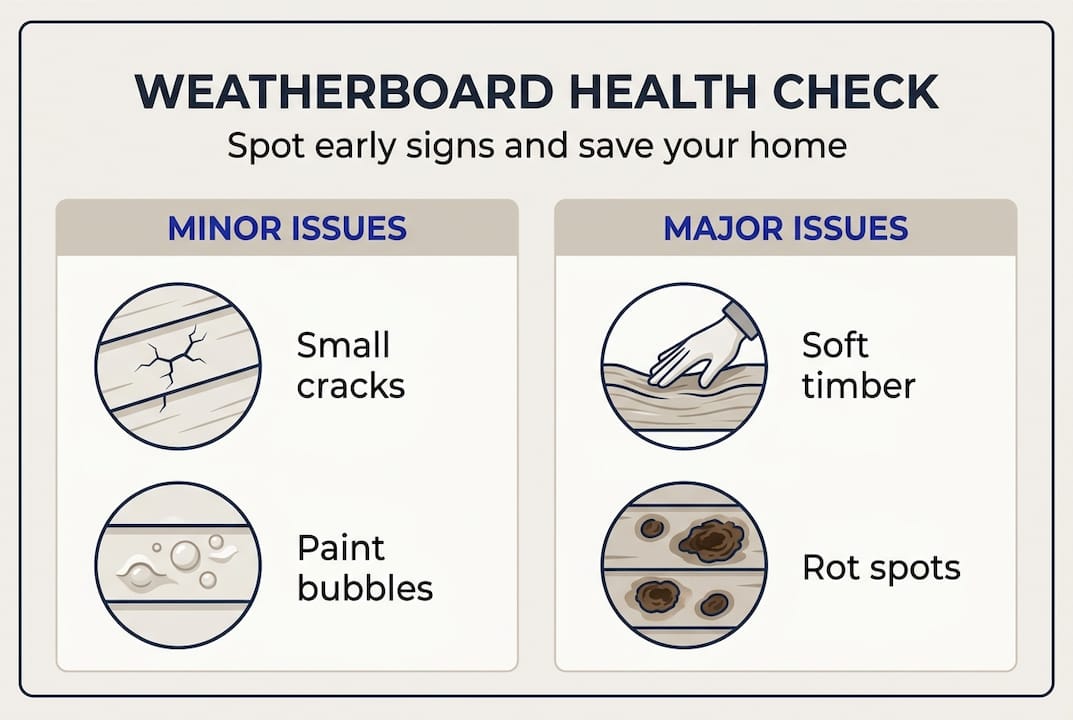
Pro Tip: Address surface cracks and peeling paint within weeks of noticing them. Small repairs cost hundreds, while ignoring them leads to rot requiring thousands in heritage weatherboard replacement. Proper paint protection for Victorian homes acts as your first line of defence against moisture damage.
When to repair weatherboards: recognising minor damage and fixes
Repair makes sense when damage remains isolated to specific boards or sections rather than spreading across multiple walls. Minor cracks, paint peeling with solid timber underneath, or damage limited to one or two boards all warrant repair rather than wholesale replacement. You’ll save significant money and preserve original heritage fabric when the underlying timber structure remains sound.
Simple repairs involve cleaning affected areas, sanding back loose paint, filling cracks with flexible exterior filler, applying primer to bare timber, and repainting with heritage-appropriate colours. For isolated damaged boards, remove only the affected pieces and replace them with matching profiles. This targeted approach maintains your home’s authenticity while addressing specific problems.
Repair-appropriate damage types:
- Surface cracks less than 3mm wide affecting individual boards
- Paint peeling or bubbling in localised areas with firm timber beneath
- Minor warping or cupping that doesn’t compromise weatherproofing
- Isolated board damage from impact or localised moisture exposure
- Small areas of surface rot caught early before penetrating deep into timber
Pro Tip: Use like-for-like materials when replacing individual boards to preserve heritage integrity and comply with heritage overlays. Match original board profiles, timber species, and fixing methods. Modern shortcuts like using different profiles or face-nailing instead of traditional secret nailing can trigger heritage permit requirements and diminish authenticity.
Avoid DIY fixes without proper inspection. What appears as minor paint damage might hide moisture problems or pest activity behind boards. Professional assessment identifies hidden issues before you commit to repair work. Key signs your home needs repainting include chalk residue on your hand after touching walls, widespread cracking, or colour fading across multiple elevations.
Ignoring minor weatherboard damage creates a cascade effect. Small cracks admit moisture, which causes paint to fail further, allowing more water to penetrate timber, leading to rot that spreads to adjacent boards and underlying frames. What starts as a $500 repair becomes a $15,000 replacement project within two years. Early intervention through preventative painting breaks this cycle and protects your investment.
When replacement is necessary: recognising extensive and structural damage
Replacement becomes unavoidable when damage affects structural integrity or spreads across large sections of your home’s exterior. Rot or soft timber in multiple locations, damage to over 30-40% of boards, recurring issues after repairs, or compromised structural frames all signal the need for comprehensive weatherboard replacement rather than patchwork fixes.
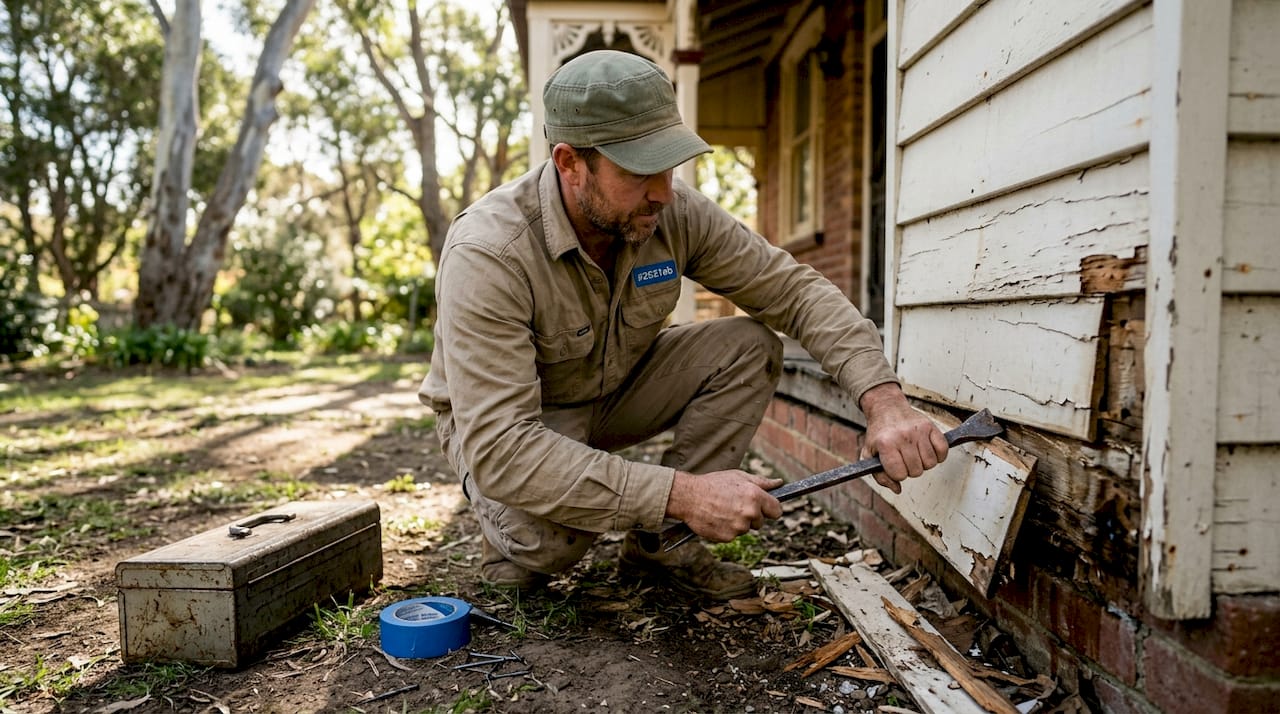
Structural damage presents the clearest replacement trigger. When frames behind weatherboards show rot, moisture staining, or weakness, repairs won’t solve the underlying problem. You must replace both weatherboards and damaged framing to restore structural integrity. Similarly, if pressing boards reveals soft timber across multiple walls, the rot has progressed beyond surface treatment.
Recurring problems after repeated repairs indicate systemic issues. If you’ve repaired the same sections multiple times within five years, moisture is penetrating from behind or through inadequate flashings. Continuing to patch failing boards wastes money without addressing root causes. Full replacement allows proper moisture barrier installation and flashing upgrades.
Repair versus replacement decision matrix:
| Factor | Repair | Replace |
|---|---|---|
| Damage extent | Less than 30% of boards affected | Over 30-40% of boards damaged |
| Timber condition | Firm timber with surface damage only | Soft, rotted, or structurally compromised timber |
| Damage pattern | Isolated to specific boards or small areas | Widespread across multiple walls or elevations |
| Repair history | First occurrence or infrequent issues | Recurring problems in same areas after repairs |
| Frame integrity | Frames sound and dry | Frames show rot, moisture damage, or weakness |
| Cost effectiveness | Repair costs under 40% of replacement | Repair costs approach or exceed replacement value |
For heritage homes, like-for-like replacements using matching profiles and timber species are usually exempt from permits, but significant changes require council approval and heritage impact statements. This makes sourcing correct replacement materials crucial. Modern fibre cement boards, while durable, often require permits for heritage properties because they alter the building’s character and appearance.
Pro Tip: Engage qualified heritage specialists early when replacement becomes necessary. They navigate permit requirements, source appropriate materials, and ensure work complies with heritage overlay controls. Professional heritage weatherboard replacement preserves your home’s authenticity while meeting contemporary building standards.
Preparation and maintenance for lasting heritage weatherboards
Preventive maintenance dramatically extends weatherboard lifespan and delays replacement needs. Annual cleaning, repainting every 7-10 years, gutter clearing, seasonal inspections, and addressing moisture trapping form the foundation of effective weatherboard preservation. These practices cost far less than premature replacement while maintaining your home’s heritage value.
Regular cleaning removes dirt, mould, and organic matter that trap moisture against timber. Use a soft brush and mild detergent solution, working from top to bottom. Avoid high-pressure washing, which forces water behind boards and damages paint. Clean weatherboards dry faster and allow paint to perform its protective function properly.
Repainting every 7-10 years protects timber and maintains heritage finish quality. Paint creates a moisture barrier that prevents water penetration, the primary cause of weatherboard failure. Choose heritage-compliant colours and high-quality exterior paints formulated for Melbourne’s climate. Proper surface preparation before painting ensures maximum paint adhesion and longevity.
Preparation steps before repainting or repairs:
- Inspect all weatherboards systematically, noting damage locations and severity
- Test timber firmness by pressing boards with your thumb, marking soft areas
- Check gaps between boards, around windows, and at corners for moisture entry points
- Clear gutters and downpipes to prevent overflow onto walls
- Trim vegetation touching or near weatherboards to improve air circulation
- Remove loose paint by scraping and sanding, feathering edges for smooth transitions
- Fill cracks and holes with flexible exterior filler, allowing proper curing time
- Apply primer to all bare timber before topcoat application
Seasonal inspections catch damage early when repairs remain simple and affordable. Check weatherboards each autumn before winter rains and again in spring after wet weather. Look for paint lifting, new cracks, moisture staining, or areas where boards feel spongy. Document findings with photos to track changes over time.
Essential maintenance tasks and frequency:
- Clean weatherboards annually to remove dirt and organic growth
- Clear gutters twice yearly, especially before and after autumn
- Inspect paint condition every six months for early failure signs
- Repaint every 7-10 years depending on exposure and paint quality
- Check and maintain caulking around windows and trim every two years
- Trim plants and vegetation away from walls annually
Pro Tip: Use heritage-compliant paints and coatings recommended for Melbourne’s climate. Modern low-VOC acrylic paints offer excellent durability while meeting environmental standards. Heritage exterior coatings should breathe to allow moisture vapour to escape while blocking liquid water. Following proper exterior painting steps ensures maximum protection and authentic heritage appearance.
Preserve your heritage home’s weatherboards with expert painting and repairs
Protecting your Victorian or Edwardian weatherboards requires specialised knowledge of heritage materials, council requirements, and proper restoration techniques. Sol Shine specialises in Melbourne heritage weatherboard repairs and replacement, qualified to handle Council heritage overlays and source like-for-like materials that preserve your home’s authentic character.

Our expert heritage painting services extend weatherboard lifespan through proper surface preparation, heritage-appropriate coatings, and meticulous application techniques. We provide professional inspections tailored to Victorian and Edwardian homes, identifying damage early and recommending cost-effective solutions. From minor repairs to complete heritage weatherboard replacement, we deliver skilled craftsmanship that honours your home’s history. Our comprehensive exterior painting services protect your investment while maintaining heritage authenticity across Melbourne’s inner east, bayside, and surrounding suburbs.
When should you replace weatherboards instead of repairing them?
How do I know if weatherboards are worth repairing?
Weatherboards warrant repair when damage affects fewer than 30% of boards, timber remains firm when pressed, and issues stay isolated to specific areas. Surface cracks, localised paint failure, and individual damaged boards all respond well to targeted repairs that cost significantly less than replacement while preserving original heritage fabric.
What risks come with delaying weatherboard replacement?
Delaying necessary replacement allows rot to spread from damaged boards into structural frames, dramatically increasing repair costs and potentially compromising your home’s structural integrity. Moisture penetration worsens over time, causing paint failure across larger areas, attracting pests, and creating conditions for mould growth that affects indoor air quality.
Are fibre cement boards suitable for heritage homes in Melbourne?
Fibre cement weatherboards typically require heritage permits because they alter your home’s character and appearance compared to traditional timber. While durable and low-maintenance, they lack the authentic texture, profile variations, and natural aging characteristics of timber weatherboards. Most heritage overlays require like-for-like timber replacement to maintain authenticity.
Do I need council approval to replace weatherboards on a heritage home?
Like-for-like weatherboard replacement using matching timber species, profiles, and fixing methods typically proceeds without permits under heritage overlay exemptions. Significant changes including different materials, altered profiles, or modifications to original configurations require council approval and heritage impact statements. Always confirm requirements with your local council before starting work.
What maintenance extends the life of timber weatherboards?
Repainting every 7-10 years provides critical moisture protection, while annual cleaning removes dirt and organic matter that trap dampness against timber. Clear gutters twice yearly to prevent overflow, inspect paint condition every six months, and address minor damage immediately before it spreads. These simple practices can extend weatherboard life from 25 years to 80+ years.


