
TL;DR:
- Epoxy driveways offer durability and can last 10 to 20 years with proper preparation.
- Decorative finishes enhance heritage homes’ kerb appeal while maintaining character.
- Low maintenance features make epoxy ideal for busy Melbourne families with period properties.
Your driveway is the first thing visitors notice, and for Melbourne homeowners with period properties, it carries real weight. A cracked, stained, or faded surface can undermine an otherwise beautifully maintained Victorian or Edwardian façade. Choosing the right coating is not simply about aesthetics; it is about protecting a significant investment while respecting the character of your home. Epoxy driveway coatings have emerged as a compelling solution, offering a combination of durability, visual appeal, and low maintenance that traditional surfaces rarely match. This article covers the key advantages and what to consider before committing.
Table of Contents
- Unmatched durability and longevity
- Customisable aesthetics and instant kerb appeal
- Low maintenance for busy Melbourne families
- How epoxy compares: Costs, alternatives and real-world fit
- A local expert’s take: What matters most for period homes
- Ready to upgrade your driveway surface?
- Frequently asked questions
Key Takeaways
| Point | Details |
|---|---|
| Exceptional durability | Epoxy coatings can easily last 10-20 years even under heavy traffic and provide far better protection than paint or sealers. |
| Customisable aesthetics | A broad palette of colours and decorative finishes lets homeowners create period-appropriate or contemporary looks. |
| Less cleaning hassle | Epoxy’s sealed surface means oil, dirt, and stains are a breeze to wipe away, saving regular effort and cost. |
| Outperforms alternatives | Compared to paint and traditional sealers, epoxy coatings require less maintenance and last much longer, making them cost-effective. |
| Professional prep is key | Great results depend on surface preparation and UV-stable products, especially in Melbourne’s climate and period homes. |
Unmatched durability and longevity
When it comes to driveway surfaces, longevity is everything. Bare concrete weathers quickly under Melbourne’s variable climate, and standard paint or sealers typically need reapplication every one to three years. Epoxy coatings are a different proposition entirely.
A professionally installed epoxy system bonds to concrete at between 2,000 and 3,000 PSI, creating a surface that resists impact, abrasion, and chemical spills with genuine reliability. For period homes with narrow driveways that see regular vehicle traffic, that bond strength matters. Epoxy driveway coatings provide enhanced durability, resisting stains, chemicals, abrasion, and heavy vehicle traffic far more effectively than conventional finishes.
The lifespan advantage is significant. Where paint or basic sealers last one to three years, a well-prepared epoxy system delivers 10 to 20 years of reliable performance. That translates directly into fewer disruptions to your property and lower long-term costs. Understanding paint durability factors specific to Melbourne heritage homes helps clarify why surface choice matters so much in this climate.
Key durability advantages of epoxy coatings include:
- Impact resistance: Handles heavy vehicles, including SUVs and delivery trucks, without cracking or chipping under normal use.
- Chemical resistance: Repels oil, fuel, and household chemicals that would permanently stain bare concrete.
- Abrasion resistance: Withstands tyre scuffing and foot traffic without wearing thin over time.
- Moisture resistance: Seals the slab against water ingress, which is particularly important for older concrete that may already show signs of porosity.
“A properly bonded epoxy system on a well-prepared slab is one of the most cost-effective long-term investments a homeowner can make in their driveway surface.”
Proper surface preparation tips are non-negotiable. Grinding, crack repair, and moisture testing must be completed before any coating is applied. Skipping these steps is the single most common reason epoxy systems fail prematurely on older slabs. The epoxy garage floor benchmarks confirm that preparation quality directly determines coating lifespan.
Pro Tip: Always request a professional moisture test before installation. Old concrete slabs on period properties can hold significant residual moisture, which prevents proper adhesion and leads to bubbling or delamination.
With longevity covered, it is just as important to consider the visual transformation epoxy provides.
Customisable aesthetics and instant kerb appeal
Epoxy is not a one-size-fits-all grey slab solution. The range of decorative finishes available in 2026 is genuinely impressive, and for period home owners, that flexibility is a real advantage.
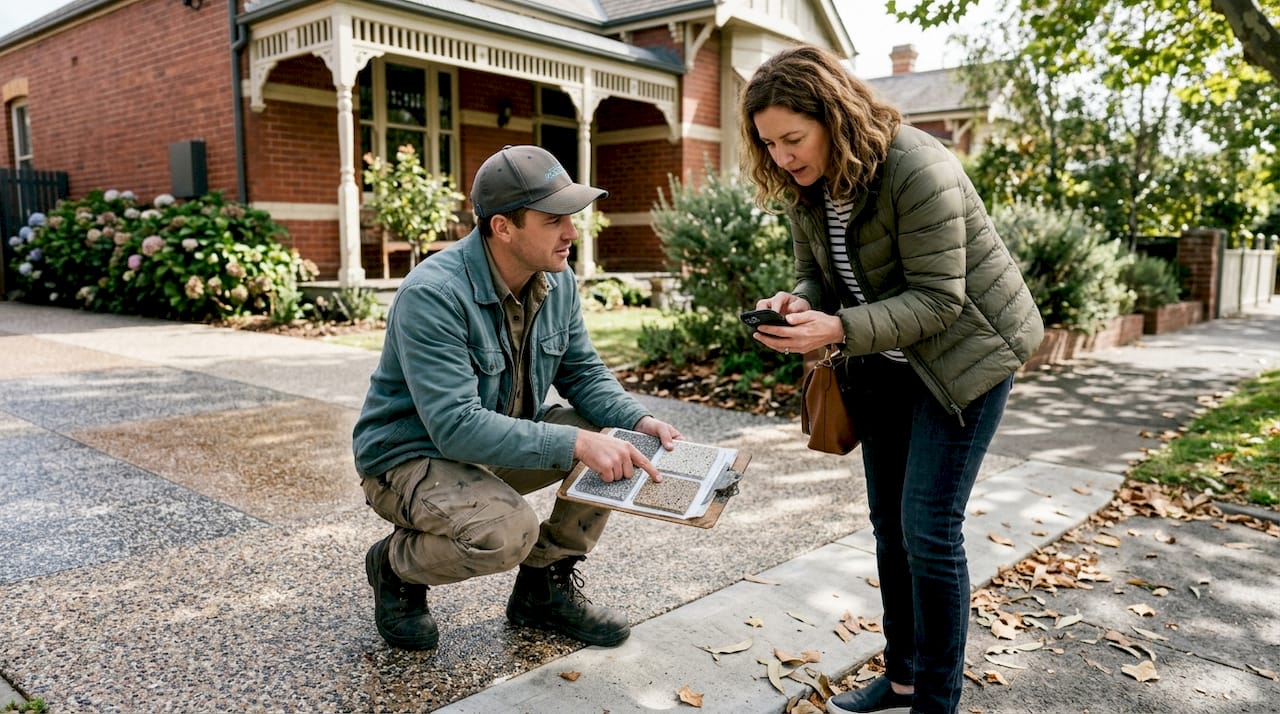
You can choose from solid colours, quartz flake blends, faux stone effects, or high-gloss finishes that complement rather than clash with a heritage façade. Customisable colours and finishes boost kerb appeal and property value in ways that plain concrete or standard paint simply cannot achieve. For a Victorian terrace in Hawthorn or a Federation home in Camberwell, selecting a warm, neutral flake blend can feel entirely period-appropriate while still modernising the overall presentation.
Decorative finish options worth considering:
- Solid colour epoxy: Clean, contemporary look; suits rendered or painted façades.
- Quartz flake finish: Adds texture and slip resistance; blends well with natural stone elements common in heritage gardens.
- Metallic epoxy: High-gloss, reflective surface; suits more contemporary renovations within period streetscapes.
- Faux stone or aggregate finish: Mimics bluestone or pebble surfaces; excellent for maintaining heritage character.
Sol Shine has completed decorative surface projects across Melbourne’s inner east and bayside, including custom driveway finishes in Camberwell and decorative options in Kew, where period-appropriate colour selection made a meaningful difference to the overall result.
| Finish type | Approximate cost (per m²) | Best suited for |
|---|---|---|
| Solid colour epoxy | $50 to $80 | Contemporary or rendered homes |
| Quartz flake epoxy | $80 to $120 | Heritage and period properties |
| Metallic epoxy | $100 to $150 | Modern extensions or garages |
| Faux stone aggregate | $90 to $130 | Victorian and Edwardian streetscapes |
Pro Tip: Request physical samples and hold them against your home’s façade in natural light before committing to a finish. Colours read very differently on a small card compared to a full driveway surface.
Beyond style, the ease of upkeep is another major driver for many homeowners.
Low maintenance for busy Melbourne families
One of the most practical advantages of epoxy is how little effort it requires to keep looking sharp. For homeowners already managing the ongoing demands of a period property, that matters enormously.
Epoxy’s non-porous surface makes it easy to clean and genuinely low maintenance compared to alternatives. Oil drips, leaf stains, and garden grime sit on the surface rather than soaking in. A quick sweep or a rinse with a garden hose is typically all that is needed for routine upkeep.
Compare that to exposed aggregate or unsealed concrete, which can require pressure washing, degreasing, and periodic resealing to stay presentable. For homes surrounded by established gardens, as many period properties in Kew, Hawthorn, or Malvern are, leaf litter and organic staining are a constant reality. Epoxy handles both without complaint.
Maintenance benefits at a glance:
- No annual resealing: Unlike pavers or exposed aggregate, epoxy does not need periodic sealer reapplication.
- Stain resistance: Oil, leaf tannin, and garden chemicals wipe away cleanly from a sealed epoxy surface.
- No weed growth: The sealed surface eliminates the gaps where weeds establish in paver joints.
- Consistent appearance: Epoxy does not fade unevenly the way painted surfaces do, maintaining a uniform look year to year.
Reviewing maintenance essentials for Melbourne surfaces gives a broader picture of how surface choice affects your ongoing workload across the entire property.
Pro Tip: Use gentle, non-abrasive cleaners on high-gloss epoxy surfaces. Harsh detergents or stiff-bristle scrubbing can dull the finish over time and reduce the coating’s lifespan.
Knowing the benefits is key, but understanding how epoxy compares with alternatives will help you decide.
How epoxy compares: Costs, alternatives and real-world fit
For period home owners weighing their options, a direct comparison helps clarify where epoxy sits relative to other common driveway treatments.
| Surface type | Typical cost (per m²) | Lifespan | Maintenance level | Heritage suitability |
|---|---|---|---|---|
| Standard paint | $15 to $30 | 1 to 3 years | High | Low |
| Concrete sealer | $20 to $40 | 2 to 5 years | Medium | Medium |
| Epoxy coating | $80 to $120 | 10 to 20 years | Low | High |
| Polyurea/polyaspartic | $100 to $150 | 15 to 25 years | Low | High |
| New concrete pour | $80 to $150 | 20 to 30 years | Medium | Low to medium |
Professional epoxy installation at $80 to $120 per square metre outperforms paint and sealers significantly, delivering 10 to 20 years of service compared to one to three years for basic coatings. For period homes where avoiding excavation or major groundworks is a priority, epoxy is particularly well suited. It goes directly over an existing slab, preserving established garden beds, heritage kerbing, and original bluestone edging that might otherwise be disturbed.
Steps to approach your driveway surface decision:
- Assess your existing slab: Determine whether the concrete is structurally sound and suitable for a coating system.
- Consider sun exposure: Full-sun driveways in Melbourne require a UV-stable topcoat or a polyurea and polyaspartic alternative to prevent yellowing.
- Match the finish to your façade: Choose a colour and texture that complements your home’s period character.
- Get a moisture test done: Especially important for slabs over 30 years old.
- Compare total cost over 10 years: Factor in reapplication frequency, not just upfront price.
For heritage homes where surface disturbance is a genuine concern, exploring exterior paint alternatives and heritage surface restoration options alongside epoxy gives a fuller picture of what is available.
“Epoxy avoids the need for messy excavation, making it an ideal choice for period properties where preserving existing garden and kerb features is a priority.”
Stepping back, what do the experts and experienced renovators suggest for tricky period home driveways?
A local expert’s take: What matters most for period homes
After working across Melbourne’s inner east and bayside suburbs on heritage properties, Sol Shine has observed a consistent pattern. Most epoxy failures on period driveways come down to one thing: inadequate preparation of an old slab.
Crack repair and moisture testing are not optional extras. They are the foundation of a coating system that will actually last. Homeowners who skip these steps to save money upfront almost always face delamination or bubbling within two to three years.
UV stability is a genuine concern that is often underestimated. Melbourne’s summer sun is intense, and standard epoxy resins will yellow and become brittle without a dedicated UV-stable topcoat. Insist on this from any contractor you engage. If you are uncertain about how a coating will perform on your specific slab, ask for a test patch in a less visible area before committing to the full driveway.
The heritage durability guide for Melbourne homes covers these considerations in detail and is worth reviewing before making any final decisions. The right preparation and product selection make the difference between a surface that looks excellent for 15 years and one that needs replacing in three.
Ready to upgrade your driveway surface?
If you are considering an epoxy coating for your Melbourne period home, Sol Shine can help you navigate the options with confidence. We understand the particular demands of heritage properties and bring the same care to exterior surfaces as we do to full restoration projects.
Our team of exterior refinishing experts can assess your existing slab, recommend the right system for your home’s exposure and style, and provide samples to visualise the result against your façade. For homeowners looking at broader surface and coating work as part of a larger renovation, our heritage restoration coatings service covers everything under one roof. Get in touch to arrange a consultation and take the first step toward a driveway surface that genuinely complements your home.
Frequently asked questions
How long do epoxy driveway coatings last in Melbourne conditions?
Professionally installed epoxy coatings typically last 10 to 20 years under regular vehicle traffic, significantly outperforming most paint or sealer products available on the market.
Will epoxy coatings yellow or crack in the sun?
Standard epoxy may yellow or become brittle outdoors without a UV-stable topcoat; always ask your contractor for specialised resins or topcoats suited to Melbourne’s sunny climate.
Is epoxy coating suitable for all period home driveways?
Epoxy suits most solid concrete driveways, but meticulous surface prep including grinding, crack repair, and moisture checks is essential for older property slabs to achieve proper adhesion.
How much does professional epoxy driveway installation cost in Melbourne?
Expect to pay between $80 and $120 per square metre for decorative flake epoxy coatings installed by an experienced contractor in Melbourne.


