
TL;DR:
- Proper weatherproof painting is crucial to prevent moisture damage and preserve heritage features.
- Surface preparation, including inspection, cleaning, and timber repairs, is vital for lasting results.
- Professional execution ensures protection against Melbourne’s climate and maintains property value.
Peeling paint on a Victorian weatherboard façade isn’t just an eyesore. It’s a warning sign. Once moisture finds its way beneath the surface, it begins attacking the timber, joints, and original detailing that give your home its character and its value. For owners of heritage properties in Melbourne, a failed paint system can escalate from a cosmetic concern to a structural repair costing tens of thousands of dollars. This guide walks through every stage of the weatherproof painting process, from initial inspection and surface preparation through to execution and long-term maintenance, so you know exactly what a professional approach looks like and why it matters.
Table of Contents
- Why weatherproof painting is vital for heritage homes
- Preparing your Victorian or Edwardian home for painting
- Executing a step-by-step weatherproof painting process
- Inspecting and maintaining your weatherproof paintwork
- What most painting guides don’t tell you about heritage weatherproofing
- Preserve your heritage home with Melbourne’s weatherproofing specialists
- Frequently asked questions
Key Takeaways
| Point | Details |
|---|---|
| Preparation is everything | Thorough repair and cleaning of surfaces is vital before painting a heritage property. |
| Use the right materials | Choose paints and primers suited for Melbourne’s climate and heritage timbers for lasting protection. |
| Methodical process matters | Weatherproof painting must follow a step-by-step system for best and longest results. |
| Inspection and maintenance | Post-painting checks and regular maintenance are key to heritage home durability. |
| Expert help is worth it | Large-scale or intricate projects should always involve professional heritage painting specialists. |
Why weatherproof painting is vital for heritage homes
Melbourne’s climate is genuinely hard on painted surfaces. Wet winters drive moisture into exposed timber, while summer UV exposure causes paint films to expand, contract, and eventually crack. Heritage homes built in the Victorian and Edwardian eras were constructed using old-growth timbers and lime-based renders that behave differently to modern materials. They breathe. They move. And they demand a paint system that accommodates those qualities rather than fighting them.
The original detailing on these homes, including decorative fretwork, sash windows, turned verandah posts, and ornate cornices, is particularly vulnerable. These intricate profiles trap moisture, making them prime candidates for rot and paint failure if the wrong products or techniques are used. A Melbourne weatherproof painting guide tailored to heritage conditions will always address these features specifically, because generic exterior painting approaches simply aren’t enough.
Poor weatherproofing carries serious financial consequences. When paint fails, moisture penetrates. Rot sets in. What starts as a surface repair becomes a full timber replacement, and in a heritage property, matching original profiles adds significant cost. Avoiding common exterior painting mistakes from the outset is far more cost-effective than remediation later.
Here’s what’s genuinely at risk when weatherproofing is inadequate:
- Accelerated timber decay in window frames, fascias, and weatherboards
- Moisture ingress behind render causing cracking and spalling
- Loss of original detailing that cannot be easily replicated
- Reduced resale value and potential issues with heritage overlays
- Increased insurance exposure if structural damage is evident
A well-executed weatherproof paint system, by contrast, extends the lifespan of exposed surfaces significantly, reducing lifetime maintenance costs and preserving the architectural integrity that defines your property’s appeal. Quality maintenance tips for weatherproof paint will reinforce this investment year after year.
With the stakes clear, it’s crucial to understand the groundwork required for a flawless weatherproof painting process.
Preparing your Victorian or Edwardian home for painting
Surface preparation is where most failed paint jobs begin to unravel. It’s the least glamorous part of the process, but it’s also the most consequential. Skipping or rushing preparation almost always leads to premature paint failure, and on a heritage home with complex profiles, that’s an expensive outcome.
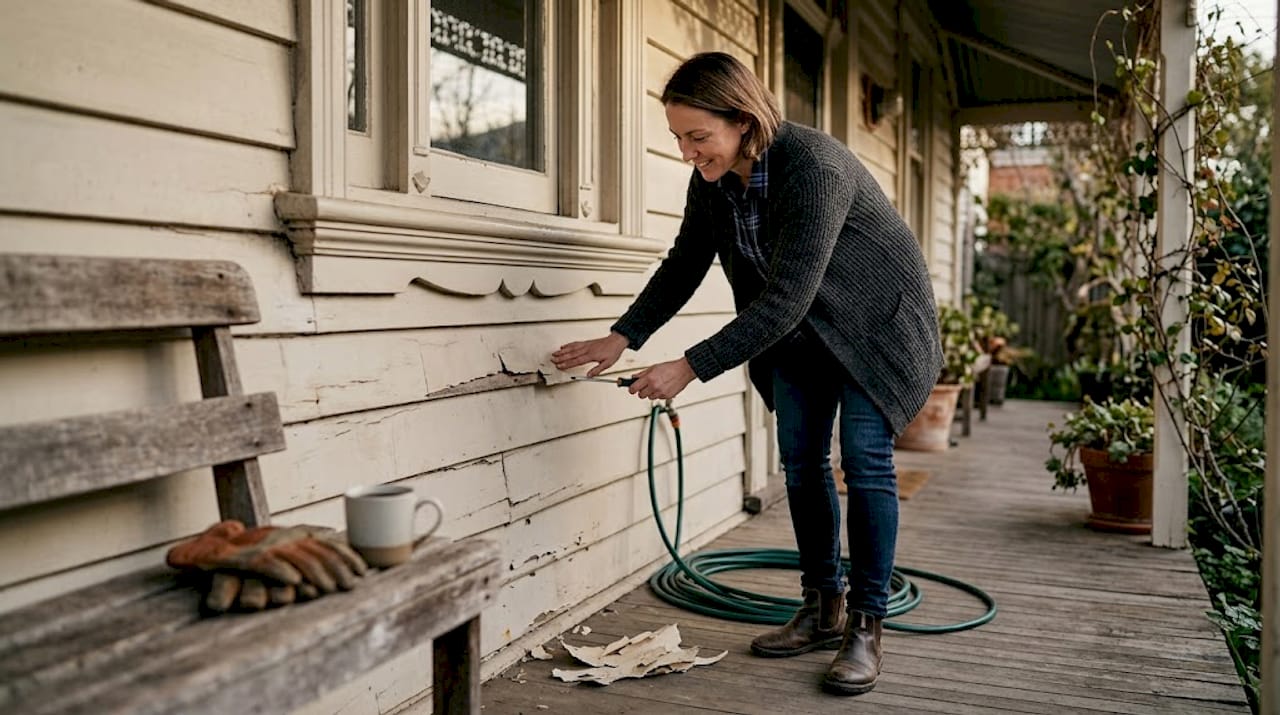
The first step is a thorough inspection. Every element of the exterior needs to be assessed: weatherboards, window sashes, sills, fascia boards, verandah timbers, and any decorative joinery. Look for soft spots, discolouration, gaps at joints, and any previous paint that is lifting, blistering, or peeling. As surface preparation is key to a lasting result, identifying all defects before work begins prevents costly surprises mid-project.
Lead paint is a critical consideration for homes built before 1970. Many Victorian and Edwardian properties in Melbourne still have multiple layers of lead-based paint beneath the surface. Disturbing this material without proper controls creates a serious health risk. Professionals use wet sanding, containment sheeting, and personal protective equipment to manage this safely and in accordance with current WorkSafe guidelines.
| Preparation stage | Tools and materials required |
|---|---|
| Inspection | Moisture meter, screwdriver, torch |
| Cleaning | Pressure washer, sugar soap, soft brush |
| Sanding and stripping | Orbital sander, hand scrapers, wet-dry sandpaper |
| Timber repairs | Two-part wood filler, timber hardener |
| Gap sealing | Paintable flexible sealant, caulking gun |
| Priming | Heritage-compatible oil or acrylic primer, brush |
Once defects are repaired and surfaces are clean and dry, sanding creates the mechanical key (a slightly rough surface) that allows primer to bond properly. Two-part fillers restore damaged profiles, and flexible paintable sealant closes gaps between trim elements and weatherboards, preventing future moisture entry.
Choosing the right primer for heritage timbers matters. Oil-based primers penetrate more deeply into porous or weathered timber and offer superior adhesion, while quality acrylic primers suit surfaces in better condition. Always follow the specific primer recommendation for the topcoat system you’re using.
Pro Tip: Never apply primer over damp timber. Use a moisture meter to confirm readings below 15% before coating. Painting over wet timber is one of the fastest routes to paint failure on heritage exteriors.
“Preparation isn’t just a step in the process. On a heritage home, it’s the foundation everything else depends on.” This is why Sol Shine dedicates considerable time to assessment and repair before a brush is ever lifted. Refer to our weatherboard repair guide for further detail on addressing damaged boards before painting begins.
Preparation finished, it’s time to carry out the weatherproof painting process step by step.
Executing a step-by-step weatherproof painting process
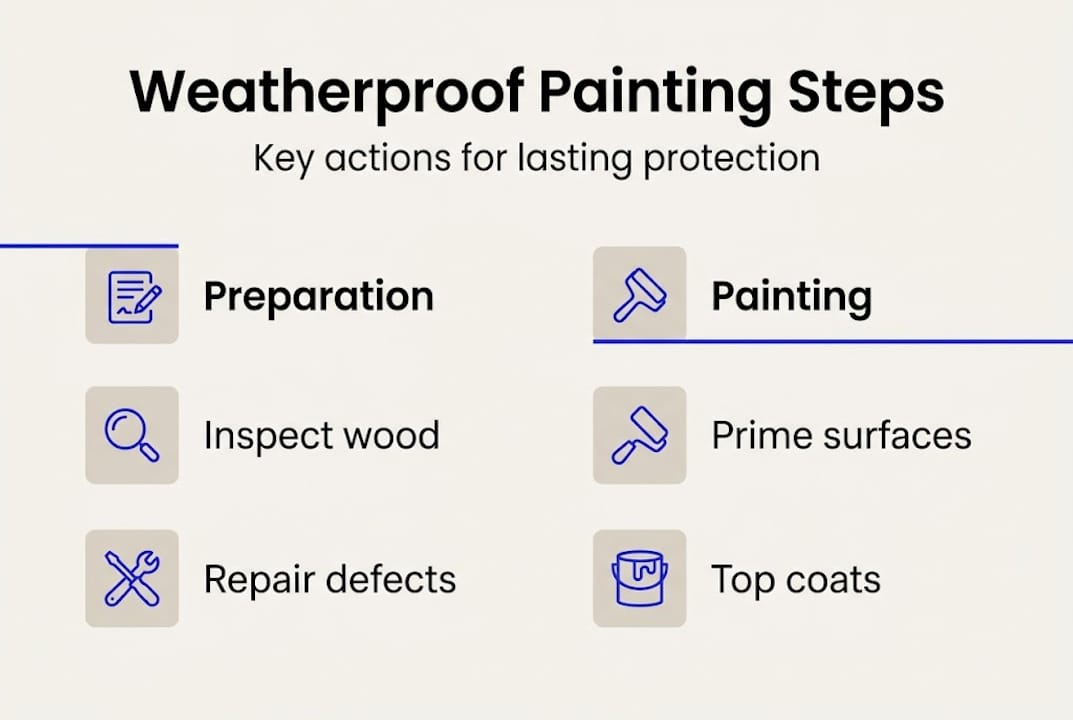
With surfaces properly prepared, the painting itself follows a clear sequence. Rushing any stage, or allowing inadequate drying time between coats, undermines everything the preparation achieved. A professional painting workflow always treats each coat as a distinct and deliberate step.
Step-by-step weatherproof painting sequence:
- Apply primer to all bare timber and repaired surfaces. Allow full cure time as specified by the manufacturer.
- Apply a penetrating sealer to any highly porous areas, particularly end grain timber and around window sashes.
- Apply the first full coat of exterior acrylic or oil-modified topcoat using brush application for all detail work and intricate profiles.
- Allow the first coat to dry fully, then lightly sand with fine-grit paper to improve intercoat adhesion.
- Apply the second topcoat, ensuring complete and even coverage across all surfaces, edges, and joinery.
- Inspect all surfaces in raking light (angled light that reveals missed spots and thin coverage) before sign-off.
Melbourne’s climate creates specific timing constraints. Avoid painting during the heat of summer afternoons when surface temperatures exceed 35°C, as the paint film dries too quickly and doesn’t form a proper bond. Similarly, avoid painting when rain is forecast within 24 hours or when overnight temperatures will drop below 10°C. These conditions cause poor adhesion, runs, and long-term peeling.
| Paint type | Best used for | Key benefit |
|---|---|---|
| Oil-modified acrylic | Weatherboards, window frames | Superior adhesion on aged timber |
| 100% acrylic exterior | Rendered surfaces, fascias | Flexibility, UV resistance |
| Specialty trim enamel | Fretwork, decorative joinery | Hard-wearing, crisp finish |
| Penetrating timber oil | Exposed end grain, sills | Deep moisture protection |
For intricate heritage elements like fretwork and window sashes, brush application is non-negotiable. Spray application, while faster on flat surfaces, cannot reliably coat all faces of decorative profiles. Brushwork on these elements ensures full coverage and prevents moisture entry at any uncoated face.
Pro Tip: Paint window sashes and frames in sections, keeping them operable throughout the process. Painting a sash shut is a common mistake that leads to damaged paintwork when the window is eventually forced open.
For best exterior paints suited to heritage conditions, product selection should match the specific substrate and the level of weathering exposure. Our exterior painting advice covers this in further detail.
With painting complete, verifying the results and planning ongoing care ensures lasting protection and beauty.
Inspecting and maintaining your weatherproof paintwork
A thorough post-painting inspection is as important as the preparation that preceded it. The best way to check coverage quality is to view all surfaces in raking light, ideally early morning or late afternoon when the sun hits at a low angle. This reveals thin patches, runs, missed spots on profile edges, and any areas where the surface texture shows through the topcoat.
Signs of early paint failure to watch for include:
- Blistering: Moisture trapped beneath the surface causes the paint film to bubble. Often indicates painting over damp timber or inadequate primer.
- Cracking or alligatoring: A pattern of cracks resembling scales, usually caused by applying a hard topcoat over a flexible primer, or painting in unsuitable temperatures.
- Mildew growth: Black or grey spotting, particularly in shaded areas, indicates the paint system lacks adequate fungicidal protection.
- Peeling at joints: Flexible sealant has failed or was not applied, allowing moisture entry at gaps between elements.
Careful maintenance of weatherproof painted surfaces extends the life of any paint system considerably. A realistic maintenance schedule for a heritage property looks like this:
- Every 12 months: Wash all exterior surfaces with a mild detergent and soft brush. Check sealant at window frames, sills, and joins.
- Every 2 to 3 years: Inspect closely for any signs of early failure. Address small areas of peeling or cracking before they spread.
- Every 7 to 10 years: Full exterior repaint, including preparation and any timber repairs identified during the inspection phase.
When minor failures are spotted early, a spot repair by a professional is straightforward and relatively inexpensive. Left unaddressed, the same area can deteriorate to the point where full timber replacement becomes necessary. Understanding how quality paint protects your investment underscores why ongoing care is worth the effort.
Pro Tip: After any major Melbourne storm, walk the perimeter of your home and check for peeling, lifted weatherboards, or damaged sealant. Storm damage accelerates moisture ingress at vulnerable points.
For more detail on seasonal care, our guide covering weatherproof painting upkeep is a practical reference to keep on hand.
All these steps are essential, but what do most guides and professionals miss?
What most painting guides don’t tell you about heritage weatherproofing
Most articles on weatherproof painting treat the process as purely a surface exercise. Apply primer, apply paint, done. But for Victorian and Edwardian homes in Melbourne, the real risks live beneath the surface, and this is where many projects fall short.
Window joinery is the most consistently overlooked area. Sash windows on heritage homes are complex assemblies with many small timber elements, and the sub-frame timbers behind the architraves are rarely inspected. Moisture finds these spaces easily. By the time rot is visible from the outside, the damage inside can be extensive. No amount of quality topcoat compensates for compromised sub-timber.
The costliest painting mistakes on heritage properties almost always trace back to inadequate sub-surface repairs, not poor product selection. Choosing a premium exterior paint over a mid-range product makes a marginal difference. Failing to replace a rotted sill or fix a leaking window head before painting creates a failure point that no paint system can overcome.
DIY weatherproofing is viable for minor touch-ups on a single element. For projects involving the full exterior of a heritage home, the risk calculus changes completely. Complex profiles, lead paint management, sub-surface repairs, and product selection for heritage materials require skills and knowledge that go well beyond general handyman capability. The cost of remediation after a poorly executed DIY project typically exceeds what a professional job would have cost from the beginning.
Preserve your heritage home with Melbourne’s weatherproofing specialists
Sol Shine works with homeowners across Melbourne’s inner east and bayside suburbs to deliver weatherproof painting and full heritage restoration on properties where quality and lasting results are the only acceptable standard.

Our team of exterior painting experts manages every stage of the process under one roof, from sub-surface timber repairs and brickwork through to the final coat of premium exterior topcoat. For owners of Victorian and Edwardian homes, our heritage painting services are designed specifically for the complexity and care these properties demand. Projects starting at $20,000 receive a detailed consultation, transparent scope of works, and a result built to last. To understand how this kind of investment performs over time, our guide on restoration value for historical homes makes for useful reading before you get in touch.
Frequently asked questions
What type of paint is best for Melbourne’s heritage exteriors?
Acrylic exterior paints designed for heritage timbers are best, combining flexibility, UV resistance, and water repellence suited to Melbourne’s variable climate. For specific product guidance, our overview of top exterior paints covers leading options for heritage conditions.
How often should weatherproof painting be reapplied on heritage homes?
Repainting is usually needed every 7 to 10 years, or sooner if you notice peeling, cracking, or fading. Following a consistent maintenance schedule helps you catch issues before a full repaint becomes urgent.
What prep work is most important before painting heritage homes?
Thorough cleaning, sanding, and addressing all timber repairs and cracks are essential before any paint is applied. As quality repainting research consistently shows, no topcoat system can compensate for inadequate preparation.
Can I do weatherproof painting myself or should I hire a specialist?
DIY is suitable for minor touch-ups but for large projects or complex heritage façades, a specialist delivers the safety management and material knowledge the work demands. Reviewing the costliest painting mistakes homeowners make illustrates the real risk of underestimating scope.
How does weatherproof painting increase house value?
Quality weatherproof painting preserves the façade and original detailing, boosting street appeal and supporting strong resale value. Understanding how paint protects heritage surfaces explains why this is one of the most cost-effective investments an owner can make.


