
TL;DR:
- Victorian heritage exteriors face rapid deterioration from moisture and incompatible modern materials.
- Using breathable, lime-based renders and paints is essential to preserve authenticity and prevent decay.
- Working with heritage specialists ensures compliant, reversible repairs that maximize property value.
Your Melbourne Victorian or its exterior deteriorating faster than it should. That’s not just about age. Properties over 120 years old face severe risks including spalling, rising damp, and masonry decay, and what makes it worse is that some of those risks are being accelerated by well-intentioned maintenance using the wrong modern materials. Every decision you make about your façade, from the render you choose to the paint you apply, either preserves or threatens your home’s future. This article walks you through the most important strategies for protecting your heritage property, keeping it authentic, compliant, and genuinely valuable for generations to come.
Table of Contents
- Understanding the risks: Why exteriors matter most
- Materials matter: Choose products that let your walls breathe
- Heritage overlays: How to navigate Melbourne’s regulations
- Property value: The real payback on doing exteriors right
- The truth about heritage maintenance: What experts wish homeowners knew
- Work with true heritage experts
- Questions our clients often ask
Key Takeaways
| Point | Details |
|---|---|
| Material mistakes matter | Using the wrong render or paint traps moisture and can ruin heritage features permanently. |
| Follow the heritage rules | Most visible changes need council approval, but authentic maintenance is usually exempt if matched. |
| Update boosts value | Properly restored exteriors deliver a noticeable price premium and lasting street appeal. |
| Documentation pays off | Keep records and photos of your maintenance for smoother, less stressful future works. |
| Expert help is worth it | Specialists in heritage homes spot the difference between genuine preservation and expensive mistakes. |
Understanding the risks: Why exteriors matter most
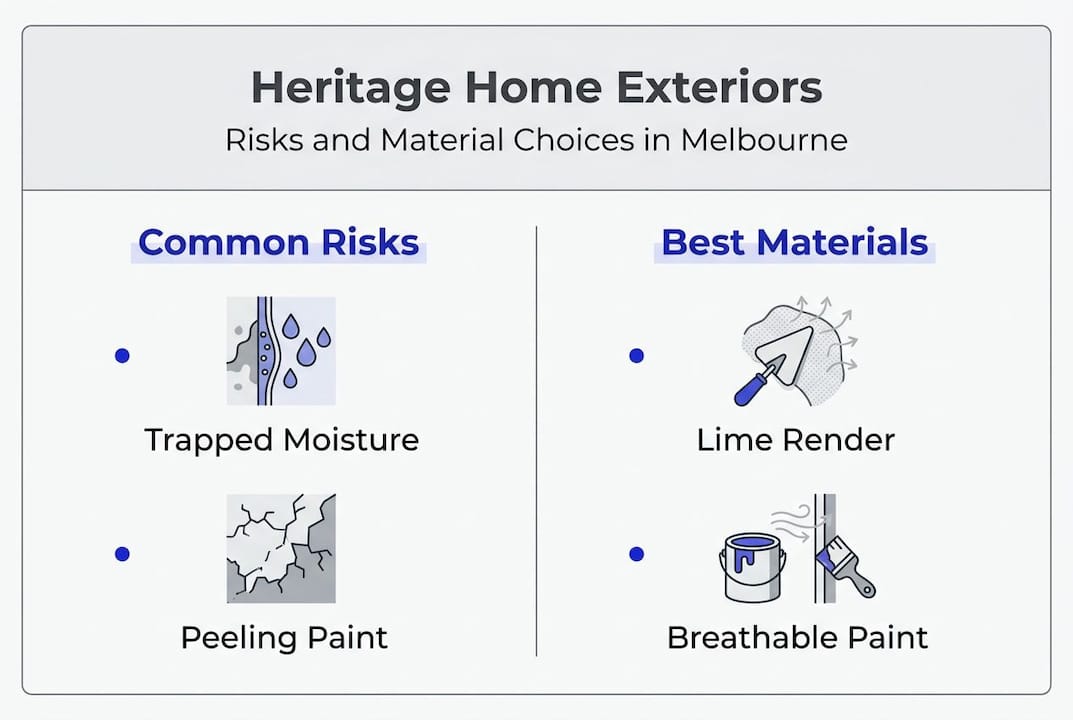
Heritage home exteriors are under constant pressure. Melbourne’s variable climate, with its cold winters, hot summers, and persistent moisture, creates ideal conditions for decay to take hold. The most common threats you’ll encounter are spalling brickwork, rising damp, flaking paint, render failure, and timber rot in joinery and window frames. Each problem compounds the others. Water trapped behind a failed render doesn’t just stay there. It migrates into masonry, softens lime mortar, and eventually works its way into your wall structure.
Age is a critical factor. A home that’s 40 years old has some resilience left in its original materials. A home that’s 80, 100, or 120 years old is in a fundamentally different category. The older the property, the more likely it is that previous owners have made repairs using materials that don’t match the original fabric. Each mismatched repair can create a new moisture trap or stress point.
The visual and economic toll of neglect is real. A façade that’s visibly decaying sends a clear message to buyers, valuers, and even council inspectors. The gap between a well-maintained heritage home and a neglected one can represent tens of thousands of dollars at sale.
| Risk level | Property age | Common issues observed | Priority action needed? |
|---|---|---|---|
| Low to moderate | 40 to 70 years | Paint fading, minor cracking | Annual inspection |
| High | 70 to 100 years | Rising damp, render failure | 2-year professional assessment |
| Critical | 100 to 120+ years | exterior issues in severe climates and spalling masonry | Full exterior assessment now |
Proper exterior cleaning for heritage homes is one of the most underutilised protective steps available to Melbourne homeowners. The right cleaning approach removes biological growth, salt deposits, and pollutants before they cause structural damage.
Knowing what to look for helps. The following warning signs deserve immediate attention:
- Paint that’s lifting or blistering rather than simply fading
- White salt deposits (efflorescence) appearing on brick or render surfaces
- Dark staining at the base of walls, which often signals rising damp
- Window frames or sills that feel soft or spongy to the touch
- Any render that sounds hollow when tapped
Pro tip: Don’t assess your exterior by sight alone. Run your hand along render surfaces and tap gently on suspected problem areas. Sound changes and soft spots reveal hidden trouble long before it becomes visible from the footpath. The safeguards for Melbourne heritage home exteriors you put in place now will determine how much restoration work you face in five years.
Now that you see the need for exterior vigilance, let’s zero in on what actually works for heritage materials in the Melbourne setting.
Materials matter: Choose products that let your walls breathe
Having covered the threats and what to watch for, it’s time to get precise, because what you put on your walls matters as much as what they’re made of.
Victorian and early twentieth century homes were built with lime-based renders and mortars. These materials were chosen for good reason. They’re flexible, breathable, and self-healing to a small degree. When moisture enters the wall, lime allows it to migrate outward and evaporate. The wall breathes. This is not a nice-to-have. It’s the entire basis on which your home manages moisture.
Modern cement renders trap moisture unlike traditional lime renders, which accelerates decay at a rate most homeowners never see coming. When cement is applied over lime-based walls, it creates a hard, rigid skin that locks moisture inside. The result is accelerated decay behind a surface that looks perfectly fine from the outside.
| Feature | Traditional lime render | Modern cement render |
|---|---|---|
| breathability | High. allows evaporation | Low. traps moisture inside |
| flexibility | Good. moves with the building | Low. cracks under movement |
| compatibility with old walls | High. matches original fabric | Poor. can damage original material |
| maintenance requirement | Higher skill required | Lower skill but higher long-term risk |
| council acceptance | Generally preferred | Often rejected for heritage facades |
Breathable paints follow the same logic. A standard acrylic paint applied over a lime-rendered surface can seal moisture in just as effectively as a cement render. The right paint choice for a heritage exterior uses formulations specifically designed for high vapour permeability.
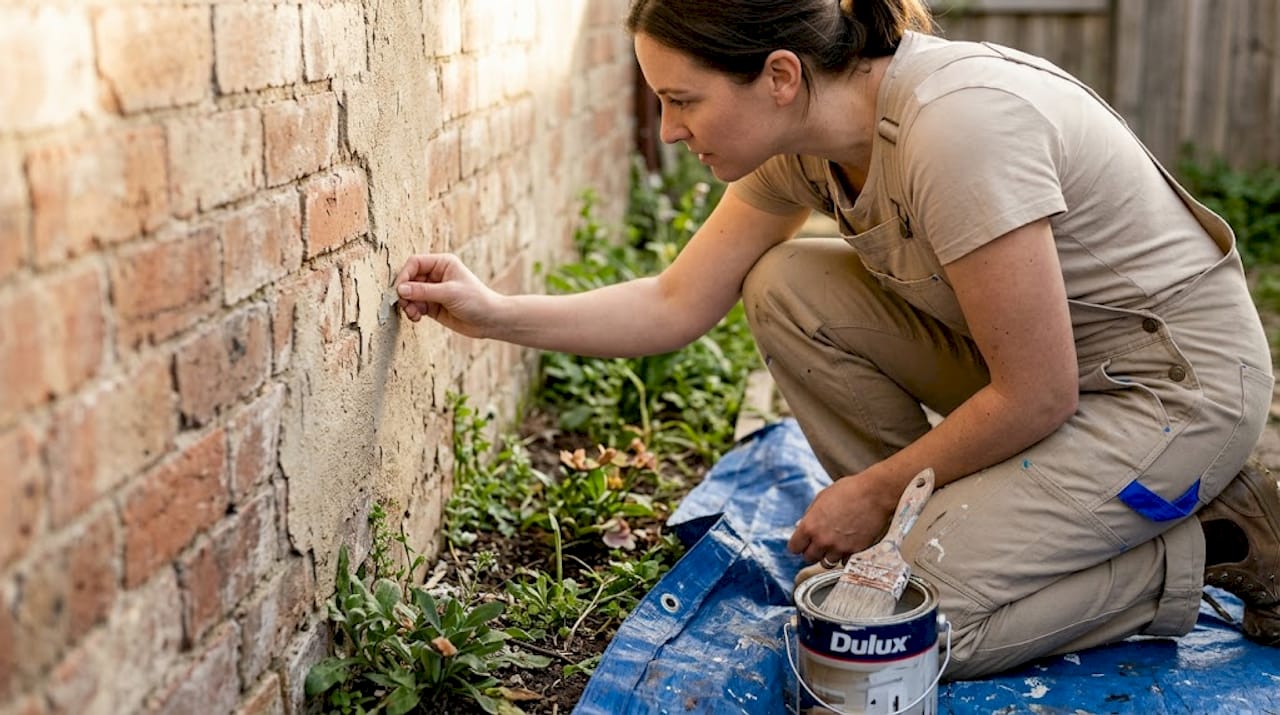
Pro tip: Before any render or paint work is applied, ask your contractor to confirm the existing wall’s base material. A simple scratch test on a small concealed area can tell you whether you’re dealing with lime or cement. This one step prevents costly mistakes.
For sustainable maintenance tips that align with heritage requirements, material selection sits at the centre of every good decision. And if you’re weighing up premium versus standard paint options, heritage properties almost always benefit from the higher vapour-permeable formulations.
- Always match render type to existing wall base
- Use breathable, heritage-compatible paints on rendered surfaces
- Source lime-based products from suppliers who understand heritage applications
- Request material data sheets before any product is applied to your home
Heritage overlays: How to navigate Melbourne’s regulations
But there’s more to smart maintenance than materials. You also need to keep Melbourne’s unique rules and reputation in mind.
Most inner-Melbourne suburbs sit within a Heritage overlay under the Victoria Planning provisions. This overlay protects the character and fabric of significant residential streetscapes. As a homeowner, you need to understand what this means in practical terms before any exterior work begins.
The good news is that like-for-like maintenance is generally exempt from planning permit requirements. If you’re replacing a rotted timber window frame with an identical timber window frame, or repainting in the same colour, you’re typically free to proceed. The moment you change materials, profiles, or colours visible from the street, you may need approval.
Council guidelines are clear that you must retain original external materials, especially on front-facing features. This includes original brickwork, timber trims, decorative render details, and verandah columns.
Here’s a practical step-by-step approach when you’re unsure whether approval is needed:
- Contact your local council’s planning department and describe the proposed works clearly.
- Request a pre-application meeting or written advice to confirm whether a permit is required.
- If a permit is needed, engage a heritage consultant or architect familiar with your local overlay.
- Submit photos of the existing condition alongside your application.
- Keep copies of all correspondence, approvals, and materials specifications on file.
For compliance painting tips that keep your project within council expectations, the key is to plan before you commit to any contractor or material. Making reversible changes to period homes wherever possible is a principle that resonates strongly with heritage planning officers.
Pro tip: Keep a dedicated folder, either physical or digital, with dated photos of every repair and product used. When you sell, or when the next maintenance cycle comes around, this record becomes genuinely valuable. It also protects you in any future council query.
Property value: The real payback on doing exteriors right
Now that you’re clear on lawful and authentic restoration, let’s get real. What’s the actual payback, and why do smart owners invest in doing exteriors right?
The answer is straightforward. Well-documented restoration commands a heritage premium in the Melbourne market. When buyers inspect a heritage property with a well-maintained façade, verified materials, and council-compliant repairs, they see reduced risk and increased desirability. That translates directly into stronger offers.
A faithfully restored Victorian or Federation frontage is not just a visual asset. It signals to buyers that the home has been cared for correctly, reducing their uncertainty and increasing their willingness to pay.
Real estate agents working in heritage-rich suburbs like Brighton, South Melbourne, and the heritage precincts of the inner north consistently note that exterior condition is one of the first things prospective buyers assess before even entering a property.
| Area of focus | Impact at open inspection | Long-term value benefit |
|---|---|---|
| Fresh period-appropriate paint | High. immediate visual impact | Strong kerb appeal sustains value |
| Sound render with no cracking | High. signals structural health | Lower maintenance costs for buyer |
| Original timber windows restored | Very high. signals authentic detail | Premium positioning vs updated homes |
| Clean brickwork or sandstone | High. creates strong first impression | Heritage character preserved |
The value-boosting cleaning strategies that specifically suit period homes go well beyond a quick pressure wash. The right approach removes staining without damaging original surfaces, particularly on soft heritage bricks and detailed render.
A visual and structural checklist for presenting your home at its best:
- All render surfaces sound and free of hollow spots
- Window frames painted, sealed, and glazing putty intact
- Cast iron lacework or timber fretwork in good repair
- Front fence and gate matching period style and in good condition
- No visible efflorescence or damp staining at ground level
Paint’s impact on value is consistently underestimated, but a quality exterior repaint in a considered, period-appropriate palette can transform how a property is received at sale. Even strategic landscaping for property value contributes to the overall streetscape impression that buyers form in the first few seconds.
The truth about heritage maintenance: What experts wish homeowners knew
Here is the part that most maintenance guides skip. Too many Melbourne homeowners, and frankly too many general tradespeople, approach heritage exteriors with a ‘get it done and move on’ mindset. They use harsh pressure washing on soft bricks, apply modern sealers over lime renders, and replace original joinery with PVC profiles because it’s cheaper. Each of these decisions chips away at the original fabric and can trigger council action during future sale or renovation.
What genuinely preserves value is matched materials, reversible upgrades, and the discipline to only change what cannot be seen from the street. The homes that command the strongest heritage premiums are those where every visible element is authentic or authentically restored.
The most common mistake we see is homeowners hiring whoever is cheapest and available, only to discover later that those contractors had no understanding of lime-based systems or council overlay requirements. For expert exterior cleaning advice and broader restoration guidance, the starting point should always be a specialist who understands both the spirit and the letter of heritage regulations. The savings from cutting corners rarely outlast the first winter.
Pro tip: Ask any contractor you’re considering to name two heritage-specific products they plan to use, and explain why. Their answer will tell you immediately whether they understand what your home actually needs.
Work with true heritage experts
All of the detail covered above, from material compatibility to council overlays to market value, points to one clear conclusion. Getting your heritage home’s exterior right is not a job for generalists.
Sol shine brings together skilled painters and heritage restoration specialists who work across Melbourne’s inner east, bayside, and surrounding suburbs. Whether you need heritage painting specialists who understand period-appropriate finishes, weatherboard restoration guidance, or a complete heritage window repair solution, the Sol shine team handles it all under one roof. Get in touch to discuss your property and find out how we can help preserve what makes your home genuinely irreplaceable.
Questions our clients often ask
What’s the biggest threat to heritage home exteriors in Melbourne?
The biggest threat is trapped moisture from using the wrong materials. Modern cement renders block the natural breathability of lime-based walls, accelerating hidden decay.
Can I repaint or repair my exterior without council approval?
Like-for-like maintenance is generally exempt, but most visible changes to your heritage façade require a planning permit under Melbourne’s Heritage overlay.
How does maintaining my home’s exterior increase property value?
Well-documented restoration positions your home to attract a heritage premium by reducing perceived risk and strengthening buyer confidence at sale.
Which materials should I avoid when restoring a Victorian facade?
Avoid modern cement renders and non-breathable paints. Using cement over lime walls traps moisture and causes rapid decay that’s invisible until significant damage has already occurred.
What is the first step for a Melbourne homeowner wanting to maintain exterior heritage features?
Start with a thorough exterior assessment by a specialist who understands both historical building materials and your local council’s heritage requirements. This gives you a clear picture of what needs attention and in what order.
Recommended
- Why exterior cleaning safeguards Melbourne heritage homes
- Why cleaning exterior surfaces protects heritage homes
- Heritage home exterior cleaning: boost value in Melbourne
- Why preventative painting preserves Melbourne heritage homes
- HVAC for Historic Buildings: 2025 Guide for Homeowners & Managers – HVAC Service and Repair | Louisville, KY | Project Heating & Cooling


