
TL;DR:
- Humidity impacts paint adhesion, leading to premature failures when surfaces are painted under unsuitable moisture conditions. Proper environment control, including measuring surface temperature and humidity, is essential to ensure durable paint films, especially in high-humidity areas like Melbourne homes. Using breathable, moisture-resistant paints and timely maintenance can significantly extend the lifespan of painted surfaces in humid climates.
Most homeowners think about colour, finish, and coverage when planning a paint project. Humidity rarely makes the list. Yet the impact of humidity on paint is one of the most overlooked reasons a paint job fails within months of completion. Whether you are refreshing an interior room or repainting a Federation-era façade, moisture in the air directly affects how paint dries, bonds, and holds up over years. This guide explains exactly what happens, what to watch for, and how to get it right the first time.
Table of Contents
- Key takeaways
- How humidity affects painting at a physical level
- Common paint defects caused by humidity
- Managing humidity for a better paint result
- Choosing the right paint for humid conditions
- Paint durability in humidity: long-term care
- My honest take on humidity and paint quality
- Let Sol Shine handle the hard conditions for you
- FAQ
Key takeaways
| Point | Details |
|---|---|
| Humidity affects adhesion | Paint applied above recommended humidity levels bonds poorly, leading to peeling and early failure. |
| The 3°C rule matters | Substrate temperature must stay at least 3°C above the dew point to prevent invisible condensation under the film. |
| 40–65% RH is the sweet spot | Most paint types perform best within this relative humidity range during application and curing. |
| Waiting longer is not enough | High humidity causes improper film formation beneath the surface that extra drying time cannot correct. |
| Control the environment first | Addressing ventilation and moisture sources before painting prevents costly, recurring failures. |
How humidity affects painting at a physical level
To understand the impact of humidity on paint, you need to understand two terms: relative humidity (RH) and dew point. Relative humidity is the percentage of moisture the air holds compared to its maximum capacity at a given temperature. Dew point is the temperature at which that air becomes fully saturated and moisture condenses on surfaces.
When you paint over a surface that is at or near the dew point, invisible condensation forms between the coating and the substrate. Paint applied on top of that moisture layer cannot bond correctly. The result is adhesion failure, often before the first coat has even cured.
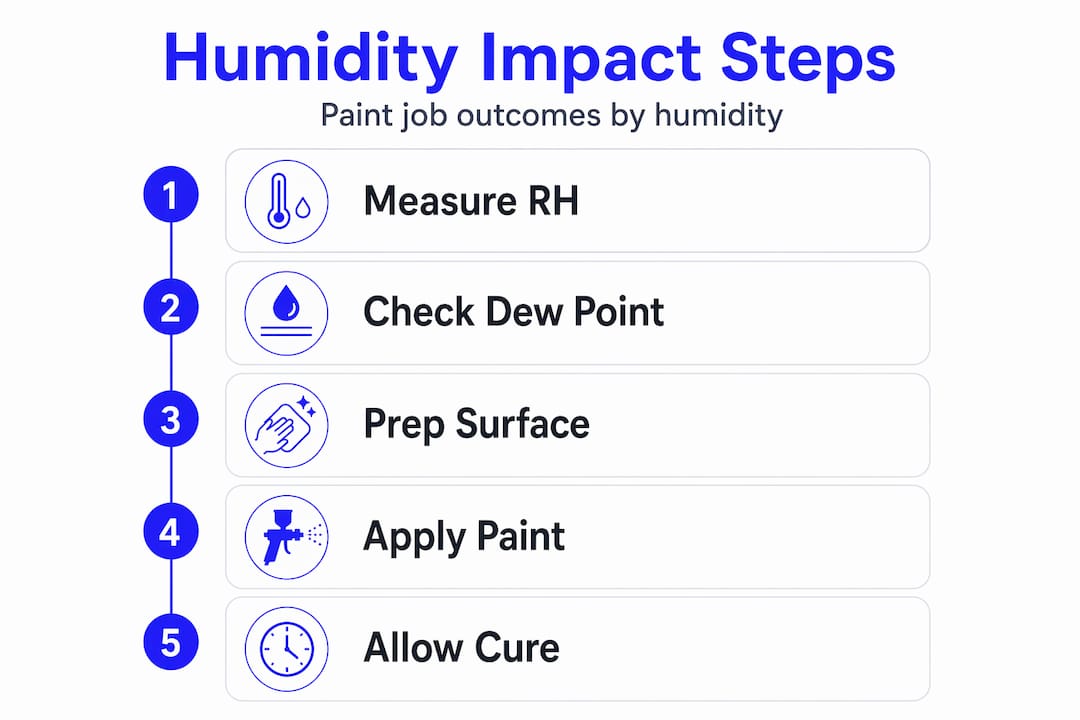
The 3°C rule for substrate temperature addresses exactly this risk. The substrate must be at least 3°C warmer than the dew point before any coating is applied. Professional painters measure air temperature, substrate temperature, and dew point with a digital psychrometer before they open a tin. Most homeowners skip this step entirely.
Here are the standard conditions required for reliable paint application:
- Relative humidity: Below 85% for most coatings; below 80% for water-based paints
- Substrate temperature: At least 3°C above the calculated dew point
- Ambient temperature: Between 10°C and 35°C for most interior and exterior paints
- Spray application: Ideal RH is between 40% and 65% for the best finish quality
The table below shows how humidity levels map to typical painting risk:
| Relative humidity | Risk level | Likely outcome |
|---|---|---|
| Below 30% | High (dry) | Dry spray, static, poor levelling |
| 30–40% | Moderate | Acceptable but monitor closely |
| 40–65% | Low | Optimal conditions for most paints |
| 65–80% | Moderate to high | Extended drying times, possible defects |
| Above 80% | High | Film formation failure, adhesion loss |
Pro Tip: Hire or purchase a digital thermo-hygrometer for around $30. Measure humidity and temperature at the surface level, not just in the middle of the room. Surfaces near external walls and floors are often cooler and closer to dew point than the ambient air suggests.
Common paint defects caused by humidity
Knowing the science is useful, but recognising what humidity-related failure looks like is what saves a job. Some defects appear within hours. Others take weeks or months to surface, by which time the root cause is long forgotten.
High humidity defects:
- Blushing: A cloudy, milky appearance trapped beneath the film as moisture interferes with the drying process. Common in both oil-based and water-based finishes.
- Soft film: Paint that feels dry to the touch but remains tacky and soft underneath. Pressing a fingernail into it reveals the problem.
- Bubbling and blistering: Moisture trapped beneath the surface expands as temperatures change, lifting the film away from the substrate.
- Peeling: The end stage of poor adhesion. Indoor humidity above 60% dramatically increases this risk and can also support mould growth beneath the film.
- Fish-eyes: Small craters in the finish where moisture has disrupted surface tension during application.
Low humidity defects:
- Dry spray: Paint dries mid-air before reaching the surface, creating a rough, powdery texture.
- Poor flow and levelling: The coating sets too quickly for brush marks or roller stipple to relax out.
- Static attraction: Dry air generates static, which pulls dust and particles into a wet coating.
What makes humidity defects particularly frustrating is that early signs like blushing and fish-eyes are often dismissed as minor cosmetic issues. They are not. They are indicators of film formation problems that will compromise the full coating over time.
Paint may feel dry on the surface but remain soft underneath in high humidity, leading to long-term adhesion failure that extra drying time will not resolve.
Managing humidity for a better paint result
Understanding the risks is one thing. Managing them is where most DIY projects either succeed or fall short. The good news is that with a clear plan, you can control the conditions well enough to get a professional result.
- Measure before you start. Use a thermo-hygrometer to record humidity and temperature at the surface level at least 30 minutes before painting. Do not rely on a weather app — indoor conditions can differ significantly from outdoor readings.
- Choose the right time of day for outdoor work. Early mornings often bring higher humidity, especially in Melbourne’s bayside and inner-east suburbs. Late morning to early afternoon typically offers drier, more stable conditions for exterior painting.
- Use a dehumidifier for interior work. Run it for several hours before painting and keep it running during application and the initial drying phase. This is particularly relevant for bathrooms, laundries, and older homes with limited ventilation.
- Ventilate without introducing humid outside air. Open windows only if outside humidity is lower than inside. Mechanical ventilation or a fan circulating interior air works better on wet days.
- Never paint during or immediately after rain. Exterior surfaces absorb moisture quickly. Allow at least 24 to 48 hours after rainfall before applying any exterior coating.
- Observe the 3°C margin strictly. Substrate temperature must exceed dew point by at least 3°C before you begin. This applies equally to interior walls on cold nights and exterior cladding on overcast days.
- Postpone rather than push through. Waiting longer in high humidity does not compensate for improper film formation. If conditions are outside the recommended range, reschedule.
| Scenario | Recommended action |
|---|---|
| RH above 80% outdoors | Postpone all exterior work |
| Bathroom interior, no ventilation | Run dehumidifier for 4+ hours prior |
| Cold morning, dew on surfaces | Wait until surfaces warm to 3°C above dew point |
| Humid afternoon, spray application | Switch to brush or roller, or postpone |
Pro Tip: For heritage weatherboard homes in Melbourne’s inner suburbs, check the substrate temperature of north-facing and south-facing walls separately. South-facing cladding stays cooler for longer and is far more likely to sit near dew point, even on a pleasant day.
Choosing the right paint for humid conditions
The right product choice makes a significant difference to paint durability in humidity. Not all paints behave the same way when moisture is present during application or curing.
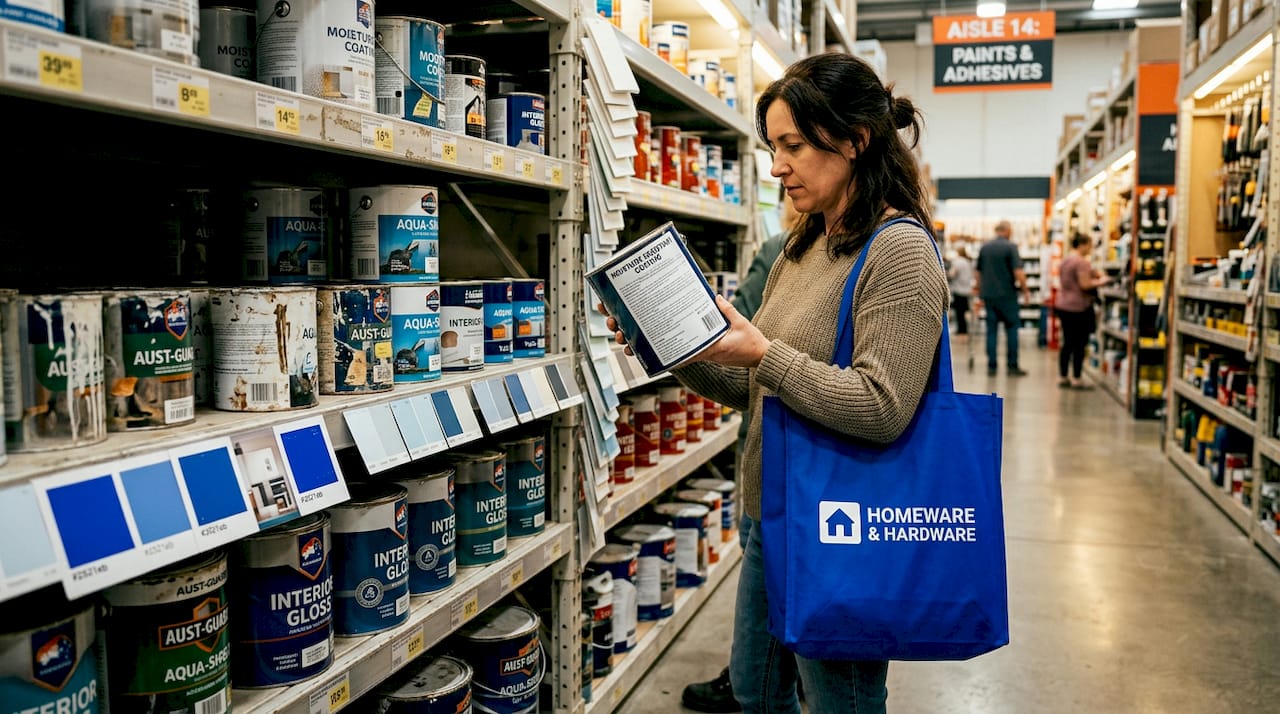
Water-based acrylic paints generally perform better than solvent-based alternatives in humid conditions. They are more breathable, which allows moisture vapour to move through the film without causing blistering. Solvent-based coatings form a denser film and are less tolerant of moisture trapped beneath them. On moisture-prone interior surfaces, this distinction matters considerably.
For the best paint for high humidity environments, consider the following:
- Acrylic latex paints with a satin or semi-gloss finish resist moisture better than flat finishes, which are more porous.
- Moisture-resistant primers create a stable base layer on substrates that have been exposed to damp conditions. They are not optional on bathrooms, kitchens, or any surface that has previously shown blistering.
- Anti-mould additives are available in both primer and topcoat formulations. In Melbourne homes with poor ventilation or known damp issues, these are worth specifying.
- Flexible masonry coatings suit rendered and brick exterior walls, allowing minor substrate movement without cracking and admitting moisture.
Surface preparation is equally critical. Wash and dry the surface thoroughly. Allow adequate drying time after wet-sanding. Any residual moisture on the substrate at the time of painting will compromise adhesion regardless of how good the product is.
Apply thin, even coats and allow each coat to cure properly before applying the next. Thick coats trap moisture inside the film and extend curing times, compounding any existing humidity problem.
Paint durability in humidity: long-term care
The impact of humidity on paint does not stop once the job is done. Sustained elevated humidity continues to degrade paint film over months and years.
Persistent indoor humidity above 60% links directly to peeling paint, mould growth behind and on the film, and premature chalking on exterior surfaces. Addressing the moisture source, not just repainting over the damage, is the only durable solution.
Practical maintenance steps to protect painted surfaces in humid climates include:
- Control moisture at the source. Fix leaking gutters, downpipes, and roof flashings before they allow water into the building fabric. In Melbourne’s heritage homes, this often means attending to render cracks and failed sealants around windows.
- Ventilate consistently. Exhaust fans in bathrooms and kitchens should vent externally, not into the roof cavity. Roof spaces need adequate cross-ventilation to prevent trapped humidity from affecting interior surfaces.
- Inspect painted surfaces annually. Look for early signs of blistering, chalking, or fine cracks. Catching these early allows a touch-up rather than a full repaint.
- Schedule repaints proactively. Exterior paint on a well-prepared surface in Melbourne’s climate typically lasts 8 to 12 years. Waiting until paint fails completely costs more to rectify than timely maintenance.
- Use moisture barriers where required. In subfloor areas and behind wet-area wall linings, a vapour barrier prevents moisture migration into the structure and the painted surfaces above it. Read more on moisture control for heritage homes.
My honest take on humidity and paint quality
I’ve worked on enough Melbourne homes to say with confidence that humidity is the most consistently underestimated variable in any paint project. Homeowners focus heavily on colour and product selection, which matter, but they rarely ask what the weather is doing or what the walls have been doing all winter.
What I’ve found is that the difference between a paint job that lasts a decade and one that starts peeling in two years often comes down to a single morning’s decision. Painting on a humid overcast day because the schedule demands it. Applying a second coat before the first has properly cured. Skipping the moisture reading on a surface that feels dry but sits near dew point. These are not failures of effort. They are failures of information.
The thing that surprises most people I speak with is that humidity damage is often invisible at completion. The job looks clean, the colour is right, and the surface appears smooth. The failure shows up six months later when the film starts lifting at the edges or a soft spot develops behind a patch of blistering. By then, the cause is difficult to trace.
My advice for anyone considering a significant interior or exterior repaint is to treat environmental conditions as seriously as product selection. If conditions are marginal, wait. If the project involves heritage materials like heritage timber trim or original render on a Victorian or Edwardian home, the stakes are even higher, because failed paint on those substrates creates repair problems that go well beyond a coat of paint.
Controlling humidity has fundamentally shaped how I approach both domestic repaint schedules and more complex restoration projects. It is not a minor consideration. It is the foundation on which every lasting finish depends.
— Jarrad
Let Sol Shine handle the hard conditions for you

Sol Shine has spent years painting and restoring Melbourne homes in the inner east, bayside, and surrounding suburbs, including Hawthorn, Kew, Brighton, and Camberwell. Every project begins with a thorough environmental assessment, including humidity readings, dew point calculations, and substrate moisture checks, before a single tin is opened. That preparation is what separates a finish that lasts from one that fails.
Whether you are planning an interior repaint for a heritage home or need a full exterior programme that accounts for Melbourne’s variable climate, Sol Shine brings the expertise to get conditions right. Explore our exterior painting projects or get in touch directly to discuss your property and timeline.
FAQ
What humidity level is safe for painting?
Most paints perform reliably at a relative humidity between 40% and 65%. Above 80% RH, film formation is compromised and painting should be postponed.
Why does paint peel in humid rooms?
Peeling occurs when moisture weakens the bond between the paint film and the substrate. Indoor humidity above 60% is a primary cause, especially in bathrooms and kitchens with inadequate ventilation.
Can I paint in humid conditions if I wait longer to dry?
Waiting longer does not fully solve the problem. Slow evaporation in high humidity causes improper film formation beneath the surface that extended drying time cannot correct.
What is blushing in paint and is it serious?
Blushing is a milky, cloudy finish caused by moisture trapped in the drying film. It is a warning sign of film formation failure and should be addressed before applying further coats.
What is the best paint for high humidity areas?
Water-based acrylic paints with a satin or semi-gloss finish perform best in high humidity environments. Pair them with a moisture-resistant primer and, where required, a product with anti-mould additives for rooms like bathrooms and laundries.


