
TL;DR:
- Skilled craftsmanship uses traditional manual skills and material knowledge to ensure the lasting preservation of heritage homes. It influences the structural integrity and performance of restorations by making nuanced material decisions and applying techniques grounded in experience.
Skilled craftsmanship is the expert application of traditional manual skills and material knowledge that ensures the authentic preservation and quality restoration of period and heritage homes. For homeowners managing Victorian or Edwardian properties in Melbourne’s inner east and bayside suburbs, this definition carries real weight. The role of skilled craftsmanship extends far beyond aesthetics. It determines whether a restored façade lasts decades or fails within years. Global construction is projected to grow by more than $10 trillion over the next 20 years, and the demand for heritage artisans who can meet that growth with genuine skill is already outpacing supply.
How does skilled craftsmanship improve heritage restoration quality?
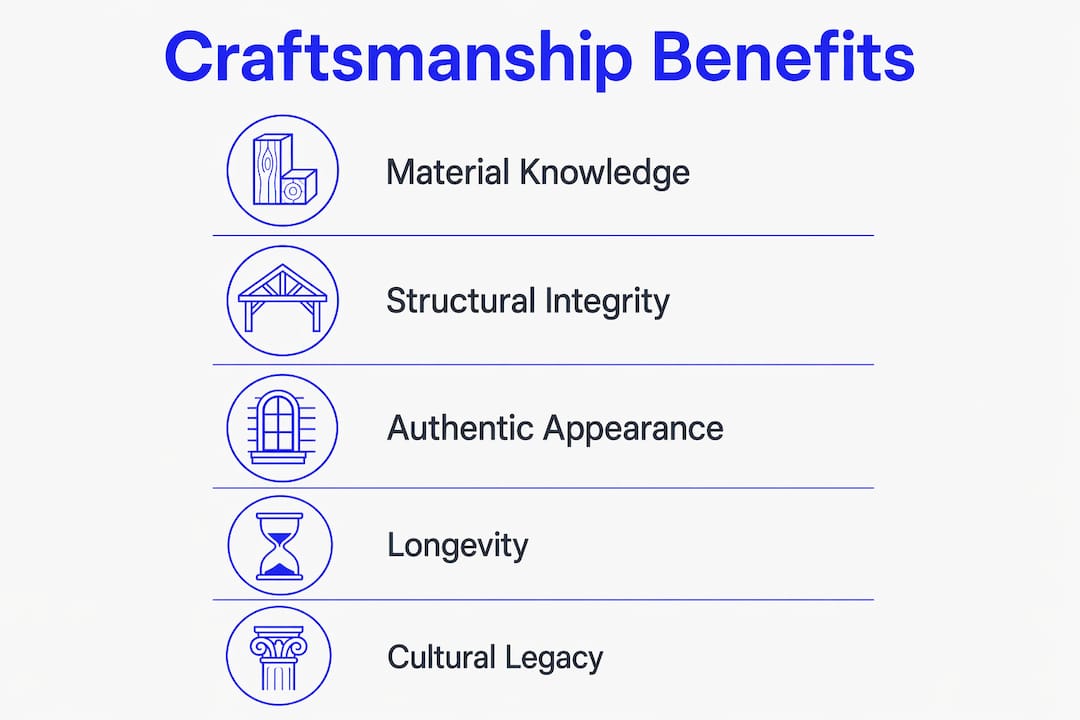
The quality of a heritage restoration is determined by decisions made at the material level, not the design level. Accumulated judgement and an intimate understanding of how timber, stone, and render behave over time are what separate a lasting repair from one that fails quietly behind a fresh coat of paint. A craftsperson who has worked with old-growth hardwood for years knows how it moves with humidity. That knowledge cannot be replicated by a specification sheet.
The mark of quality craftsmanship is often invisible. It lives in joinery tolerances, in the consistency of an internal finish, and in the structural decisions made before any surface treatment begins. This is why two restorations can look identical on completion day but perform very differently over the following decade.
Traditional techniques deliver structural benefits that modern prefabrication cannot replicate in heritage contexts:
- Timber joinery cut and fitted by hand accommodates the natural movement of old-growth timber without cracking or separation.
- Lime mortar selection in brickwork allows heritage masonry to breathe and flex, preventing moisture damage that rigid modern mortars cause.
- Manual scribing in carpentry and joinery creates authentic load distribution essential for durability in period structures.
- Render repair using heritage-compatible mixes preserves the original substrate rather than trapping moisture behind an impermeable surface.
Pro Tip: Before engaging any tradesperson for heritage render or brickwork, ask specifically which mortar mix they plan to use. A lime-based mortar is almost always the correct choice for pre-1950s masonry. A Portland cement mix will look fine initially but can cause serious spalling within five years.
Craftsmanship also embodies accountability. Skilled artisans stand behind their work in a way that mass-production models do not. When a craftsperson fits a sash window or repairs a heritage cornice, they are making a professional commitment to its performance, not just its appearance.
How are heritage craft skills passed down to new generations?
Heritage craft skills are transmitted most effectively through sustained, mentor-led practice. Research confirms that traditional skills transmission occurs over 2–4 year periods of hands-on engagement. No short course or digital tutorial replicates the depth of understanding that comes from working alongside an experienced artisan on real projects.
The most effective transmission follows a clear progression:
- Observation. The apprentice watches the mentor work, learning to read materials, tools, and conditions before touching them.
- Assisted practice. The apprentice performs tasks under direct supervision, with the mentor correcting technique in real time.
- Independent application. The apprentice completes work independently, with the mentor reviewing outcomes and identifying refinements.
- Contextual judgement. The apprentice begins making material and method decisions, guided by the mentor’s experience rather than a rulebook.
The most passionate craftspeople serve as mentors who transmit not just skills but cultural history and pride to their apprentices. This matters for heritage restoration specifically because the craft carries the memory of how buildings were originally constructed. An artisan who understands why a Victorian verandah was built a particular way will restore it more faithfully than one who simply copies its appearance.
Pro Tip: When selecting a heritage restoration specialist, ask about their training background. A tradesperson who completed a formal apprenticeship under an experienced heritage artisan will bring a different depth of understanding than one who learned primarily through commercial construction.
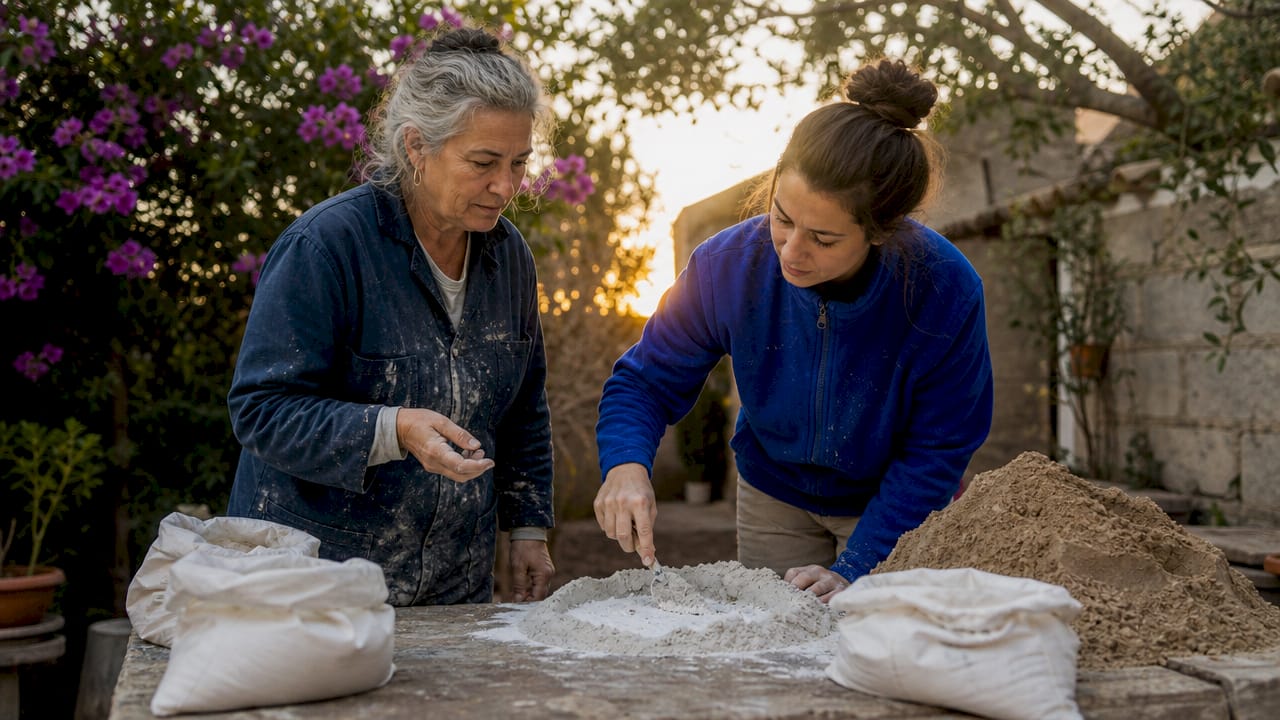
The role of tradespeople in heritage painting and restoration reflects this same principle. Skill is not just technical. It is cultural, and it is built through years of deliberate, mentored practice.
How do craftspeople balance traditional methods with modern tools?
Skilled artisans working on heritage properties today operate at the intersection of traditional technique and modern capability. The best outcomes come from knowing which tool serves the building, not from defaulting to either extreme.
| Restoration task | Traditional method | Modern tool used alongside |
|---|---|---|
| Cornice replication | Hand casting and moulding | 3D scanning for profile accuracy |
| Timber window repair | Hand planing and scribing | CNC cutting for replacement sections |
| Render matching | Manual mix testing and application | Spectrometry for colour matching |
| Brickwork repointing | Hand raking and lime mortar | Moisture meters for substrate assessment |
Integrating technologies like CNC and 3D scanning enhances precision but must be balanced carefully with traditional practices to preserve building flexibility. A 3D scan can capture a cornice profile with accuracy that hand measurement cannot match. But the casting, finishing, and fitting of that cornice still requires a craftsperson’s hands and judgement.
The risk runs in the other direction too. Misapplication of modern rigid materials can harm heritage structures by preventing the natural movement and breathability that old buildings depend on. Epoxy fillers, acrylic renders, and rigid sealants applied to Victorian or Edwardian substrates often create more problems than they solve. True craft balances new methods while allowing natural material behaviour over time.
For homeowners, this means asking your restoration specialist not just what they will do, but why they have chosen each material and method. A craftsperson who can explain their reasoning is one who understands the building, not just the task. You can also review exterior restoration best practices to build your own understanding before those conversations begin.
How can homeowners work effectively with skilled craftspeople?
Homeowners who treat skilled craftspeople as project partners, rather than contractors, consistently achieve better restoration outcomes. Successful heritage restorations treat craftspeople as stakeholders alongside architects and historians, respecting the building’s original character and construction logic.
Practical steps that make a real difference:
- Brief thoroughly, then trust the process. Share your goals, your budget constraints, and any heritage overlay requirements upfront. Then allow the craftsperson to work without micromanagement.
- Ask for process transparency. Demonstrating the restoration process increases cultural engagement and helps homeowners understand the value of what is being done. Request progress walkthroughs at key stages.
- Document decisions. Keep a written record of materials used, methods applied, and any variations from the original scope. This information is invaluable for future maintenance.
- Understand the maintenance commitment. A well-executed heritage restoration requires ongoing care. Ask your craftsperson to outline a maintenance schedule at project completion.
- Respect the timeline. Craftsmanship deliberately slows production to allow for error correction and higher judgement. Pressure to accelerate a heritage restoration almost always compromises the outcome.
The exterior woodwork on a Victorian or Edwardian home is a good example of where this collaboration matters most. Timber trim, bargeboards, and verandah posts require careful assessment, not just repainting. A craftsperson who inspects and documents the condition of each element before work begins is one who will deliver a result that lasts.
Key takeaways
Skilled craftsmanship is the single most important factor in determining whether a heritage restoration preserves its structural integrity, aesthetic authenticity, and long-term value.
| Point | Details |
|---|---|
| Material knowledge is non-negotiable | Artisans must understand how timber, lime, and render behave over time to make repairs that last. |
| Skills are built over years, not weeks | Effective heritage craft transmission requires 2–4 years of mentor-led, hands-on practice. |
| Modern tools support, not replace, craft | Technologies like 3D scanning improve accuracy but cannot substitute for a craftsperson’s judgement. |
| Homeowners are project partners | Briefing thoroughly and respecting the process leads to better outcomes and lower long-term maintenance costs. |
| Accountability defines true craftsmanship | Skilled artisans stand behind their work in ways that mass-production or budget-driven services do not. |
Craftsmanship is patience, not just skill
I have worked on enough Victorian and Edwardian homes across Melbourne to know that the biggest misconception homeowners bring to a heritage restoration is the belief that speed and quality can coexist. They rarely do. The properties that come out looking genuinely right, the ones where the render sits flush, the joinery moves correctly, and the paint holds for fifteen years, are the ones where the craftsperson was given time to think, not just to work.
What I find most often is that homeowners underestimate how much of a craftsperson’s value is invisible. The decision to use a particular lime mix, to leave a section of render to cure before overcoating, to hand-plane a sash rather than replace it entirely. None of that shows up in a quote comparison. It only shows up five years later when one house still looks right and another is already failing.
The other thing I have observed is that the best craftspeople are also the most willing to explain their reasoning. They are not guarding trade secrets. They understand that a homeowner who appreciates what is being done will respect the process and the timeline. That relationship produces better work. Every time.
Respecting artisan knowledge is not just good manners. It is how you protect the investment you are making in a building that was designed to last a century.
— Jarrad
Heritage restoration done properly, from the first coat to the final detail
Sol Shine brings the same commitment to craftsmanship to every heritage project it undertakes across Melbourne’s inner east and bayside suburbs.

Whether your Victorian or Edwardian home needs a full exterior repaint, render repair, timber restoration, or custom joinery, Sol Shine manages the entire scope under one roof. Every project is handled by skilled tradespeople who understand heritage materials and methods, not generalist painters working from a standard specification. For homeowners ready to invest in a restoration that respects the character of their property, Sol Shine’s heritage painting services and heritage painting guide are the right starting point. Get in touch to discuss your project.
FAQ
What is skilled craftsmanship in heritage restoration?
Skilled craftsmanship in heritage restoration is the expert application of traditional manual techniques and material knowledge to repair and preserve period buildings. It includes timber joinery, lime mortar work, render repair, and architectural woodwork carried out by artisans with deep, hands-on experience.
Why does craftsmanship matter more than materials alone?
The best materials fail without the right application. Skilled artisans bring accumulated judgement about how materials behave over time, which determines whether a repair lasts years or decades.
How long does it take to develop heritage craft skills?
Research confirms that effective heritage skills transmission requires 2–4 years of sustained, mentor-led practice. Short courses and digital learning do not replicate the depth of understanding built through hands-on apprenticeship.
Can modern technology replace traditional craftsmanship in restoration?
Modern tools like 3D scanning and CNC improve accuracy in specific tasks but cannot replace a craftsperson’s judgement. Traditional techniques remain essential for authentic load distribution, material flexibility, and long-term structural performance.
How do I choose the right craftsperson for a heritage project?
Ask about their apprenticeship background, request examples of comparable heritage work, and confirm their knowledge of heritage-compatible materials such as lime mortar and breathable render systems. A craftsperson who explains their method choices clearly is one who understands the building.


