
There is a quiet misconception among many heritage homeowners that leaving a Victorian or Edwardian façade to age naturally is the respectful approach. In reality, that thinking can cost you dearly. Mould, biological growth, and accumulated grime do not add character; they accelerate decay. Neglecting exterior cleaning can quietly erode both the structural integrity and the ‘heritage premium’ that makes your property so valuable in suburbs like Kew, Hawthorn, and Brighton. This article covers the real risks of neglect, how to clean without damaging original features, and why a proactive routine is the smartest investment you can make in your home’s future.
Table of Contents
- The hidden dangers of neglecting exterior cleaning
- How regular exterior cleaning preserves heritage value
- Maintaining historical integrity: What to clean and what to leave
- The cost of ignoring exterior cleaning: Real Melbourne stories
- Why a proactive mindset is the true foundation of heritage home care
- Trusted experts for Melbourne heritage home care
- Frequently asked questions
Key Takeaways
| Point | Details |
|---|---|
| Preserves heritage and value | Routine cleaning safeguards both the aesthetic and market worth of Melbourne’s period homes. |
| Protects your health | Removing mould and allergens boosts air quality and the living comfort of heritage properties. |
| Prevents costly repairs | Regular care avoids major structural and paint damage caused by neglect. |
| Requires professional touch | Heritage cleaning demands specialist skills to protect delicate features and comply with local guidelines. |
The hidden dangers of neglecting exterior cleaning
Melbourne’s climate is particularly unforgiving for heritage properties. The city’s combination of high humidity, coastal salt air in bayside suburbs, and pollution from inner-city traffic creates a hostile environment for the original materials used in Victorian and Edwardian construction. Timber weatherboards, lime render, and heritage brickwork were built to last, but they were never designed to cope with a century of neglect.
The most common threats to an unmaintained exterior include:
- Moisture ingress from blocked gutters and dirty surfaces, which softens timber and causes paint to bubble and peel
- Mould and lichen growth that embeds itself into render and brickwork, breaking down the surface over time
- Airborne pollution and grime that bonds with paintwork, dulling colour and trapping moisture against the substrate
- Biological staining on verandah timbers and ornate fretwork, which is far harder to remove once established
- Crumbling paint that exposes bare timber or render to the elements, inviting rapid deterioration
The health implications are equally serious. Regular cleaning removes harmful mould spores and allergens from exterior surfaces, which is particularly important for homes with open verandahs and large windows typical of the era. Poor cleaning health benefits are well documented, with mould exposure linked to respiratory conditions and increased allergy symptoms.
“A heritage home that looks tired on the outside signals deferred maintenance to every buyer, every council inspector, and every neighbour who passes by.”
For owners who have invested in painting maintenance tips or recently completed an exterior painting for heritage homes project, regular cleaning is what protects that investment between paint cycles. Without it, even a premium repaint can degrade years ahead of schedule.
How regular exterior cleaning preserves heritage value
Real estate agents working in Melbourne’s inner east and bayside suburbs consistently report that well-maintained heritage homes command a premium above comparable properties. This is the ‘heritage premium’: the additional market value attached to a home that retains its original character in excellent condition. Regular cleaning boosts this premium by keeping the façade, trims, and period details looking their best year-round.
The difference between a cleaned and uncleaned heritage exterior is stark when you compare outcomes:
| Feature | Regularly cleaned | Neglected for 3+ years |
|---|---|---|
| Paintwork lifespan | 8 to 12 years | 4 to 6 years |
| Render condition | Stable and intact | Cracking and stained |
| Timber trims | Sound and paintable | Soft, rotten, or split |
| Buyer perception | Well-maintained, premium | Deferred maintenance, reduced offer |
| Heritage overlay compliance | Easily maintained | Potentially at risk |
The cleaning and home value relationship is well established. Establishing a reliable cleaning routine does not need to be complicated. A practical approach for heritage homeowners includes:
- Schedule a full exterior wash every 12 months, ideally in late autumn after summer dust and biological growth has peaked
- Inspect gutters and downpipes at the same time, clearing debris that traps moisture against fascia boards
- Spot-treat mould or lichen growth on render and brickwork as soon as it appears, before it becomes embedded
- Clean verandah timbers, balustrades, and fretwork with a low-pressure rinse and appropriate timber-safe solution
- Follow each cleaning cycle with a visual inspection of paintwork, noting any areas of peeling or chalking for attention
Pro Tip: Coordinate your annual cleaning with your painting contractor’s schedule. Cleaning immediately before a repaint ensures the surface is properly prepared, and cleaning between paint cycles keeps the coating performing at its best. Sol Shine’s preventative painting approach is built around exactly this kind of coordinated care.
For homes with coatings for restoration already applied, or those considering heritage painting services, a clean surface is the non-negotiable starting point for any quality outcome.
Maintaining historical integrity: What to clean and what to leave
Not every part of a heritage home responds the same way to cleaning. Knowing which surfaces can handle regular maintenance and which require specialist care is essential for preserving the architectural character that makes your property unique.
Surfaces well-suited to regular cleaning include:
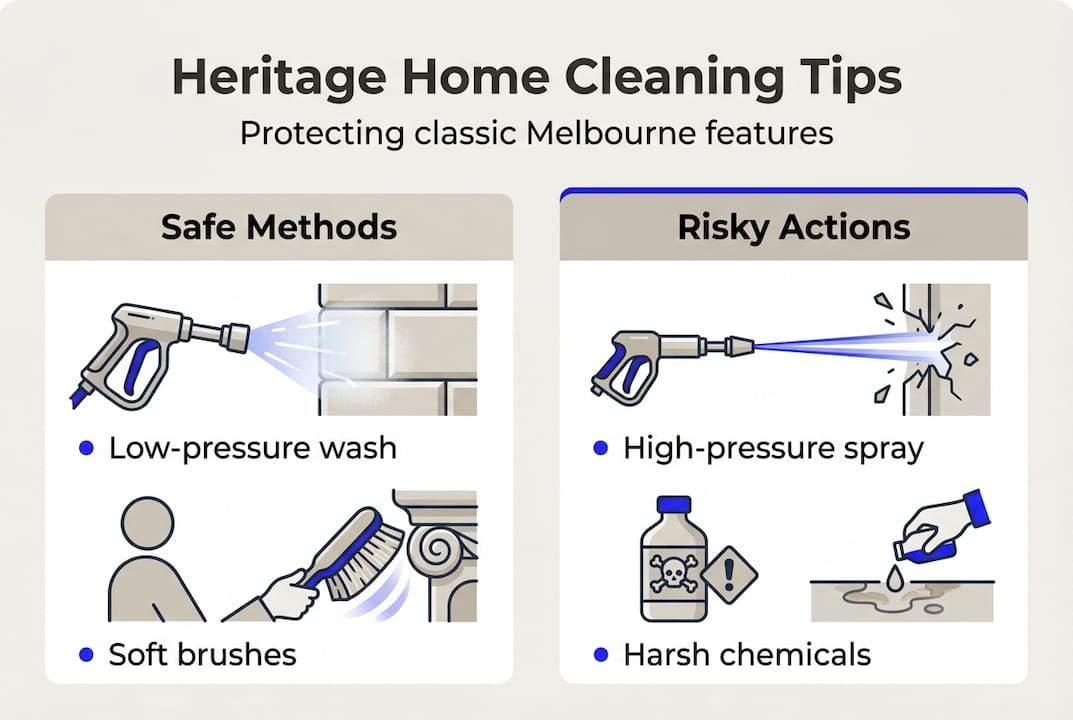
- Weatherboards and cladding: Low-pressure washing with a heritage-safe detergent removes grime without lifting paint
- Verandah decking and steps: Regular scrubbing prevents biological staining and keeps timber sound
- Window surrounds and sills: Gentle cleaning removes dirt that traps moisture and accelerates paint failure
- Brick pathways and front fences: Periodic washing maintains presentation without damaging mortar joints
Areas that require caution and specialist knowledge include:
| Feature | Risk level | Recommended approach |
|---|---|---|
| Ornate timber fretwork | High | Low-pressure only, no abrasives |
| Leadlight windows | Very high | Dry or damp cloth, no pressure washing |
| Original lime render | High | Specialist cleaning, no acidic products |
| Decorative terracotta | Medium | Soft brush and water, avoid chemicals |
| Heritage brickwork | Medium | Specialist assessment before any treatment |
Professional exterior cleaning preserves delicate brickwork, stonework, and timber without causing damage. High-pressure washing, for example, is one of the most common mistakes made on heritage homes. It strips paint, forces water into joints, and can permanently damage soft render or ornate timber detail.
Pro Tip: Before engaging any cleaning contractor, confirm they have direct experience with heritage properties. A general pressure-washing service is not the same as a specialist who understands the materials and overlays involved. For homes with original window repair for heritage homes requirements or sensitive render, always consult specialist heritage painting professionals who understand the full picture.
The goal is to clean in a way that supports the home’s longevity. Cleaning that causes damage is not maintenance; it is a different kind of neglect. Understanding the cleaning for home staging principles also helps homeowners prioritise which areas deliver the greatest visual and protective impact.
The cost of ignoring exterior cleaning: Real Melbourne stories
Across Melbourne’s heritage suburbs, the pattern repeats itself. A homeowner delays exterior cleaning for a few years, assuming the home is holding up well. Then, during a routine inspection or pre-sale assessment, the true cost of that delay becomes visible.
The typical progression of damage from ignored exterior cleaning follows a predictable path:
- Grime and biological growth accumulate on weatherboards and render, trapping moisture against the surface
- Paint begins to chalk, blister, and peel, exposing bare timber or substrate beneath
- Moisture ingress accelerates paint and woodwork deterioration, softening timber frames and window sills
- Rot sets into weatherboards, requiring partial or full weatherboard replacement rather than a simple repaint
- Leadlight windows and original joinery suffer water damage, requiring costly timber window protection or full restoration
- Heritage overlay compliance becomes an issue if the property’s condition has visibly deteriorated
“What begins as a $500 cleaning job left undone can quietly become a $30,000 restoration project within five to seven years.”
In one Hawthorn property, a homeowner deferred exterior maintenance for four years. By the time Sol Shine assessed the home, the original weatherboards on the south-facing elevation had significant rot, the render on the front bay window was cracking and detaching, and the paintwork across the entire façade had failed. The restoration scope was substantial, and the deep cleaning before sale that the vendor had hoped would suffice was nowhere near adequate.
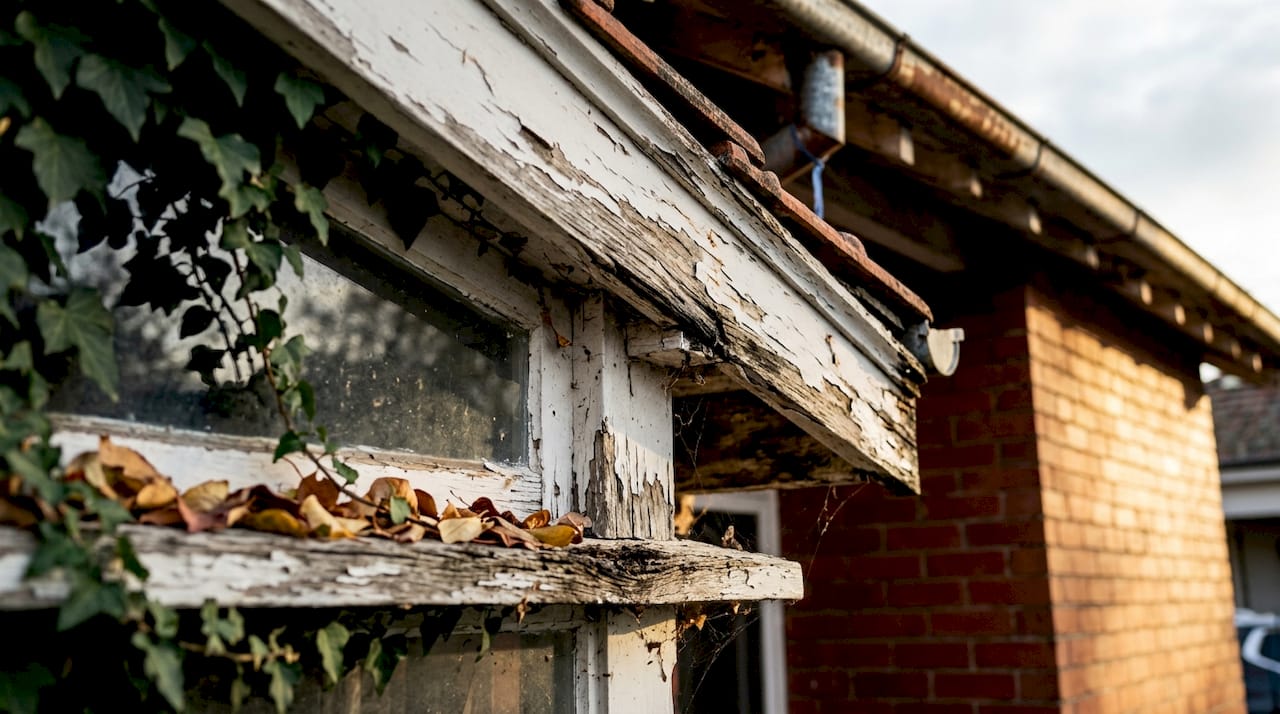
In a Camberwell Edwardian, a similar story unfolded. Blocked gutters had allowed water to sit against the fascia boards for two seasons. The timber had softened beyond repair, and the ornate brackets beneath the verandah roofline had begun to split. A cleaning and gutter clearance programme, maintained annually, would have prevented both situations entirely.
Why a proactive mindset is the true foundation of heritage home care
After years of working on Victorian and Edwardian homes across Melbourne’s inner east and bayside suburbs, Sol Shine has observed something consistent: the homeowners with the best-preserved properties are rarely the ones who spend the most on crisis repairs. They are the ones who never let things reach a crisis in the first place.
The heritage restoration industry tends to celebrate the dramatic transformations, the before-and-after reveals of homes brought back from the brink. But the real skill, and the real value, lies in what does not happen. No rot. No failed render. No emergency repaints. That kind of outcome is the result of consistent, modest effort applied over years.
There is also a broader responsibility worth acknowledging. Heritage homes in suburbs like Fitzroy, Northcote, and Essendon are part of a shared streetscape. How you maintain your property affects the character of the entire neighbourhood. Embracing preventative painting wisdom and regular exterior care is not just good practice for your own asset; it is a form of stewardship for the architectural legacy these streets represent. That is a privilege, not a burden.
Trusted experts for Melbourne heritage home care
If your heritage home is overdue for a professional assessment, now is the right time to act. Sol Shine specialises in exactly this kind of work, combining skilled exterior cleaning coordination with full-scale heritage restoration and painting across Melbourne’s inner east, bayside, and surrounding suburbs.

From heritage painting services and render repair to weatherboard replacement and timber restoration, Sol Shine manages every aspect of your home’s exterior care under one roof. There is no need to coordinate multiple contractors or worry about whether the work respects your home’s heritage status. Visit the Sol Shine homepage to learn more or request a consultation for your property.
Frequently asked questions
How often should heritage homes be cleaned in Melbourne?
Annual cleaning is recommended for most Victorian and Edwardian homes, but high-traffic properties or those shaded by large trees may benefit from more frequent attention to prevent biological growth.
Will exterior cleaning damage original heritage features?
When carried out by professionals experienced with heritage materials, the right techniques protect and prolong the life of original features. Professional cleaning is safe for original brickwork, timber, and render when the correct methods and pressures are used.
Does exterior cleaning really increase resale value?
Yes. Enhanced curb appeal and a well-maintained façade contribute directly to the heritage premium that buyers pay in Melbourne’s top heritage suburbs, making regular cleaning one of the highest-return maintenance activities available.
What parts of a heritage home should always be cleaned?
High-contact and weather-exposed surfaces such as weatherboards, verandahs, and window surrounds should be prioritised for cleaning, while delicate features like ornate fretwork and leadlight windows require specialist attention rather than standard pressure washing.


