
TL;DR:
- Heritage exteriors require gentle, low-pressure cleaning methods to prevent irreversible damage.
- Proper planning, permits, and expert advice are essential before cleaning or restoring heritage homes.
- Maintaining heritage features, such as gutters and mortar, helps preserve the home’s authenticity and integrity.
Cleaning the exterior of a Victorian or Edwardian home in Melbourne is not as straightforward as hosing down a modern render. The wrong method, even a well-intentioned one, can strip original lime mortar, lift heritage paint, or force moisture into century-old brickwork in ways that are costly and sometimes irreversible. Melbourne’s variable climate, from summer heatwaves to winter damp, adds further pressure on already aged materials. Layer in the requirements of Heritage Overlays under local planning schemes, and you have a job that demands careful thought before a single brush is raised. This guide breaks down exactly what you need to know to clean your heritage exterior safely, legally, and with confidence.
Table of Contents
- Understanding your heritage exterior: Materials and risks
- Preparation: Assess, plan and gather your tools
- How to clean: Step-by-step safe cleaning for heritage exteriors
- Maintenance and troubleshooting: Keeping your exterior healthy
- Why preservation, not perfection, protects your heritage
- Get expert help with your Melbourne heritage home
- Frequently asked questions
Key Takeaways
| Point | Details |
|---|---|
| Gentle methods only | Always start cleaning with low-pressure and non-abrasive methods to protect heritage materials. |
| Plan and get permits | Check your home’s overlays and secure permits before exterior cleaning or repainting. |
| Test before cleaning | Always trial your cleaning method on a small, inconspicuous area first. |
| Ongoing maintenance matters | Regular checks and gentle care keep heritage exteriors healthy and valuable. |
| Preservation over perfection | Embrace authentic signs of age and focus on material longevity, not spotless looks. |
Understanding your heritage exterior: Materials and risks
Now that we’ve set the scene for why heritage exteriors need specialist care, let’s break down what your home is actually made of and what can go wrong if you get it wrong.
Victorian and Edwardian homes across suburbs like Kew, Hawthorn, and Camberwell were built with materials that behave very differently from modern construction. Brick, stucco render, timber weatherboards, and decorative cast iron each have their own vulnerabilities. Understanding those vulnerabilities is the first step toward protecting them.
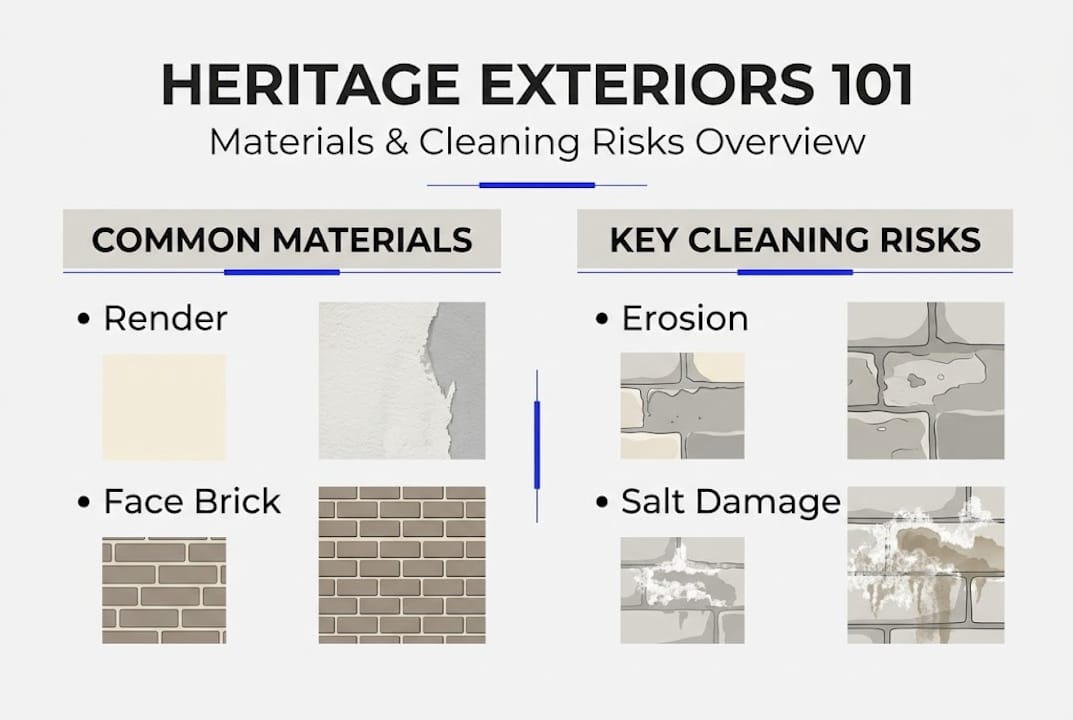
| Material | Common vulnerabilities | Key risks if cleaned incorrectly |
|---|---|---|
| Face brick | Porous mortar joints, salt deposits | High-pressure water forces moisture deep into the wall |
| Stucco render | Hairline cracks, hollow spots | Abrasive tools or pressure washing causes delamination |
| Timber weatherboards | Raised grain, paint adhesion loss | Harsh chemicals strip paint and accelerate rot |
| Cast iron lacework | Rust beneath paint layers | Sandblasting removes protective coatings and accelerates corrosion |
Masonry and brick exteriors require low-pressure and non-abrasive cleaning methods. This is not a guideline to consider; it is a baseline requirement for any responsible heritage cleaning programme. Ignoring it risks damage that no amount of repainting will fully conceal.
High-pressure washing, sandblasting, and harsh chemical strippers are the three most common mistakes made on heritage façades. Each one can cause irreversible harm. Proper exterior cleaning that protects heritage homes starts with understanding what you are working with, not what product is on sale at the hardware store.
Melbourne’s Heritage Overlays, administered under the Planning and Environment Act 1987, place legal obligations on what you can and cannot do to the exterior of a listed or contributory property. The Heritage Victoria guide outlines these obligations clearly. Non-compliance can result in enforcement action and costly rectification works.
Common damages caused by incorrect cleaning techniques include:
- Crumbling mortar joints from water forced into hairline cracks under pressure
- Paint loss and blistering caused by solvent-based chemicals on aged oil-based coatings
- Water ingress behind render, leading to internal damp and structural issues
- Salt attack (efflorescence) triggered when moisture mobilises soluble salts within the masonry
- Timber splitting from rapid wetting and drying cycles during hot Melbourne summers
Knowing these risks helps you make informed decisions, and it helps you understand why cleaning done well can genuinely boost value in Melbourne rather than diminish it.
Preparation: Assess, plan and gather your tools
With the risks in mind, effective cleaning starts before you even reach for a brush. Here’s how to plan for a successful, permit-safe job.
A thorough visual inspection is your starting point. Walk the full perimeter of your home and look carefully at the following:
- Check for active cracks in render or mortar, particularly around window reveals and parapet walls
- Look for staining patterns that suggest rising damp or leaking gutters above
- Note any areas where paint is already lifting, blistering, or showing signs of salt crystallisation
- Identify sections of cast iron that show rust bleed or loose fixings
- Document everything with photographs before any cleaning begins
Once you have a clear picture of the condition, choose your cleaning method carefully. Not every surface needs the same approach.
| Method | Best suited for | Caution |
|---|---|---|
| Gentle pH-neutral cleanser | Light grime on brick and render | Avoid on friable or crumbling surfaces |
| Low-pressure steam cleaning | Ingrained dirt, biological growth | Requires correct temperature control |
| Poultice application | Deep stains, oil marks on masonry | Must be fully cured before removal |
It is essential to test small areas and use a staged approach for paint removal, consulting with guides or experts prior to commencing. Testing a 30 cm square patch in an inconspicuous location before treating a full wall is not optional; it is the single most effective way to avoid a costly mistake.
Planning permits are often required for exterior works in Heritage Overlays. Before you begin, contact your local council to confirm whether a permit applies to your property. Many homeowners are surprised to learn that even repainting in a different colour can require approval. The exterior cleaning safeguards that apply to Melbourne heritage homes are there for good reason, and working within them protects both your property and its legal standing.
For tools and PPE, gather the following before starting:
- Soft-bristle brushes (natural fibre preferred for masonry)
- Low-pressure garden sprayer or soft wash system
- pH-neutral or heritage-specific cleaning solution
- Protective eyewear, gloves, and a dust mask rated P2 or higher
- Drop sheets to protect garden beds and hard surfaces below
Pro Tip: Keep a written log of every product you test, the dilution ratio used, the surface it was applied to, and the result. This record becomes invaluable if you need to repeat the process or hand the information to a professional later.
How to clean: Step-by-step safe cleaning for heritage exteriors
With your plan and permits sorted, it’s time for the main event: here’s how to clean without putting your heritage at risk.
Sequence matters as much as technique. Follow these steps carefully and work from the top of the façade downward to prevent dirty water running over already-cleaned surfaces.
- Dry brush the surface using a soft-bristle brush to remove loose dust, cobwebs, and dry debris before any water is introduced
- Pre-wet the wall with clean water at low pressure to reduce absorption of the cleaning solution into the substrate
- Apply your chosen cleanser with a soft brush or low-pressure sprayer, working in small sections of no more than two square metres at a time
- Allow dwell time as directed by the product, typically five to ten minutes, without letting the solution dry on the surface
- Rinse gently from top to bottom using low-pressure water, checking that runoff is directed away from garden beds
- Address stains separately using a poultice or targeted heritage stain remover after the general clean has dried
- Inspect the cleaned area in natural light before moving on, looking for any signs of surface damage or unexpected reactions
Always test on a small, inconspicuous area first. No product or technique should be applied to a full wall until you have confirmed it is safe on your specific substrate.
Avoid high-pressure washing; start with low-pressure or manual methods and increase only if clearly safe after testing. For stains, rising damp, or major restoration, DIY cleaning is possible for basic dirt and dust, but calling an expert is strongly recommended to avoid damage.

Pause cleaning immediately if you notice any of the following: active moisture weeping from the wall, salt crystals forming on the surface during the process, or paint lifting in sheets rather than small flakes. These are signs of deeper problems that cleaning alone will not resolve.
Pro Tip: Never clean a heritage exterior when frost is forecast overnight or when a heatwave is predicted within 24 hours. Rapid temperature changes cause cleaning solutions to behave unpredictably and can drive moisture into already stressed masonry.
For more specific guidance, our roof cleaning tips and painting maintenance tips cover related areas that often need attention alongside a full exterior clean.
Maintenance and troubleshooting: Keeping your exterior healthy
Cleaning is just the start. Maintaining your home’s exterior will save you time and money in the long run.
A well-maintained heritage exterior does not need intensive cleaning every year. What it does need is consistent, low-effort attention across a few key areas. Biannual maintenance tasks that make a real difference include:
- Clear gutters and downpipes at least twice a year, in autumn after leaf fall and in spring before the wet season, to prevent overflow that saturates walls
- Inspect mortar joints for crumbling or gaps and repoint using lime mortar, not cement, to maintain breathability in heritage masonry
- Check paint condition on all timber elements including window sills, fascias, and weatherboards, looking for peeling, cracking, or chalking
- Clean biological growth such as moss, lichen, and algae with a diluted biocide solution before it penetrates the substrate
- Inspect cast iron lacework for rust spots and touch up with a rust-inhibiting primer before the rust spreads beneath surrounding paint
Clear gutters at least twice a year, check for damp, and use lime mortars for repointing. These three habits alone prevent the majority of serious heritage exterior problems seen on Melbourne homes.
Efflorescence, the white powdery salt deposit that appears on brick and render, is one of the most misunderstood maintenance issues. It is a symptom of moisture movement, not a surface problem. Brushing it off dry is the correct first step. Never use acid-based cleaners on efflorescence without expert advice, as they can react with the masonry and cause further damage.
Moss and lichen growth is common on south-facing walls and shaded sections of roof lines in Melbourne’s wetter months. A diluted bleach or purpose-made biocide solution applied with a soft brush and rinsed after 15 minutes is generally effective. Avoid pressure washing as a shortcut.
If you notice blistering paint on rendered walls, salt crystals forming repeatedly in the same location, or persistent damp patches that do not dry out between rain events, these are signs of a more serious moisture problem. Preventative painting preserves heritage homes and protects and extends life of the underlying materials, but only when the root cause of moisture is addressed first.
Why preservation, not perfection, protects your heritage
Looking at the big picture, here’s why striving for an ‘as-new’ appearance is not just unnecessary, but potentially harmful for Melbourne’s historic homes.
There is a tendency among heritage homeowners to want their façade to look freshly built. It is understandable. You are proud of your home and you want it to look its best. But chasing absolute cleanliness on a 120-year-old surface often means applying techniques that are too aggressive for aged materials.
Heritage Overlays exist precisely because authenticity matters more than newness. A patina of age on face brick, the slight irregularity of hand-applied render, the natural weathering of original timber, these are not flaws. They are evidence of the home’s history and, in many cases, they contribute to its assessed heritage significance.
At Sol Shine, we have seen well-meaning homeowners spend thousands correcting damage caused by over-cleaning. A gentle clean that removes harmful biological growth and surface grime while preserving the material beneath is always the better outcome. The benefits of exterior cleaning are real, but they come from protecting the fabric of the home, not from making it look like new construction.
Get expert help with your Melbourne heritage home
If you’d prefer peace of mind and a flawless result, here’s where expert guidance makes all the difference.
For many heritage homeowners, the complexity of materials, permits, and risk management makes professional assessment the most sensible path forward. Sol Shine specialises in heritage exterior painting and restoration across Melbourne’s inner east, bayside, and surrounding suburbs.

Whether you need a full exterior repaint, render repair, or a specialist cleaning assessment before committing to a larger restoration project, our team brings the expertise to match. Explore our Melbourne exterior painting projects to see the quality of our work, or learn more about our dedicated heritage painting services. Contact Sol Shine to arrange an on-site assessment and take the guesswork out of caring for your heritage home.
Frequently asked questions
What is the safest way to clean heritage brick exteriors?
Use low-pressure steam cleaning, test a small patch first, and avoid harsh chemicals or abrasive tools. High-pressure washing and sandblasting are particularly damaging to aged mortar joints.
How often should I clear gutters on heritage homes?
Gutters should be cleaned at least twice a year, ideally in autumn after leaf fall and in spring before the wetter months. Blocked gutters are one of the leading causes of moisture damage in heritage masonry.
Do I need a permit to clean or repaint a heritage home in Melbourne?
Planning permits are often required for exterior works in Heritage Overlays, so always check with your local council before starting. Even a colour change on a repaint can require approval in some overlays.
What should I do if I find rising damp or salt attack?
Pause cleaning immediately, address the underlying moisture issue first, and consult a heritage specialist for appropriate treatment options. Continuing to clean over active rising damp will make the problem worse.
Is DIY exterior cleaning safe for my Victorian home?
DIY is appropriate for removing surface dust and light grime, but professionals are strongly recommended for stains, paint removal, or any signs of structural damage. Getting it wrong on a heritage surface can be far more costly than the price of expert advice.
Recommended
- Why cleaning exterior surfaces protects heritage homes
- Heritage home exterior cleaning: boost value in Melbourne
- Why exterior cleaning safeguards Melbourne heritage homes
- Maximise your home’s value: top benefits of exterior cleaning
- Benefits of Exterior Cleaning for Homeowners – white-diamond-pressure


