
TL;DR:
- Proper surface preparation, environmental conditions, and ongoing maintenance are crucial to extending the paint lifespan of Melbourne heritage homes. Neglecting these factors often leads to premature failure, which is entirely preventable with skilled application and careful moisture management. Regular inspections and timely touch-ups help preserve the property’s character and protect your investment for many years.
Repainting a Victorian or Edwardian home before its time is one of the most avoidable costs homeowners in Melbourne face. Yet it happens regularly, not because of a poor product choice, but because of factors that were overlooked well before the first coat was applied. Many heritage homeowners assume that selecting a premium paint brand is enough to guarantee longevity. The reality is that surface type, preparation, application conditions, and maintenance habits carry far more weight than the paint itself. This guide walks through each of those factors in detail, giving you the knowledge to protect your home’s character and your investment for years to come.
Table of Contents
- Understanding paint lifespan: what affects it most in Melbourne homes
- Critical factors influencing paint longevity in heritage homes
- Application conditions and surface preparation: nuances that make or break paint
- Ongoing maintenance and signs of paint failure: keeping your investment protected
- Why most paint failures in Melbourne heritage homes are preventable
- Professional restoration and painting expertise for Melbourne heritage homes
- Frequently asked questions
Key Takeaways
| Point | Details |
|---|---|
| Professional prep extends lifespan | Meticulous surface preparation is the most reliable way to ensure paint lasts on heritage homes. |
| Application timing matters | Painting during ideal weather and avoiding high humidity or dew point proximity is crucial for durability. |
| Regular maintenance prevents failure | Routine checks and timely touch-ups stop minor paint issues from becoming major problems. |
| Heritage homes need expert care | Historic materials and surfaces require specialised techniques for paint longevity. |
Understanding paint lifespan: what affects it most in Melbourne homes
Paint lifespan refers to how long a coating maintains its protective and aesthetic performance before it requires significant repair or full repainting. For interior surfaces, a quality repaint can last anywhere from five to ten years. For exterior applications on heritage homes, where surfaces are exposed to Melbourne’s variable climate, realistic expectations range from seven to fifteen years depending on the substrate and conditions.
Melbourne presents a genuinely demanding environment for exterior coatings. The city is known for its four seasons in one day, and that unpredictability creates real stress on painted surfaces. UV radiation from the northern sun causes colour fade and film breakdown. Humidity from Port Phillip Bay and regular rainfall introduces moisture into porous materials. Temperature swings cause timber, masonry, and render to expand and contract, which stresses the paint film over time.
Heritage surfaces react to these conditions differently from modern substrates. Older brick, lime render, and hand-sawn timber are far more porous than contemporary materials. They absorb and release moisture at a different rate, which means paint durability factors that apply to new builds often underestimate what these surfaces demand. As one industry source notes, paint lifespan is heavily impacted by application conditions and environmental exposure.
Typical exterior paint lifespan by surface type:
| Surface type | Modern home (years) | Heritage home (years) |
|---|---|---|
| Rendered masonry | 10 to 14 | 7 to 12 |
| Hardwood weatherboards | 8 to 12 | 6 to 10 |
| Softwood timber trim | 6 to 9 | 5 to 8 |
| Brick (painted) | 10 to 15 | 8 to 12 |
| Iron or steel features | 8 to 12 | 6 to 10 |
The numbers above assume correct preparation and application. Without those elements, even the best exterior coatings can begin failing within two to three years. The key factors that affect whether your heritage home reaches the upper end of these ranges are worth examining one by one.
Key reasons Melbourne heritage homes often see shortened paint lifespans:
- Moisture trapped in thick lime plaster walls during painting
- Older timber that hasn’t been fully stabilised before application
- Existing paint layers that were never properly stripped or prepared
- Application during humid periods typical of Melbourne’s autumn and spring seasons
- Inadequate priming of highly absorbent heritage substrates
Understanding paint protection for heritage homes starts with accepting that these properties have needs that sit outside the standard painting playbook.
Critical factors influencing paint longevity in heritage homes
With a basic grasp of paint lifespan, let’s examine the key influences so you can choose strategies that work for your home’s unique history.
There are six primary factors that determine how long paint lasts on a heritage property. Each one matters independently, and together they compound significantly in their effect on the final result.
- Surface type and substrate condition. Heritage substrates such as lime render, original brick, and Baltic pine are porous and reactive. They demand primers specifically formulated for their characteristics.
- Surface preparation. This is the single greatest predictor of paint longevity. Inadequate preparation is the leading cause of premature failure across all project types.
- Application conditions. Temperature, humidity, and dew point (the temperature at which moisture condenses on a surface) all affect how paint adheres and cures.
- Paint quality and product selection. Premium acrylic and oil-based paints formulated for heritage applications perform significantly better on aged surfaces.
- Ongoing maintenance. Regular inspections and timely touch-ups can add years to the coating’s functional life.
- Weather and UV exposure. North and west-facing façades in Melbourne receive the harshest sun exposure and require coatings with strong UV resistance.
Understanding surface preparation tips is critical because preparation errors are also the hardest to remedy once paint is applied. As confirmed by industry coating standards, humidity and dew point proximity can dramatically affect paint performance.
Comparison: common versus heritage substrate challenges:
| Challenge | Modern substrate | Heritage substrate |
|---|---|---|
| Surface porosity | Low to medium | High, variable |
| Existing paint layers | Typically one to two | Often five or more |
| Moisture retention | Minimal | Significant |
| Adhesion complexity | Standard | Requires specialist primers |
| Response to humidity | Minimal | Pronounced |
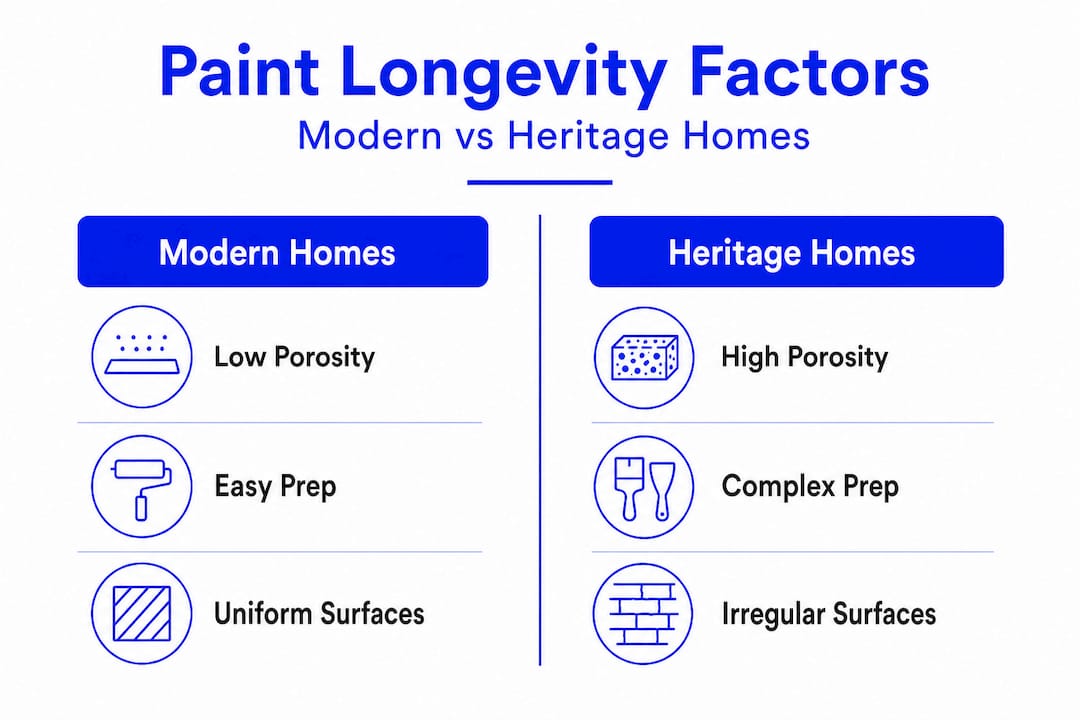
Overlooking peeling paint mistakes during planning is where many Melbourne heritage projects run into trouble. A north-facing weatherboard façade in Kew treated identically to a south-facing brick home in Brighton will perform very differently, even with the same products and same painter.
Pro Tip: Before any exterior heritage painting project, check the dew point for the day. If the surface temperature is within three degrees Celsius of the dew point, do not apply paint. Moisture will be drawn into the film as it cures, causing adhesion failure that won’t become visible for weeks or months.
Application conditions and surface preparation: nuances that make or break paint
Having outlined critical influences, let’s focus on the techniques and step-by-step practices that set apart professional results from costly mistakes.
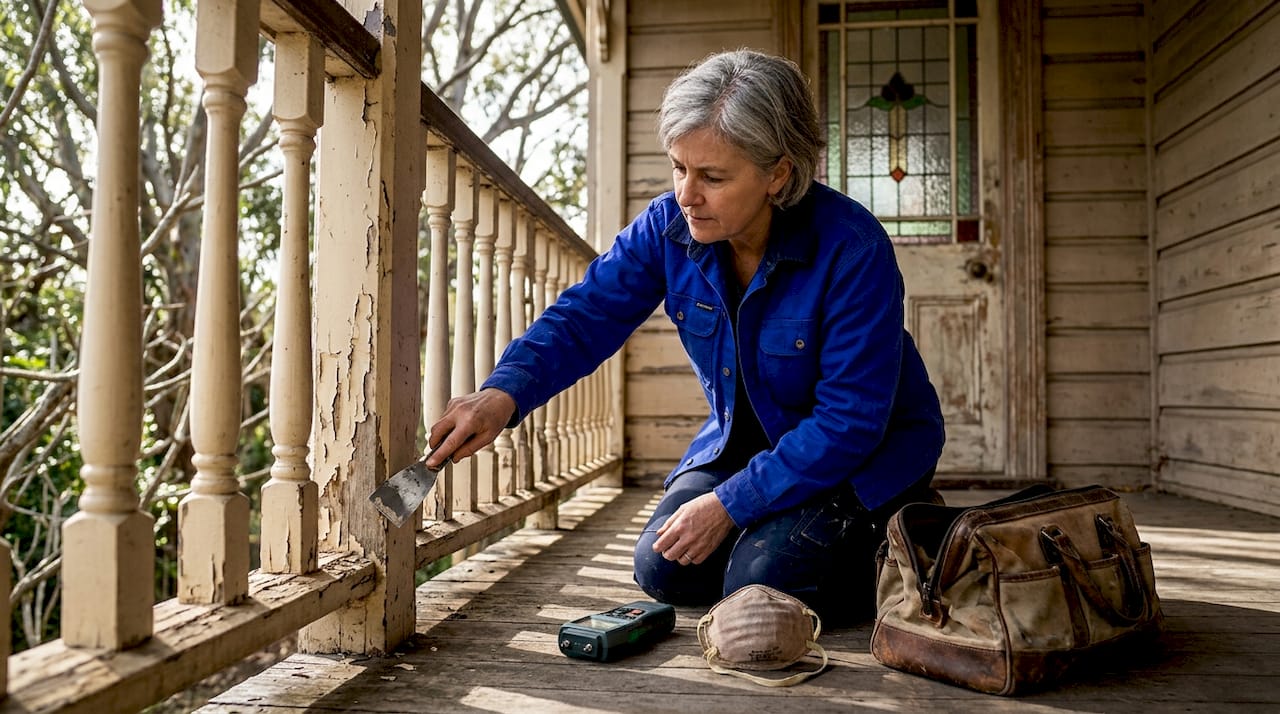
Surface preparation on a heritage home is not a straightforward clean and prime. It is a methodical process that must account for the property’s age, past treatments, current moisture levels, and the environmental conditions on the day of application. When these elements align correctly, the paint performs as intended. When they don’t, the consequences are expensive.
Critical preparation steps for heritage surfaces include:
- Cleaning and degreasing. High-pressure washing is effective for masonry but must be calibrated carefully for aged render and original timber. Excessive pressure damages softer heritage substrates.
- Moisture monitoring. After washing, surfaces must be allowed to dry completely. Using a moisture metre to verify readings below twelve percent for timber and below fifteen percent for masonry is standard professional practice.
- Stripping damaged layers. Existing paint that is cracking, flaking, or chalking must be removed, not painted over. On heritage homes, this often means encountering multiple legacy paint layers including early lead-based coatings.
- Priming appropriately. A heritage surface that is highly absorbent needs a penetrating primer applied first, before any topcoat is considered. Skipping this step results in uneven adhesion and early film failure.
- Filling and patching. Cracks in render or timber must be properly filled and feathered before painting. Heritage render repairs should use compatible lime or acrylic compounds rather than modern fillers that may not flex with the original substrate.
“A painted surface is only ever as durable as the preparation behind it. On a heritage home, that preparation is rarely straightforward, and shortcuts always become visible eventually.” This is a perspective Sol Shine’s team brings to every project in suburbs like Hawthorn, Malvern, and Camberwell.
Painting during high humidity is one of the most common field errors. Melbourne’s spring and autumn seasons can deliver ideal-looking mornings that turn humid by midday. Careful rechecking of moisture after cleaning is critical for heritage surfaces before painting.
Pro Tip: Always revisit moisture readings on the morning of application, even if the surface appeared dry the previous afternoon. Overnight dew and coastal humidity can significantly change surface readings on heritage timber and render.
Quality outcomes depend on quality repainting preparation, and this is particularly true for period homes where hidden moisture paths exist within thick masonry walls or behind original linings. Proactive moisture management also supports paint maintenance essentials by reducing the risk of early intervention being needed.
Ongoing maintenance and signs of paint failure: keeping your investment protected
Once the paint is applied correctly, it is ongoing care and early intervention that provide the greatest return for your heritage home.
Many homeowners invest significantly in a professional repaint and then assume the work is done. But painted surfaces, particularly on heritage homes, require ongoing attention to reach their full lifespan. Paint lifespan can be extended significantly by consistent monitoring and timely intervention.
Signs of paint deterioration that heritage homeowners should watch for include:
- Cracking. Fine crazing in topcoats can indicate movement in the substrate or that the paint film is losing flexibility. On render, this often signals moisture ingress beneath the surface.
- Chalking. A powdery residue on the surface when you run your hand over exterior walls is a sign of UV degradation. It’s more common on older oil-based paints and indicates the coating has reached the end of its protective life.
- Peeling or flaking. This is the most obvious sign of adhesion failure, typically traced back to moisture or preparation issues. On weatherboards, peeling often starts at joints and end grain.
- Discolouration or staining. Dark streaks on rendered or masonry surfaces can indicate moisture movement, mould growth beneath the paint film, or efflorescence (salt deposits migrating through masonry).
- Fading or uneven sheen. Particularly on north-facing façades, where UV exposure is strongest in Melbourne.
Knowing the key signs that indicate repainting is needed helps you act before deterioration becomes structural.
A structured approach to ongoing maintenance extends the life of your repaint considerably:
- Annual visual inspection. Walk around the property each year, ideally in late summer or early autumn. Check all façades, window frames, soffits, and any decorative heritage timber trim.
- Post-storm check. After major weather events, inspect for any impact damage, water pooling near the base of walls, or paint lifting at joins.
- Touch-up window frames and trims promptly. These are the most exposed elements on a heritage home and the first to show failure. Small touch-ups cost very little and prevent moisture from penetrating into substrate materials.
- Clean gutters and check flashings. Water overflow from blocked gutters is a direct cause of paint failure on fascias and weatherboards. This is a maintenance step that protects your painting investment as much as it protects the structure.
- Schedule a professional inspection every three years. A trained eye will identify early failure points that a homeowner inspection might miss, particularly on multi-storey properties or areas with restricted access.
Consistent paint maintenance in Melbourne is not just about aesthetics. On heritage homes where replacement of original materials is costly and often undesirable, keeping the paint film intact is the first line of defence against structural deterioration.
Why most paint failures in Melbourne heritage homes are preventable
The uncomfortable truth that years of working on Victorian and Edwardian homes across Melbourne’s inner east and bayside suburbs reveal is this: the vast majority of premature paint failures are entirely preventable. They are not bad luck. They are the result of specific, identifiable decisions made before or during the painting process.
The most common pattern Sol Shine encounters when assessing heritage homes brought in for early repainting is missed preparation. A previous painter completed the work visually well. The colours looked right, the finish looked clean. But the substrate moisture wasn’t properly checked, or the surface wasn’t fully stripped, or application went ahead on a humid afternoon in March when conditions were borderline. Within two or three years, the paint starts to lift. By five years, the homeowner is facing a full repaint again.
Application conditions are critical: avoiding dew point proximity and high humidity is one of the most important technical standards in professional exterior painting, yet it’s routinely ignored by inexperienced operators. Dew point and humidity remain the most misunderstood factors in heritage painting, even among experienced tradespeople who aren’t specialists in period properties.
There is also a persistent misconception that heritage homes just “need repainting more often” because they’re old. This isn’t inherently true. A well-prepared, correctly applied paint system on a Camberwell Edwardian or a Kew Victorian can perform for a decade or more. What they need is more skill and more respect for the preparation process, not more frequent repainting. Building for longevity from the start, with surface prep for paint longevity taken seriously as a non-negotiable, is what separates a lasting result from a repeat expense.
Professional restoration and painting expertise for Melbourne heritage homes
If these insights have made you rethink your maintenance plan, here is how Sol Shine can ensure your heritage home’s paint lasts as long as possible.
Sol Shine specialises in large-scale heritage painting services across Melbourne’s inner east and bayside suburbs, including Kew, Hawthorn, Camberwell, Brighton, Malvern, Richmond, Fitzroy, and Northcote. Every project begins with a thorough assessment of substrate conditions, moisture levels, and existing paint systems before a single recommendation is made.

Sol Shine’s approach combines skilled painting craftsmanship with a full heritage restoration capability, including render repair, brickwork, damaged window restoration, timber restoration, and architectural woodwork. Understanding how premium heritage painting contributes to preserving and improving your property is part of every project conversation. For homeowners considering a major repaint or restoration, the restoration value guide provides a clear picture of the long-term investment case. Contact Sol Shine to discuss your heritage home’s needs and receive expert guidance tailored to your property.
Frequently asked questions
How does Melbourne’s climate impact paint lifespan on heritage homes?
Melbourne’s fluctuating humidity, rainfall, and sun exposure create unique challenges for paint durability, often shortening lifespan without proper preparation. As confirmed by industry sources, application conditions and environmental exposure are among the most significant influences on how long a coating performs.
Why do heritage homes need special paint care compared to newer houses?
Heritage homes have older, more porous surfaces and historic materials that require specialist preparation and application for paint to last. Careful rechecking of moisture after cleaning is critical for heritage surfaces before any coating is applied, given how readily these substrates absorb and retain moisture.
What is the most common cause of paint failure in period homes?
Poor surface preparation and painting during unsuitable conditions, especially with high humidity or near dew point, are the most frequent causes. Industry standards confirm that humidity and proximity to dew point can dramatically affect paint performance across all coating types.
How often should I check for signs of paint deterioration on my heritage property?
Check annually and after major weather events for cracking, peeling, or chalking to protect your investment. Consistent monitoring and timely intervention are the most reliable ways to extend the functional life of a quality repaint on a period home.


