
TL;DR:
- Mildew resistant paint contains biocidal additives that inhibit mildew growth on properly prepared surfaces. It effectively prevents new mold from forming but does not eliminate existing mildew or address underlying moisture issues. Proper surface cleaning, moisture control, and correct application are essential for the paint’s long-term effectiveness.
Mildew resistant paint is one of those products that gets misunderstood more often than it gets used correctly. Homeowners reach for it hoping it will solve an existing mould problem, when in reality, what is mildew resistant paint really about is preventing new growth on a clean, properly prepared surface. These specialist coatings, known in the industry as antifungal or fungicidal paints, contain biocidal additives that inhibit mildew from colonising the dried paint film. They work. But only under the right conditions, and only as part of a broader approach to moisture management.
Table of Contents
- Key takeaways
- What is mildew resistant paint and how it works
- Choosing the right mildew resistant paint
- Preparing and applying mildew resistant paint
- Maintaining painted surfaces against mildew
- My honest take on mildew resistant paint
- How Sol Shine can help protect your home
- FAQ
Key takeaways
| Point | Details |
|---|---|
| Antifungal additives do the work | Mildew resistant coatings contain mildewcides that stop spores from establishing on dried paint film. |
| Prep is non-negotiable | Painting over active mildew allows it to continue growing under the new coat. |
| Product choice must match location | Interior and exterior formulations differ significantly; using the wrong one reduces effectiveness. |
| Moisture control is the real fix | Even the best antifungal paint will fail if underlying leaks or poor ventilation are not addressed. |
| Follow label directions closely | Application steps like coat number and curing time directly affect how long protection lasts. |
What is mildew resistant paint and how it works
Mildew resistant paint is a specialised coating formulated with two key components working together: mildewcides and moisture-resistant binders. Mildewcides are biocidal additives, typically zinc compounds or organic fungicides, that are suspended within the paint film. When mildew spores land on a treated surface, the mildewcide disrupts their cellular function and prevents them from taking hold.
The moisture-resistant binders complement this by sealing porous substrates and repelling water, which reduces the damp conditions spores need to germinate. This combination creates a paint film that is actively hostile to fungal growth rather than simply providing a surface for it to colonise.
It helps to understand the terminology, because labels are not always consistent. Here is how the three main categories differ:
- Mildew resistant paint targets surface-level staining organisms. Mildew is the thin, powdery growth you see on bathroom ceilings and exterior weatherboards.
- Mould resistant paint is formulated to inhibit deeper fungal growth. The distinction between mildew and mould paint matters because product claims vary by region and manufacturer.
- Antimicrobial paint covers a broader spectrum of microbes including bacteria, and is sometimes used in healthcare or commercial settings.
For most residential applications, antifungal or mildew prevention paint covers the bulk of what homeowners need. Products like Dulux Trade Mouldshield are tested to recognised fungicidal standards and designed specifically for interior moisture-prone areas.
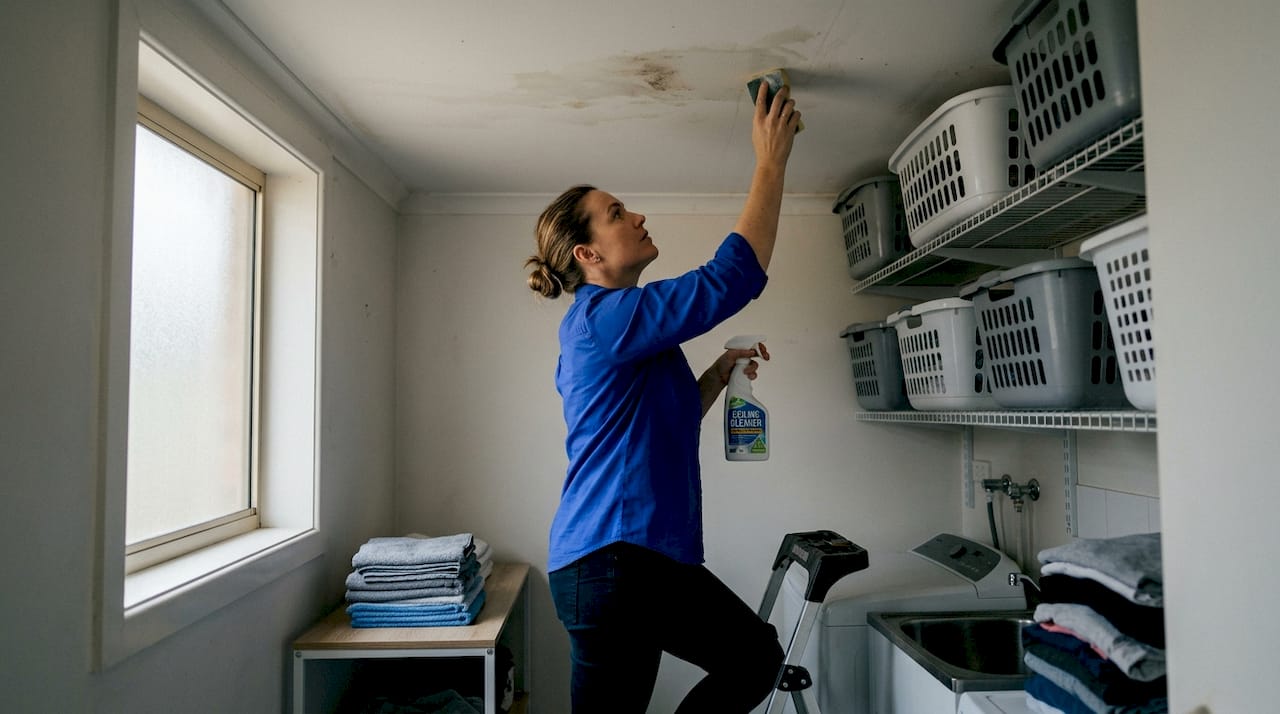
One important limitation: these paints do not remove existing mould. They do not dry out a damp wall. They do not replace ventilation. What they do is make it harder for mildew to grow after you have done everything else right.
Choosing the right mildew resistant paint
Not every antifungal coating suits every situation. Selecting the wrong product for your exposure zone is one of the most common mistakes homeowners make, and it costs them the protection they were expecting.
Interior vs exterior use
Some fungicidal paints are strictly formulated for interior use. Dulux Mouldshield, for example, is recommended for kitchens and bathrooms only and is not designed for exterior surfaces. Applying an interior product outdoors exposes it to UV degradation, rain, and temperature cycles it was never engineered to handle. For exterior weatherboards, fascias, and rendered surfaces, you need a product specifically rated for outdoor exposure.
Matching sheen to the space
Sheen level is not just an aesthetic choice. It affects how moisture interacts with the surface.
| Sheen level | Best use | Moisture resistance |
|---|---|---|
| Matt | Low-traffic, dry areas | Lower |
| Eggshell | Bathrooms, kitchens | Moderate |
| Semi-gloss | High-humidity interiors | High |
| Gloss | Trims, exterior woodwork | Highest |
For bathrooms and laundries, semi-gloss or eggshell finishes are generally the better choice because they are easier to clean and less permeable than matt finishes.
Reading product labels
Labels tell you exactly what a product is designed to do and where. Look for terms like “fungicidal,” “mildewcide,” or “antimicrobial” in the product description. Check whether the product requires a specific primer, lists a minimum number of coats, or has restrictions on use in continuously wet areas. Premium paint choices carry more detail on their labels, and that detail protects your investment.
Pro Tip: Always check whether the antifungal paint you are considering is tintable. Some products lose efficacy when tinted with standard colourants, so confirm with your supplier before committing to a custom colour.
Preparing and applying mildew resistant paint
Preparation is where most mildew problems are created or solved. Applying a premium fungicidal topcoat over contaminated or damp surfaces simply traps the problem underneath.
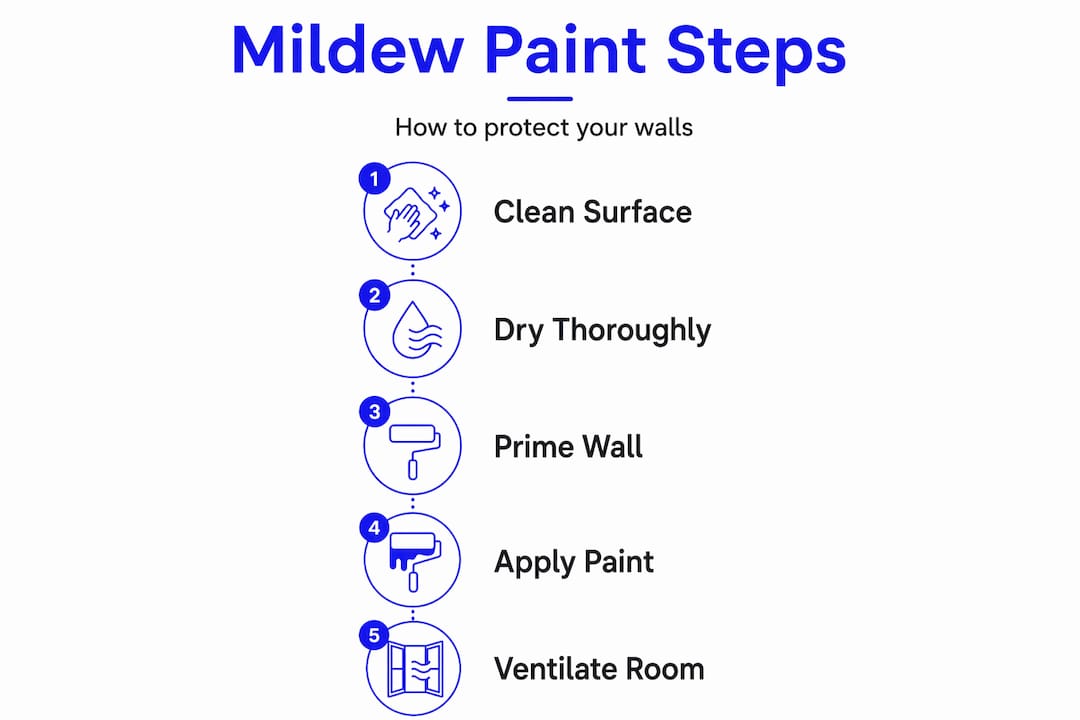
Follow these steps for reliable results:
-
Kill the existing mildew. Use a chlorine-based solution diluted according to product instructions. Apply it to the affected surface and allow it to dwell. Active mildew left beneath new paint will continue growing through the new coat within months.
-
Rinse thoroughly. After treatment, wash the surface completely. Chlorine-based rinse cycles may need to be repeated for heavy growth on exterior surfaces before you can consider the area clean.
-
Repair and dry the surface. Fix any cracks, render damage, or areas of water ingress. Allow the surface to dry fully before applying any coating. A damp substrate will undermine adhesion and trap moisture.
-
Prime with a mildewcide primer. Primers formulated with antimicrobial additives provide a stable base for the topcoat, improve adhesion, and block any residual fungal material from migrating to the surface.
-
Apply the correct number of coats. Most antifungal paints require two full coats to deliver their rated performance. Zinsser PERMA-WHITE, for example, offers a five-year mildew guarantee specifically when two coats are applied and curing instructions are followed.
-
Respect the curing period. Curing time matters. Zinsser recommends waiting 24 hours before shower use and avoiding scrubbing for seven days after application. Rushing this step can compromise the protection you paid for.
Pro Tip: Paint in dry, well-ventilated conditions wherever possible. High ambient humidity during application can affect how the film forms and cures, reducing the effectiveness of mildewcide additives in the final coat.
Maintaining painted surfaces against mildew
Mildew resistant coatings do not last indefinitely, and their effectiveness is directly tied to how well you manage the environment around them. Think of the paint as one layer of protection in a system, not the whole system.
Ongoing maintenance comes down to a few consistent habits:
- Ventilate actively. Exhaust fans in bathrooms and kitchens should be run during and after use. Poor ventilation is the single most common reason antifungal paints fail prematurely, even when applied correctly.
- Fix leaks promptly. A slow leak behind a wall or around a window frame will defeat any paint coating. Moisture cycling through the substrate is something no mildew resistant formulation can overcome on its own.
- Clean gently. Wipe down surfaces with a mild detergent and soft cloth. Abrasive scrubbing degrades the paint film and removes the mildewcide layer that sits at the surface.
- Recoat when needed. Most fungicidal paints maintain their protection for five to ten years under normal conditions. When you notice discolouration returning or the finish looking tired, it is time to prepare and repaint rather than wait for the problem to worsen.
- Know the limits. If you are seeing dark staining through existing paint, detecting a musty odour in a wall cavity, or noticing bubbling and peeling near skirting boards, those are signs of structural moisture. Mildew prevention paint cannot address this. You need a professional assessment before any repainting.
For heritage homes in particular, where brick, render, and timber interact in complex ways, moisture control in painted surfaces requires more than just choosing the right tin of paint.
My honest take on mildew resistant paint
I have seen the pattern repeat more times than I can count. A homeowner notices black spots on a bathroom ceiling, buys a tin of antifungal paint, rolls it on, and feels satisfied. Six months later, the spots are back. Sometimes worse.
What is happening is not a product failure. It is a process failure. The paint never had a chance because the mildew underneath was not killed first, or the exhaust fan was undersized, or there was a slow weep from a window frame letting moisture into the wall. Painting over active mildew does not encapsulate it. The mildew keeps growing and eventually pushes through.
In my experience, the homes where mildew resistant paint performs exactly as promised share three things: thorough prep, resolved moisture sources, and correct application. When all three are in place, a quality fungicidal coating does genuinely hold up for years.
My advice is to treat the product label as a contract, not a suggestion. The five-year guarantees you see on premium antifungal paints are achievable. But they are conditional on doing the work before the first coat goes on.
If you are dealing with a persistent mildew problem in a heritage home, particularly on rendered walls, timber eaves, or interior cornices, get a professional opinion before you pick up a brush. The cost of getting it right the first time is far lower than the cost of repainting in twelve months because the root cause was never addressed.
— Jarrad
How Sol Shine can help protect your home
Choosing the right antifungal coating is only half the job. The preparation, priming, and application process determines whether that coating delivers lasting protection or fails within a season. Sol Shine’s team of professional painters works across Melbourne’s inner east and bayside suburbs, handling interior painting projects where moisture control and correct product selection are treated as part of the work, not afterthoughts.
For moisture-prone areas like bathrooms, laundries, kitchens, and exterior façades on Victorian and Edwardian homes, Sol Shine applies antifungal coatings with full surface preparation included. This means killing and removing existing mildew, priming correctly, and applying the specified number of coats under appropriate conditions. You can view examples of completed work in the exterior painting portfolio and interior painting portfolio. For a project consultation, get in touch with the Sol Shine team directly.
FAQ
What does mildew resistant paint actually contain?
Mildew resistant paint contains mildewcides, typically organic fungicides or zinc-based compounds, suspended within moisture-resistant binders that form the dried paint film. These additives inhibit fungal spores from colonising the surface.
Can mildew resistant paint be used on exterior surfaces?
Some products are rated for exterior use, but not all. Dulux Mouldshield, for example, is formulated for interior use only. Always check the label to confirm the product suits your specific exposure zone before purchasing.
Does mildew resistant paint kill existing mould?
No. Antifungal paint prevents new growth on clean, dry surfaces. Existing mildew must be killed with a chlorine-based treatment and thoroughly rinsed away before any painting begins, otherwise growth continues beneath the new coat.
How long does mildew resistant paint last?
With correct preparation and application, quality products like Zinsser PERMA-WHITE offer up to five years of protection. That guarantee depends on applying two full coats, respecting curing times, and maintaining good ventilation in the space.
When should I call a professional instead of doing it myself?
If mildew keeps returning after multiple treatments, or if you notice signs of structural moisture such as bubbling paint, persistent musty odours, or staining through wall cavities, a professional assessment is the right step before repainting.


