
TL;DR:
- Heritage roofs in Melbourne require specialized cleaning methods to prevent biological damage and preserve their historical value. Regular soft wash cleaning every one to two years helps extend roof lifespan, maintain kerb appeal, and avoid costly repairs. Proper technique and maintenance are essential to protect the entire structure and uphold the home’s heritage significance.
Many Melbourne homeowners invest significant care into their Victorian and Edwardian homes, restoring façades, repainting weatherboards, and maintaining heritage timber trim. Yet the roof, one of the most exposed and structurally critical elements, is routinely overlooked. Skipping regular roof cleaning is not simply a cosmetic oversight. Biological growth, debris accumulation, and moisture retention can silently erode roofing materials over years, leading to premature deterioration, costly repairs, and a noticeable decline in property value. This guide clarifies what heritage roof cleaning actually involves, why the method matters enormously, and how to build a maintenance routine that protects your home for the long term.
Table of Contents
- The unique challenges of Victorian and Edwardian roofs
- Why regular roof cleaning matters: Value, lifespan, and appearance
- Roof cleaning methods compared: Soft wash vs. high-pressure
- Practical guide: How to schedule and maintain a clean heritage roof
- What most homeowners miss about roof cleaning and heritage value
- Professional heritage roof cleaning and restoration in Melbourne
- Frequently asked questions
Key Takeaways
| Point | Details |
|---|---|
| Protect heritage value | Regular roof cleaning preserves the unique features and value of Victorian and Edwardian homes in Melbourne. |
| Choose safe cleaning methods | Soft washing is preferred over high-pressure methods for heritage roof materials, helping prevent costly damage. |
| Boost property longevity | Routine roof maintenance reduces the risk of leaks and structural decay, extending your home’s lifespan. |
| Prevent expensive repairs | Catching biological growth early with cleaning is far more cost-effective than roof restoration or replacement. |
| Work with specialists | Seek roof cleaners with proven heritage home experience to ensure safe, durable results. |
The unique challenges of Victorian and Edwardian roofs
Heritage roofs are not built like modern ones. Victorian and Edwardian homes across suburbs such as Kew, Hawthorn, Camberwell, and Brighton feature roofing materials that were installed decades ago, and many have never been replaced. These materials require a far more considered approach to cleaning than contemporary roofing systems.
Common heritage roofing materials include:
- Slate tiles: Dense and durable, but porous enough to harbour moss and lichen. Foot traffic or aggressive cleaning can cause cracking or delamination.
- Terracotta tiles: Original terracotta is often unglazed and brittle over time. Biological growth can penetrate the surface, weakening the tile structure.
- Aged corrugated iron and pressed metal: Common on many period homes, these surfaces rust when protective coatings fail. Cleaning must avoid abrading the surface.
- Asphalt shingles: Less common in heritage contexts but present in some early twentieth century homes. According to ARMA-related guidance, high-pressure cleaning can increase wear through granule loss and may affect manufacturer warranties.
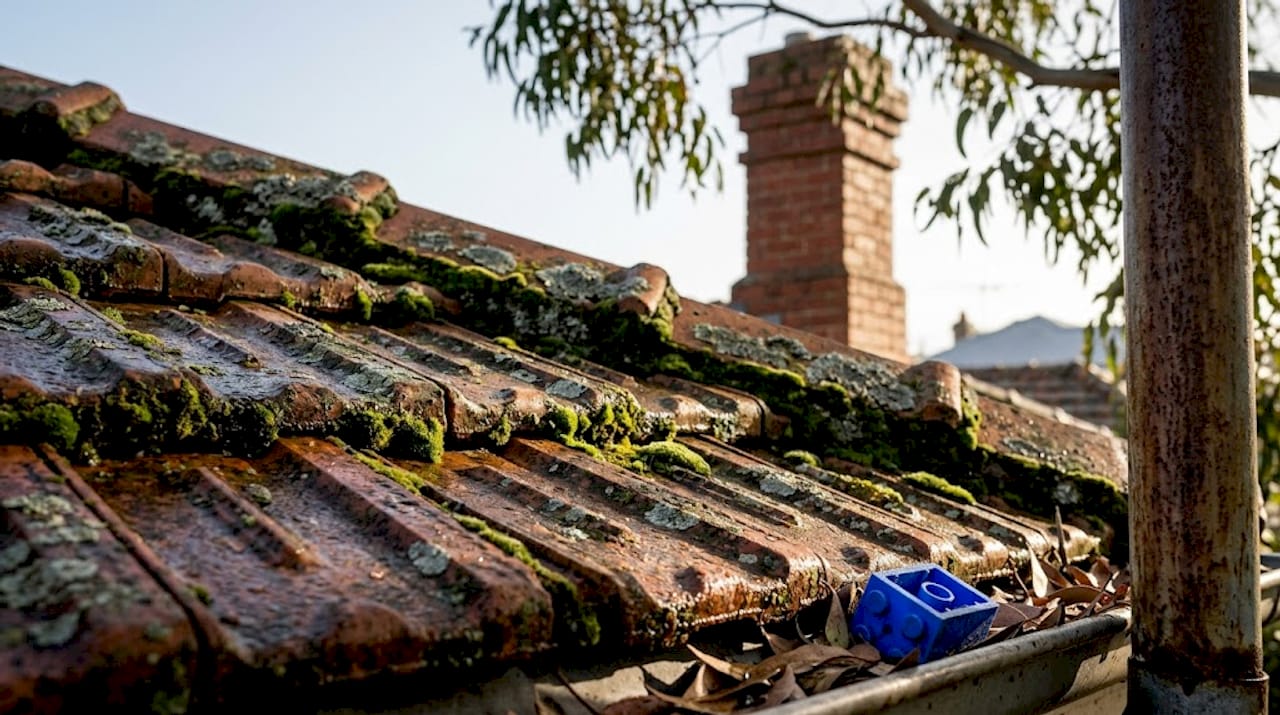
Melbourne’s inner east and bayside suburbs experience a climate that accelerates biological growth. Moisture from Port Phillip Bay, canopy coverage from mature elms and oaks, and seasonal variation all create ideal conditions for moss, lichen, and algae to establish themselves on roofing surfaces. Once biological growth takes hold, it retains moisture against the roofing material. This moisture accelerates surface degradation over time.
Pro Tip: If you notice green or dark streaking on your roof tiles, that is biological growth already at work. Do not delay. The longer it sits, the deeper it penetrates the surface and the harder it becomes to remove safely.
Our heritage roof cleaning tips outline what to look for during a visual inspection before calling in professionals. Understanding what you are looking at helps you have a more informed conversation with your cleaner and ensures the right method is selected from the start.
The key takeaway here is straightforward: heritage roofs require specialised knowledge. General cleaning advice designed for modern concrete tiles is not appropriate for slate, terracotta, or aged iron. Method selection, chemical compatibility, and the age and condition of the material all need to be assessed before work begins.
Why regular roof cleaning matters: Value, lifespan, and appearance
Once you understand the vulnerabilities specific to heritage roofing materials, the case for regular cleaning becomes clear. This is not simply about appearance, though kerb appeal matters enormously for period homes. It is about protecting a long-term investment.
Biological growth causes accelerating damage. Moss and lichen are not passive organisms sitting on your roof. They have root-like structures called rhizines that penetrate porous surfaces, expanding and contracting with moisture. Over time, this physical action breaks down tile and mortar at a microscopic level. Left unchecked for three to five years, the damage moves from surface staining to structural compromise.
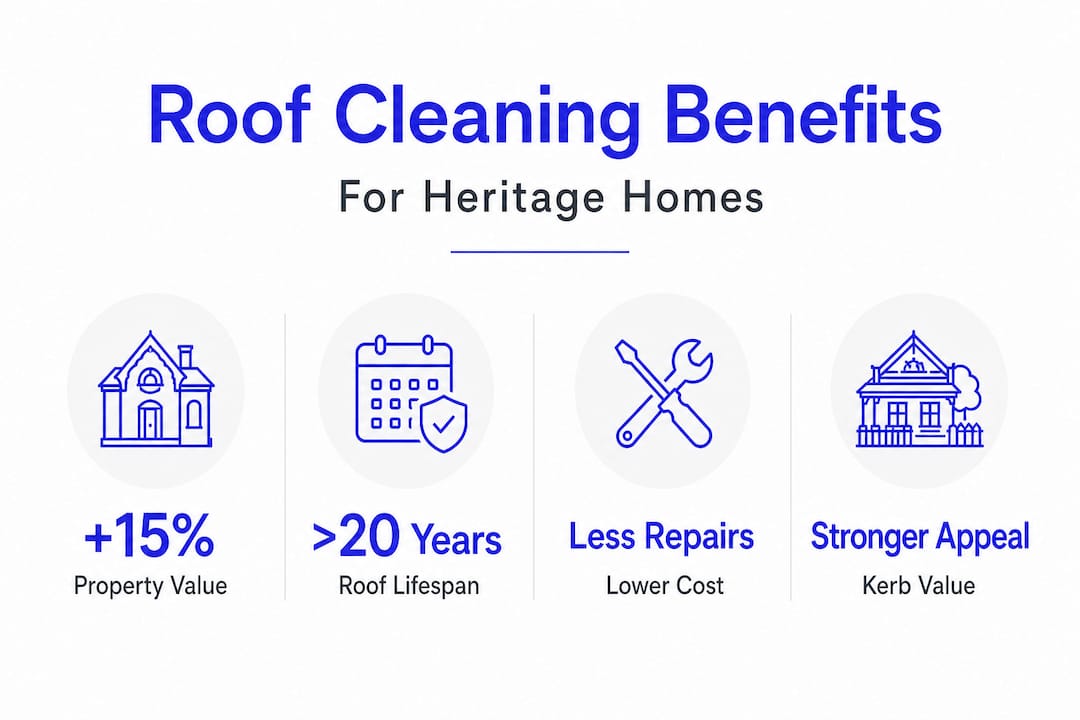
Routine cleaning is far more cost-effective than restoration. The benefits of exterior cleaning for period homes are well documented. A professional clean every one to two years can extend the serviceable life of roofing materials by a decade or more. Contrast this with the cost of a full tile replacement or re-bedding and re-pointing of ridge capping, which regularly runs into tens of thousands of dollars on heritage homes.
Kerb appeal directly affects property value. Heritage homes in suburbs like Malvern, Brighton, and Camberwell are sought after precisely because of their period character. A stained, mossy roof diminishes that character immediately. Boosting heritage home value through regular maintenance is one of the most cost-effective strategies available to owners. Buyers and valuers notice the roof before they step inside.
Clean roofs also protect internal structures. Water retained by biological growth, or forced under tiles by deteriorating mortar, eventually finds its way into roof cavities. This leads to timber rot in rafters and ceiling linings, which is a far more expensive and disruptive repair than a professional clean.
Regular roof maintenance is also an opportunity to identify emerging issues early. A professional cleaner can spot cracked tiles, failed pointing, or rusted flashing during a scheduled visit, enabling targeted repairs before they escalate. Scheduled roof inspections provide a similar proactive advantage, helping owners avoid the expense and disruption of emergency repairs.
| Maintenance approach | Typical frequency | Approximate cost | Likely outcome |
|---|---|---|---|
| Routine soft wash cleaning | Every 1 to 2 years | $500 to $1,500 | Extends tile life, preserves appearance |
| Delayed cleaning (3 to 5 years) | Infrequent | $1,500 to $3,500 | Partial damage, deeper staining, increased repair needs |
| No cleaning (5 years or more) | Neglect | $5,000 to $20,000+ | Structural damage, full restoration or replacement required |
The numbers tell a straightforward story. Investing in consistent, appropriate cleaning costs a fraction of the remediation required when roofing materials are allowed to deteriorate. Cleaning exterior surfaces is one of the most practical forms of heritage protection available.
Roof cleaning methods compared: Soft wash vs. high-pressure
Understanding the difference between cleaning methods is essential for any heritage homeowner. Not all roof cleaning is equal, and choosing the wrong method can cause more damage than doing nothing at all.
Soft washing uses low water pressure combined with a chemical solution applied at a dwell time long enough to kill biological growth at the root. The National Roof Cleaning Authority notes that soft washing is widely preferred for its ability to kill biological growth while significantly reducing the risk of surface damage compared with pressure washing. The chemical solutions used are typically biodegradable and formulated to break down moss, lichen, and algae without harming surrounding garden beds or stormwater systems when properly diluted and applied.
High-pressure cleaning uses mechanical force to remove biological growth and debris. It is faster in some applications but carries significant risk on heritage materials. The physical force of high-pressure water against aged terracotta, slate, or asphalt shingles can fracture surfaces, dislodge granules, and strip protective coatings. As highlighted in ARMA-related content, high-pressure cleaning on asphalt shingles specifically can increase wear through granule loss and may void manufacturer warranties. The same principle applies to other heritage materials.
“The right cleaning method is determined by the roofing material, its age, and its condition, not by what is quickest or cheapest on the day.”
| Feature | Soft washing | High-pressure cleaning |
|---|---|---|
| Water pressure | Low (below 500 PSI) | High (1,500 to 3,000+ PSI) |
| Chemical treatment | Yes, formulated biocides | Minimal or none |
| Risk to heritage materials | Low | High |
| Dwell time required | 15 to 30 minutes | Immediate |
| Warranty implications | Generally safe | May void warranties |
| Recommended for heritage roofs | Yes | Not recommended |
Additional resources, such as roof cleaning methods, provide further context on how professional services approach different roofing types.
When engaging a roof cleaner, ask the following questions before any work begins:
- What cleaning method do you use, and why is it appropriate for my roofing material?
- What chemicals do you apply, and are they safe for heritage surfaces and surrounding gardens?
- Can you confirm your process aligns with manufacturer or trade body guidance for my specific roof type?
- Do you carry insurance that covers heritage property damage?
- Have you worked on Victorian or Edwardian homes in Melbourne’s inner east or bayside suburbs before?
Understanding roof painting workflows is also valuable if your home is approaching the point where cleaning alone is insufficient and a full repaint or coating is needed. Sometimes cleaning is the first step in a broader restoration programme. Our heritage exterior cleaning guide and heritage cleaning steps provide a thorough overview of how this process works in practice. We also maintain clear heritage safety standards across all our projects to ensure heritage fabric is protected at every stage.
Practical guide: How to schedule and maintain a clean heritage roof
Having covered the why and the how, the practical question becomes: what does a well-maintained heritage roof cleaning programme actually look like?
Recommended schedule for Melbourne’s inner east and bayside:
- Annual visual inspection: Walk the perimeter and check from ground level or upper windows for visible moss, lichen, dark streaking, or debris accumulation in valleys and gutters.
- Professional clean every 12 to 24 months: Heritage homes in leafy suburbs such as Kew, Hawthorn, and Camberwell, where canopy coverage is dense, benefit from annual cleaning. Homes in more open bayside locations may manage a two-year cycle effectively.
- Post-storm checks: After significant storms, inspect for dislodged tiles, debris in valleys, and blocked gutters. These create conditions for accelerated biological growth.
- Gutter cleaning as a companion task: Blocked gutters overflow onto fascia boards and down walls. Schedule gutter cleaning alongside or immediately before roof cleaning.
- Follow-up inspection 30 days after cleaning: Check that biological growth is retreating. Some soft wash treatments continue to work for several weeks after application. Any persistent growth should be reported to your service provider.
Pro Tip: Ask your roof cleaner to provide a written condition report after each visit. This creates a documented history of your roof’s condition over time, which is valuable for insurance purposes and when preparing a property for sale.
Vetting professional cleaners for heritage sensitivity requires more than checking a price and availability. Ask specifically about their experience with Melbourne’s roof restoration basics and with period homes in particular. Providers who understand the soft wash guidance from trade bodies are more likely to apply that knowledge correctly on your property.
Between professional cleans, keep gutters clear of leaf debris, trim overhanging branches where possible, and address any cracked or slipped tiles promptly. Small, proactive actions between scheduled cleans significantly reduce the workload and cost of each professional visit.
What most homeowners miss about roof cleaning and heritage value
Here is an observation worth sitting with: most heritage homeowners spend considerable time and money on what people can see. They repaint the façade, restore the veranda, and refinish the heritage timber trim. All of that is important. But the roof is the element that quietly determines how long everything else lasts.
When moisture infiltrates under poorly maintained tiles, it does not stay there. It moves. It finds rafters, it finds ceiling linings, and eventually it finds its way into the walls. By the time a homeowner notices a stain on the interior ceiling or paint bubbling near a cornice, the damage behind it has typically been developing for years. Regular roof cleaning is not just about the roof. It is about protecting the entire structure beneath it.
There is also a less obvious point about heritage value. Victorian and Edwardian homes carry a premium in Melbourne’s property market precisely because they are well preserved. That preservation requires consistent maintenance across every element, including the roof. A buyer walking through a well-presented Hawthorn terrace with a clean, intact roof draws a very different conclusion than one confronted with a moss-covered, stained tile surface that suggests years of deferred maintenance.
Our experience working with heritage homeowners across the inner east and bayside confirms that roof cleaning is consistently underestimated as a maintenance practice. It tends to sit at the bottom of the annual maintenance list until a problem forces it to the top. By then, the cost and complexity of intervention has increased substantially.
Moving beyond minimum standards means anticipating problems rather than reacting to them. The right approach is to treat the roof as the first line of defence for your entire property, which is exactly what it is. Integrating regular cleaning into your annual maintenance calendar, alongside other exterior cleaning safeguards, is one of the most intelligent decisions a heritage homeowner can make. The return on that investment, measured in preserved materials, avoided repairs, and sustained property value, is substantial.
Professional heritage roof cleaning and restoration in Melbourne
Sol Shine brings together skilled tradespeople who understand Melbourne’s period homes from the roof down. Whether your property needs a careful soft wash to lift years of biological growth, a full roof repaint to restore faded terracotta, or a broader heritage restoration programme covering render, brickwork, and joinery, the team delivers all of it under one roof.

If you are considering a larger project that combines roof work with exterior painting, weatherboard replacement, or window restoration, Sol Shine specialises in exactly this kind of coordinated, large-scale heritage work. Explore our heritage painting services for a full picture of what is possible, or review our premium heritage painting portfolio to see the quality of outcomes we consistently deliver. For homeowners thinking about the financial case for investment, our restoration value insights outline how heritage restoration translates into measurable property value. Get in touch with Sol Shine to discuss your home and arrange a thorough assessment.
Frequently asked questions
How often should I clean my roof if I own a heritage home in Melbourne?
Every one to two years is the standard recommendation for heritage homes, though homes under heavy canopy cover or in high-moisture areas may benefit from annual cleaning. The soft wash method ensures biological growth is properly treated without damaging delicate heritage materials.
Does high-pressure roof cleaning damage Victorian or Edwardian roofs?
Yes, high-pressure cleaning poses a real risk to heritage roofing materials. On asphalt shingles in particular, high-pressure cleaning can cause granule loss and may void manufacturer warranties. The same risks apply to aged terracotta and slate.
Can regular roof cleaning increase my property’s value?
Absolutely. A clean, well-maintained roof directly supports kerb appeal and signals to buyers that the property has been properly cared for. Regular soft wash cleaning also prevents the kind of biological damage that leads to expensive tile replacement or structural repairs, protecting the overall value of the home.
What questions should I ask my roof cleaner for a heritage home?
Always ask about their experience with Victorian and Edwardian roofing materials, which cleaning method they use, and whether their process aligns with manufacturer guidance. Given that high-pressure cleaning can cause granule loss and affect warranties, confirm upfront that soft washing will be used on your heritage roof.


